Mechanisms influencing network topology in plant–hummingbird pollination networks
Ricardo Sánchez-Martín, Elisa Barreto, Melina F. Maxwell, Francois Duchenne, Holger Beck, Rafaela Bobato, Emanuel Brenes, Daniela Bôlla, Nicole Büttner, Ana Paula Caron, Alejandro Castro Jiménez, Nelson Chaves-Elizondo, María José Gavilanes, Anna Sofia Görlich

TL;DR
This study shows that plant-hummingbird pollination networks maintain a consistent structure due to trait-based interactions, not changes in diversity.
Contribution
The study identifies trait-based mechanisms as the primary driver of network structure in plant-hummingbird interactions.
Findings
Elevation had no effect on network structure despite influencing diversity.
Trait matching between hummingbird bills and flower corollas consistently drives network structure.
Strong trait matching increases modularity and specialization but decreases nestedness and connectance.
Abstract
Ecological communities result from complex species interactions, often summarized in interaction networks. The structure of these networks is described by metrics that provide insight into community assembly, ecosystem functioning and coevolutionary processes. Despite advances in measuring and mapping network structure, the mechanisms underlying its formation remain less explored. Network metrics may vary across communities owing to changes in species diversity and environmental conditions. However, network metrics may remain invariant if mechanisms influencing interactions (linkage rules) are independent of species composition and environmental conditions and instead influenced by traits. We investigated whether changes in taxonomic, phylogenetic and functional diversity along elevation gradients influence network modularity, nestedness, connectance and specialization across 32 sites…
Genes, proteins, chemicals, diseases, species, mutations and cell lines named across the full text — each resolved to its canonical identifier and authoritative record.
Click any figure to enlarge with its caption.
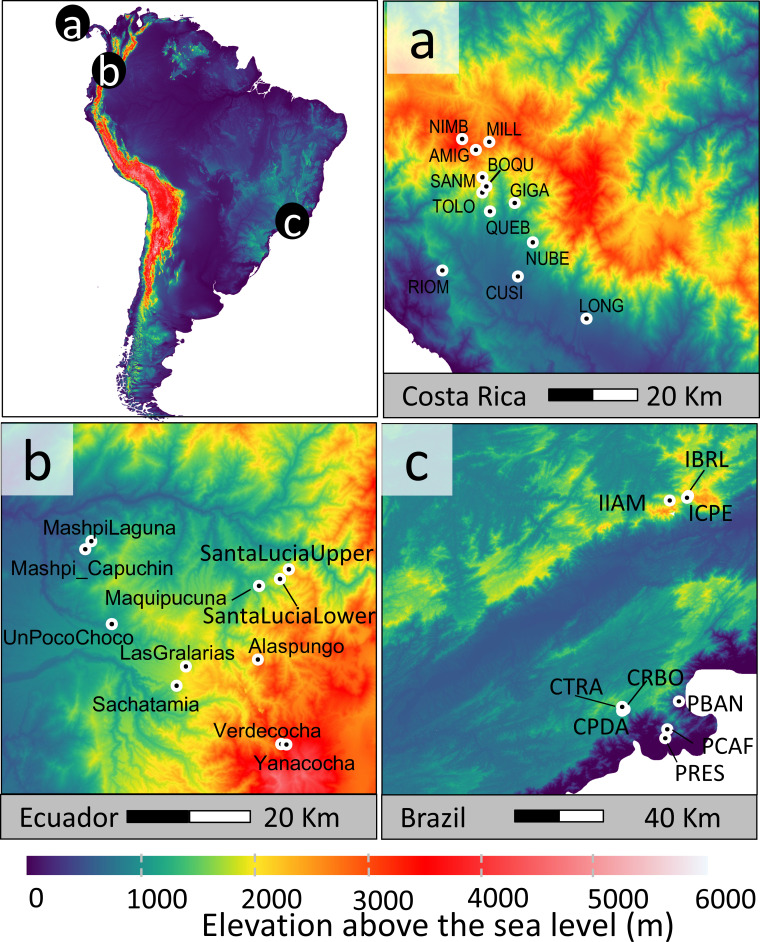 Figure 1
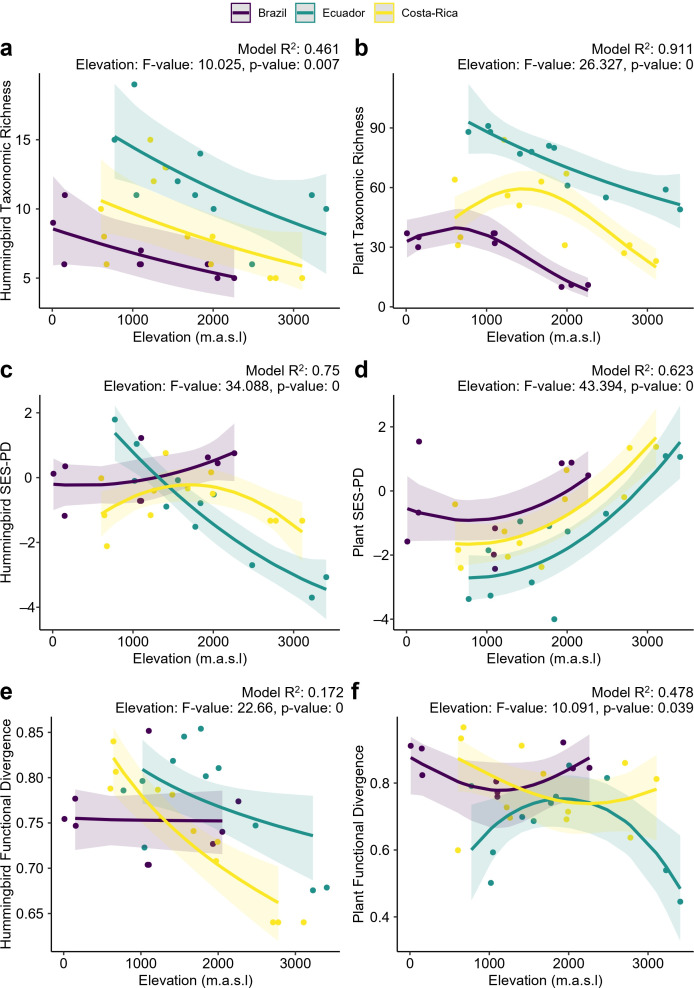 Figure 2
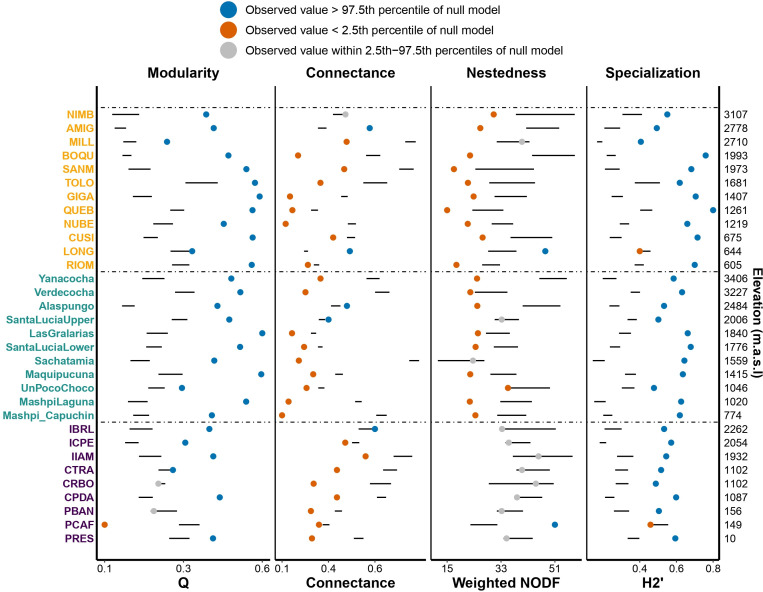 Figure 3
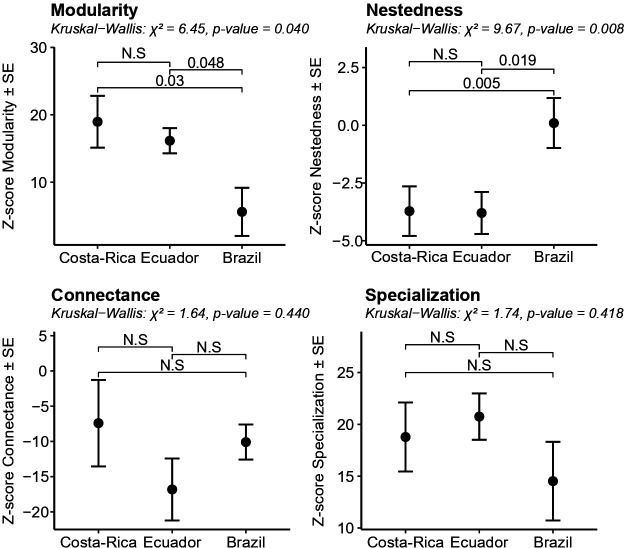 Figure 4
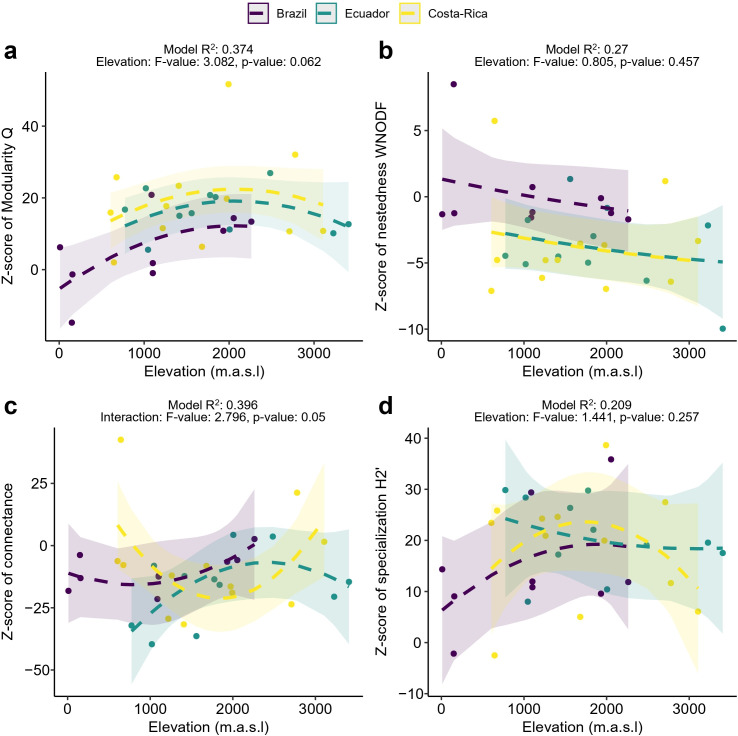 Figure 5
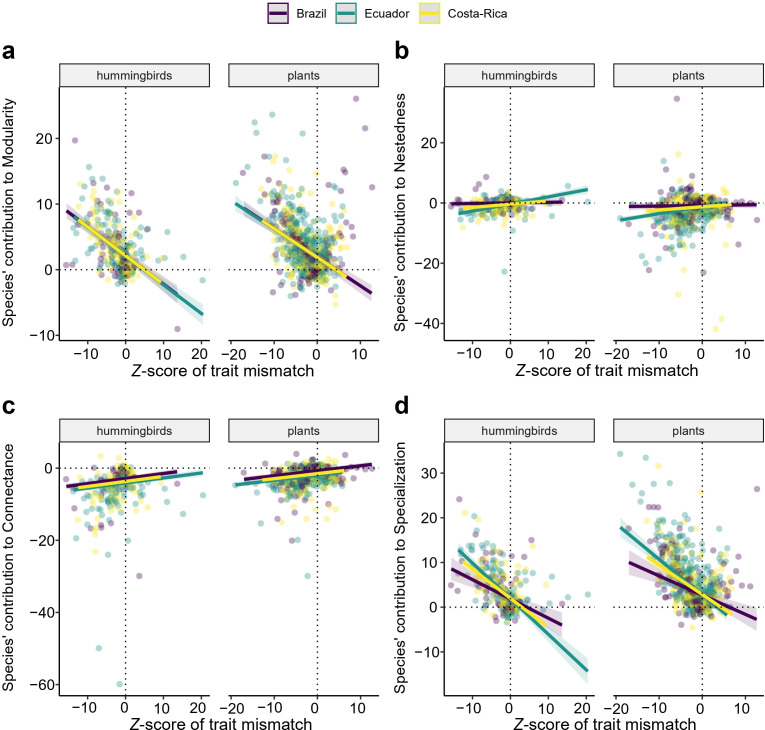 Figure 6
Peer Reviews
No public reviews on file for this paper yet. If you reviewed it on a platform where reviews are public (OpenReview, ICLR, NeurIPS, ICML), you can paste yours below so the community can read it here.
Videos
No videos yet. Explain this paper in a talk, walkthrough, or lecture? Add one.
Taxonomy
TopicsPlant and animal studies · Species Distribution and Climate Change · Ecology and Vegetation Dynamics Studies