A shared gene but distinct dynamics regulate mimicry polymorphisms in closely related butterfly species
Sofia I. Sheikh, Meredith M. Doellman, Nicholas W. VanKuren, Phoebe Hall, Marcus R. Kronforst

TL;DR
This study explores how a shared gene, dsx, controls mimicry in female butterflies across species, revealing distinct genetic mechanisms behind similar traits.
Contribution
The study shows that dsx regulates mimicry polymorphism in butterflies, but with species-specific downstream gene expression dynamics.
Findings
Knocking down dsx expression in butterflies leads to male-like wing patterns in females, showing dsx controls both dimorphism and polymorphism.
Mimetic dsx alleles in Papilio lowii and Papilio alphenor show unique spatiotemporal expression patterns.
RNA-seq data reveals species-specific differences in the timing of gene expression related to mimicry.
Abstract
Sex-limited polymorphisms, like mating strategies in male birds and mimicry in female butterflies, are widespread across the tree of life and frequently adaptive. Considerable work has been done exploring why genetic variation resulting in sex-limited morphs is generated and maintained, yet little is known about their molecular and developmental genetic basis. In the butterfly genus Papilio (subgenus Menelaides), multiple species have female-limited polymorphism: females develop either mimetic or non-mimetic wing colour patterns, and each polymorphism is controlled by allelic variation at doublesex (dsx). Across several species, we found that alternative female morphs develop male-like colour patterns when we knock down dsx expression, establishing that dsx controls both sexual dimorphism and polymorphism. We also found that mimetic dsx alleles have unique spatiotemporal expression…
Genes, proteins, chemicals, diseases, species, mutations and cell lines named across the full text — each resolved to its canonical identifier and authoritative record.
Click any figure to enlarge with its caption.
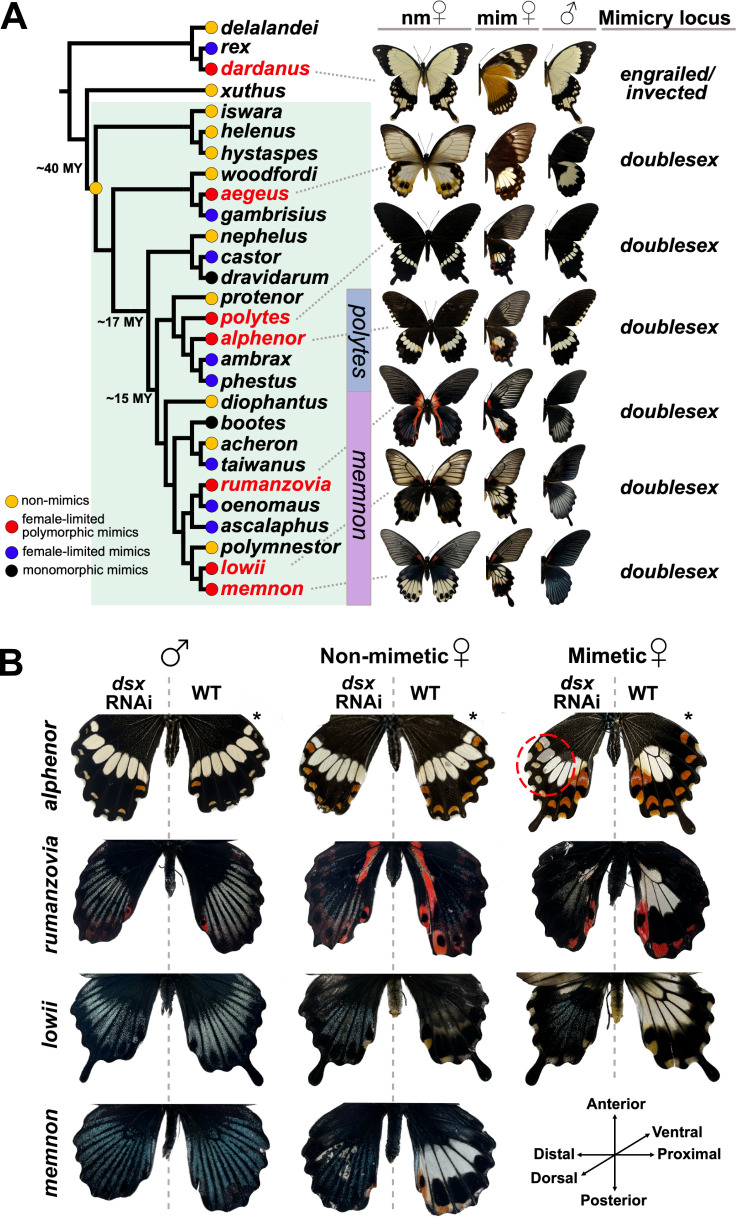 Figure 1
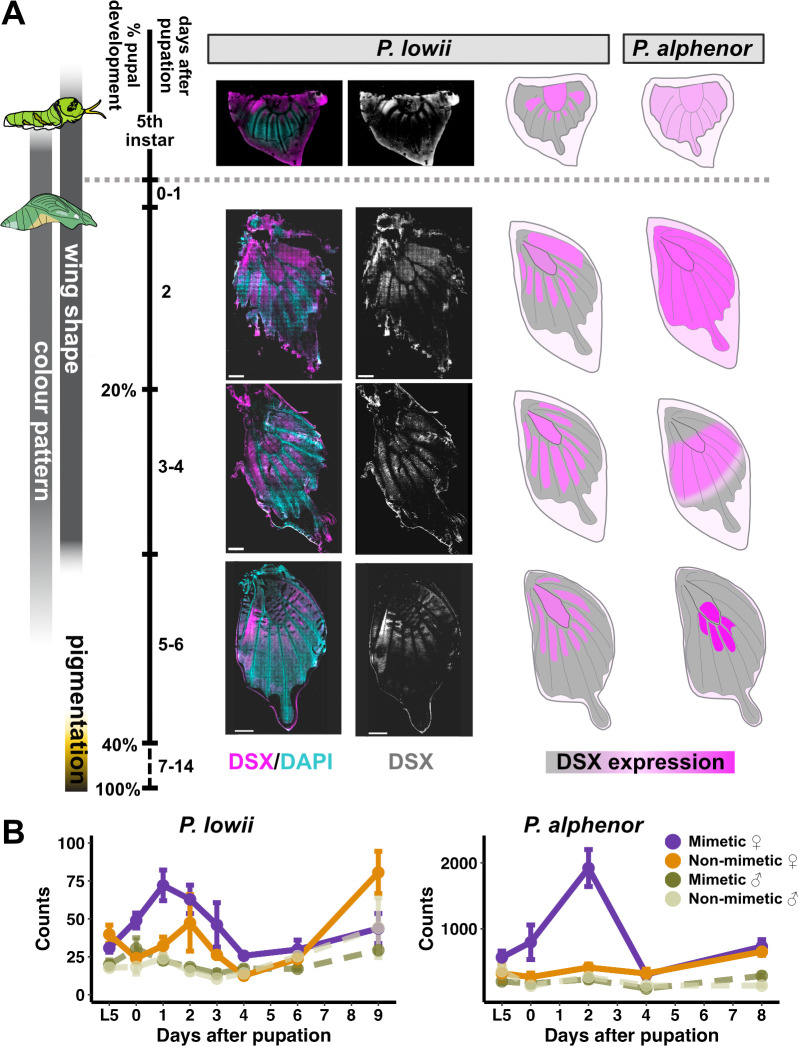 Figure 2
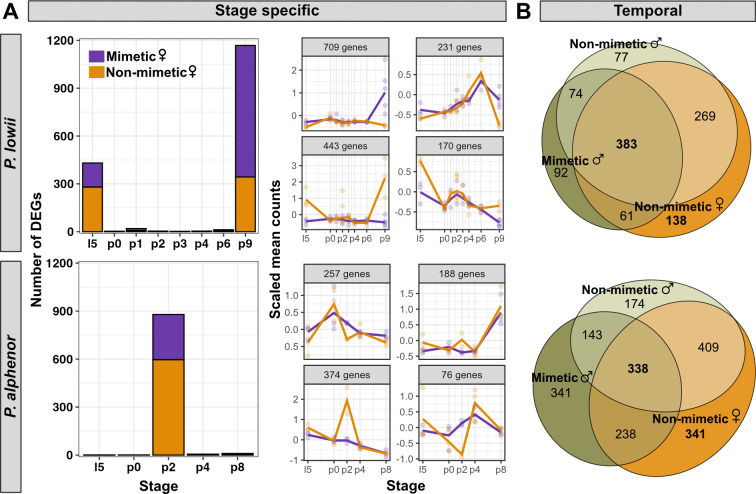 Figure 3
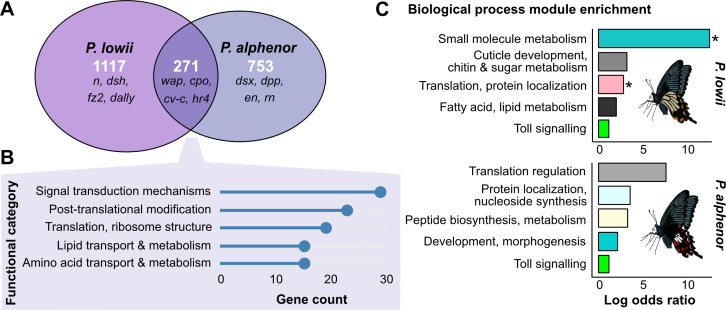 Figure 4
Peer Reviews
No public reviews on file for this paper yet. If you reviewed it on a platform where reviews are public (OpenReview, ICLR, NeurIPS, ICML), you can paste yours below so the community can read it here.
Videos
No videos yet. Explain this paper in a talk, walkthrough, or lecture? Add one.
Taxonomy
TopicsAnimal Behavior and Reproduction · Developmental Biology and Gene Regulation · Lepidoptera: Biology and Taxonomy