Retrospective Development of an AI Model Combining Ultrasound and Clinical Data for Pediatric Appendicitis Differentiation
Rongying Tan, Yongteng Li, Jianjun Wang, Jixian He, Xiaoting Ding, Yanlin Mou, Xi Zhang, Chen Zhong, Liucheng Yang, Kai Wu

TL;DR
An AI model combining ultrasound images and clinical data effectively differentiates complicated from uncomplicated appendicitis in children.
Contribution
A novel AI model integrating ultrasound and clinical data for diagnosing pediatric appendicitis is developed and validated.
Findings
The combined AI model achieved high accuracy (AUC: 0.940) in differentiating complicated from uncomplicated appendicitis.
The model's performance was comparable to senior surgeons and better than junior surgeons in internal validation.
Decision curve analysis confirmed the model's clinical utility over traditional methods.
Abstract
To differentiate complicated appendicitis (CA) from uncomplicated appendicitis (UA) in children, we developed and validated an artificial intelligence (AI) model using a multimodal approach integrating ultrasound images and clinical data. A retrospective analysis was performed on 372 pathologically confirmed pediatric appendicitis cases (230 male, 142 female) from three centers, all with preoperative abdominal ultrasound. Deep learning (DL) features and radiomic features were extracted from appendiceal ultrasound images using deep transfer learning (DTL) and conventional radiomic methods, respectively. We selected 12 radiomic features, 9 DL features, and 3 clinical features—namely, white blood cell count (WBC), neutrophil count (NEU), and C-reactive protein (CRP)—for building the machine learning classification model. Based on these features, four distinct models were constructed: the…
Genes, proteins, chemicals, diseases, species, mutations and cell lines named across the full text — each resolved to its canonical identifier and authoritative record.
Click any figure to enlarge with its caption.
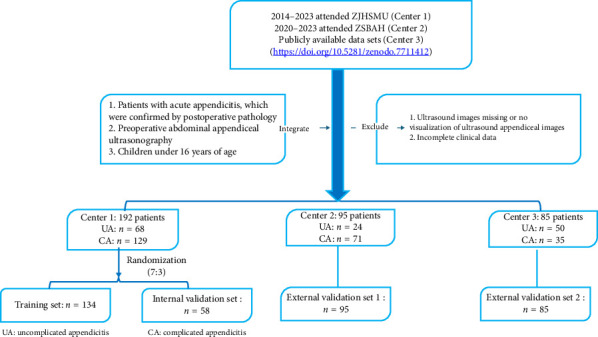 Figure 1
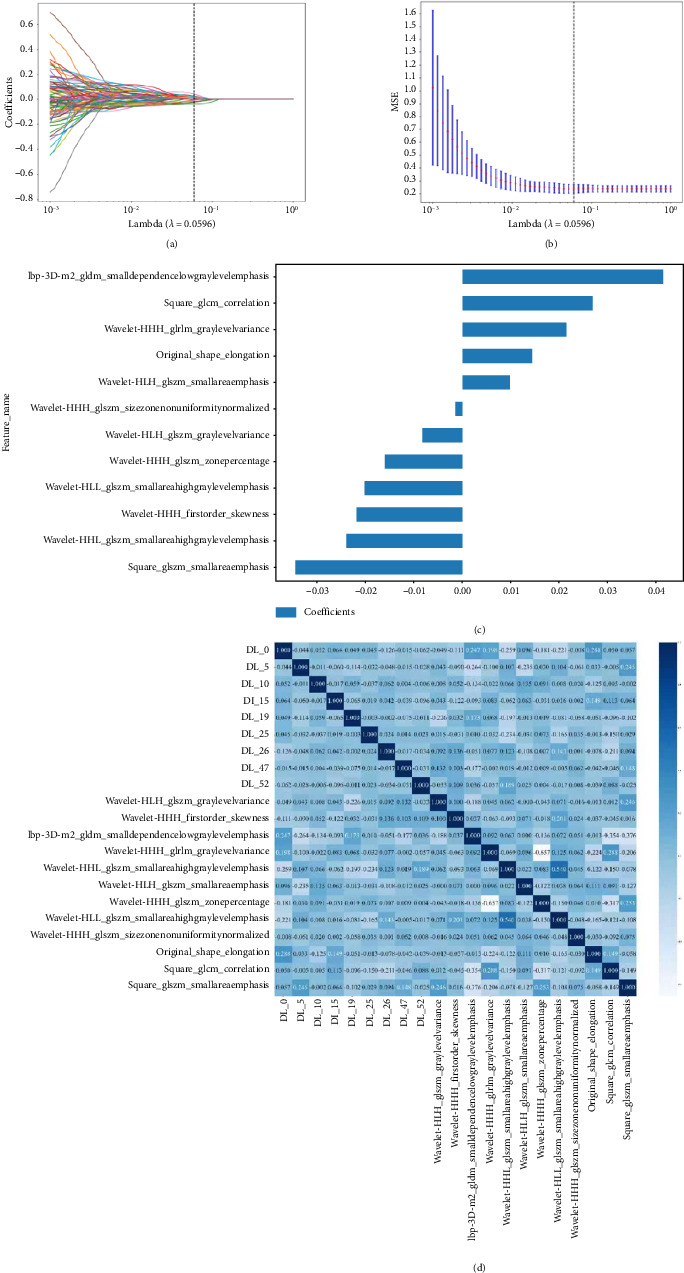 Figure 2
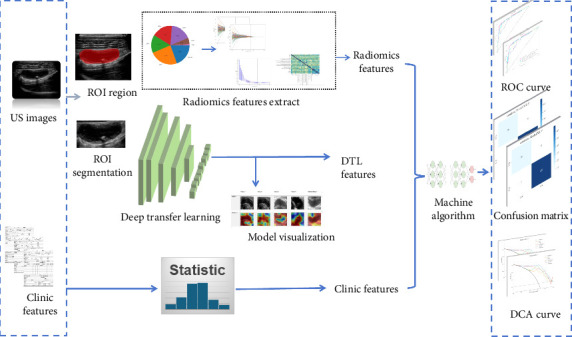 Figure 3
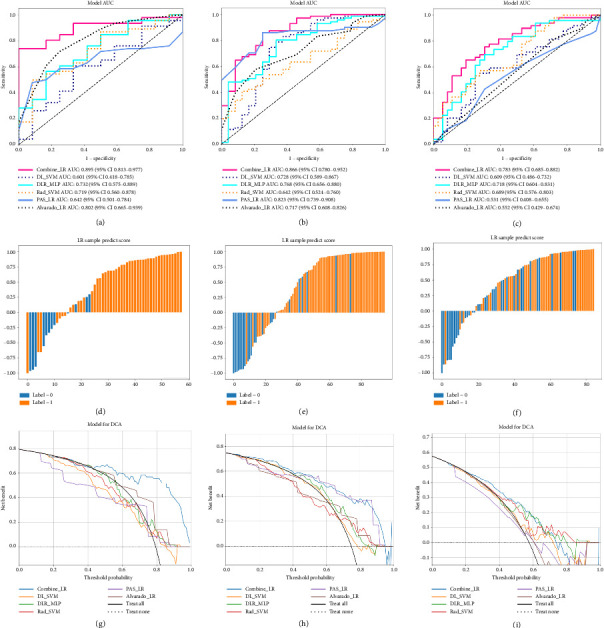 Figure 4
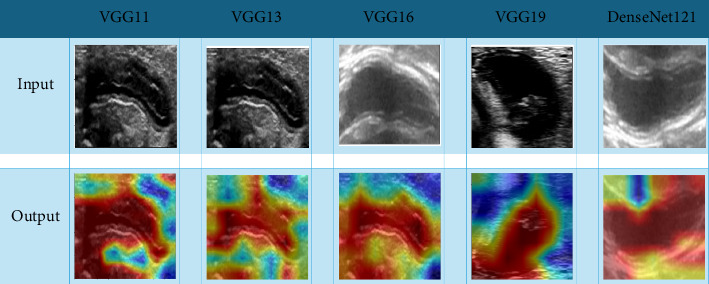 Figure 5
Peer Reviews
No public reviews on file for this paper yet. If you reviewed it on a platform where reviews are public (OpenReview, ICLR, NeurIPS, ICML), you can paste yours below so the community can read it here.
Videos
No videos yet. Explain this paper in a talk, walkthrough, or lecture? Add one.
Taxonomy
TopicsAppendicitis Diagnosis and Management · Artificial Intelligence in Healthcare and Education · Intraperitoneal and Appendiceal Malignancies