Quantitative Assessment of Temporomandibular Joint Space in Bruxers: A Cross-Sectional Radiographic Study
Ramnarayan B. K., Preeti Patil, Meenakshi Chowdhary, Savita A. M., Krishnanand P. S., Darshana S.

TL;DR
This study uses CBCT scans to show that bruxism causes measurable changes in TMJ space, suggesting early detection is possible.
Contribution
The study provides quantitative evidence of TMJ space alterations in bruxers using CBCT, revealing distinct displacement patterns.
Findings
Bruxers showed significantly reduced superior joint space (SJS) and increased posterior joint space (PJS) compared to nonbruxers.
Age was negatively correlated with SJS in bruxers, indicating progressive joint space narrowing.
Male bruxers had significantly higher PJS than female bruxers, suggesting gender-based differences in TMJ response to bruxism.
Abstract
Bruxism is a parafunctional habit that can lead to significant dental and musculoskeletal complications. Chronic bruxism may impose excessive and abnormal mechanical loads on the temporomandibular joint (TMJ), potentially altering joint morphology and joint space dimensions. These changes can be subtle and asymptomatic initially, but they may progress to disorders such as disc displacement, joint pain, and functional limitations. Radiographic evaluation of TMJ space, particularly through advanced imaging modalities such as cone beam computed tomography (CBCT), offers a noninvasive means of quantifying joint space alterations. However, the relationship between bruxism and TMJ space narrowing or asymmetry remains inadequately understood, with inconsistent findings across existing literature. To quantitatively evaluate the TMJ space in individuals with bruxism using CBCT and compare…
Genes, proteins, chemicals, diseases, species, mutations and cell lines named across the full text — each resolved to its canonical identifier and authoritative record.
Click any figure to enlarge with its caption.
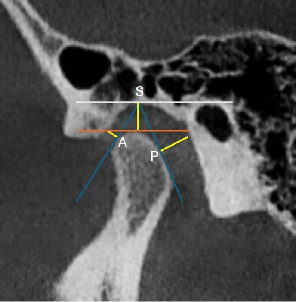 Figure 1
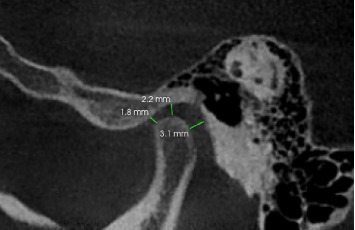 Figure 2
Peer Reviews
No public reviews on file for this paper yet. If you reviewed it on a platform where reviews are public (OpenReview, ICLR, NeurIPS, ICML), you can paste yours below so the community can read it here.
Videos
No videos yet. Explain this paper in a talk, walkthrough, or lecture? Add one.
Taxonomy
TopicsTemporomandibular Joint Disorders · Orthodontics and Dentofacial Orthopedics · Dental Radiography and Imaging