ScReNI: Single-cell Regulatory Network Inference Through Integrating scRNA-seq and scATAC-seq Data
Xueli Xu (徐雪丽), Yanran Liang (梁嫣然), Miaoxiu Tang (汤杪庥), Jiongliang Wang (王炯亮), Xi Wang (王茜), Yixue Li (李亦学), Jie Wang (王杰)

TL;DR
ScReNI is a new method that combines scRNA-seq and scATAC-seq data to infer cell-specific gene regulatory networks and identify cell-enriched regulators.
Contribution
ScReNI introduces a novel algorithm for integrating scRNA-seq and scATAC-seq data to infer single-cell regulatory networks and cell-enriched regulators.
Findings
ScReNI outperforms existing methods in inferring regulatory relationships and cell clustering.
ScReNI successfully identifies cell type-specific regulatory networks and cell-enriched regulators.
The method works with both paired and unpaired scRNA-seq and scATAC-seq datasets.
Abstract
Each cell possesses a unique gene regulatory network. However, limited methods exist for inferring cell-specific regulatory networks, particularly through the integration of single-cell RNA sequencing (scRNA-seq) and single-cell assay for transposase-accessible chromatin using sequencing (scATAC-seq) data. Herein, we develop a novel algorithm, named single-cell regulatory network inference (ScReNI), for inferring gene regulatory networks at the single-cell level. In ScReNI, the nearest neighbors algorithm is utilized to establish the neighboring cells for each cell, where nonlinear regulatory relationships between gene expression and chromatin accessibility are inferred through a modified random forest. ScReNI is designed to analyze both paired and unpaired datasets for scRNA-seq and scATAC-seq. ScReNI demonstrates more accurate regulatory relationships and outperforms existing…
Genes, proteins, chemicals, diseases, species, mutations and cell lines named across the full text — each resolved to its canonical identifier and authoritative record.
Click any figure to enlarge with its caption.
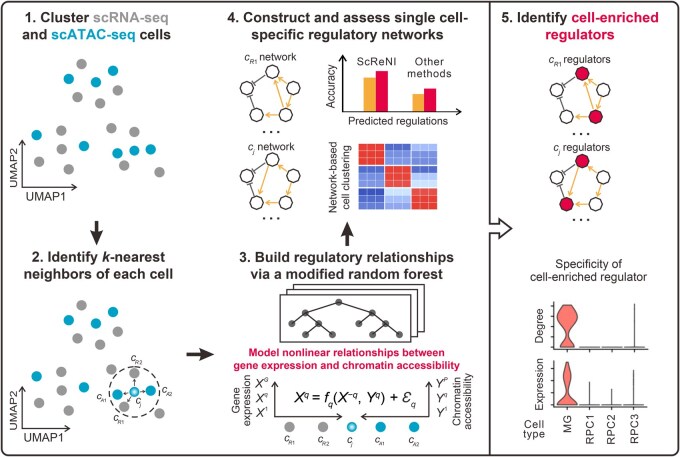 Figure 1
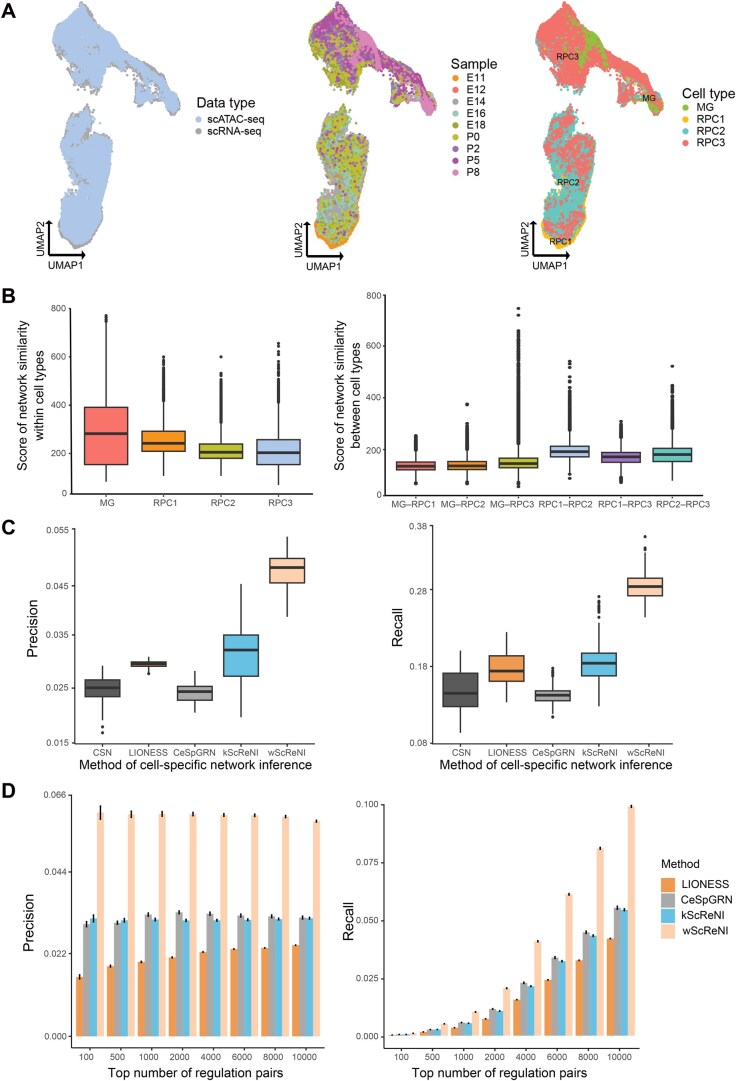 Figure 2
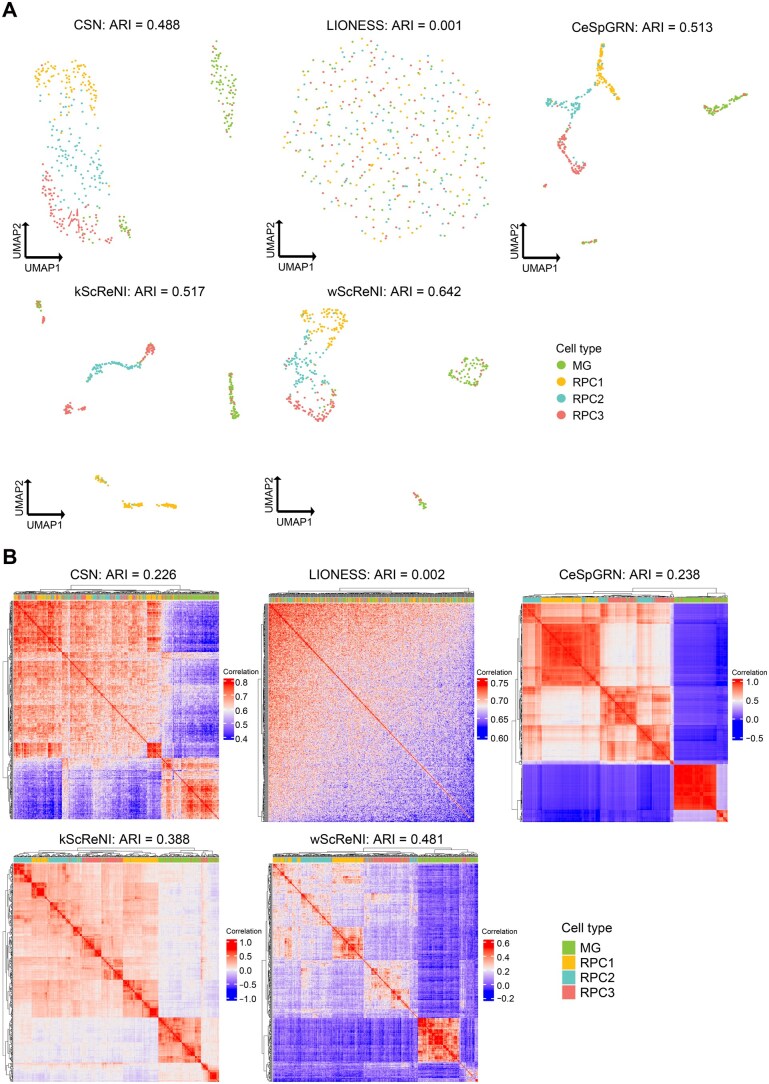 Figure 3
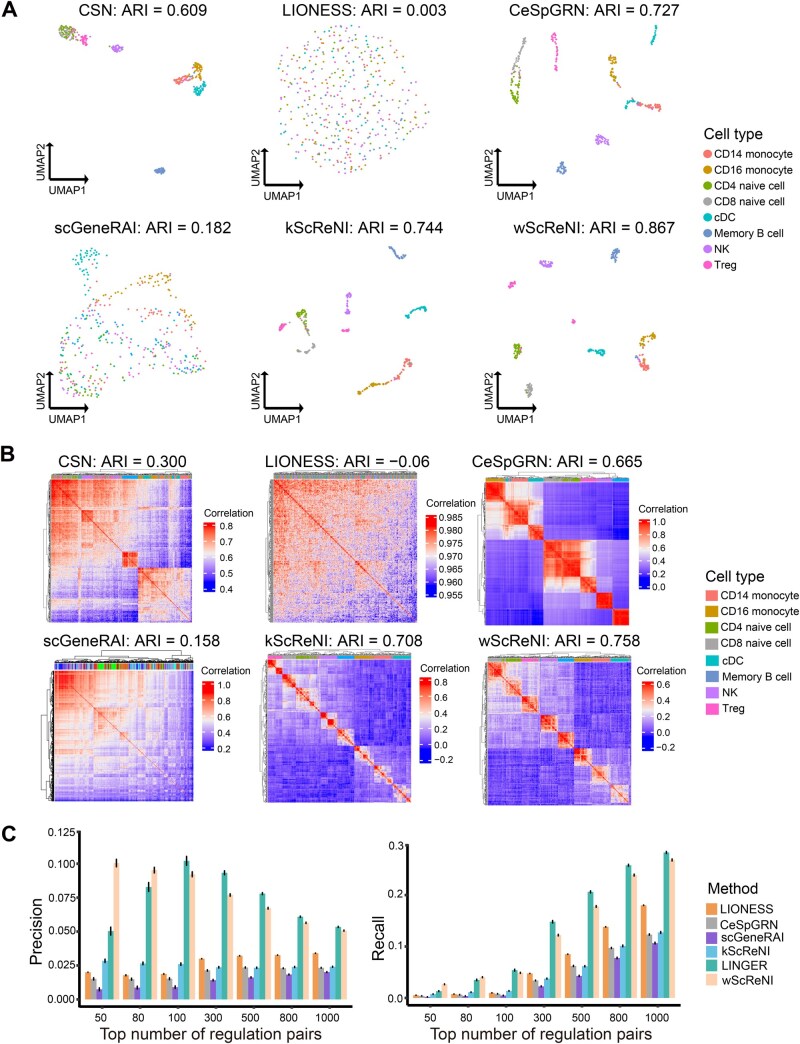 Figure 4
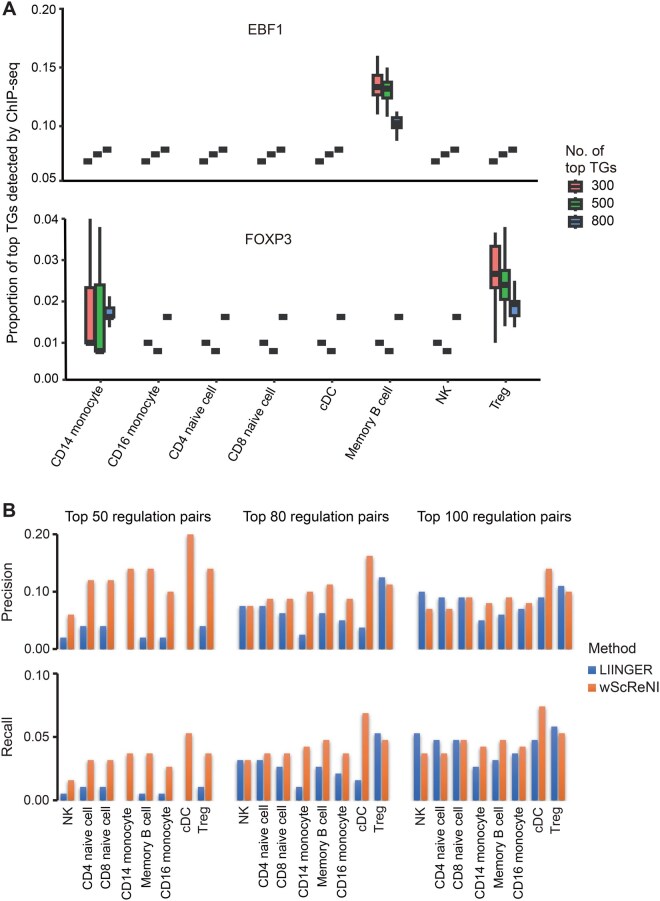 Figure 5
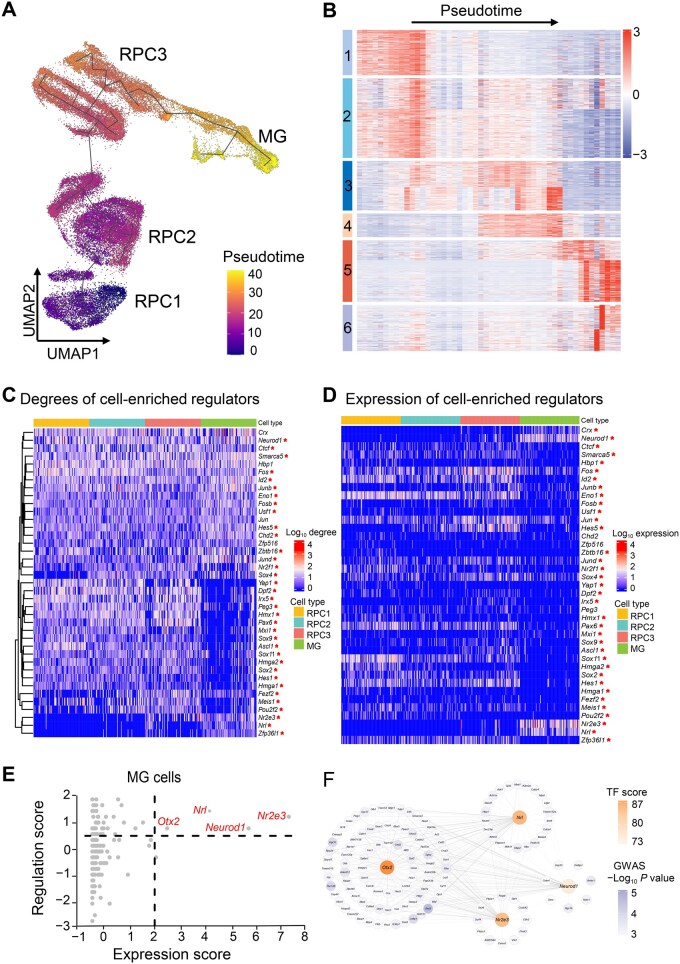 Figure 6
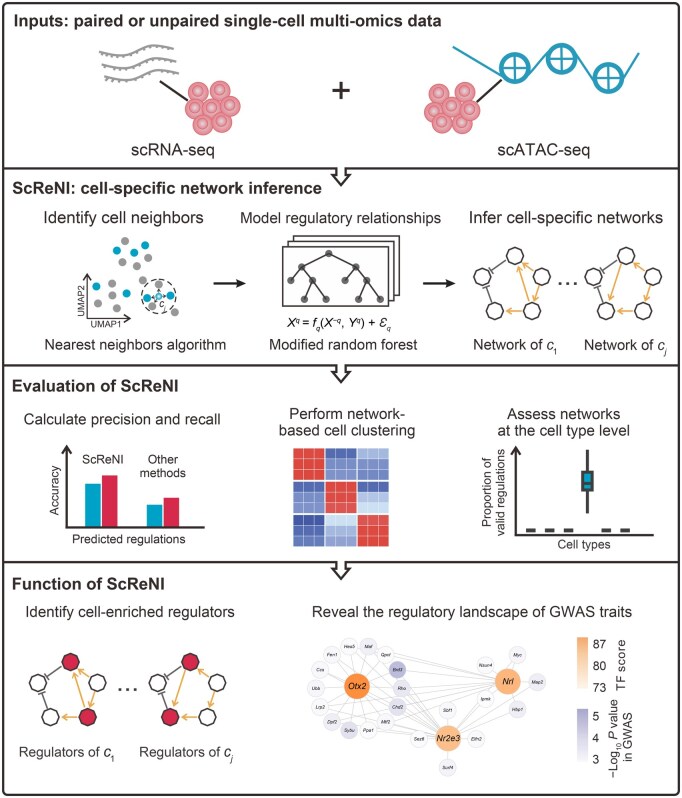 Figure 7
Peer Reviews
No public reviews on file for this paper yet. If you reviewed it on a platform where reviews are public (OpenReview, ICLR, NeurIPS, ICML), you can paste yours below so the community can read it here.
Videos
No videos yet. Explain this paper in a talk, walkthrough, or lecture? Add one.
Taxonomy
TopicsSingle-cell and spatial transcriptomics · Gene Regulatory Network Analysis · Gene expression and cancer classification