The genetic overlap between major depressive disorder, white blood cell counts and interleukin 6
Erik D Wiström, Kevin S O’Connell, Elise Koch, Piotr Jaholkowski, Guy F.L. Hindley, Nils Eiel Steen, Pravesh Parekh, Oleksandr Frei, Nadine Parker, Alexey Shadrin, Srdjan Djurovic, Anders Dale, Ole A Andreassen, Olav B Smeland

TL;DR
This study finds genetic links between depression, white blood cell counts, and interleukin 6, suggesting immune system involvement in depression.
Contribution
The study identifies shared genetic loci between MDD, white blood cell subtypes, and IL-6 using large-scale genetic data.
Findings
MDD has a significant positive genetic correlation with IL-6 levels.
Shared genetic loci were identified between MDD and specific white blood cell subtypes.
Polygenic risk scores suggest monocyte counts weakly increase MDD risk.
Abstract
Immune dysregulation may contribute to the pathophysiology of major depressive disorder (MDD). Here we aimed to identify genetic architecture jointly associated with MDD, white blood cell (WBC) count and interleukin 6 (IL-6) levels. Using genome-wide association studies summary statistics on MDD (330,173 cases and 727,595 controls), WBC counts (nmax = 563,946) and IL-6 (n = 52,654), we performed linkage disequilibrium (LD) score regression, bivariate causal mixture model (MiXeR), conjunctional false discovery rate (conjFDR) and Mendelian randomization (MR) analyses. Additionally, we used an independent MDD dataset (9,582 cases and 84,670 controls) from the Norwegian Mother, Father and Child Cohort Study for polygenic risk score (PRS) analyses. We found a significant positive genetic correlation (rg = 0.22) between MDD and IL-6. MiXeR estimates indicated substantial differences in the…
Genes, proteins, chemicals, diseases, species, mutations and cell lines named across the full text — each resolved to its canonical identifier and authoritative record.
Click any figure to enlarge with its caption.
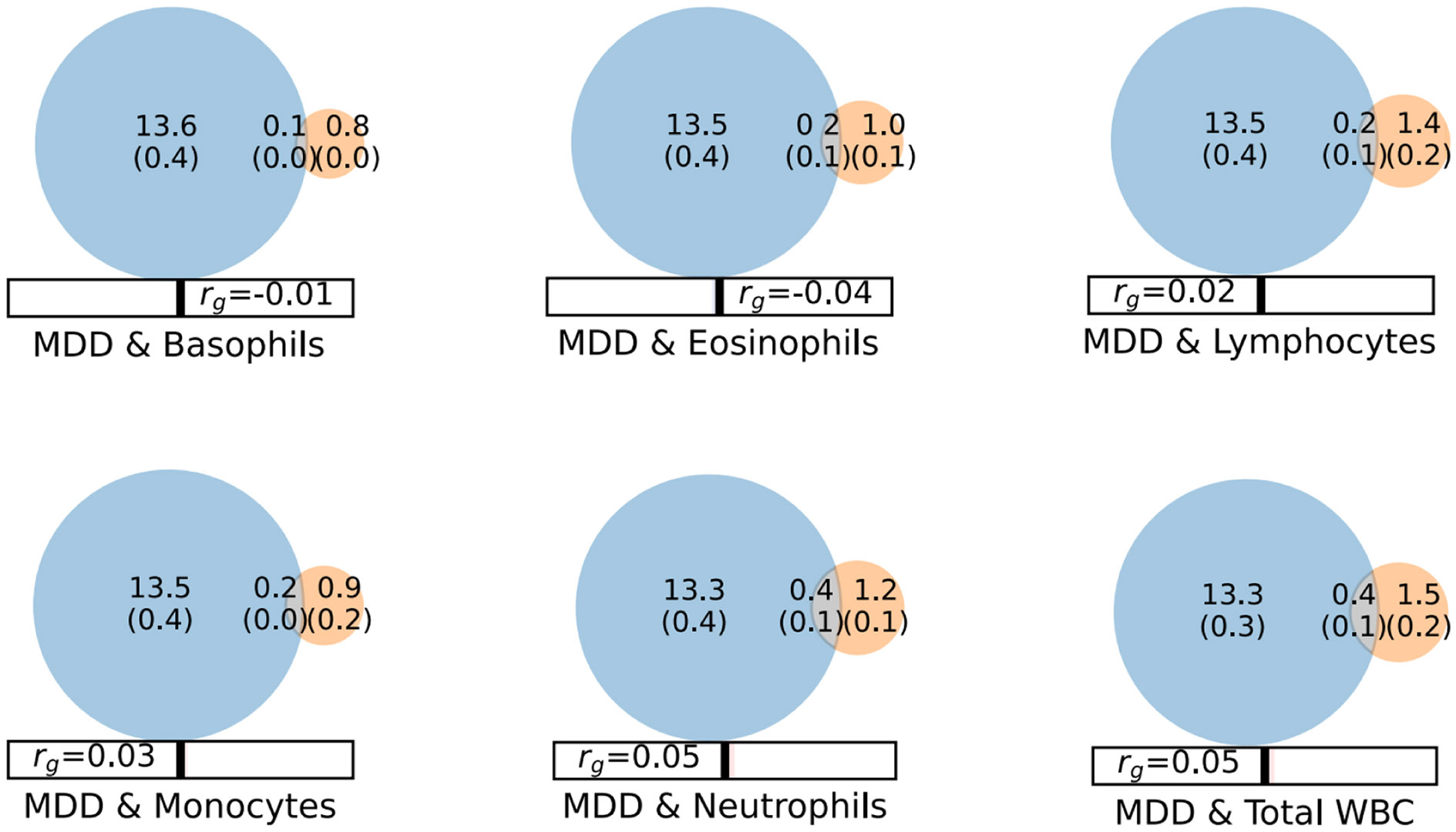 Figure 1
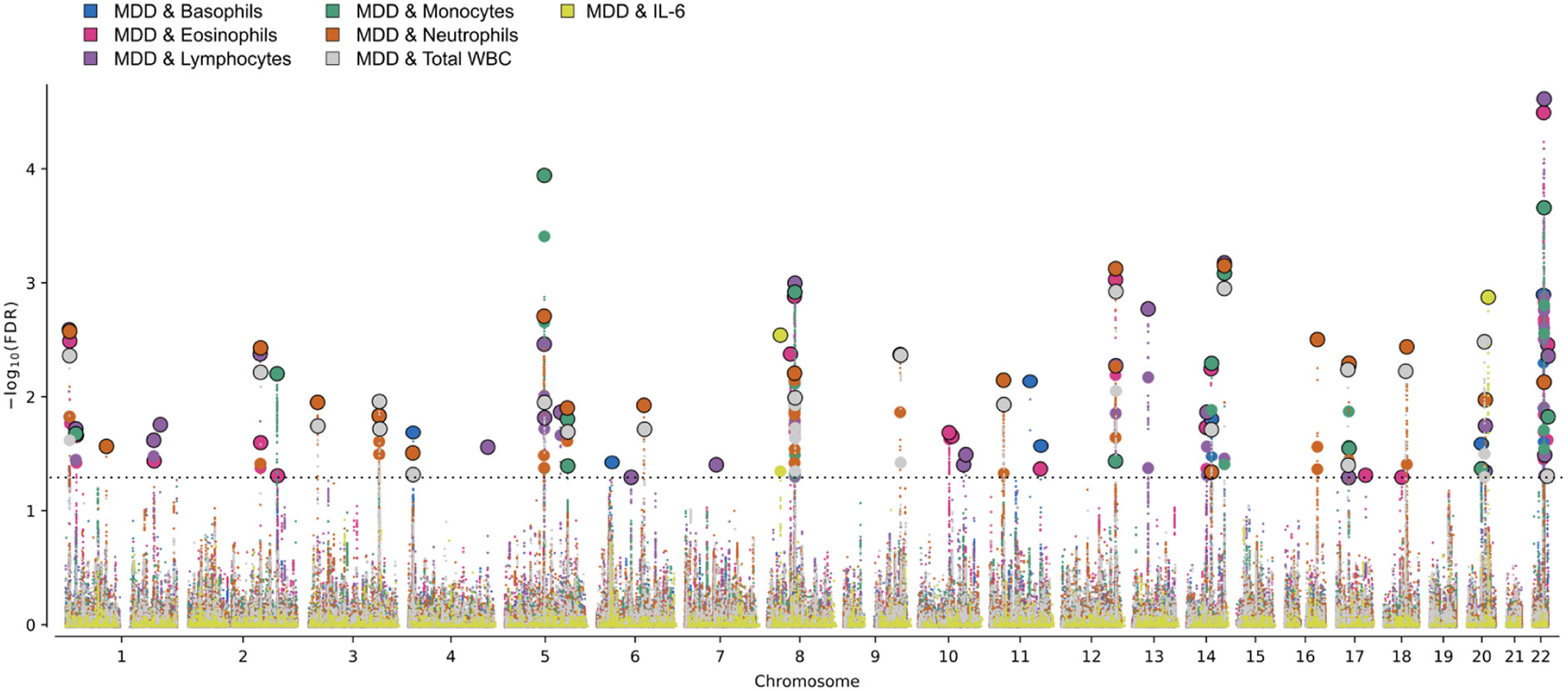 Figure 2
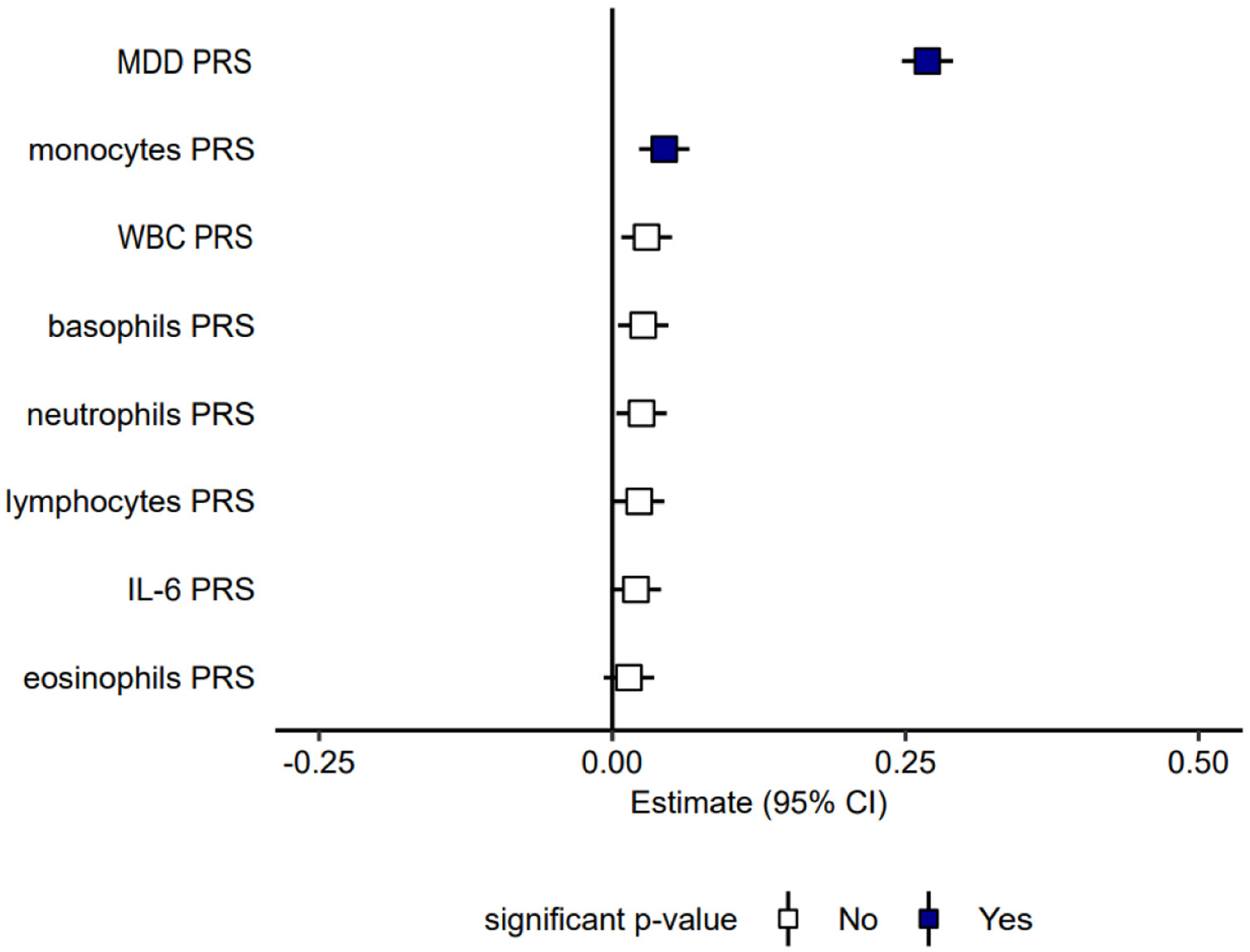 Figure 3
Peer Reviews
No public reviews on file for this paper yet. If you reviewed it on a platform where reviews are public (OpenReview, ICLR, NeurIPS, ICML), you can paste yours below so the community can read it here.
Videos
No videos yet. Explain this paper in a talk, walkthrough, or lecture? Add one.
Taxonomy
TopicsTryptophan and brain disorders · Stress Responses and Cortisol · Birth, Development, and Health