TGx-DDI (toxicogenomic DNA damage-inducing) biomarker validation: multi-site ring trial supporting regulatory use
Xiaotong Wang, Christine E Crute, Ashley Allemang, Jiri Aubrecht, Florence Burleson, Yasmin Dietz-Baum, Lena Dorsheimer, Albert J Fornace, Roland Frötschl, Ulrike Hemmann, Constance A Mitchell, Stefan Pfuhler, Andrew Williams, Lorreta Yun-Tien Lin, Syril Pettit, Carole L Yauk

TL;DR
The TGx-DDI biomarker improves genotoxicity testing by accurately identifying DNA-damaging compounds using gene expression data from human cells.
Contribution
TGx-DDI is a validated transcriptomic biomarker with high reproducibility and specificity for genotoxicity assessment across multiple laboratories.
Findings
TGx-DDI achieved 100% sensitivity, 86% specificity, and 91% accuracy in classifying DNA damage-inducing compounds.
High interlaboratory agreement and strong transcriptomic data correlation were observed across four sites.
The biomarker reliably classified compounds regardless of the study site, demonstrating robustness and reproducibility.
Abstract
Standard in vitro genotoxicity assays often suffer from low specificity, leading to irrelevant positive findings that require costly in vivo follow-up studies. The TGx-DDI (Toxicogenomic DNA Damage-Inducing) transcriptomic biomarker was developed to address this limitation by identifying DNA damage-inducing compounds through gene expression profiling in human TK6 lymphoblastoid cells. To qualify TGx-DDI as a reliable, reproducible biomarker for augmenting genotoxicity hazard assessment, a multi-site ring-trial was conducted across four laboratories using 14 blinded test compounds and standardized protocols. TK6 cells were exposed to three concentrations of each compound, followed by RNA extraction and digital nucleic acid counting using the NanoString nCounter platform. A three-pronged bioinformatics approach—Nearest Shrunken Centroid Probability Analysis, Principal Component Analysis,…
Genes, proteins, chemicals, diseases, species, mutations and cell lines named across the full text — each resolved to its canonical identifier and authoritative record.
Click any figure to enlarge with its caption.
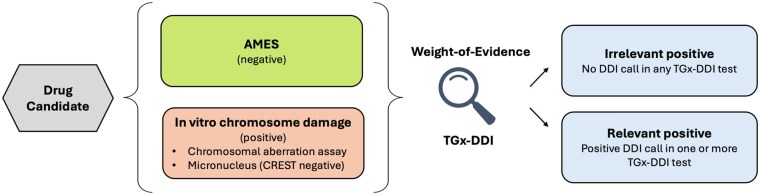 Figure 1
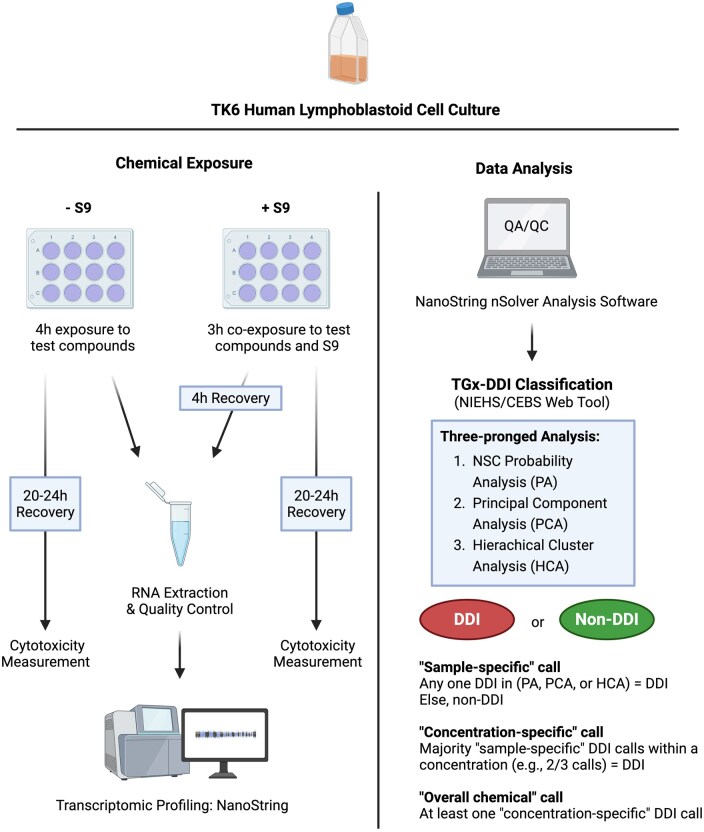 Figure 2
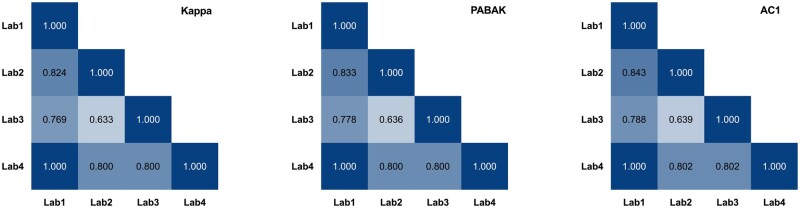 Figure 3
Peer Reviews
No public reviews on file for this paper yet. If you reviewed it on a platform where reviews are public (OpenReview, ICLR, NeurIPS, ICML), you can paste yours below so the community can read it here.
Videos
No videos yet. Explain this paper in a talk, walkthrough, or lecture? Add one.
Taxonomy
TopicsMolecular Biology Techniques and Applications · Carcinogens and Genotoxicity Assessment · Computational Drug Discovery Methods