Predictive Value of Digital Neuropsychological and Gait Assessments on Shunt Outcome in Patients With Idiopathic Normal Pressure Hydrocephalus: Prospective Cohort Study
Hanlin Cai, Keru Huang, Zilong Hao, Na Hu, Hui Gao, Feng Yang, Shiyu Feng, Linyuan Qin, Ruihan Wang, Xiyue Yang, Shan Wang, Qian Liao, Yi Liu, Dong Zhou, Liangxue Zhou, Jiaojiang He, Qin Chen

TL;DR
Digital tests for thinking and walking can better predict if shunt surgery will help patients with a brain fluid disorder called iNPH.
Contribution
Digital neuropsychological and gait assessments show higher predictive accuracy for shunt outcomes in iNPH patients compared to traditional methods.
Findings
Digital tests like one-back and Stroop showed significant improvement after ELD.
Combined digital tests outperformed traditional methods in predicting shunt response (AUC=0.92 vs 0.55).
Greater improvement in digital tests was linked to better shunt outcomes (adjusted odds ratio=0.98).
Abstract
The cerebrospinal fluid drainage test is crucial for evaluating patients with idiopathic normal pressure hydrocephalus (iNPH) before shunt surgery, while traditional methods have low sensitivity. This study aimed to evaluate the improvement of cognitive and gait parameters after external lumbar drainage (ELD) through the application of digital tests and to investigate the predictive value of digital cognitive and gait assessments for shunt outcomes. A total of 70 patients with probable iNPH were enrolled from the West China Hospital of Sichuan University. All patients underwent traditional and digital cognitive and gait assessments at baseline and 3 days after ELD. Thirty-nine patients received lumboperitoneal shunt and were followed up at 3, 6, and 12 months postoperatively using the modified Rankin scale and the Japanese iNPH grading scales. Firth logistic regression models and…
Genes, proteins, chemicals, diseases, species, mutations and cell lines named across the full text — each resolved to its canonical identifier and authoritative record.
Click any figure to enlarge with its caption.
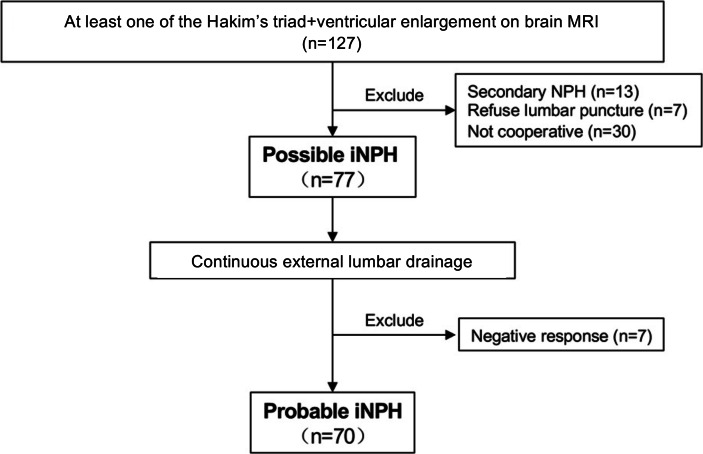 Figure 1
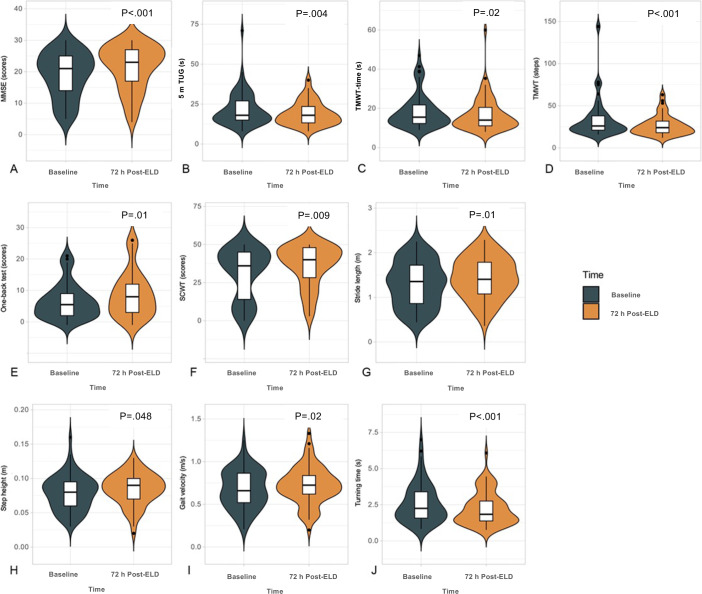 Figure 2
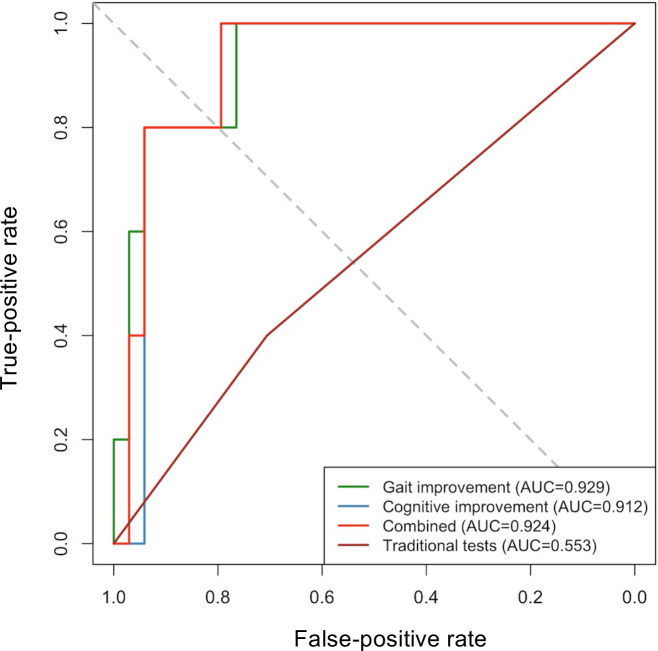 Figure 3
Peer Reviews
No public reviews on file for this paper yet. If you reviewed it on a platform where reviews are public (OpenReview, ICLR, NeurIPS, ICML), you can paste yours below so the community can read it here.
Videos
No videos yet. Explain this paper in a talk, walkthrough, or lecture? Add one.
Taxonomy
TopicsCerebrospinal fluid and hydrocephalus · Cardiovascular and Diving-Related Complications · Intracerebral and Subarachnoid Hemorrhage Research