Case Report: Compound heterozygous CEP152 c.3346-5T>C variant and chr15 deletion causing recurrent MCPH–SCKS in a Chinese pregnant woman across two consecutive pregnancies
Tao Zhang, Hua Yuan, Xiaoliang Shi, Yao He, Haitao Pan, Yongxing Zhong, Jintang Zhang, Zhen Yang, Yunyan Ke, Yan Chen, Feng Zhang

TL;DR
A Chinese couple had two pregnancies with fetuses affected by a rare genetic disorder due to the same CEP152 gene variants, confirming the condition's recurrence risk and the need for thorough genetic testing.
Contribution
First report of identical compound heterozygous CEP152 variants causing MCPH–SCKS in two consecutive pregnancies.
Findings
Compound heterozygous CEP152 variants (c.3346–5T>C and 129.6 kb deletion) were confirmed to cause MCPH–SCKS in two pregnancies.
Minigene assays showed the c.3346–5T>C variant leads to abnormal splicing, supporting its pathogenicity.
The case confirms a 25% recurrence risk for autosomal recessive disorders and highlights the importance of CNV analysis in prenatal diagnosis.
Abstract
Primary autosomal recessive microcephaly and Seckel syndrome spectrum (MCPH–SCKS) disorders are a group of autosomal recessive conditions characterized by severe growth retardation and neurodevelopmental impairment. CEP152 variants are established causes of both microcephaly and Seckel syndrome phenotypes, but the pathogenicity of different variant combinations and their clinical recurrence patterns require further verification with additional cases. Clinical and genetic analyses were performed for two consecutive pregnancies of a non-consanguineous Chinese couple. Fetal phenotypes were evaluated by ultrasound and fetal MRI sequentially; copy number variation sequencing (CNV-seq) was used to detect large genomic variants, whole-exome sequencing (WES) to screen for point variants, and minigene splicing assays to characterize the functional impact of key variants. Fetuses in both…
Genes, proteins, chemicals, diseases, species, mutations and cell lines named across the full text — each resolved to its canonical identifier and authoritative record.
Click any figure to enlarge with its caption.
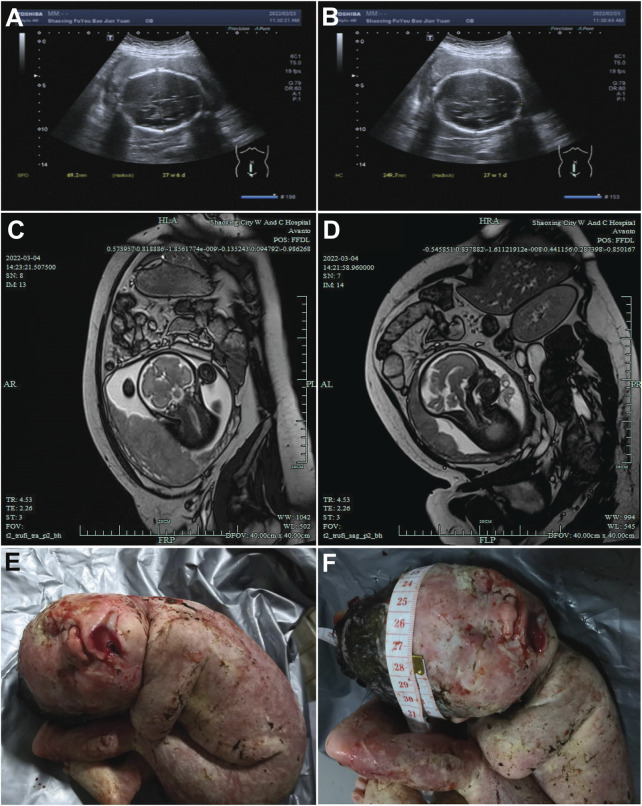 Figure 1
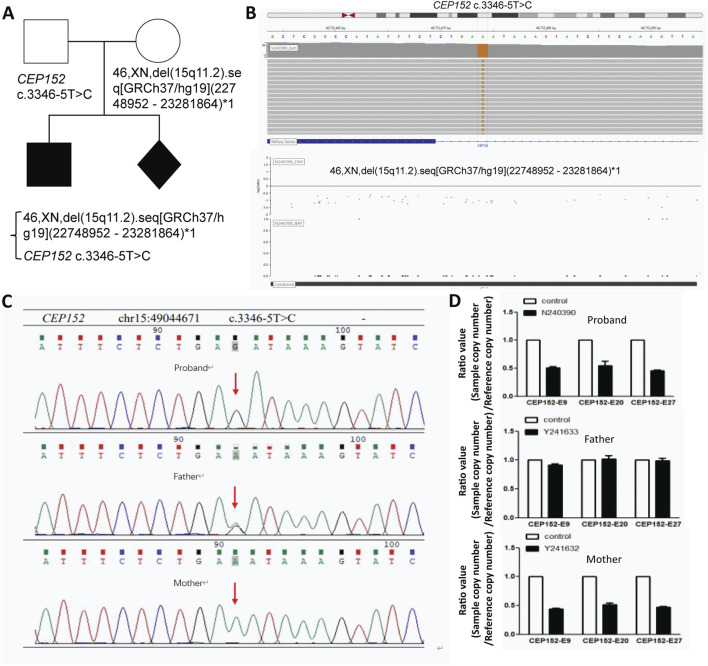 Figure 2
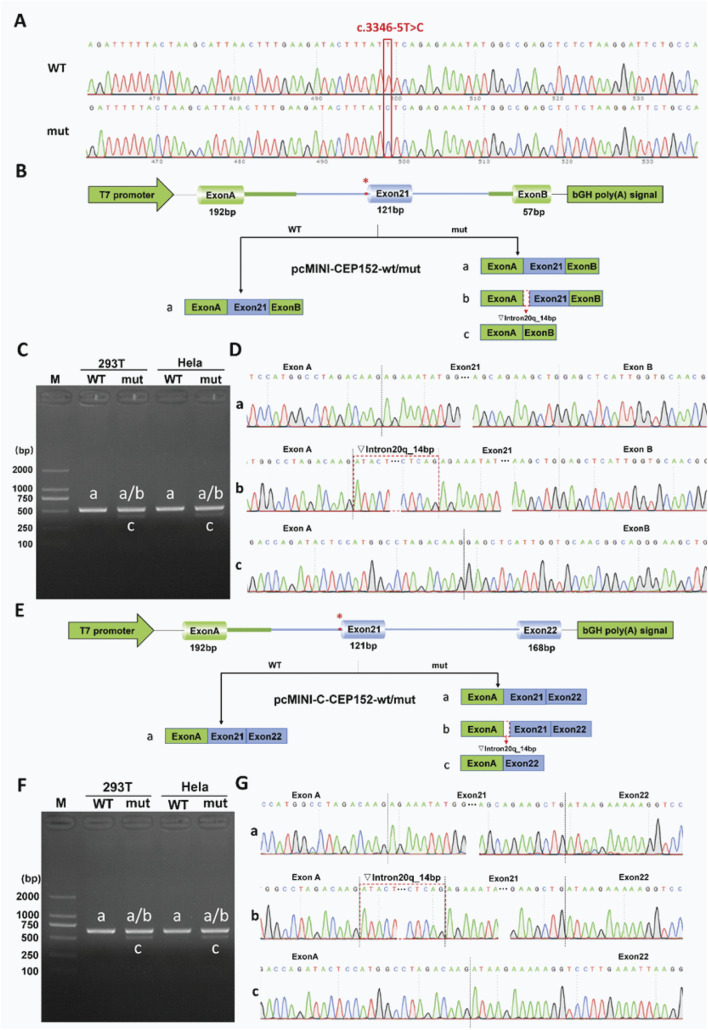 Figure 3
Peer Reviews
No public reviews on file for this paper yet. If you reviewed it on a platform where reviews are public (OpenReview, ICLR, NeurIPS, ICML), you can paste yours below so the community can read it here.
Videos
No videos yet. Explain this paper in a talk, walkthrough, or lecture? Add one.
Taxonomy
TopicsHereditary Neurological Disorders · Protein Tyrosine Phosphatases · Genetic and Kidney Cyst Diseases