On the performance of active RIS-enhanced NOMA systems with spectrum sharing mechanisms
Minh Tran, Minh Bui Vu, Sang Quang Nguyen

TL;DR
This paper analyzes how active reconfigurable intelligent surfaces improve performance in shared-spectrum NOMA networks, showing better reliability and efficiency than traditional methods.
Contribution
Proposes an ARIS-assisted NOMA architecture and derives performance metrics validated by simulations and optimization.
Findings
ARIS outperforms PRIS and OMA in outage probability, throughput, energy consumption, and efficiency.
Closed-form expressions for key performance metrics are derived and validated with simulations.
Optimized power allocation minimizes outage probability in ARIS-assisted NOMA systems.
Abstract
This paper presents a comprehensive performance analysis of a downlink non-orthogonal multiple access (NOMA) network assisted by an active reconfigurable intelligent surface (ARIS) in a cognitive spectrum-sharing scenario. Unlike conventional passive RIS (PRIS), the ARIS can both adjust phase shifts and amplify incident signals, thereby mitigating inter-user interference and overcoming multiplicative fading. We consider a two-user secondary network coexisting with a primary user, where the base station communicates with the secondary users via the ARIS. Closed-form expressions for the outage probability (OP), throughput, energy efficiency (EE), and an approximation for the ergodic data rate (EDR) are derived under Nakagami-m fading, along with asymptotic OP analysis to reveal the achievable diversity order. We also formulate and solve an optimization problem for the NOMA power…
Genes, proteins, chemicals, diseases, species, mutations and cell lines named across the full text — each resolved to its canonical identifier and authoritative record.
Click any figure to enlarge with its caption.
 Figure 1
 Figure 2
 Figure 3
 Figure 4
 Figure 5
 Figure 6
 Figure 7
 Figure 8
 Figure 9
 Figure 10
 Figure 11
 Figure 12
 Figure 13
 Figure 14
 Figure 15
 Figure 16
 Figure 17
 Figure 18
 Figure 19
 Figure 20
 Figure 21
 Figure 22
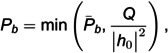 Figure 23
 Figure 24
 Figure 25
 Figure 26
 Figure 27
 Figure 28
 Figure 29
 Figure 30
 Figure 31
 Figure 32
 Figure 33
 Figure 34
 Figure 35
 Figure 36
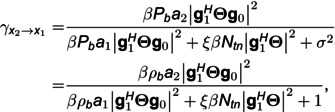 Figure 37
 Figure 38
 Figure 39
 Figure 40
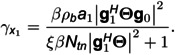 Figure 41
 Figure 42
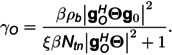 Figure 43
 Figure 44
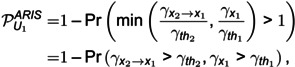 Figure 45
 Figure 46
 Figure 47
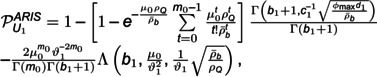 Figure 48
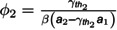 Figure 49
 Figure 50
Peer Reviews
No public reviews on file for this paper yet. If you reviewed it on a platform where reviews are public (OpenReview, ICLR, NeurIPS, ICML), you can paste yours below so the community can read it here.
Videos
No videos yet. Explain this paper in a talk, walkthrough, or lecture? Add one.
Taxonomy
TopicsAdvanced Wireless Communication Technologies · PAPR reduction in OFDM · IoT Networks and Protocols