The strength of Nesterov’s accelerated gradient in boosting transferability of stealthy adversarial attacks
Chen Lin, Sheng Long

TL;DR
This paper introduces a new method for creating stealthy adversarial attacks that work well in black-box settings without visible changes.
Contribution
The novel framework Diff-AdaNAG combines Nesterov’s Accelerated Gradient with diffusion mechanisms to enhance transferability and stealthiness in adversarial attacks.
Findings
Diff-AdaNAG improves transferability of adversarial attacks without sacrificing stealthiness.
The method outperforms existing approaches in both white-box and black-box attack scenarios.
The diffusion mechanism helps generate imperceptible adversarial examples aligned with natural data.
Abstract
Deep neural networks have been shown to be highly vulnerable to adversarial examples—inputs crafted to mislead models by adding subtle, human-imperceptible perturbations. Transferability and stealthiness are two crucial metrics for evaluating adversarial attacks. However, these goals often conflict: examples with high transferability typically exhibit noticeable adversarial noise, while those with imperceptible perturbations tend to perform poorly in black-box attacks. To tackle this, we propose Diff-AdaNAG, a novel framework that introduces Nesterov’s Accelerated Gradient (NAG) into diffusion-based adversarial example generation. Specifically, the diffusion mechanism guides the generation process toward the natural data distribution, achieving stealthy attacks with imperceptible adversarial examples. Meanwhile, an adaptive step-size strategy is utilized to harness the strong…
Genes, proteins, chemicals, diseases, species, mutations and cell lines named across the full text — each resolved to its canonical identifier and authoritative record.
Click any figure to enlarge with its caption.
 Figure 1
 Figure 2
 Figure 3
 Figure 4
 Figure 5
 Figure 6
 Figure 7
 Figure 8
 Figure 9
 Figure 10
 Figure 11
 Figure 12
 Figure 13
 Figure 14
 Figure 15
 Figure 16
 Figure 17
 Figure 18
 Figure 19
 Figure 20
 Figure 21
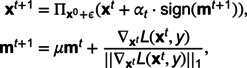 Figure 22
 Figure 23
 Figure 24
 Figure 25
 Figure 26
 Figure 27
 Figure 28
 Figure 29
 Figure 30
 Figure 31
 Figure 32
 Figure 33
 Figure 34
 Figure 35
 Figure 36
 Figure 37
 Figure 38
 Figure 39
 Figure 40
 Figure 41
 Figure 42
 Figure 43
 Figure 44
 Figure 45
 Figure 46
 Figure 47
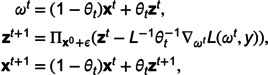 Figure 48
 Figure 49
 Figure 50
Peer Reviews
No public reviews on file for this paper yet. If you reviewed it on a platform where reviews are public (OpenReview, ICLR, NeurIPS, ICML), you can paste yours below so the community can read it here.
Videos
No videos yet. Explain this paper in a talk, walkthrough, or lecture? Add one.
Taxonomy
TopicsAdversarial Robustness in Machine Learning · Ethics and Social Impacts of AI · Generative Adversarial Networks and Image Synthesis