Therapeutic failure of multidrug therapy for leprosy: A retrospective case series in a hyperendemic Brazilian City
Andrea Maia Fernandes de Araújo Fonseca, Patrícia Sammarco Rosa, Andrea de Faria Fernandes Belone, Cleverson Teixeira Soares, Daniele de Faria Ferreira Bertoluci, Suzana Madeira Diório, Luciana Raquel Vincenzi Fachin, Rodrigo Feliciano do Carmo, Francisco Bezerra de Almeida Neto

TL;DR
A study in Brazil found that many leprosy patients still had active infection and worsening nerve damage after completing extended multidrug therapy, suggesting current treatment criteria are insufficient.
Contribution
The study demonstrates that time-based multidrug therapy for leprosy may not ensure bacteriological clearance or prevent disability, advocating for post-treatment biological assessments.
Findings
Half of patients had persistent M. leprae activity after 24-dose MDT, as shown by histopathology and molecular tests.
64% of mice inoculations confirmed viable bacilli post-treatment, indicating ongoing infection.
Neurological disability increased from 53% to 87% in patients after completing MDT.
Abstract
Leprosy remains endemic in many regions despite the global rollout of multidrug therapy (MDT). Clinical cure—defined by completion of a time-based MDT regimen—may not reflect proper bacteriological clearance, particularly in patients with persistent reactions or neurological symptoms. We aimed to assess subclinical disease activity in multibacillary patients who completed an extended 24-dose MDT course. In this retrospective case series, between January 2016 and November 2023, 131 multibacillary patients treated at the Petrolina Infectious Diseases Service (SEINPE) underwent skin biopsy upon completing 24 monthly MDT doses. Disease activity was evaluated by histopathology (H&E and Fite–Faraco staining; n = 123), slit-skin smear with bacilloscopic and morphological indices (BI, n = 126; MI, n = 74), qPCR for M. leprae (n = 101), and nude mice footpad inoculation (n = 45) at Instituto…
Genes, proteins, chemicals, diseases, species, mutations and cell lines named across the full text — each resolved to its canonical identifier and authoritative record.
Click any figure to enlarge with its caption.
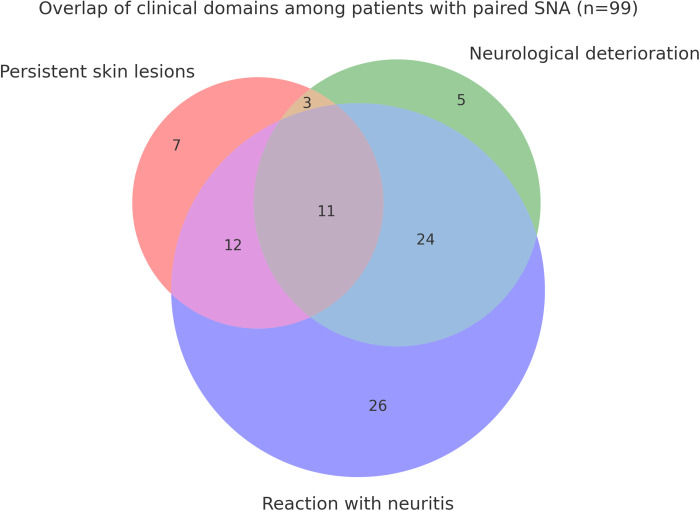 Figure 1
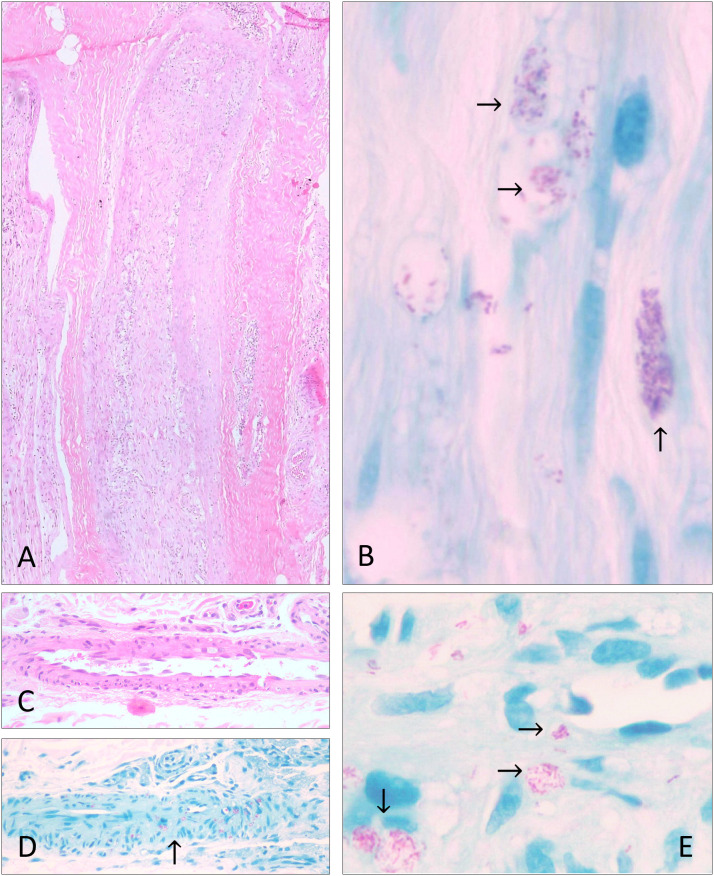 Figure 2
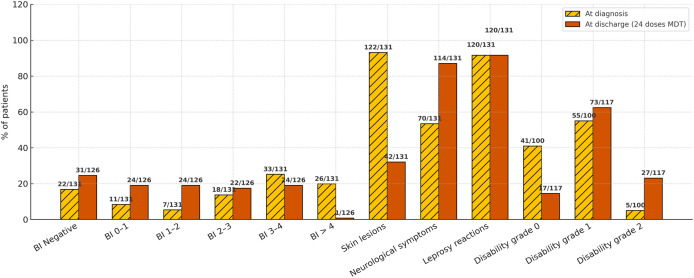 Figure 3
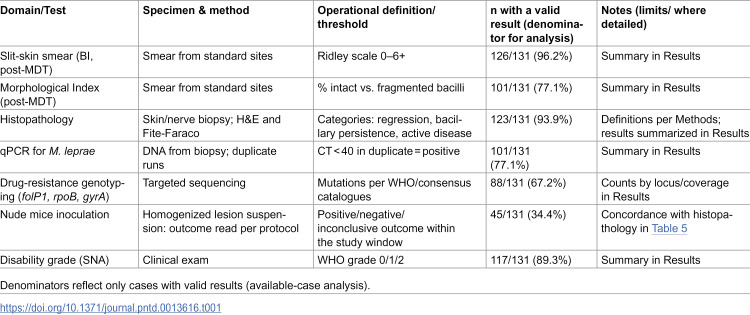 Figure 4
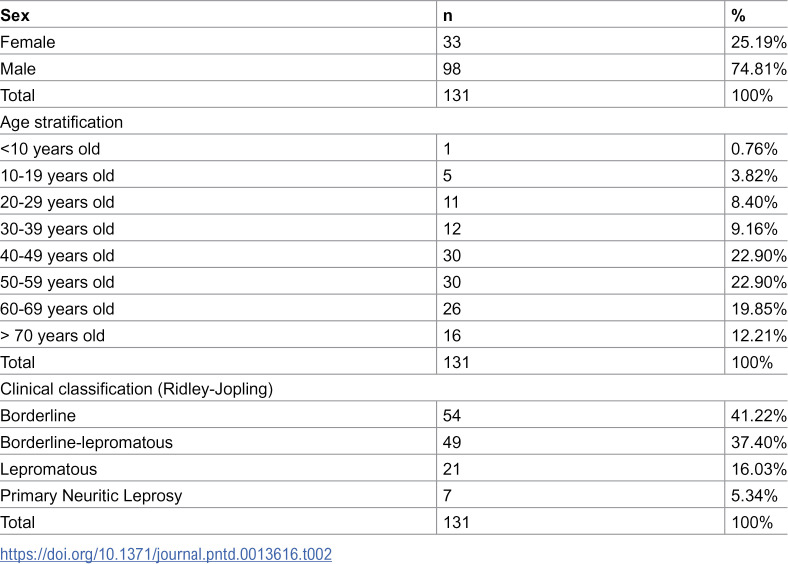 Figure 5
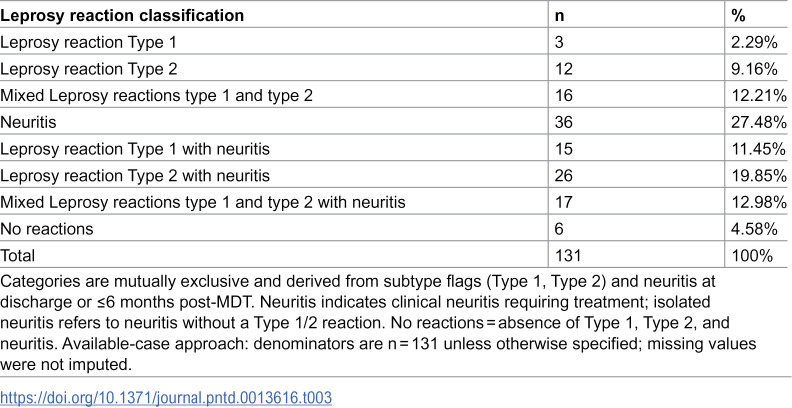 Figure 6
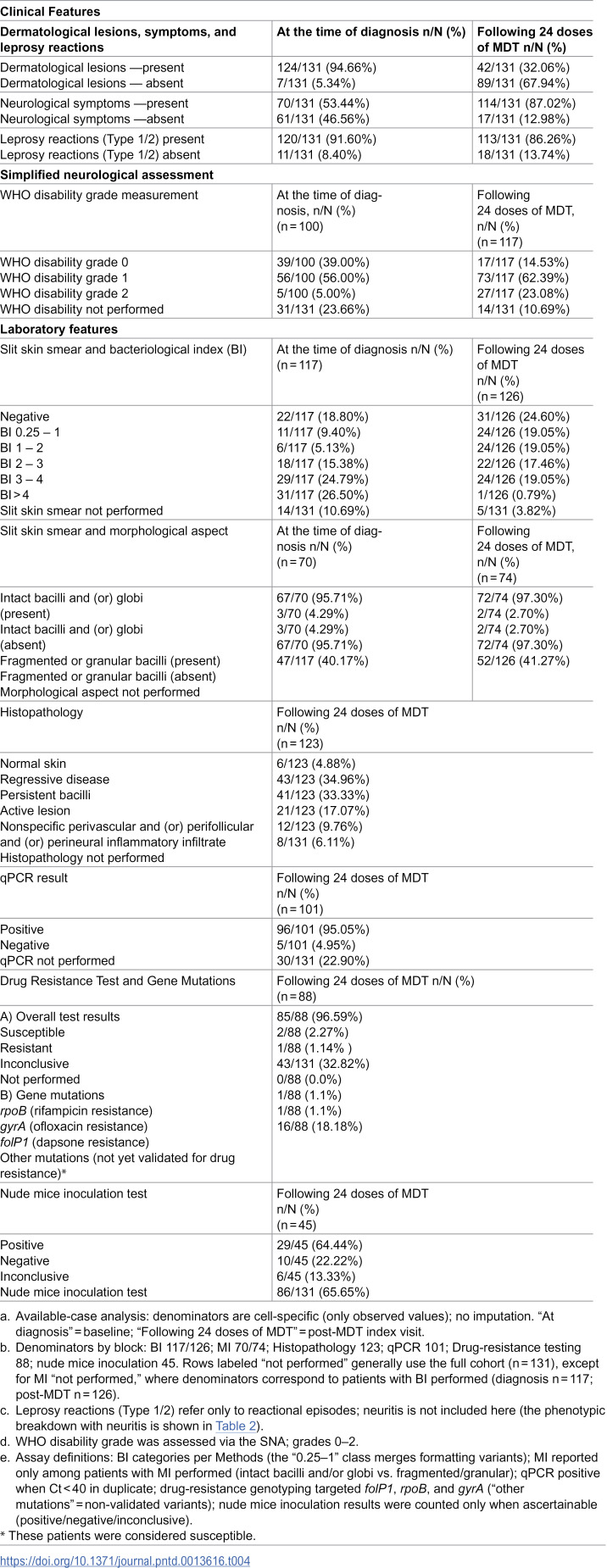 Figure 7
 Figure 8
Peer Reviews
No public reviews on file for this paper yet. If you reviewed it on a platform where reviews are public (OpenReview, ICLR, NeurIPS, ICML), you can paste yours below so the community can read it here.
Videos
No videos yet. Explain this paper in a talk, walkthrough, or lecture? Add one.
Taxonomy
TopicsLeprosy Research and Treatment · Epilepsy research and treatment · Pain Management and Opioid Use