Disruption of yqhG attenuates virulence in methicillin-resistant Staphylococcus aureus by compromising membrane stability and oxidative stress resistance
Jianhua Liao, Jun Cheng, Baoqing Liu, Yuzhi Shao, Chunyan Meng, Armel Jackson Seukep, Armel Jackson Seukep, Armel Jackson Seukep

TL;DR
Deleting the yqhG gene in MRSA reduces its ability to cause disease by weakening its defenses against stress and damaging its cell membrane.
Contribution
The study identifies yqhG as a novel target for combating MRSA by showing its role in virulence and stress resistance.
Findings
Deleting yqhG in MRSA reduced bacterial burden and improved survival in a mouse model.
The yqhG mutant showed impaired membrane integrity and increased sensitivity to oxidative stress.
Genetic complementation restored the mutant's defects, confirming yqhG's role in stress resistance.
Abstract
The growing prevalence of methicillin-resistant Staphylococcus aureus (MRSA) infections, coupled with the increasing resistance to existing antibiotics, underscores the critical need for novel therapeutic approaches to combat this pathogen. In this study, the role of yqhG, a conserved gene encoding a periplasmic protein, in MRSA virulence and stress adaptation was investigated. yqhG deletion in MRSA significantly attenuated virulence in a murine infection model, leading to reduced bacterial burden in infected organs and improved host survival. In vitro, the yqhG mutant exhibited impaired membrane integrity, reduced motility, and increased sensitivity to oxidative stress, but did not affect biofilm formation. These defects were fully restored upon genetic complementation. These findings highlight the critical role of yqhG in maintaining MRSA’s ability to withstand host-imposed stresses,…
Genes, proteins, chemicals, diseases, species, mutations and cell lines named across the full text — each resolved to its canonical identifier and authoritative record.
Click any figure to enlarge with its caption.
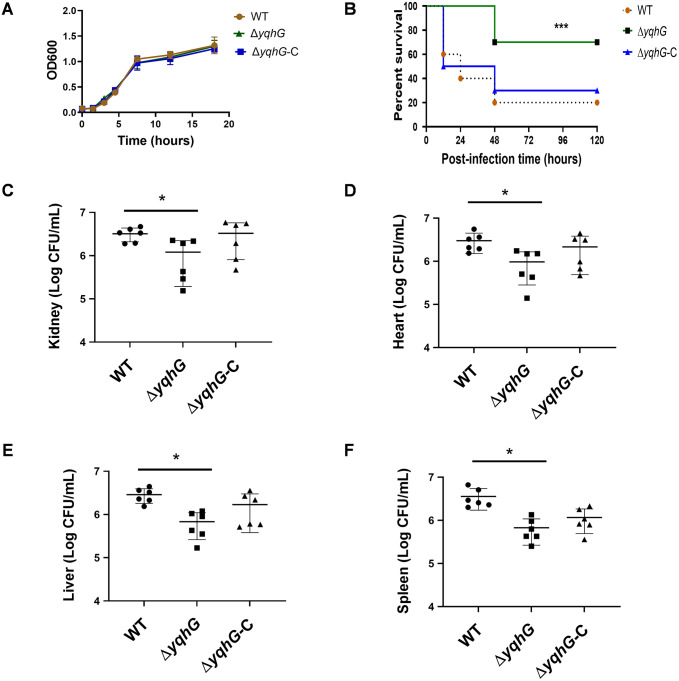 Figure 1
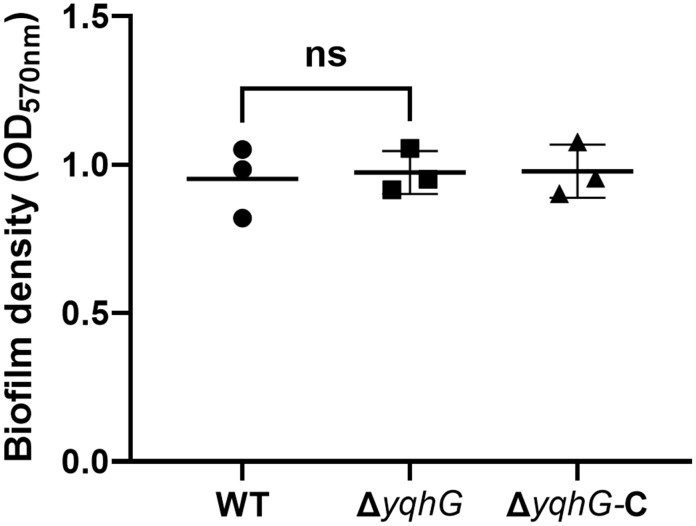 Figure 2
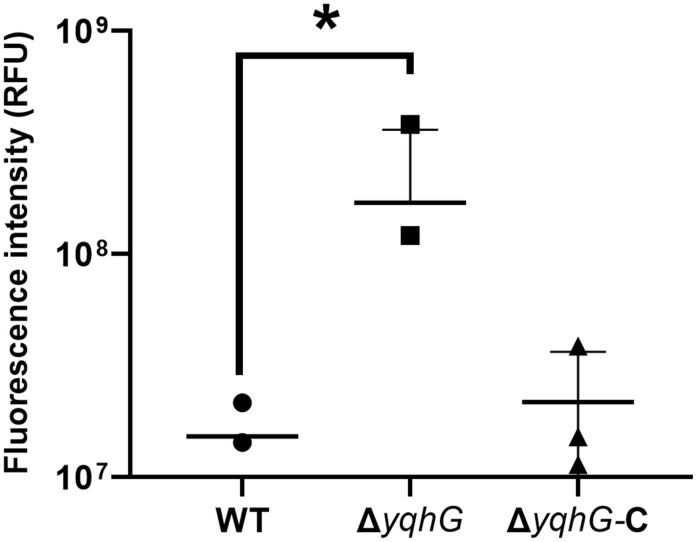 Figure 3
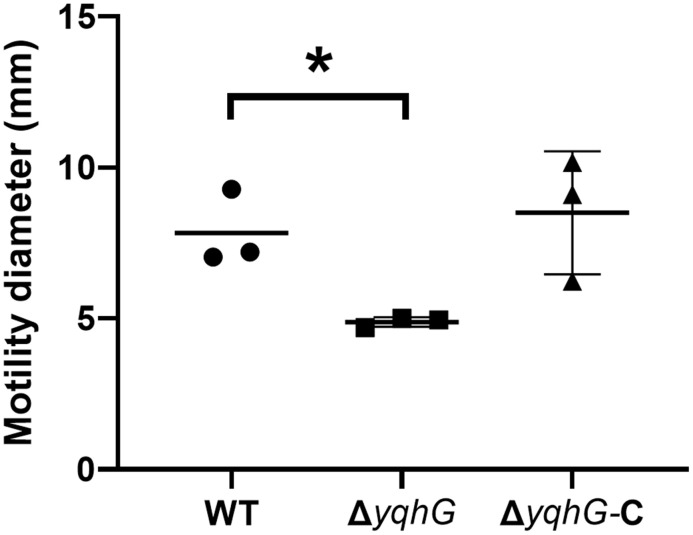 Figure 4
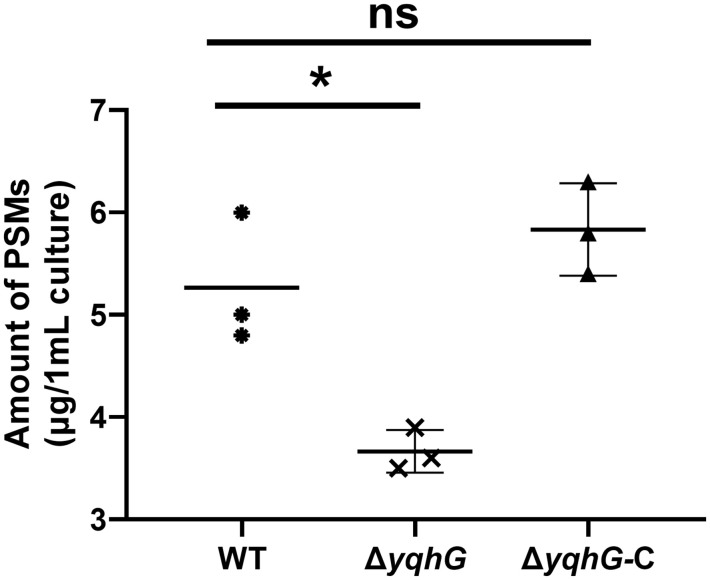 Figure 5
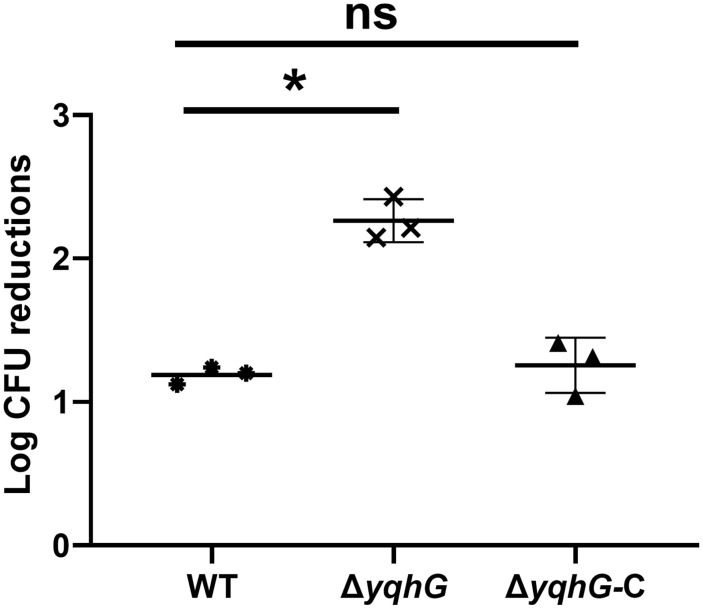 Figure 6
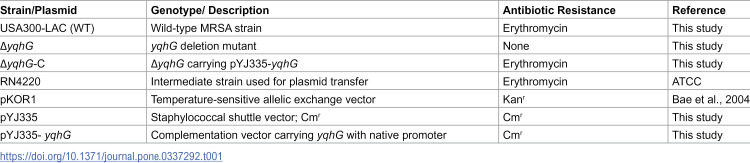 Figure 7
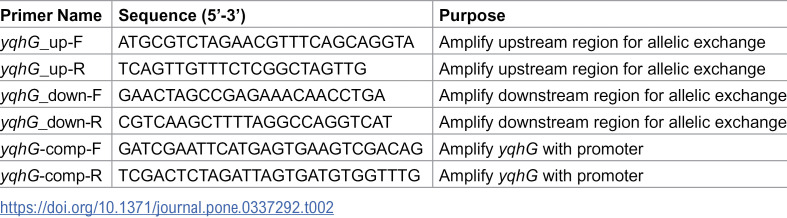 Figure 8
Peer Reviews
No public reviews on file for this paper yet. If you reviewed it on a platform where reviews are public (OpenReview, ICLR, NeurIPS, ICML), you can paste yours below so the community can read it here.
Videos
No videos yet. Explain this paper in a talk, walkthrough, or lecture? Add one.
Taxonomy
TopicsAntimicrobial Resistance in Staphylococcus · Bacterial biofilms and quorum sensing · Streptococcal Infections and Treatments