Splicing-aware scRNA-Seq resolution reveals execution-ready programs in effector Tregs
Daniil K. Lukyanov, Evgeniy S. Egorov, Valeriia V. Kriukova, Denis Syrko, Victor V. Kotliar, Kristin Ladell, David A. Price, Andre Franke, Dmitry M. Chudakov, Inna Lavrik, Inna Lavrik, Inna Lavrik

TL;DR
A new method called SANSARA improves scRNA-Seq analysis by considering spliced and unspliced mRNA, revealing hidden features in immune cells like Tregs.
Contribution
SANSARA introduces splicing-aware analysis to scRNA-Seq, uncovering new insights into cell states and functions.
Findings
Effector Tregs have high levels of spliced mRNAs for genes like IL10RA, CD38, and LFA-1, indicating readiness for function.
FOXP3 and Helios show complementary splicing patterns in Tregs, suggesting coordinated regulation.
SANSARA reveals splicing heterogeneity in Th1 and cytotoxic CD4+ T cell subsets.
Abstract
Single-cell RNA sequencing (scRNA-Seq) provides valuable insights into cell biology. However, current scRNA-Seq analytic approaches do not distinguish between spliced and unspliced mRNA at the level of dimensionality reduction. RNA velocity paradigm suggests that the presence of unspliced mRNA reflects transitional cell states, informative for studies of dynamic processes such as embryogenesis or tissue regeneration. Alternatively, stable cell subsets may also maintain translationally repressed spliced mRNA (e.g., in P-bodies) and/or unspliced mRNA reservoirs for prompt initiation of transcription-independent expression. Thus, functional cell subsets may differ not only in the current levels of actively produced mRNAs, but also in which mRNAs and in what forms are stored in the nucleus and cytoplasm. To enable splicing-aware analysis of scRNA-Seq data, we developed a method called…
Genes, proteins, chemicals, diseases, species, mutations and cell lines named across the full text — each resolved to its canonical identifier and authoritative record.
Click any figure to enlarge with its caption.
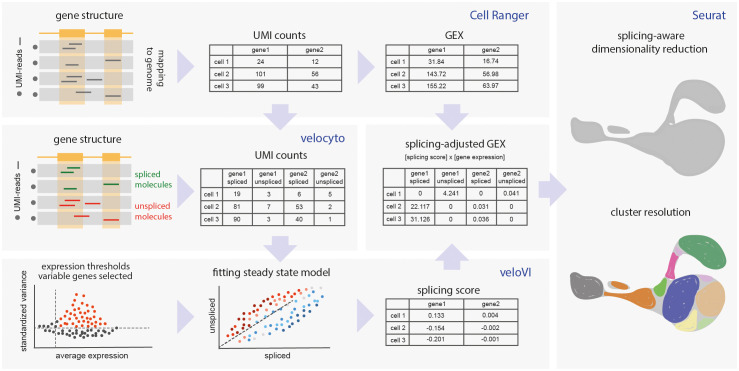 Figure 1
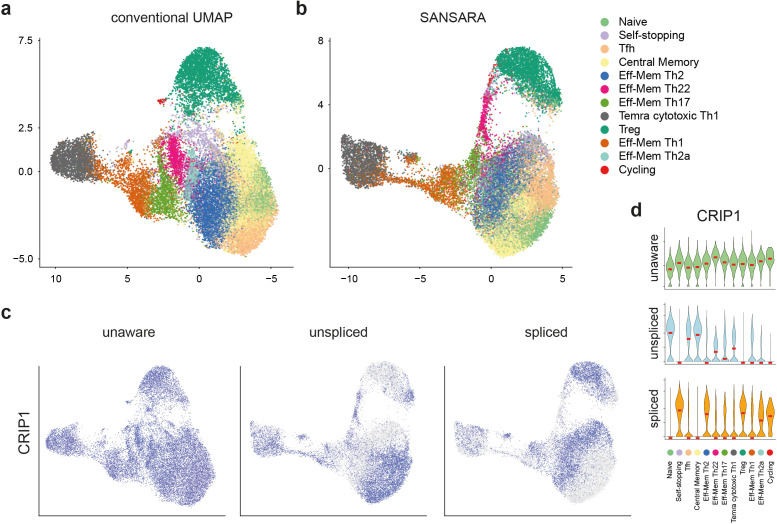 Figure 2
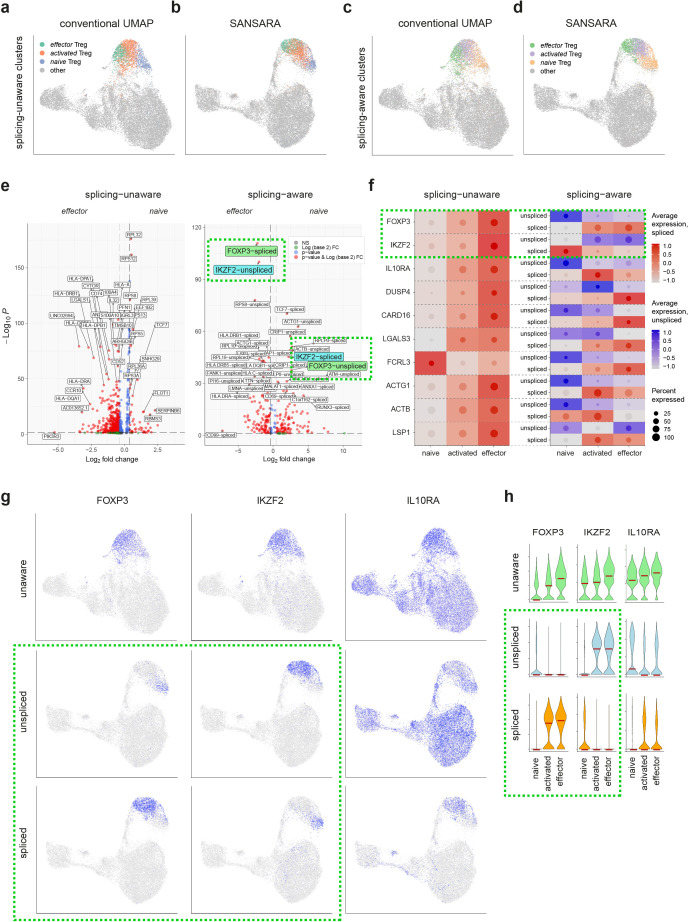 Figure 3
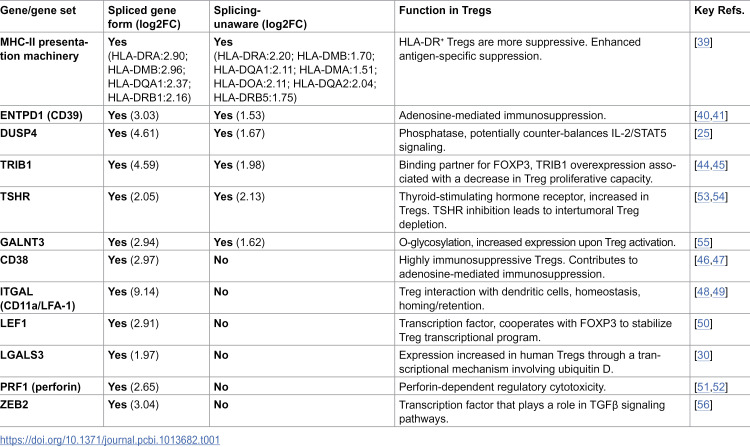 Figure 4
Peer Reviews
No public reviews on file for this paper yet. If you reviewed it on a platform where reviews are public (OpenReview, ICLR, NeurIPS, ICML), you can paste yours below so the community can read it here.
Videos
No videos yet. Explain this paper in a talk, walkthrough, or lecture? Add one.
Taxonomy
TopicsSingle-cell and spatial transcriptomics · RNA Research and Splicing · Pluripotent Stem Cells Research