Episodic memory involves transient and sparse connectivity aligned to both internal and external events
Adam J. O. Dede, Zachariah R. Cross, Samantha M. Gray, Joseph P. Kelly, Qin Yin, Parisa Vahidi, Eishi Asano, Stephan U. Schuele, Joshua M. Rosenow, Joyce Y. Wu, Sandi K. Lam, Jeffrey S. Raskin, Jack J. Lin, Olivia Kim McManus, Shifteh Sattar, Ammar Shaikhouni

TL;DR
This study shows that episodic memory relies on short-lived, sparsely connected brain states that change between encoding and retrieval.
Contribution
The study reveals dynamic shifts in brain connectivity and timing between encoding and retrieval of episodic memories.
Findings
PFC-MTL theta connectivity is aligned with internal PFC peaks during encoding and external stimuli during retrieval.
Anterior cingulate cortex connectivity is aligned only with internal HFB peaks, indicating an evaluative role.
Successful memory performance is linked to transient, sparse whole-brain network states.
Abstract
Episodic memory depends on the coordination of local processing, indexed by high-frequency broadband (HFB) activity, with global organization, indexed by theta oscillations. However, theta and HFB exhibit asynchronous timing, raising the question of how results of local processing are communicated. Using intracranial EEG in patients performing a recognition memory task, we examined this coordination across medial temporal (MTL) and prefrontal (PFC) regions. HFB peaks occurred earlier in the MTL than in the PFC. Contrasting analyses were anchored either to these internally driven HFB peaks or to the external event of stimulus presentation. We discovered three key results. First, the role of the PFC changed from encoding to retrieval. Specifically, PFC-MTL theta connectivity was aligned with internal PFC peaks during encoding, suggesting top-down initiation. By contrast, this connection…
Genes, proteins, chemicals, diseases, species, mutations and cell lines named across the full text — each resolved to its canonical identifier and authoritative record.
Click any figure to enlarge with its caption.
 Figure 1
 Figure 2
 Figure 3
 Figure 4
 Figure 5
 Figure 6
 Figure 7
 Figure 8
 Figure 9
 Figure 10
 Figure 11
 Figure 12
 Figure 13
 Figure 14
 Figure 15
 Figure 16
 Figure 17
 Figure 18
 Figure 19
 Figure 20
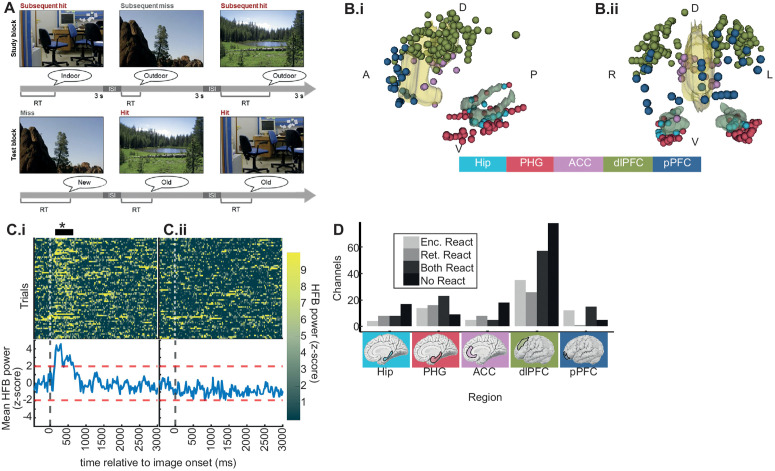 Figure 21
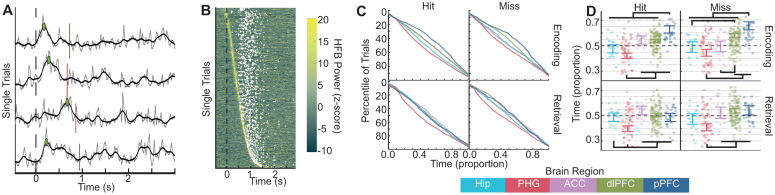 Figure 22
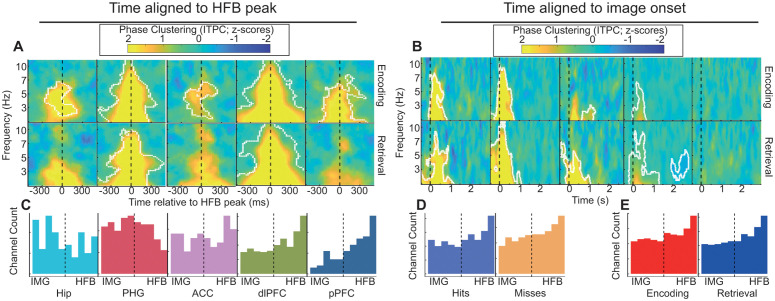 Figure 23
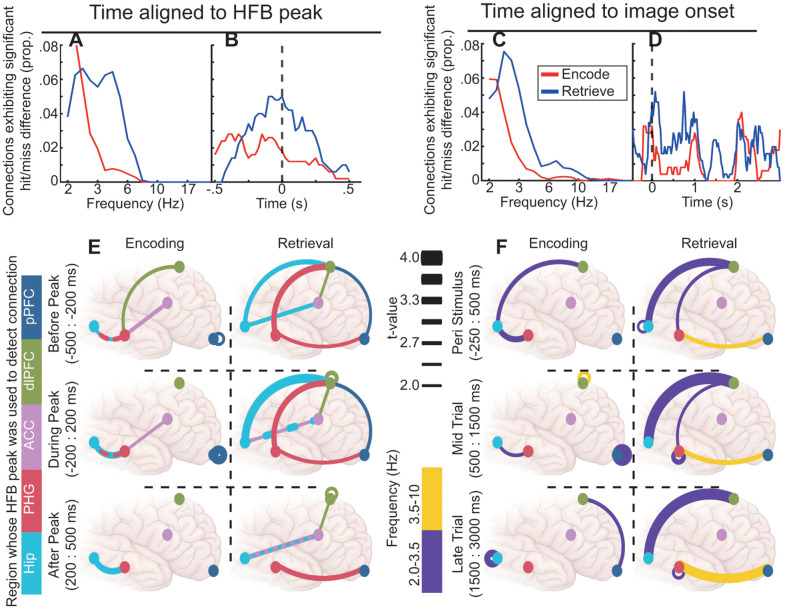 Figure 24
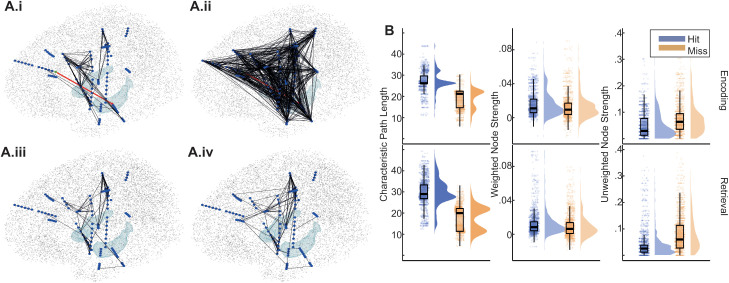 Figure 25
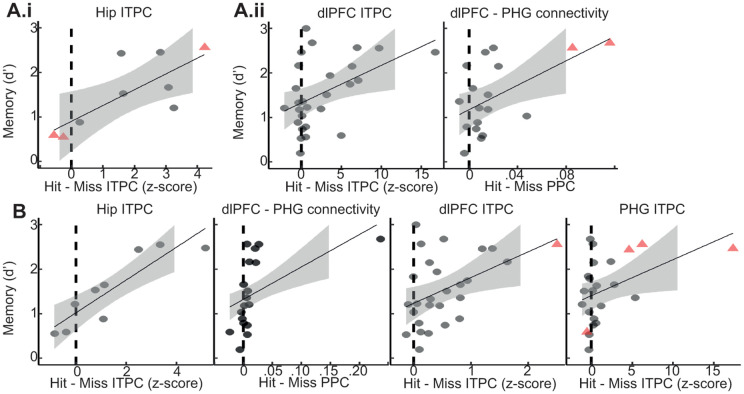 Figure 26
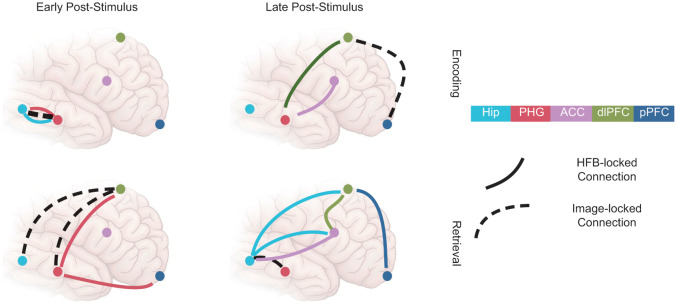 Figure 27
Peer Reviews
No public reviews on file for this paper yet. If you reviewed it on a platform where reviews are public (OpenReview, ICLR, NeurIPS, ICML), you can paste yours below so the community can read it here.
Videos
No videos yet. Explain this paper in a talk, walkthrough, or lecture? Add one.
Taxonomy
TopicsFunctional Brain Connectivity Studies · Neural and Behavioral Psychology Studies · Neural dynamics and brain function