Development of two compatible plasmids to assess sRNA-mediated post-transcriptional regulation in Acinetobacter baumannii
Aalap Mogre, Orla Connell, Jessica White, Ali Shaibah, Karsten Hokamp, Fergal J. Hamrock, Kristina Schauer, Carsten Kröger

TL;DR
Researchers developed two plasmids to study RNA-based gene regulation in Acinetobacter baumannii, a drug-resistant bacteria, enabling faster discovery of sRNA functions.
Contribution
The creation of two compatible plasmids for studying sRNA-mediated regulation in A. baumannii.
Findings
The plasmids validated the Aar sRNA-carO mRNA interaction.
A new interaction between sRNA44 and the Bap mRNA was identified.
The plasmid system is expected to accelerate sRNA research in A. baumannii.
Abstract
Post-transcriptional regulation can be mediated by small regulatory RNAs (sRNAs) in bacteria, which can act by base-pairing to a target mRNA. The discovery and mechanistic validation of base-pairing sRNAs in multidrug-resistant Acinetobacter baumannii has been hampered by the lack of genetic tools to assess RNA–RNA interactions. Here, we created two compatible plasmids for A. baumannii, which addresses this need. The newly designed plasmids validated the known Aar sRNA-carO mRNA and a new interaction of sRNA44 and the mRNA of the biofilm-associated protein Bap. The new plasmid system should accelerate the mechanistic characterization of sRNAs in A. baumannii.
Genes, proteins, chemicals, diseases, species, mutations and cell lines named across the full text — each resolved to its canonical identifier and authoritative record.
Click any figure to enlarge with its caption.
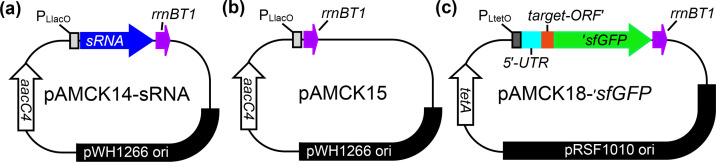 Figure 1
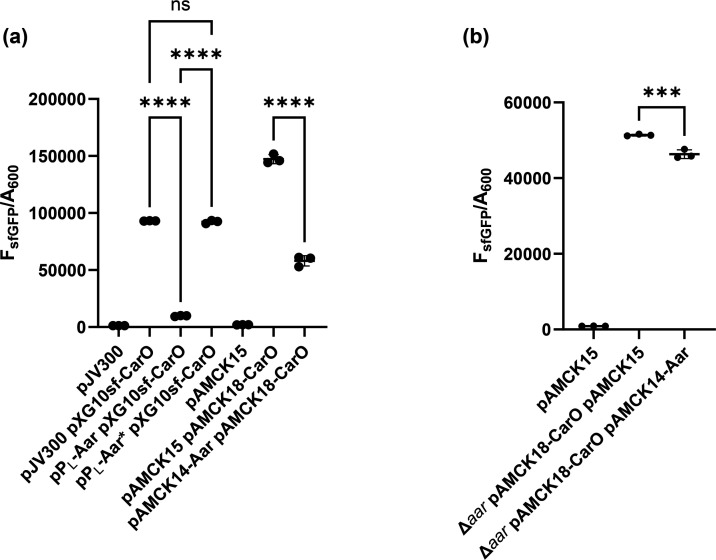 Figure 2
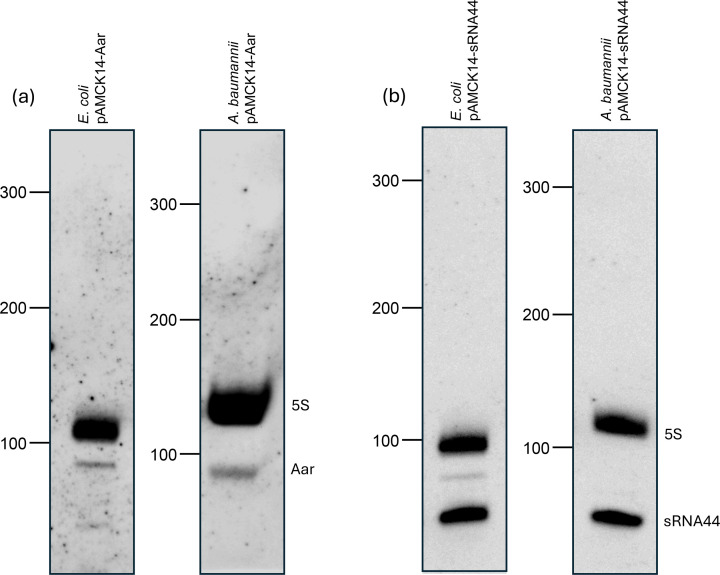 Figure 3
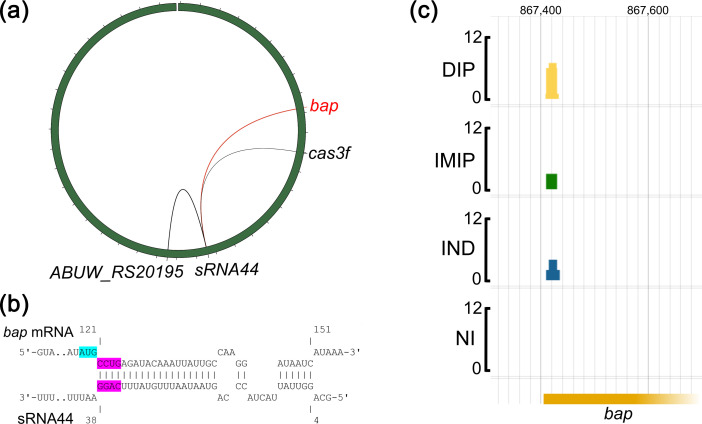 Figure 4
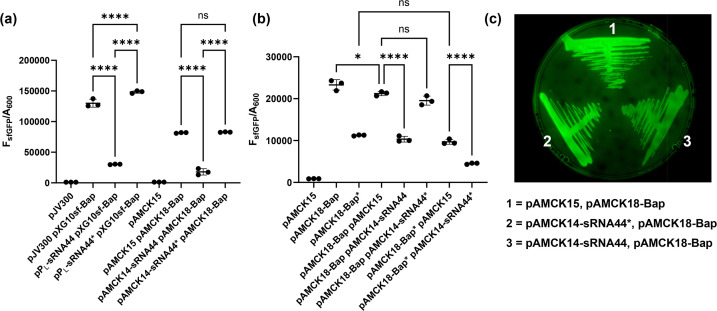 Figure 5
Peer Reviews
No public reviews on file for this paper yet. If you reviewed it on a platform where reviews are public (OpenReview, ICLR, NeurIPS, ICML), you can paste yours below so the community can read it here.
Videos
No videos yet. Explain this paper in a talk, walkthrough, or lecture? Add one.
Taxonomy
TopicsBacterial Genetics and Biotechnology · RNA and protein synthesis mechanisms · Antibiotic Resistance in Bacteria