Evaluation of a text-mining application for the rapid analysis of free-text wildlife necropsy reports
Stefan Saverimuttu, Kate McInnes, Kristin Warren, Lian Yeap, Stuart Hunter, Brett Gartrell, An Pas, James Chatterton, Bethany Jackson

TL;DR
A text-mining tool called DEE was tested to quickly analyze wildlife necropsy reports, showing promise for improving data retrieval in conservation and health research.
Contribution
The study evaluates a novel text-mining application for wildlife necropsy data, highlighting its performance and limitations in a real-world context.
Findings
DEE achieved mean F1-scores between 0.63 and 0.93 for identifying clinicopathologic findings in necropsy reports.
Findings with limited terminological variance, like external oiling, showed the highest performance and consistency.
The study suggests that capturing terminological variance is crucial for improving the tool's broader applicability.
Abstract
The ability to efficiently derive insights from wildlife necropsy data is essential for advancing conservation and One Health objectives, yet close reading remains the mainstay of knowledge retrieval from ubiquitous free-text clinical data. This time-consuming process poses a barrier to the efficient utilisation of such valuable resources. This study evaluates part of a bespoke text-mining application, DEE (Describe, Explore, Examine), designed for extracting insights from free-text necropsy reports housed in Aotearoa New Zealand’s Wildbase Pathology Register. A pilot test involving nine veterinary professionals assessed DEE’s ability to quantify the occurrence of four clinicopathologic findings (external oiling, trauma, diphtheritic stomatitis, and starvation) across two species datasets by comparison to manual review. Performance metrics—recall, precision, and F1-score—were calculated…
Genes, proteins, chemicals, diseases, species, mutations and cell lines named across the full text — each resolved to its canonical identifier and authoritative record.
Click any figure to enlarge with its caption.
 Figure 1
 Figure 2
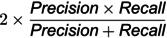 Figure 3
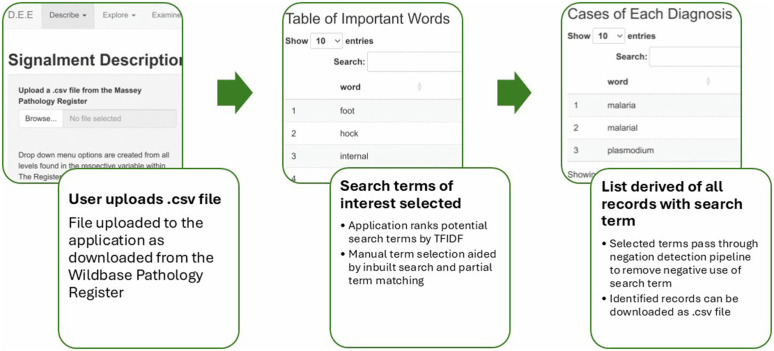 Figure 4
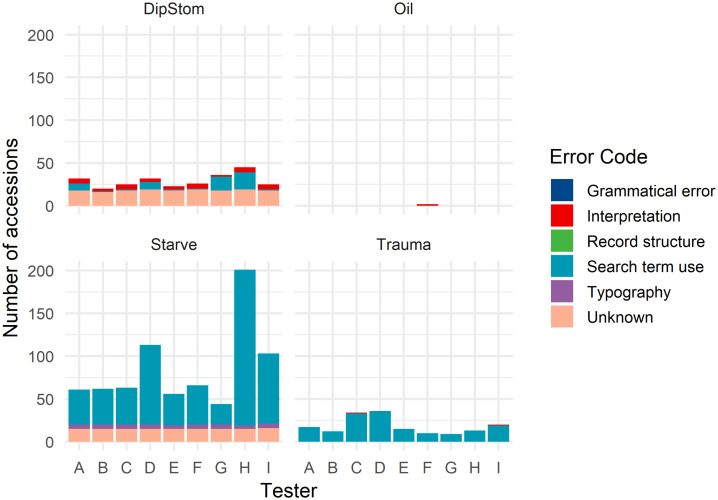 Figure 5
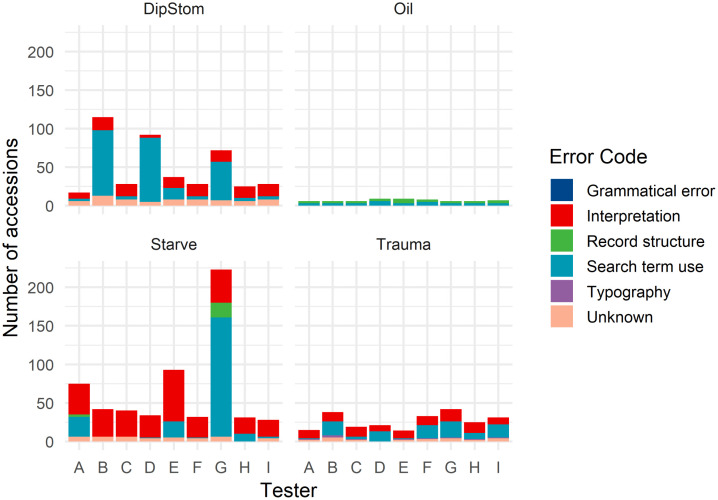 Figure 6
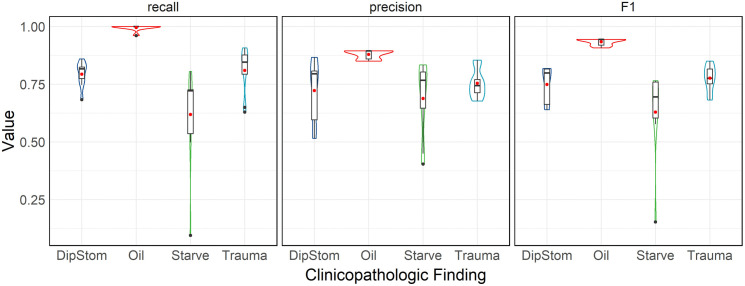 Figure 7
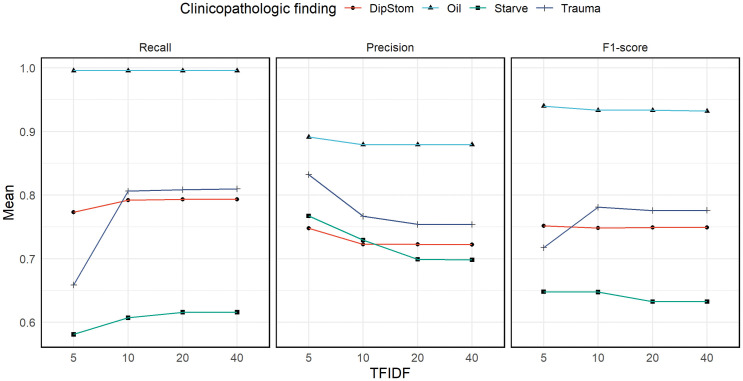 Figure 8
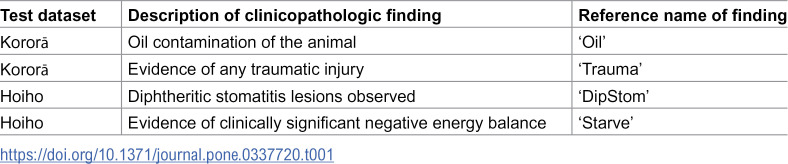 Figure 9
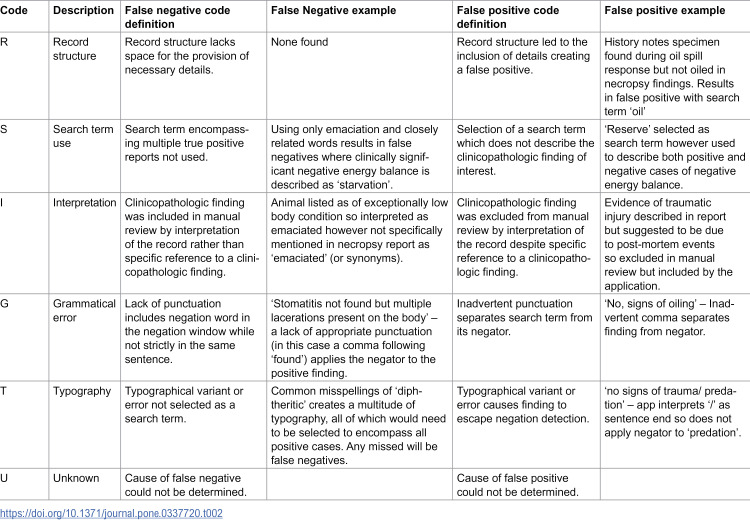 Figure 10
 Figure 11
 Figure 12
 Figure 13
Peer Reviews
No public reviews on file for this paper yet. If you reviewed it on a platform where reviews are public (OpenReview, ICLR, NeurIPS, ICML), you can paste yours below so the community can read it here.
Videos
No videos yet. Explain this paper in a talk, walkthrough, or lecture? Add one.
Taxonomy
TopicsZoonotic diseases and public health · Data-Driven Disease Surveillance · Biomedical Text Mining and Ontologies