Structure and encapsulation of carbonic anhydrase within the α-carboxysome
Pei Cing Ng, Oluwatobi Adegbite, Tianpei Li, Arnaud Baslé, Jon Marles-Wright, Lu-Ning Liu

TL;DR
This study reveals how carbonic anhydrase is structured and encapsulated within α-carboxysomes, offering insights for synthetic biology applications.
Contribution
The study identifies a trimer-of-dimers structure of α-carboxysomal carbonic anhydrase and its interaction with carboxysome shells.
Findings
HnCsoSCA forms a trimer-of-dimers structure without a zinc ion at the hexameric interface.
HnCsoSCA interacts with the CsoS1A shell hexamer and bridges the shell and Rubisco.
HnCsoSCA is incorporated into synthetic minishells at the inner surface without requiring CsoS2.
Abstract
Carbonic anhydrase plays a pivotal role in biological carbon capture by catalyzing the interconversion of CO2 and bicarbonate. This study provides insights into the structure and encapsulation of carbonic anhydrase (CA) within the α-carboxysome, a proteinaceous organelle for CO2 fixation. The results reveal that α-carboxysomal CA from the chemoautotrophic, nonphotosynthetic bacterium Halothiobacillus neapolitanus (HnCsoSCA) forms a trimer-of-dimers structure in the absence of a zinc ion at the hexameric interface. Using synthetic α-carboxysome shells, we show that HnCsoSCA interacts with the CsoS1A shell hexamer and bridges the shell facet and Rubisco. These findings advance our understanding of α-carboxysome assembly and encapsulation mechanisms, paving the way for potential applications of carboxysome structures in synthetic biology and biotechnology. Carboxysomes in cyanobacteria…
Genes, proteins, chemicals, diseases, species, mutations and cell lines named across the full text — each resolved to its canonical identifier and authoritative record.
Click any figure to enlarge with its caption.
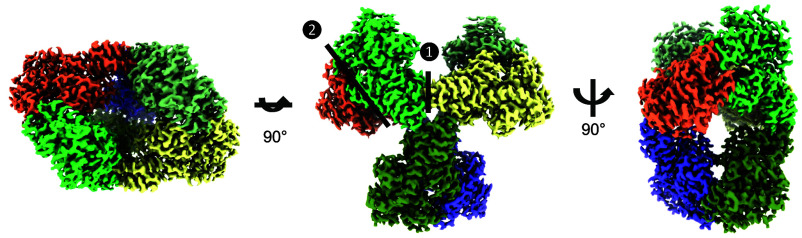 Figure 1
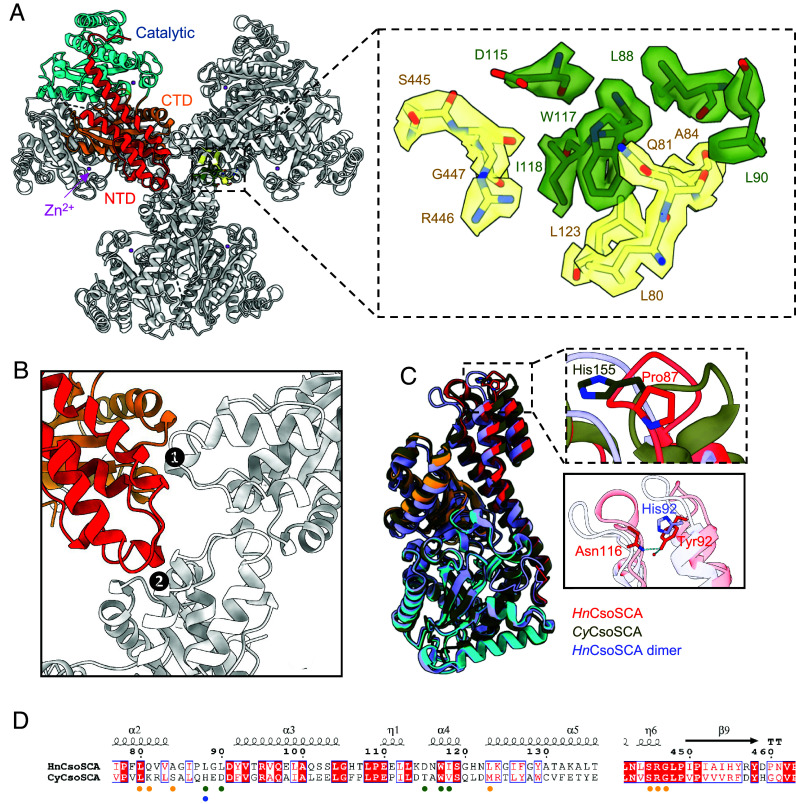 Figure 2
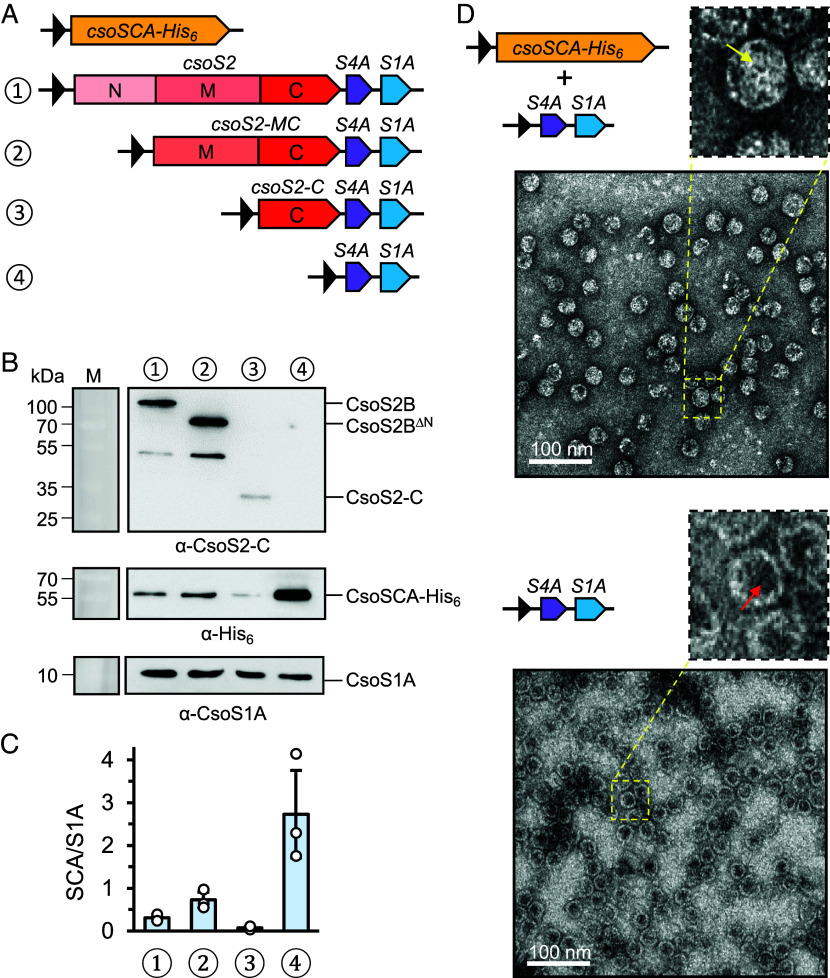 Figure 3
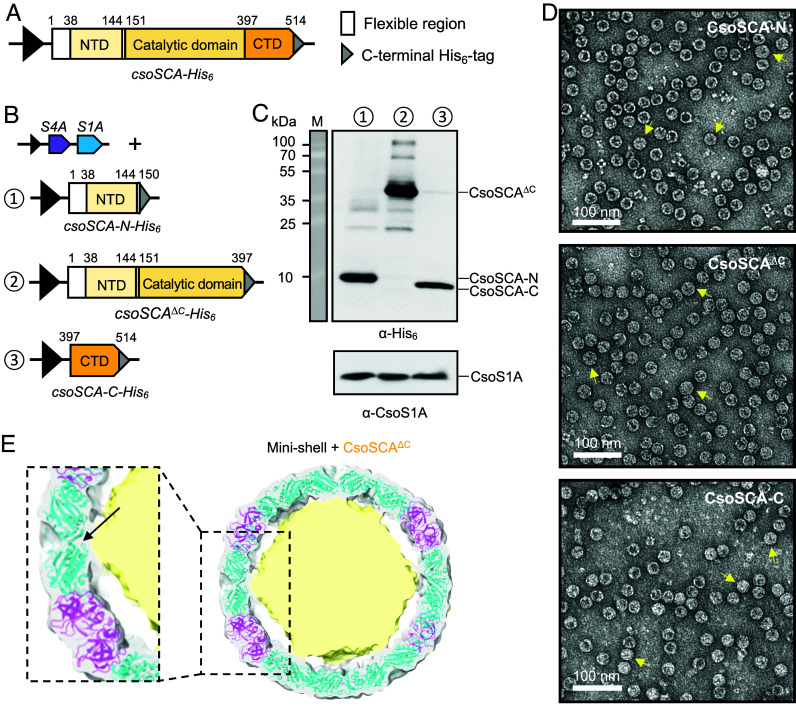 Figure 4
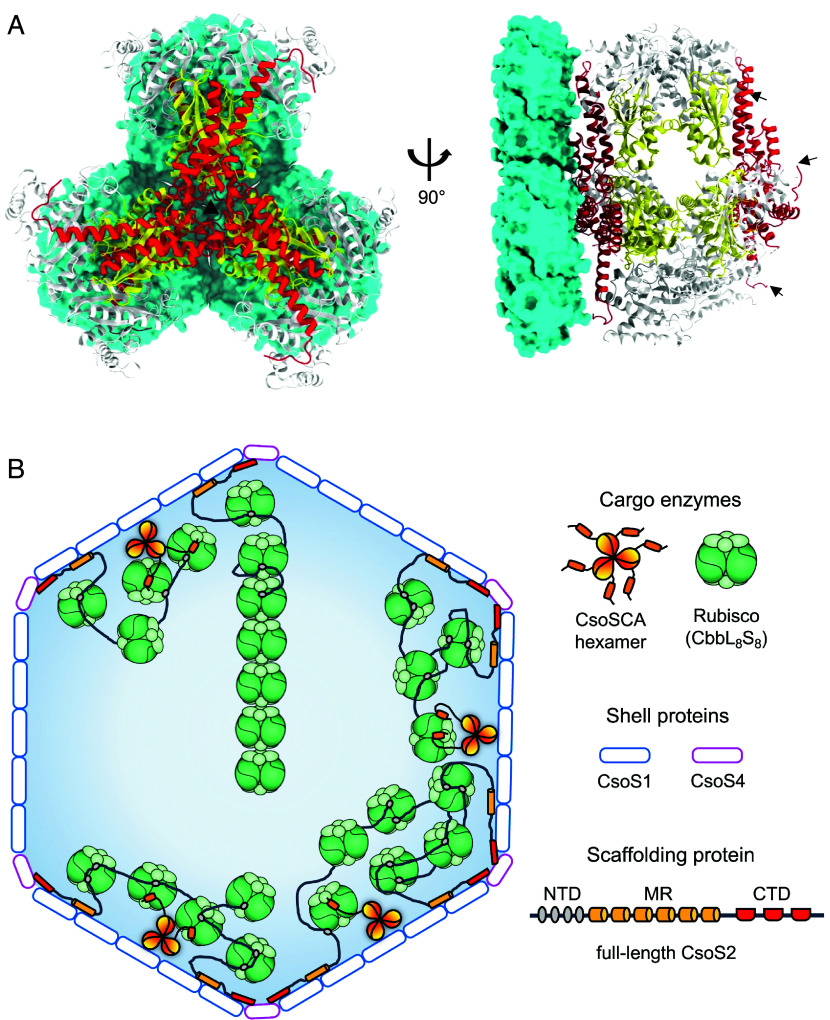 Figure 5
Peer Reviews
No public reviews on file for this paper yet. If you reviewed it on a platform where reviews are public (OpenReview, ICLR, NeurIPS, ICML), you can paste yours below so the community can read it here.
Videos
No videos yet. Explain this paper in a talk, walkthrough, or lecture? Add one.
Taxonomy
TopicsPhotosynthetic Processes and Mechanisms · Enzyme function and inhibition · Polyamine Metabolism and Applications