Tailoring BoNT A treatment and assessment across recovery stages after stroke: a report of four clinical cases
Miruna Săndulescu, Delia Cinteză, Daniel Ionuţ Răducan, Daniela Poenaru, Claudia-Gabriela Potcovaru, Horia Păunescu, Oana Andreia Coman

TL;DR
This paper presents four clinical cases showing how BoNT-A treatment for post-stroke spasticity should be tailored to individual patient needs and recovery stages.
Contribution
The study highlights the necessity of individualized dosing and timing of BoNT-A therapy based on spasticity severity and motor recovery.
Findings
Repeated BoNT-A treatment in severe spasticity reduced limb pain and prevented tissue damage.
Mild spasticity patients achieved functional recovery with lower doses and longer injection intervals.
Tailored assessment and treatment strategies improved outcomes in post-stroke spasticity management.
Abstract
Achieving effective spasticity management in post-stroke patients remains a significant therapeutic challenge. It requires the anticipation and management of multiple potential complications through a complex, individualized therapeutic approach. The therapeutic goals in stroke-related spasticity vary considerably depending on the intensity and duration of spasticity, as well as the degree of motor control in the affected limb segments. This study presents four clinical case reports involving patients with post-stroke spasticity ranging from grade 1+ to 4 on the Modified Ashworth Scale (MAS), each exhibiting a distinct temporal profile of symptom progression and levels of motor control in affected limbs. All patients received conservative rehabilitation therapy in conjunction with botulinum toxin (BoNT-A) administration. Spasticity assessment is essential for evaluating treatment…
Genes, proteins, chemicals, diseases, species, mutations and cell lines named across the full text — each resolved to its canonical identifier and authoritative record.
Click any figure to enlarge with its caption.
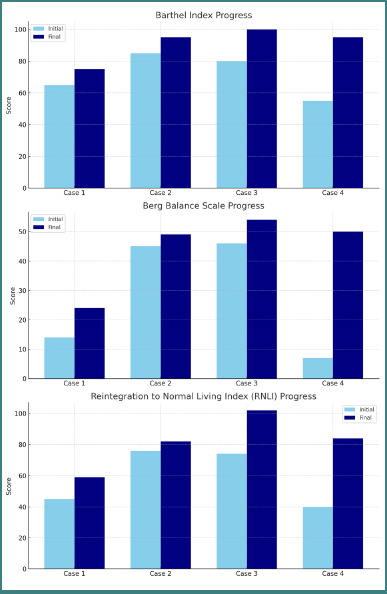 Figure 1
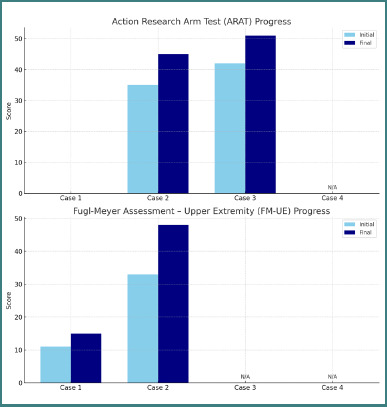 Figure 2
Peer Reviews
No public reviews on file for this paper yet. If you reviewed it on a platform where reviews are public (OpenReview, ICLR, NeurIPS, ICML), you can paste yours below so the community can read it here.
Videos
No videos yet. Explain this paper in a talk, walkthrough, or lecture? Add one.
Taxonomy
TopicsBotulinum Toxin and Related Neurological Disorders · Stroke Rehabilitation and Recovery · Neurological and metabolic disorders