Rectus diastasis repair with and without mesh at 1 year: randomized clinical trial
Reetta Tuominen, Julia Saxen, Tiina Jahkola, Jani Mikkonen, Jari Arokoski, Hannu Luomajoki, Jaana Vironen

TL;DR
A clinical trial compared two surgical techniques for rectus diastasis repair and found both effective, with one showing greater muscle gap reduction.
Contribution
This study provides the first randomized clinical trial comparing mesh-supported and suture-only techniques for rectus diastasis repair.
Findings
Both PSUM and suture plication showed no difference in rectus diastasis recurrence at 1 year.
PSUM resulted in greater inter-rectus distance reduction compared to suture plication.
Both techniques improved health-related quality of life and low back function.
Abstract
Rectus diastasis (RD) can cause functional impairment and pain. Surgical approaches vary regarding mesh use for linea alba restoration. The aim of this RCT was to compare plication supported by mesh (PSUM) with suture plication in patients with symptomatic postpartum RD. This single-centre superiority double-blind RCT was conducted in Finland from April 2018 to November 2022. The pre-specified primary outcome was RD recurrence at 1 year (inter-rectus distance (IRD) >20 mm) and a post-hoc primary outcome was absolute reduction in IRD. Secondary outcomes included health-related quality of life (HRQoL), low back disability (Oswestry Disability Index (ODI)), motor control, and complications. The date of the last follow-up was 30 November 2022. In total, 86 normal-weight women (mean age of 38.7 (range 25–52) years) were randomized, with 84 patients (98%) available for follow-up (44 in the…
Genes, proteins, chemicals, diseases, species, mutations and cell lines named across the full text — each resolved to its canonical identifier and authoritative record.
Click any figure to enlarge with its caption.
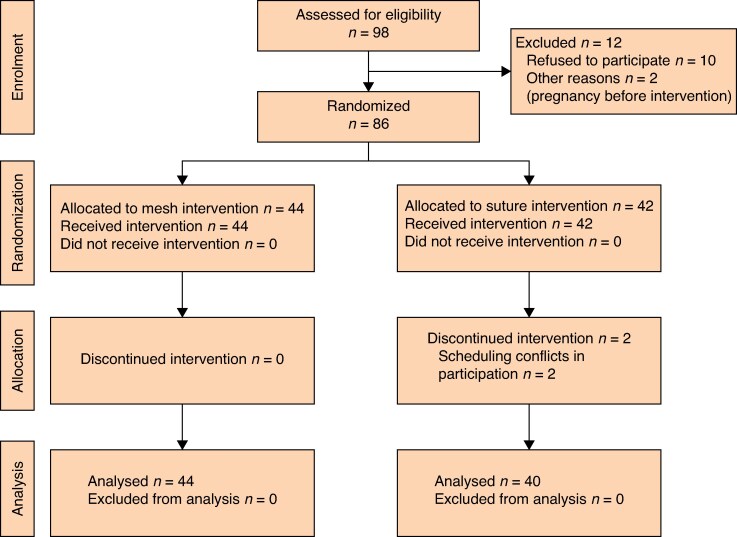 Figure 1
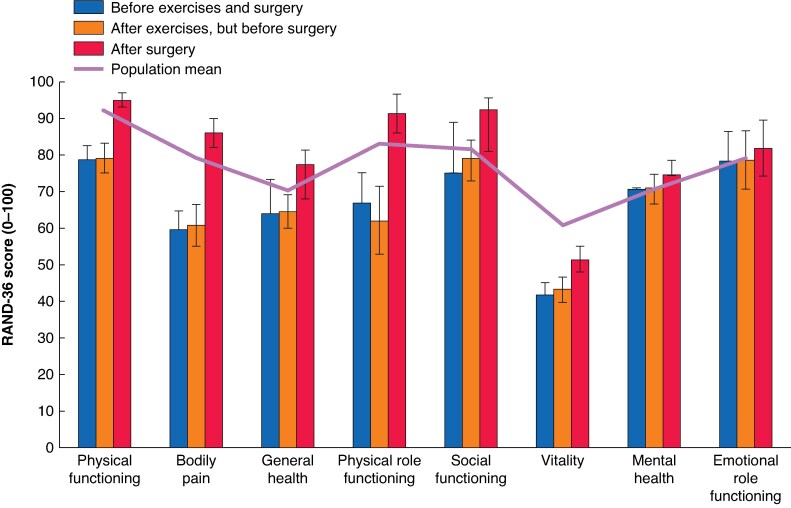 Figure 2
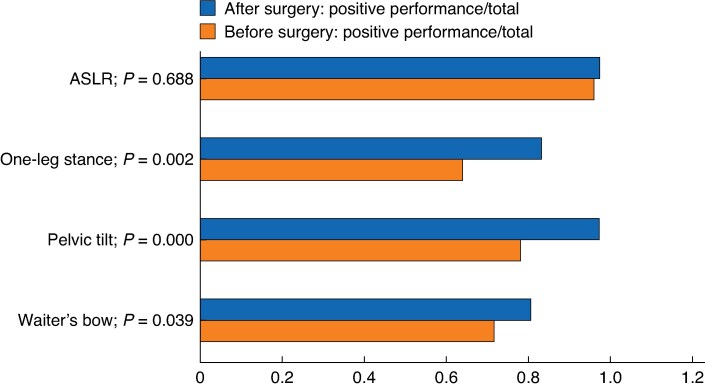 Figure 3
Peer Reviews
No public reviews on file for this paper yet. If you reviewed it on a platform where reviews are public (OpenReview, ICLR, NeurIPS, ICML), you can paste yours below so the community can read it here.
Videos
No videos yet. Explain this paper in a talk, walkthrough, or lecture? Add one.
Taxonomy
TopicsPelvic floor disorders treatments · Hernia repair and management · Congenital gastrointestinal and neural anomalies