Psychometric Properties of the SarQoL Questionnaire: A Systematic Review and Meta‐Analysis
Céline Demonceau, Brabant Christian, Shukuru Emmanuel, Majed Alokail, Nasser Al‐Daghri, Yves Rolland, Ivan Bautmans, Jürgen M. Bauer, Antonio Cherubini, Alfonso J. Cruz‐Jentoft, Bess Dawson‐Hughes, Roger A. Fielding, Nicholas C. Harvey, Francesco Landi, Marjolein Visser

TL;DR
This study confirms that the SarQoL questionnaire is a reliable and valid tool for measuring quality of life in older adults with sarcopenia.
Contribution
The study provides a comprehensive meta-analysis of the psychometric properties of the SarQoL questionnaire in older adults.
Findings
SarQoL showed high reliability with Cronbach's alpha above 0.80 and ICC of 0.98.
Strong convergent and weak divergent correlations confirmed its construct validity.
SarQoL demonstrated responsiveness to changes in health-related quality of life.
Abstract
The Sarcopenia and Quality of Life (SarQoL) questionnaire is recognized as the only disease‐specific patient‐reported outcome measure (PROM) for assessing sarcopenia‐related HRQoL. This systematic review and meta‐analysis aimed to provide a quantitative summary of all evidence reported on the reliability, validity, responsiveness and floor/ceiling effects of SarQoL in older adults. Following PRISMA‐COSMIN guidelines, a systematic search for studies evaluating the psychometric properties of SarQoL (i.e., reliability, validity, responsiveness and floor and ceiling effects) in older people was conducted on MEDLINE (via OVID), PsycINFO, Scopus and EMBASE. Studies published between 2013 and November 2024 using a consensual definition of sarcopenia were included. Study selection and data extraction were made by two independent reviewers. A random‐effects model meta‐analysis was applied.…
Genes, proteins, chemicals, diseases, species, mutations and cell lines named across the full text — each resolved to its canonical identifier and authoritative record.
Click any figure to enlarge with its caption.
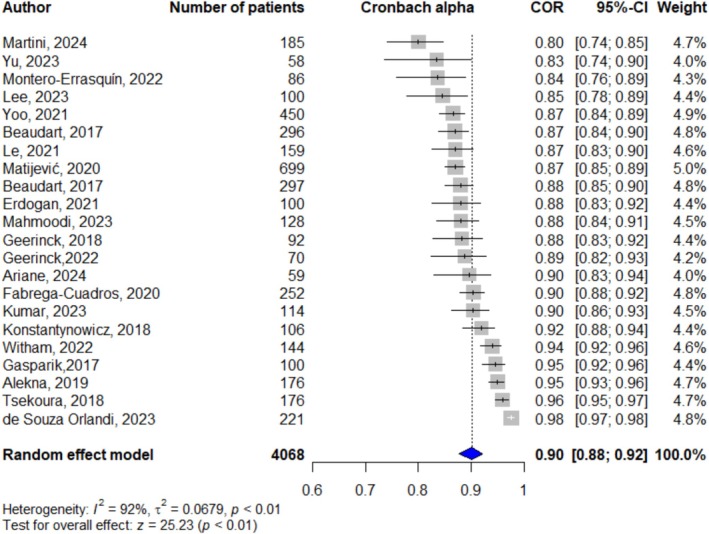 Figure 1
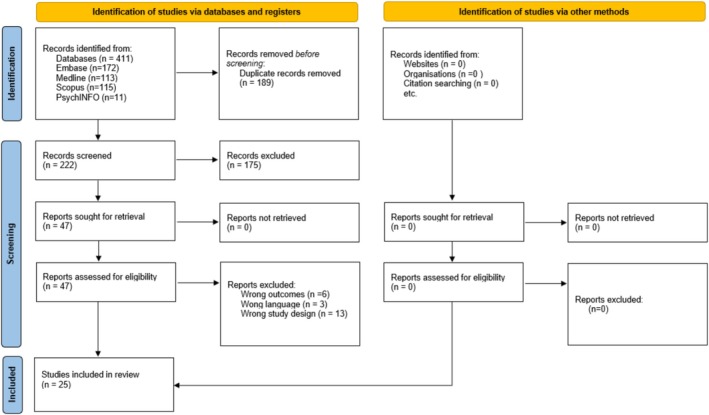 Figure 2
Peer Reviews
No public reviews on file for this paper yet. If you reviewed it on a platform where reviews are public (OpenReview, ICLR, NeurIPS, ICML), you can paste yours below so the community can read it here.
Videos
No videos yet. Explain this paper in a talk, walkthrough, or lecture? Add one.
Taxonomy
TopicsPsychometric Methodologies and Testing · Psychological Testing and Assessment · Attachment and Relationship Dynamics