Integrating omics and functional data via representation learning to prioritize candidate genes for pleiotropic effect in dairy sheep
Pablo Augusto de Souza Fonseca, Aroa Suárez-Vega, Laura Casas, Hector Marina, Beatriz Gutiérrez-Gil, Juan Jose Arranz

TL;DR
This paper uses machine learning and multi-omics data to identify genes that influence multiple traits in dairy sheep, such as milk production and health.
Contribution
A novel network-based machine learning approach is introduced to prioritize genes with pleiotropic effects using gene co-expression and functional annotations.
Findings
14 and 111 genes were identified as significant for Trait_GWAS and EBV_GWAS datasets, respectively.
Three shared genes (PHGDH, SLC1A4, and CSN3) showed pleiotropic effects across datasets.
Prioritized genes are linked to biological processes like amino acid transport, lipid metabolism, and immune regulation.
Abstract
The global demand for improved productivity, sustainability, welfare, and quality in livestock production presents significant challenges for breeders. Understanding trait correlations, often driven by pleiotropy, is essential for simultaneously improving traits of economic interest. Integrating multi-omics data and functional annotations can improve the disentangling of biological processes underlying the pleiotropic effect. Network-based machine learning (ML) models offer a robust solution for this integration. This study estimated gene-level P-values for pleiotropic effects using two phenotypic datasets: (i) Trait_GWAS, with phenotypic values of 12 traits covering milk production, composition, cheeseability, and mastitis resistance; and (ii) EBV_GWAS, with estimated breeding values for five similar traits, excluding cheeseability. Weighted gene co-expression networks (WGCNs) were…
Genes, proteins, chemicals, diseases, species, mutations and cell lines named across the full text — each resolved to its canonical identifier and authoritative record.
Click any figure to enlarge with its caption.
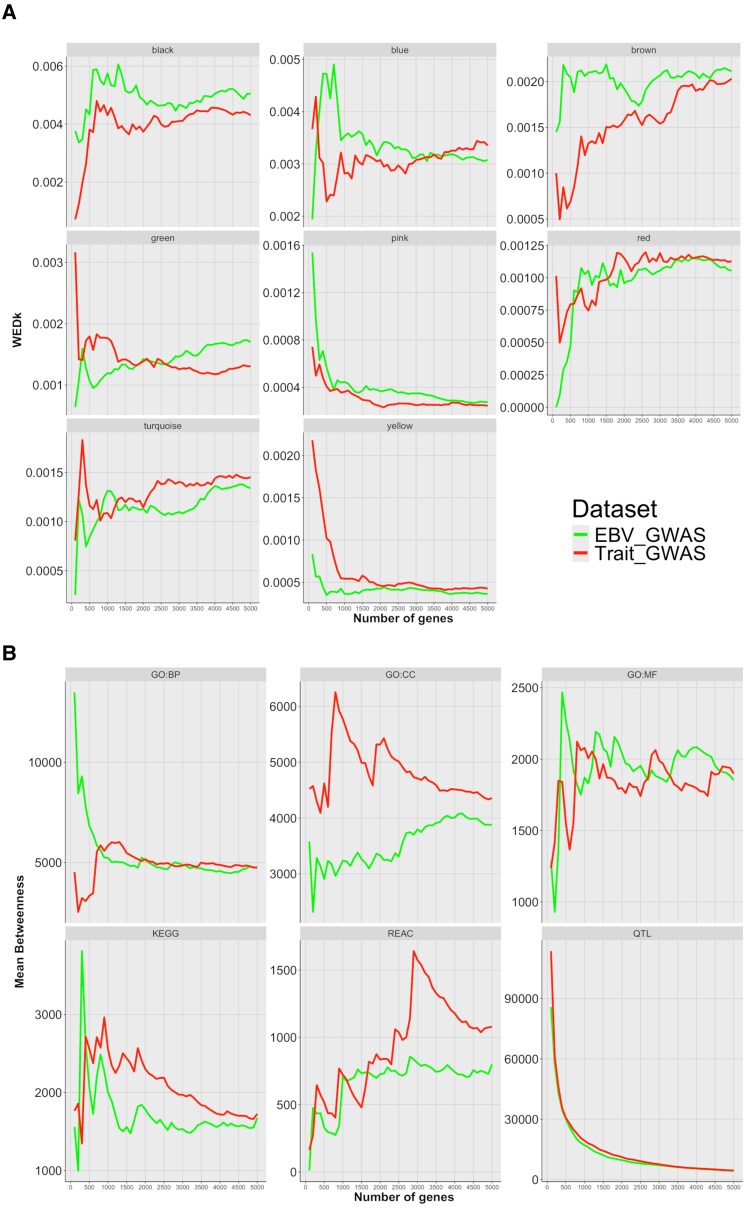 Figure 1
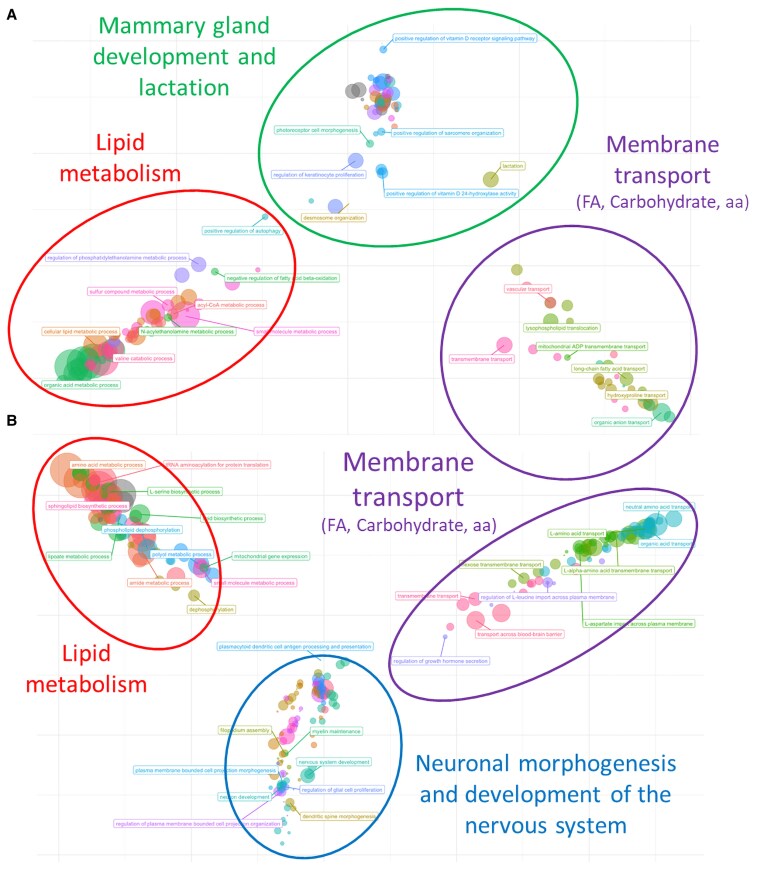 Figure 2
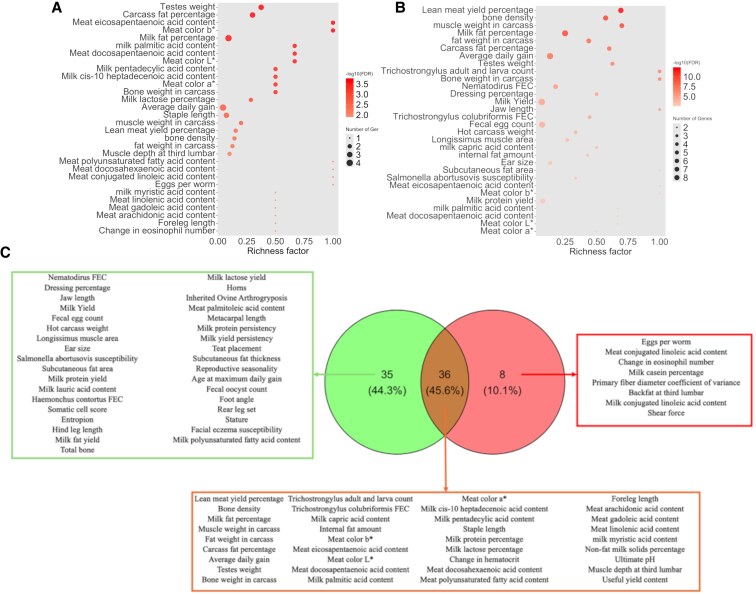 Figure 3
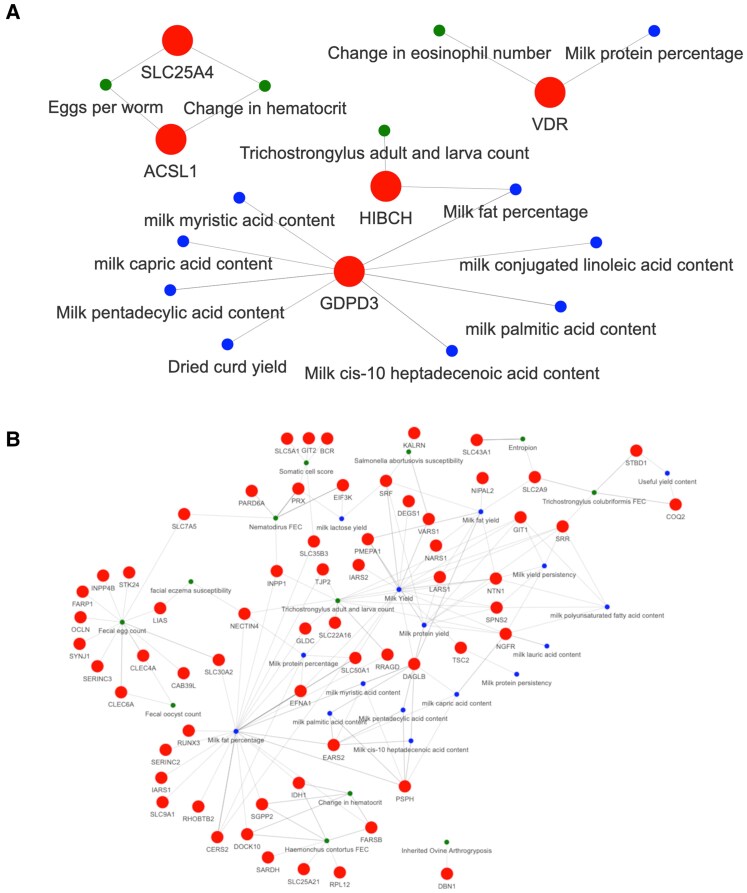 Figure 4
Peer Reviews
No public reviews on file for this paper yet. If you reviewed it on a platform where reviews are public (OpenReview, ICLR, NeurIPS, ICML), you can paste yours below so the community can read it here.
Videos
No videos yet. Explain this paper in a talk, walkthrough, or lecture? Add one.
Taxonomy
TopicsGenetic and phenotypic traits in livestock · Milk Quality and Mastitis in Dairy Cows · Reproductive Physiology in Livestock