Childhood trauma and subclinical hypomania in early adulthood: A genetically informative study
Irene Gonzalez-Calvo, Angelica Ronald, Laura Havers, Erin Lawrence, Mark Taylor, Georgina Hosang

TL;DR
Childhood trauma is linked to hypomanic symptoms in early adulthood, with genetic factors playing a major role in this connection.
Contribution
This study uses a twin design to show that genetic factors largely explain the link between childhood trauma and hypomania.
Findings
Childhood trauma was significantly associated with hypomanic symptoms and high-risk status for bipolar disorder.
Genetic factors largely influenced the association between childhood trauma and hypomania.
The MDD polygenic score interacted with childhood trauma to affect hypomania.
Abstract
There is preliminary evidence that childhood trauma (e.g., abuse) is associated with subclinical hypomania reported in adolescence. These findings need replicating in early adulthood, as clinical conditions emerge, and the mechanisms underlying this association need elucidating. This study aimed to examine the magnitude of shared genetic and environmental underpinnings of the association between childhood trauma with hypomanic symptoms and high-risk status for bipolar disorder (BD) using a twin design. Gene–environment correlations and interactions between childhood trauma and polygenic scores (PGS) for psychiatric and neurodevelopmental conditions were also investigated. Childhood trauma was reported using the Avon “Life at 22+” questionnaire by 8,464 individuals from a community twin sample. Self-reported hypomanic symptoms were assessed using the Mood Disorder Questionnaire at age…
Genes, proteins, chemicals, diseases, species, mutations and cell lines named across the full text — each resolved to its canonical identifier and authoritative record.
Click any figure to enlarge with its caption.
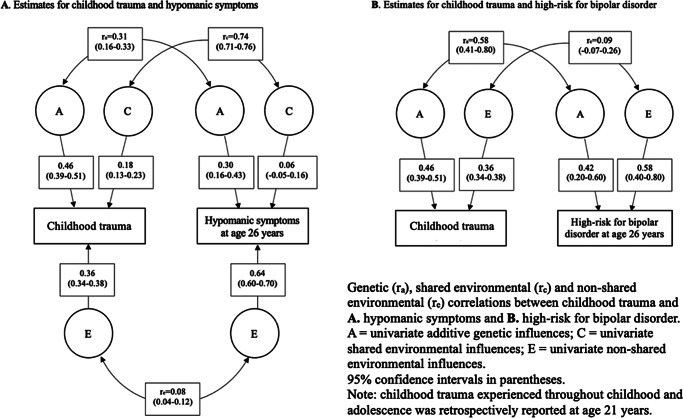 Figure 1
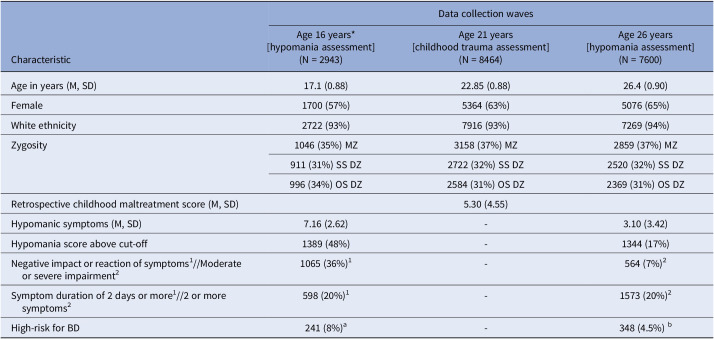 Figure 2
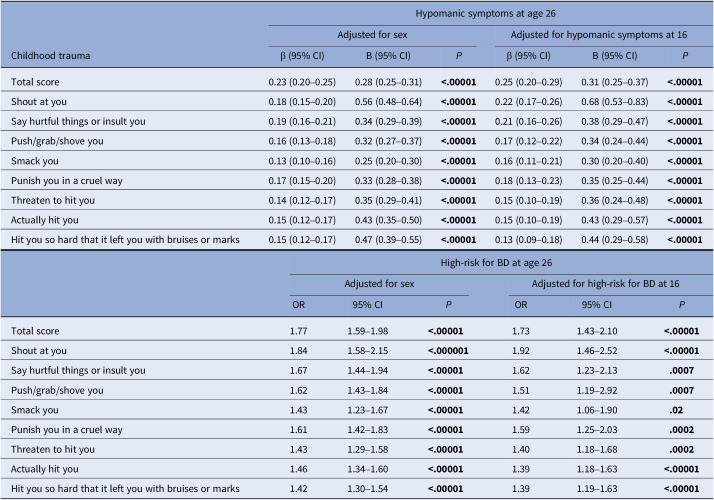 Figure 3
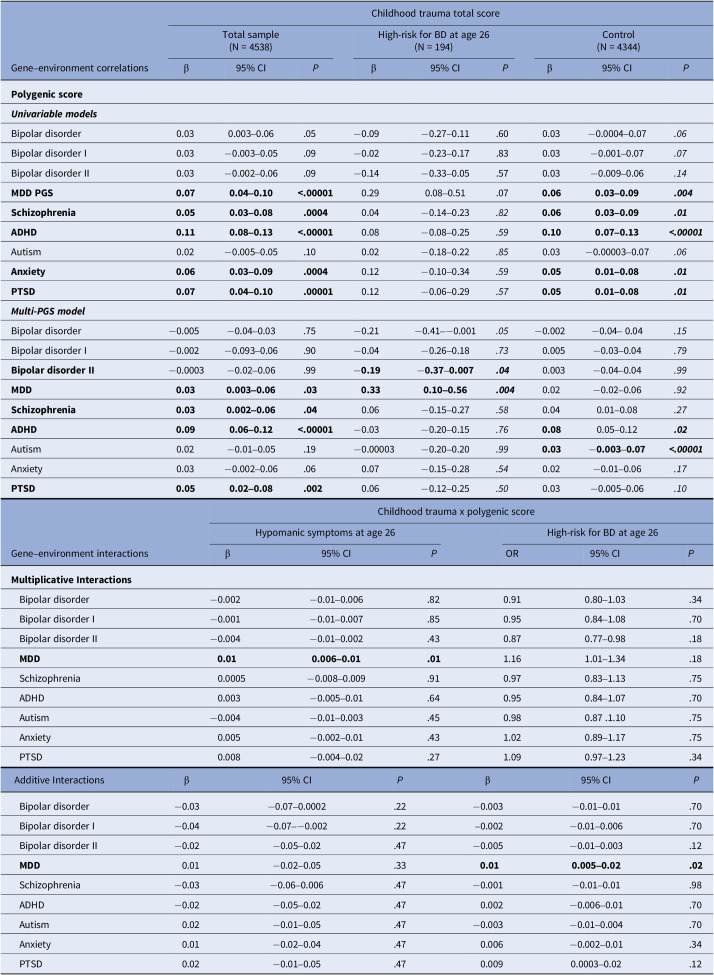 Figure 4
Peer Reviews
No public reviews on file for this paper yet. If you reviewed it on a platform where reviews are public (OpenReview, ICLR, NeurIPS, ICML), you can paste yours below so the community can read it here.
Videos
No videos yet. Explain this paper in a talk, walkthrough, or lecture? Add one.
Taxonomy
TopicsChild and Adolescent Health