The Pseudomonas aeruginosa effector protein TesG regulates alternative activation of macrophages through NLRC5
Qianhua Zhang, Yige Zhang, Ruihuan Wang, Kailun Wang, Teng Ma, Chaoyu Zou, Yongxin Zhang, Xueli Hu, Huan Liu, Jing Sherly Li, Yang Yang, Zhuochong Liu, Miao Tang, Yilin Liu, Hongliang Li, Yu Tang, Jing Li, Xikun Zhou

TL;DR
This study shows how the Pseudomonas aeruginosa protein TesG helps the bacteria survive in the body by changing immune cells to avoid detection.
Contribution
The study reveals that TesG promotes macrophage alternative activation via NLRC5, a novel mechanism for immune evasion in chronic infections.
Findings
TesG induces macrophage polarization toward the M2 phenotype by upregulating NLRC5.
NLRC5 is central to the mechanism by which TesG suppresses inflammatory immune responses.
The TesG/NLRC5 pathway aids P. aeruginosa in evading host immune defenses during chronic infection.
Abstract
Pseudomonas aeruginosa is one of the most common pathogenic bacteria in the clinic. Its large genome and strong genetic plasticity enable it to survive in various environments, posing a significant threat to patient health. We previously identified a key effector protein, TesG, secreted by the type I secretion system, which plays a crucial role in the chronic infection process of P. aeruginosa. However, the underlying mechanism remains incompletely understood. In this study, we newly discovered that TesG can induce alternative activation of macrophages and explored its mechanisms through a series of in vivo and in vitro experiments. We found that TesG promotes the expression of the NLRC5 protein, thereby inducing the polarization of macrophages toward the M2 phenotype. The activation of macrophages induced by TesG primarily occurs through the currently known mechanisms of NLRC5. These…
Genes, proteins, chemicals, diseases, species, mutations and cell lines named across the full text — each resolved to its canonical identifier and authoritative record.
Click any figure to enlarge with its caption.
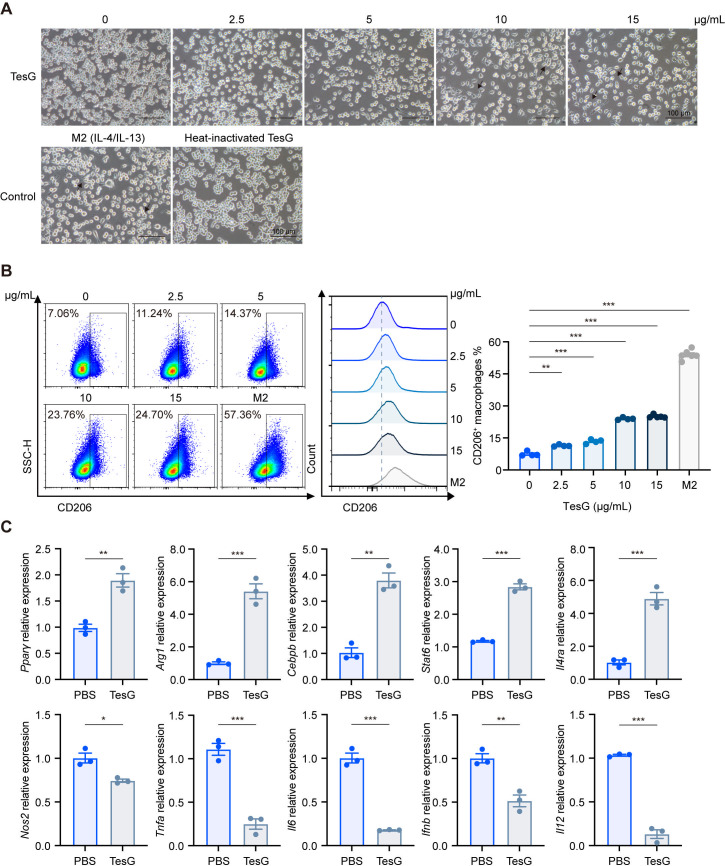 Figure 1
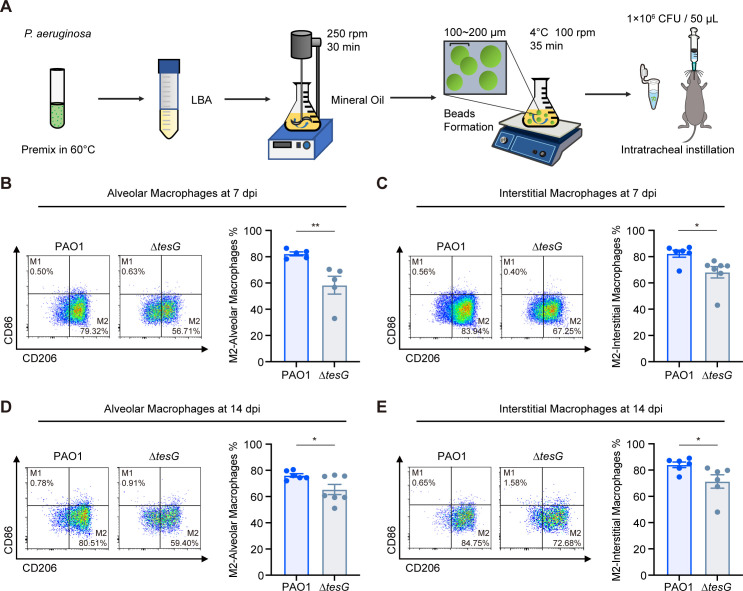 Figure 2
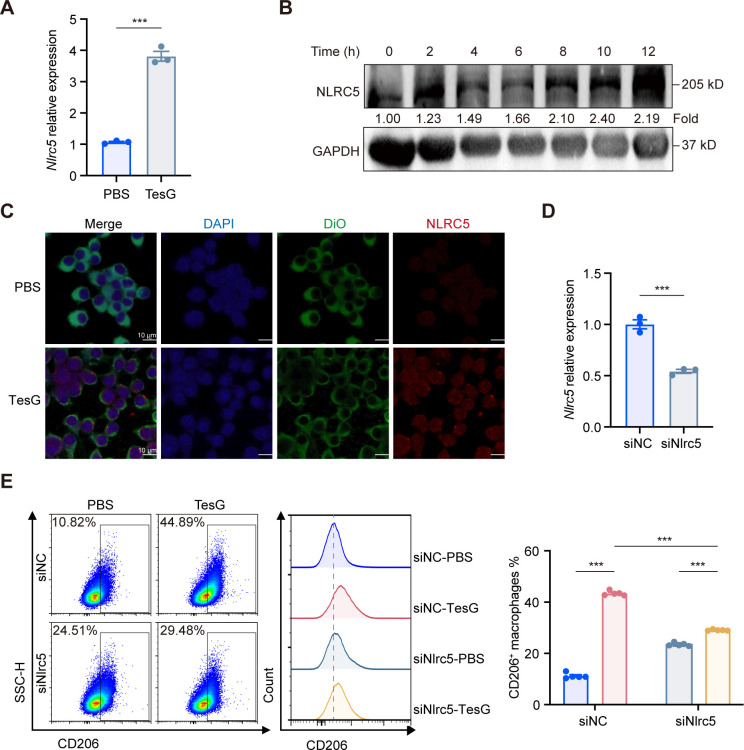 Figure 3
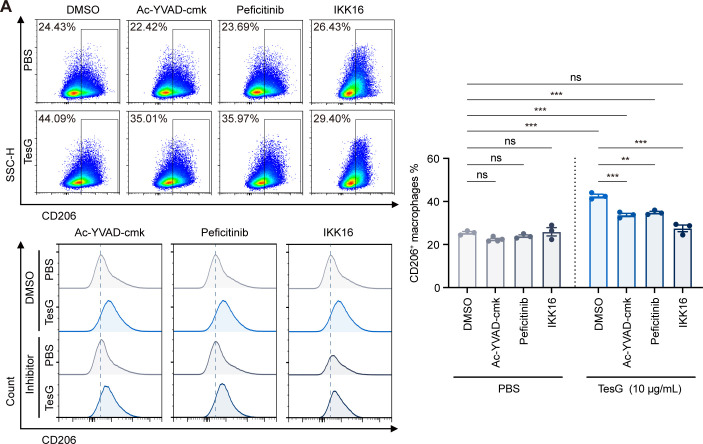 Figure 4
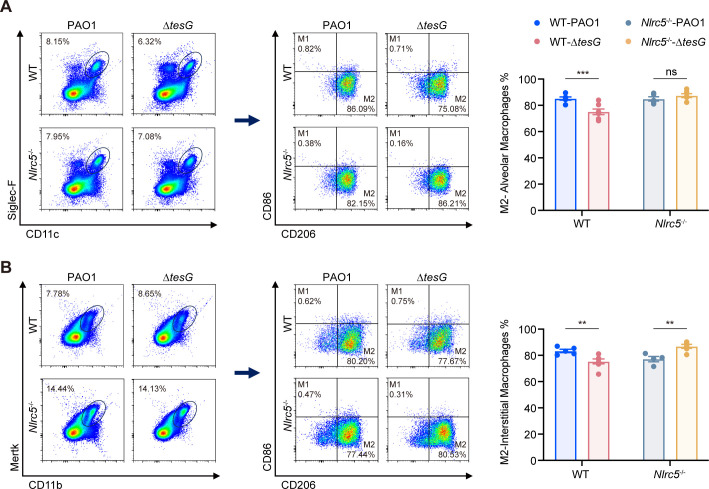 Figure 5
Peer Reviews
No public reviews on file for this paper yet. If you reviewed it on a platform where reviews are public (OpenReview, ICLR, NeurIPS, ICML), you can paste yours below so the community can read it here.
Videos
No videos yet. Explain this paper in a talk, walkthrough, or lecture? Add one.
Taxonomy
TopicsBacterial biofilms and quorum sensing · Immune Response and Inflammation · Vibrio bacteria research studies