The hidden threats posed by Japanese encephalitis virus genotype V
Qi Li, Hridesh Mishra, Kevin C. Kain, Ran Wang

TL;DR
Japanese encephalitis virus genotype V is emerging as a threat due to its distinct characteristics and potential resistance to current vaccines.
Contribution
This review highlights the unique properties of genotype V and questions the adequacy of current vaccines against it.
Findings
Genotype V JEV is predominant in Korean mosquitoes and shows higher lethality in animal studies.
Current vaccines based on genotype III offer insufficient protection against genotype V.
Breakthrough infections and potential impact on control strategies are documented.
Abstract
Japanese encephalitis virus (JEV) remains a major cause of viral encephalitis in Asia. Among its five genotypes (GI–GV), genotype V (GV) has re-emerged and become the predominant lineage in mosquitoes in the Republic of Korea, with sporadic human cases also reported. GV JEV displays differences from other genotypes in genomic sequence, antigenicity, and pathogenicity, and animal studies indicate higher lethality. Importantly, all currently used vaccines are based on GIII strains and provide partial but insufficient protection against GV JEV, with breakthrough infections documented. These findings raise concerns that GV circulation could undermine existing control strategies. Although shifts in mosquito vectors have been observed, the broader epidemiological and clinical impact of GV JEV remains poorly defined. In the absence of specific antiviral therapies, systematic evaluation is…
Genes, proteins, chemicals, diseases, species, mutations and cell lines named across the full text — each resolved to its canonical identifier and authoritative record.
Click any figure to enlarge with its caption.
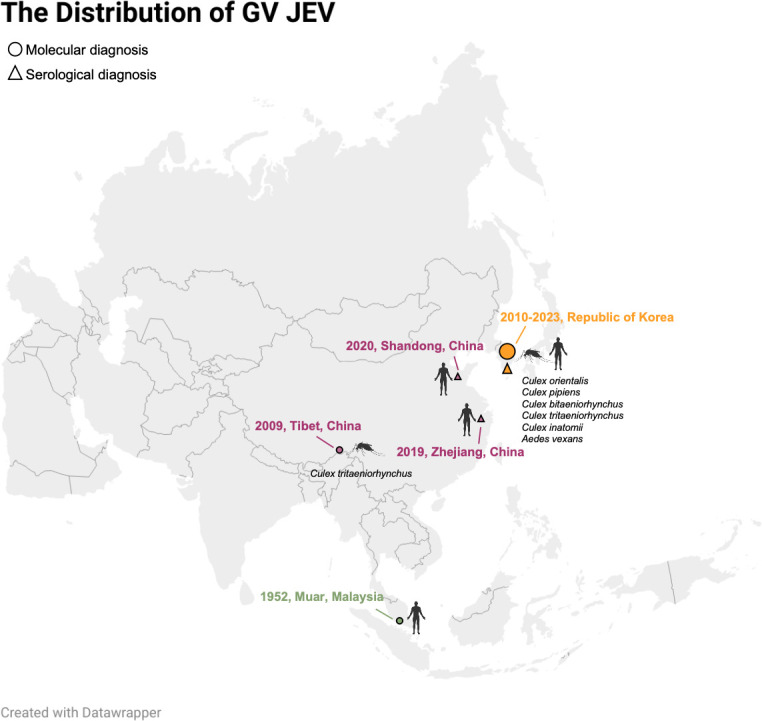 Figure 1
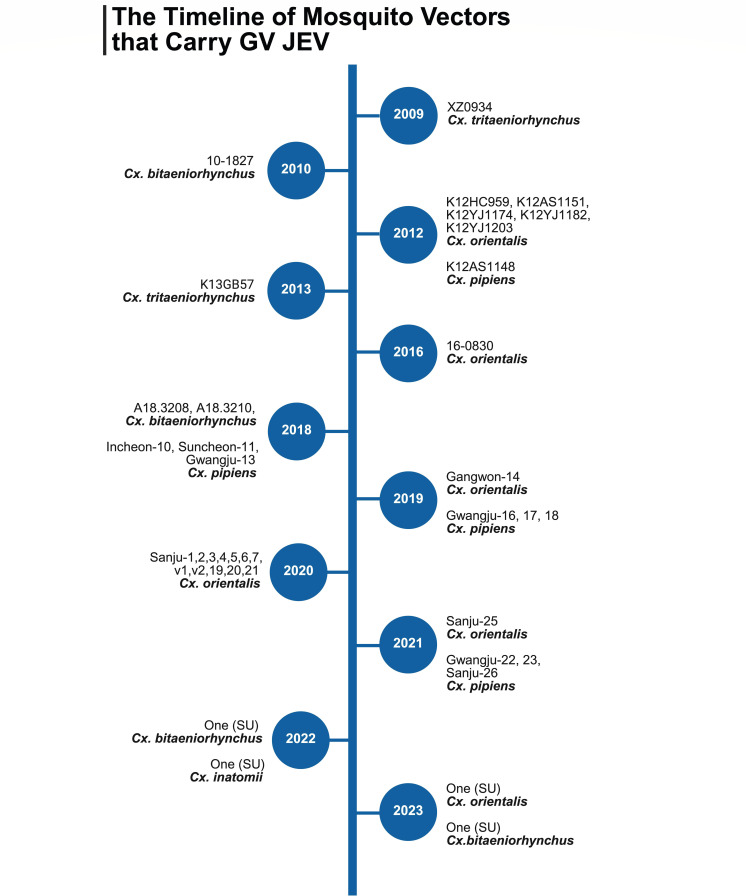 Figure 2
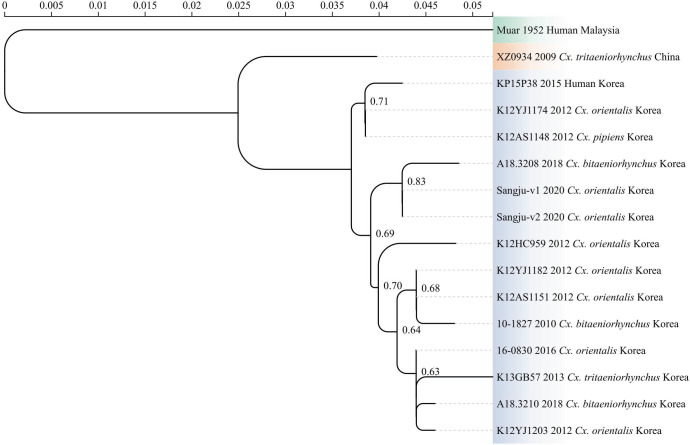 Figure 3
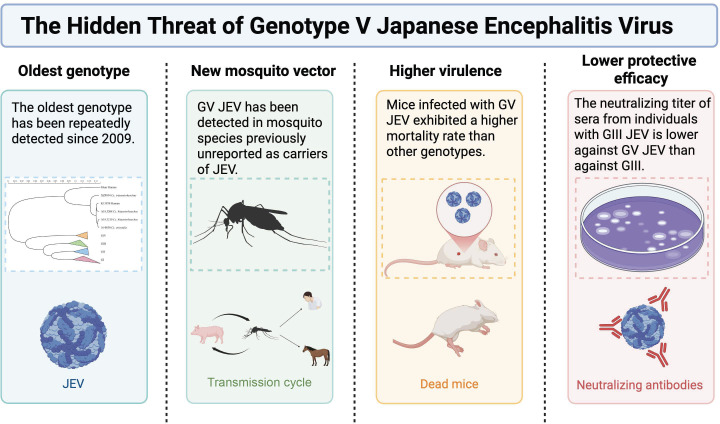 Figure 4
Peer Reviews
No public reviews on file for this paper yet. If you reviewed it on a platform where reviews are public (OpenReview, ICLR, NeurIPS, ICML), you can paste yours below so the community can read it here.
Videos
No videos yet. Explain this paper in a talk, walkthrough, or lecture? Add one.
Taxonomy
TopicsMosquito-borne diseases and control · Invertebrate Immune Response Mechanisms · Malaria Research and Control