Porcine hemagglutinating encephalomyelitis virus VW572 (not Gent/PS412 and Labadie) uses the CD81 receptor and MVB-derived exosomal pathway for efficient entry and spread in neuronal cells
W. Zaib, C. Kaviani, X. Kang, Y. Gao, F. Vanden Broucke, W. Van den Broeck, S. Coppens, S. Theuns, H. Nauwynck, K. Laval

TL;DR
This study shows that the PHEV-VW572 virus uses the CD81 receptor and exosomes to infect and spread in neuronal cells more efficiently than other PHEV isolates.
Contribution
The study identifies isolate-specific mechanisms of PHEV neurotropism, particularly the use of CD81 and exosomal pathways by PHEV-VW572.
Findings
PHEV-VW572 replicates more efficiently in neuronal cells compared to other isolates.
PHEV-VW572 uses MVB-derived exosomes for viral egress, not PHEV-Gent/PS412.
PHEV-VW572 entry is mediated by the CD81 receptor, unlike other isolates.
Abstract
Porcine hemagglutinating encephalomyelitis virus (PHEV) is considered a neurotropic coronavirus that invades the peripheral (PNS) and central (CNS) nervous system of the pig and causes acute encephalomyelitis, also known as “vomiting and wasting disease.” Recently, PHEV has been proposed as a potential surrogate virus model to further elucidate the neuropathogenesis of other betacoronaviruses. In this study, we compared key steps in the replication cycle of three distinct PHEV isolates (VW572, Gent/PS412, and Labadie) in mouse neuronal (N2a) cells. We found that PHEV-VW572 replicates more efficiently in these cells compared to the other two isolates. Interestingly, PHEV-VW572 showed high intracellular virus titers without efficient extracellular release. Further investigation revealed that PHEV-VW572, but not PHEV-Gent/PS412, mainly uses multivesicular body (MVB)-derived exosomes for…
Genes, proteins, chemicals, diseases, species, mutations and cell lines named across the full text — each resolved to its canonical identifier and authoritative record.
Click any figure to enlarge with its caption.
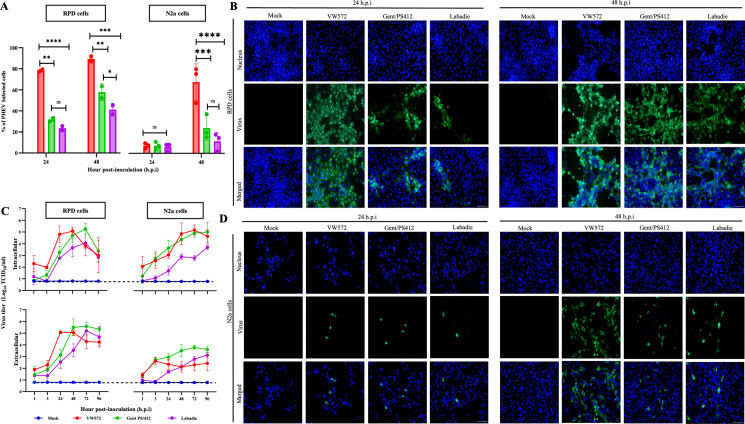 Figure 1
 Figure 2
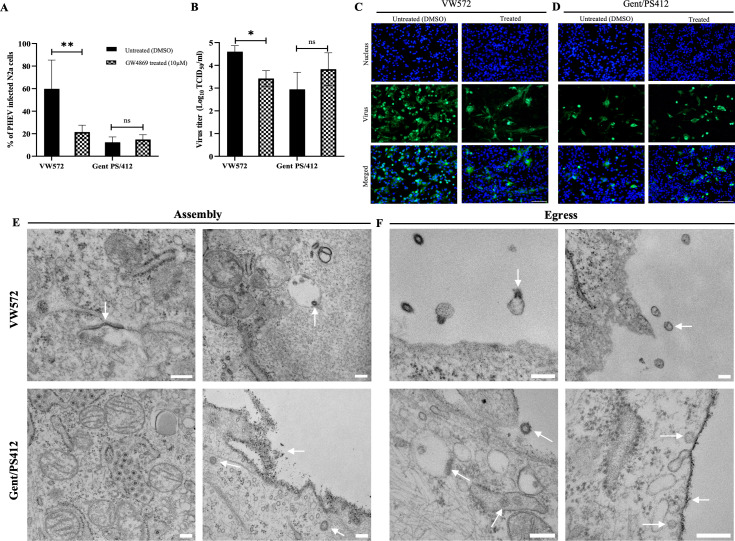 Figure 3
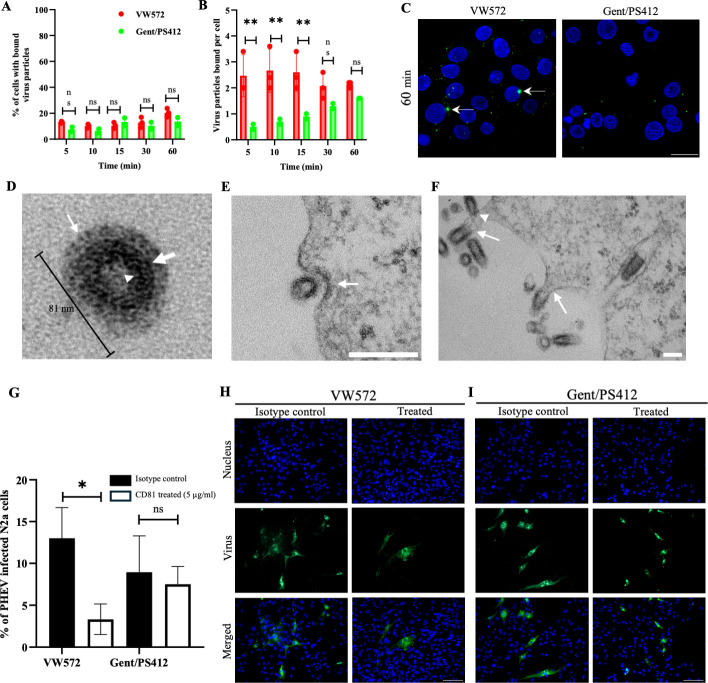 Figure 4
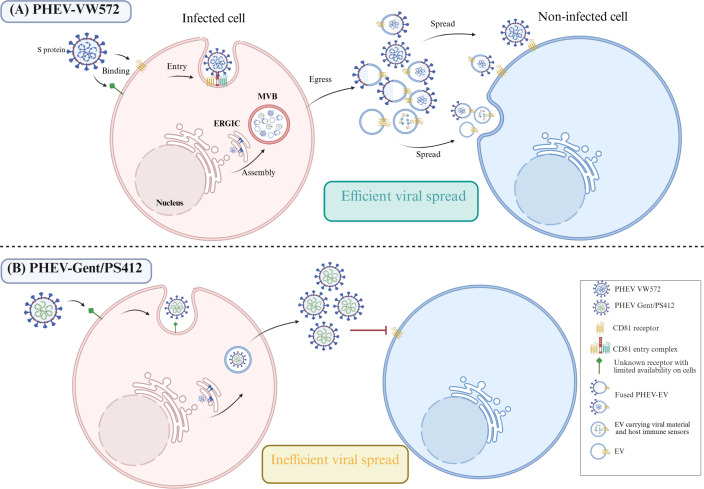 Figure 5
Peer Reviews
No public reviews on file for this paper yet. If you reviewed it on a platform where reviews are public (OpenReview, ICLR, NeurIPS, ICML), you can paste yours below so the community can read it here.
Videos
No videos yet. Explain this paper in a talk, walkthrough, or lecture? Add one.
Taxonomy
TopicsAnimal Virus Infections Studies · Viral Infections and Immunology Research · SARS-CoV-2 and COVID-19 Research