p53-mediated regulation of electron transport chain and nucleotide synthesis during Newcastle disease virus infection
Changrun Zhao, Ning Tang, Jing Wang, Yang Qu, Lei Tan, Cuiping Song, Xusheng Qiu, Ying Liao, Tingrong Luo, Chan Ding, Yingjie Sun

TL;DR
The study shows how the p53 protein controls mitochondrial function during Newcastle disease virus infection, affecting viral replication and cell survival.
Contribution
The study reveals a novel role of p53 in regulating mitochondrial metabolism during NDV infection, influencing viral replication and metabolic stress.
Findings
NDV infection disrupts mitochondrial function and increases ROS production, especially in p53-null cells.
ETC impairment limits NDV replication by restricting nucleotide biosynthesis, not through energy depletion or ROS toxicity.
p53 protects mitochondrial function and precursor availability, shaping cellular susceptibility to NDV.
Abstract
Mitochondria and their electron transport chain (ETC) constitute the central machinery for cellular energy metabolism and biosynthetic regulation. Disruption of the ETC leads to reactive oxygen species (ROS) production and metabolic imbalance, but its precise role in viral replication and infection remains to be elucidated. In this study, we used Newcastle disease virus (NDV), an important avian pathogen and a promising oncolytic virus, as a model to explore its relationship with cellular mitochondrial metabolism. We demonstrate that NDV infection induces varying degrees of mitochondrial fragmentation, membrane potential dissipation, and ROS production, especially in p53-null H1299 cells compared to p53-wild-type A549 cells. ETC impairment restricts NDV replication primarily by limiting aspartate and pyrimidine nucleotide biosynthesis, rather than through ROS-mediated cytotoxicity or…
Genes, proteins, chemicals, diseases, species, mutations and cell lines named across the full text — each resolved to its canonical identifier and authoritative record.
Click any figure to enlarge with its caption.
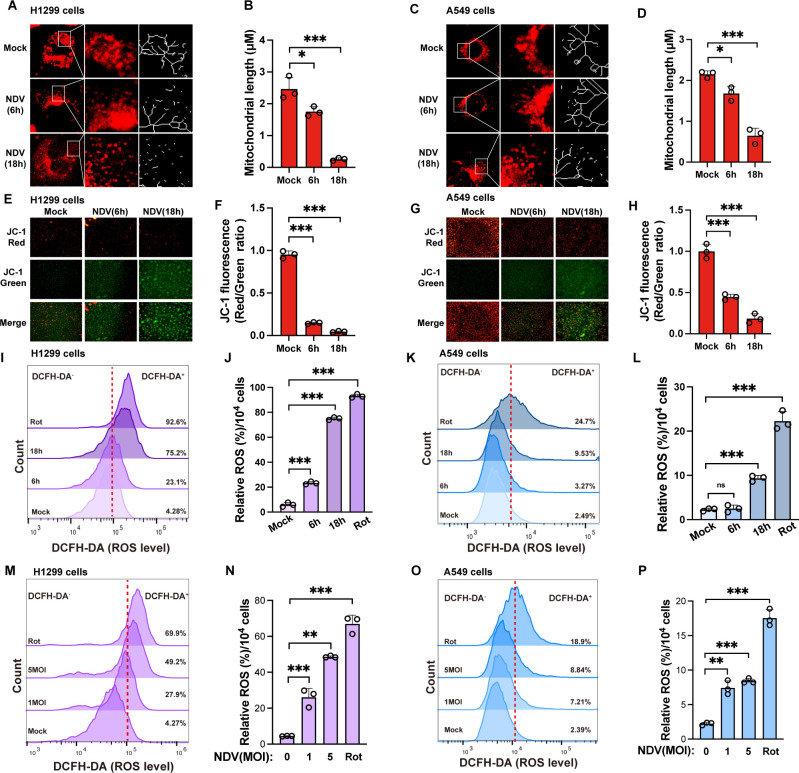 Figure 1
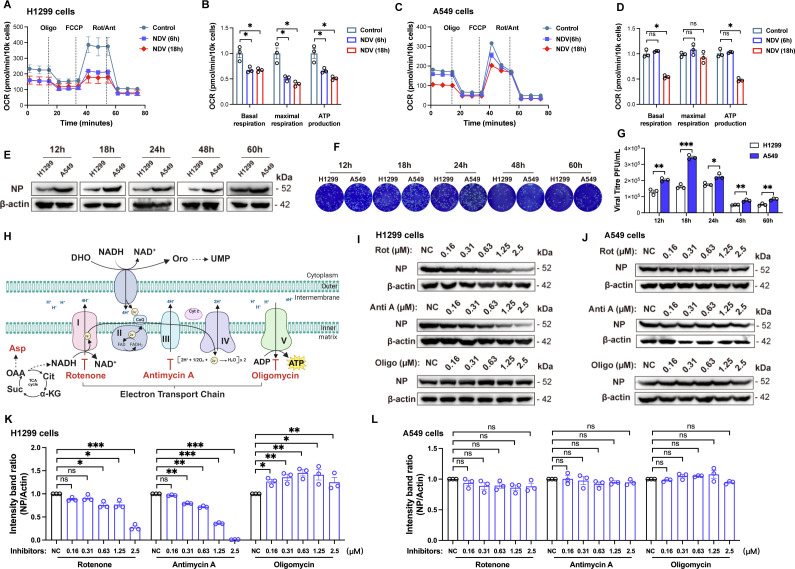 Figure 2
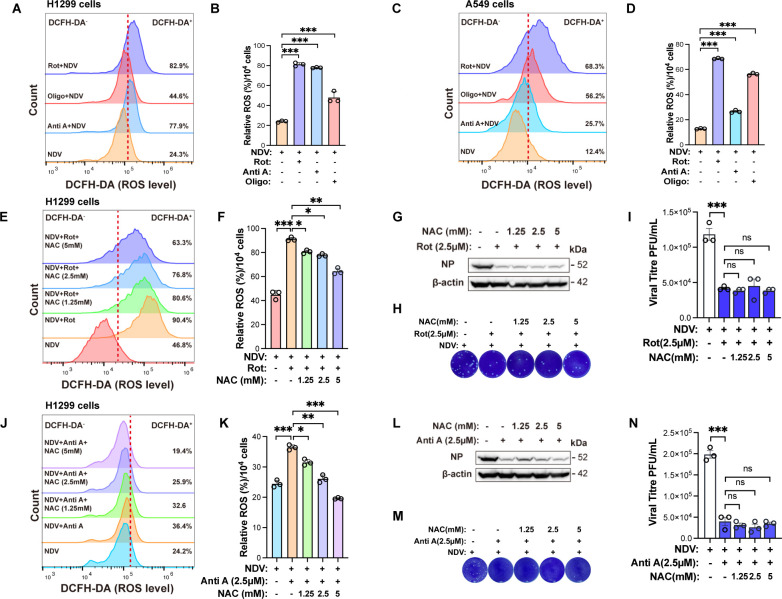 Figure 3
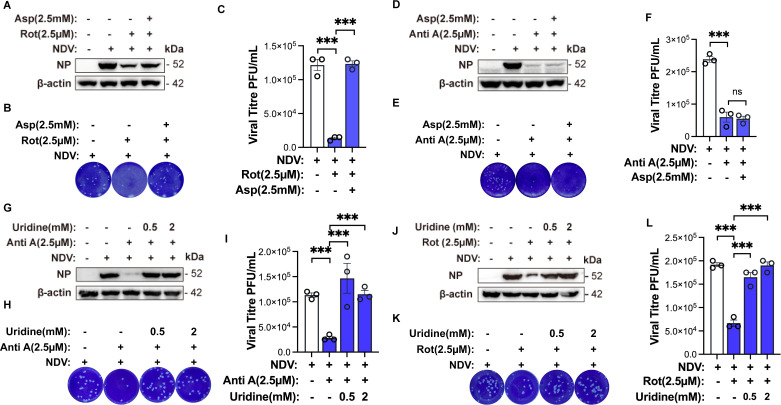 Figure 4
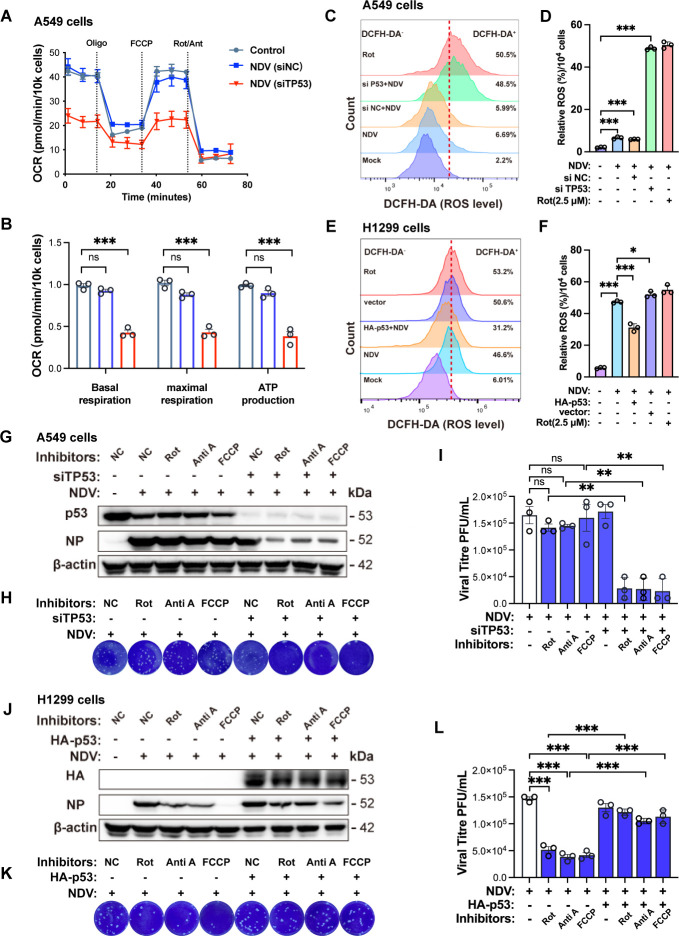 Figure 5
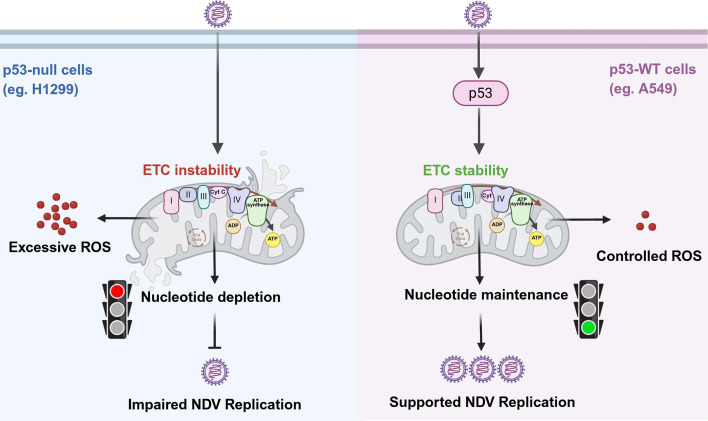 Figure 6
Peer Reviews
No public reviews on file for this paper yet. If you reviewed it on a platform where reviews are public (OpenReview, ICLR, NeurIPS, ICML), you can paste yours below so the community can read it here.
Videos
No videos yet. Explain this paper in a talk, walkthrough, or lecture? Add one.
Taxonomy
TopicsVirus-based gene therapy research · Virology and Viral Diseases · Biotin and Related Studies