APOE genotype and sex drive microbiome divergence after microbiome standardization in APOE-humanized mice
Michelle Aries Marchington, Hope Gasvoda, Makayla Michelotti, Fernando Rodriguez-Caro, Ashley Gooman, Anna Perez, Tiffany Hensley-McBain

TL;DR
This study shows how APOE genotype and sex influence gut microbiome changes over time in mice, revealing potential therapeutic targets for APOE-related diseases.
Contribution
First data on inherited microbiome divergence driven by APOE genotype and identification of genotype-specific bacterial species.
Findings
APOE2 females and males showed increased anti-inflammatory bacteria and decreased Turicibacteraceae at 6 months.
Microbiome divergence in homozygous mice was significant based on sex and APOE genotype.
Standardized microbiomes in APOE-humanized mice revealed inherited divergence at species and strain levels.
Abstract
The APOE4 allele is the greatest known genetic factor for sporadic or late-onset Alzheimer’s Disease (LOAD). Gut microbiome (GMB) dysbiosis can lead to poorer outcomes in disease. The intersection of sex, APOE genotype, inflammation, and gut microbiota is incompletely understood. Previous studies in humans and humanized APOE mice have demonstrated APOE-genotype-specific differences in the GMB. However, most of these studies were unable to resolve bacteria to the species level. It remains unclear how GMB changes with age and sex in the context of APOE genotype. In this study, humanized male mice with either APOE 2, 3, or 4 genotype were bred with the same two C57BL/6J sisters to standardize microbiomes across lines and monitor divergence based on APOE allele. Stool samples were collected at breeder set up and from the heterozygous (F1) and homozygous (F2) generations at wean and 6 months…
Genes, proteins, chemicals, diseases, species, mutations and cell lines named across the full text — each resolved to its canonical identifier and authoritative record.
Click any figure to enlarge with its caption.
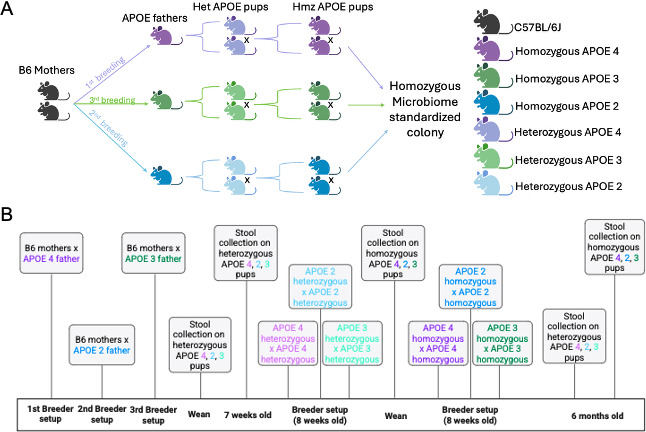 Figure 1
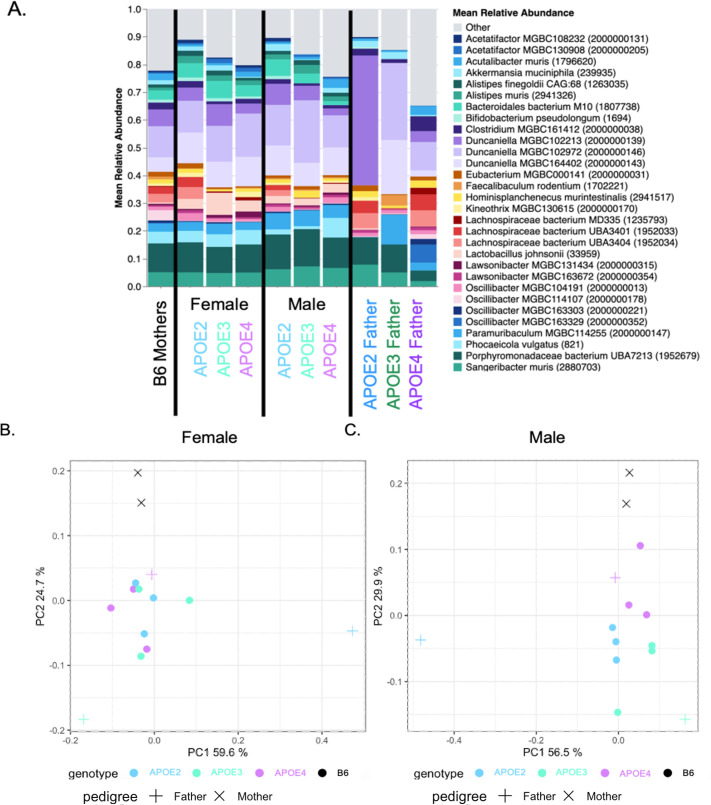 Figure 2
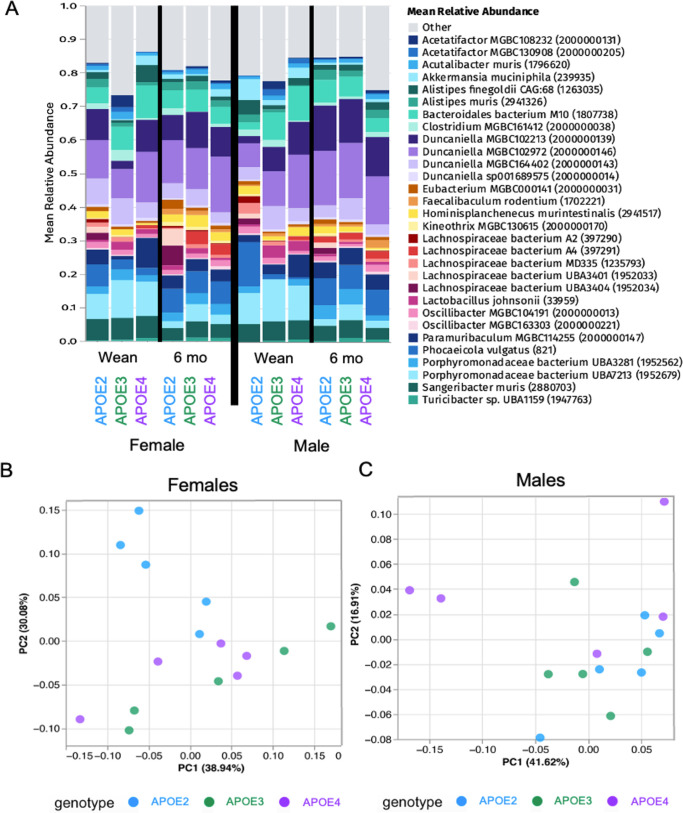 Figure 3
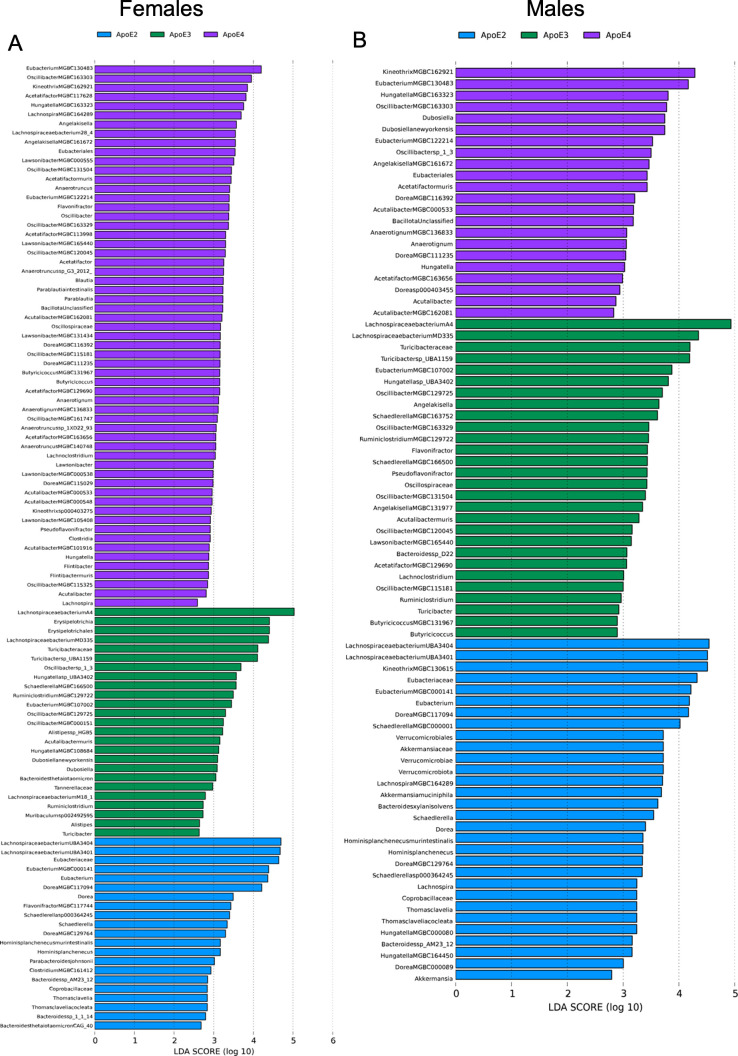 Figure 4
Peer Reviews
No public reviews on file for this paper yet. If you reviewed it on a platform where reviews are public (OpenReview, ICLR, NeurIPS, ICML), you can paste yours below so the community can read it here.
Videos
No videos yet. Explain this paper in a talk, walkthrough, or lecture? Add one.
Taxonomy
TopicsGut microbiota and health · Probiotics and Fermented Foods · Dermatology and Skin Diseases