Human cytomegalovirus UL78 is a nuclear-localized GPCR necessary for efficient reactivation from latent infection in CD34+ hematopoietic progenitor cells
Samuel Medica, Nicole L. Diggins, Michael Denton, Rebekah L. Turner, Lydia J. Pung, Adam T. Mayo, Olivia Kramer-Hansen, Jennifer Mitchell, Luke Slind, Linh K. Nguyen, Teresa A. Beechwood, Gauthami Sulgey, Craig N. Kreklywich, Daniel Malouli, Mette M. Rosenkilde, Patrizia Caposio

TL;DR
This study shows that the HCMV UL78 protein is crucial for reactivating the virus from a dormant state in blood cell precursors.
Contribution
The study identifies UL78 as a nuclear-localized GPCR essential for HCMV reactivation from latency in CD34+ hematopoietic progenitor cells.
Findings
A virus lacking UL78 fails to efficiently reactivate from latent infection in CD34+ hematopoietic progenitor cells.
UL78 preferentially couples to Gαi proteins, and this coupling is necessary for efficient reactivation.
Proteomic analysis reveals that UL78 interacts with proteins involved in trafficking, signaling, and nuclear processes.
Abstract
Human cytomegalovirus (HCMV) is a ubiquitous pathogen that persists throughout the lifetime of the host due to the establishment of latency. HCMV encodes four putative G protein-coupled receptors (GPCRs): US27, US28, UL33, and UL78. A definitive role for UL78 in HCMV infection has yet to be elucidated. Utilizing an in vitro CD34+ hematopoietic progenitor cell (HPC) model, we demonstrate that a recombinant virus lacking UL78 protein expression fails to efficiently reactivate from latent infection. Furthermore, we show that UL78 preferentially couples to the Gαi family of G proteins and that a recombinant HCMV containing mutations in the UL78 G protein-coupling DRL motif also fails to reactivate from latent infection. Together, our findings indicate that Gαi coupling is important for UL78 function during reactivation in latently infected CD34+ HPCs. To better understand the role of UL78,…
Genes, proteins, chemicals, diseases, species, mutations and cell lines named across the full text — each resolved to its canonical identifier and authoritative record.
Click any figure to enlarge with its caption.
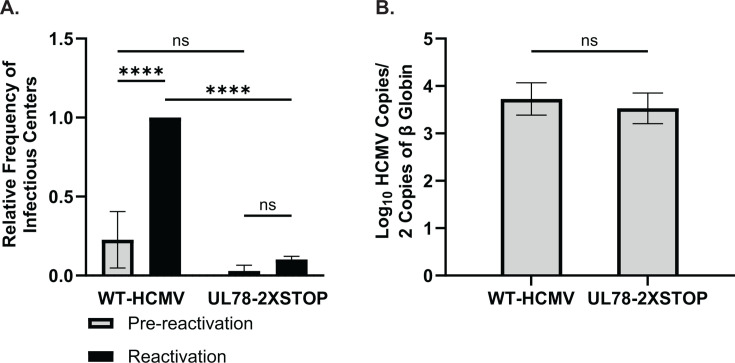 Figure 1
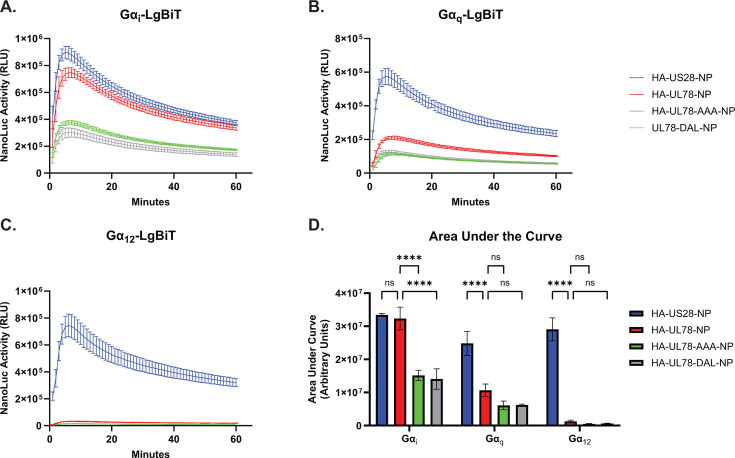 Figure 2
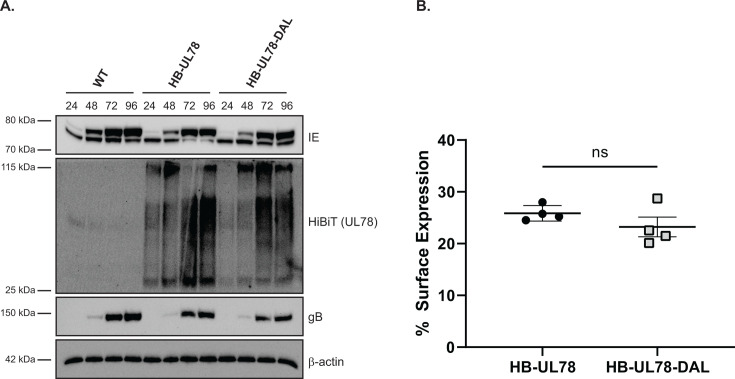 Figure 3
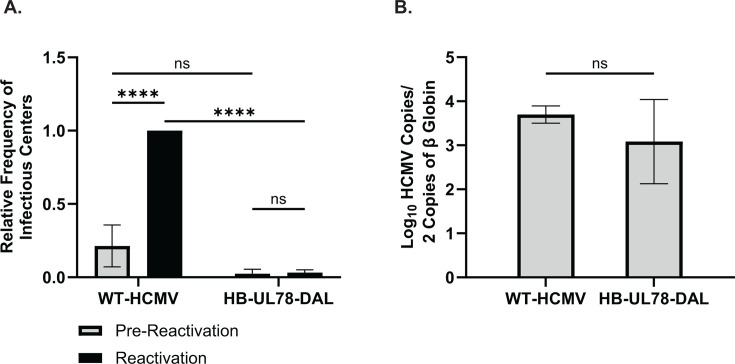 Figure 4
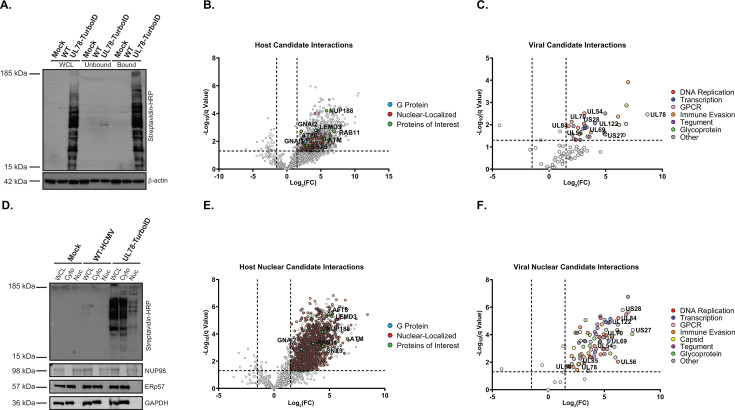 Figure 5
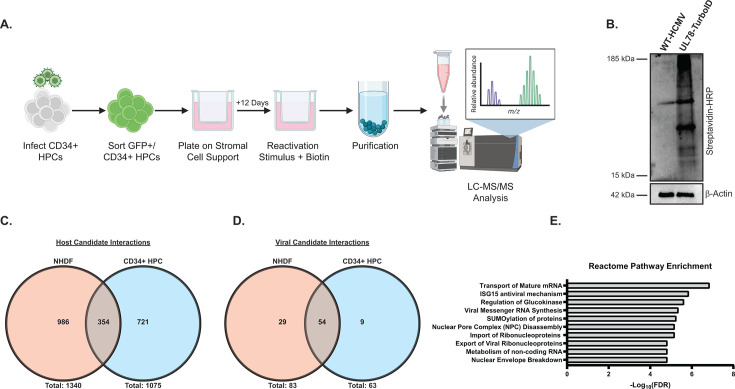 Figure 6
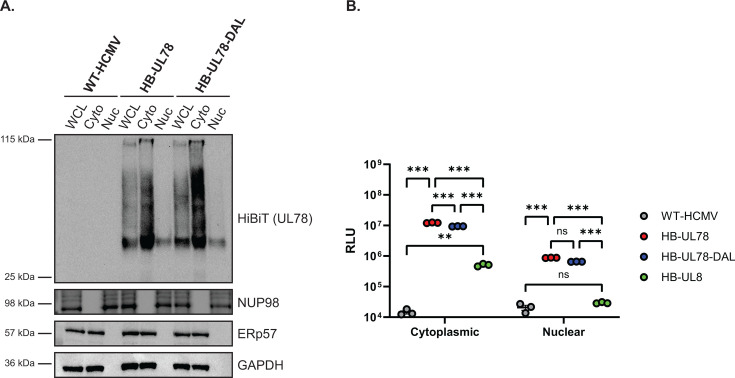 Figure 7
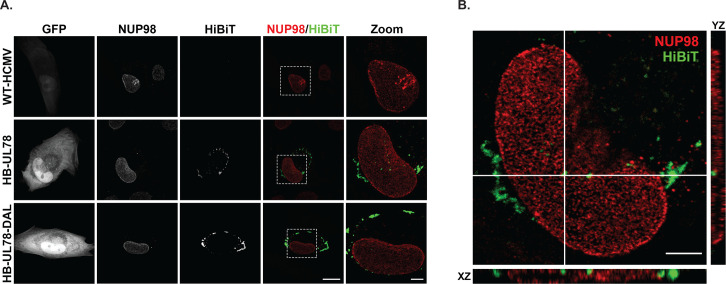 Figure 8
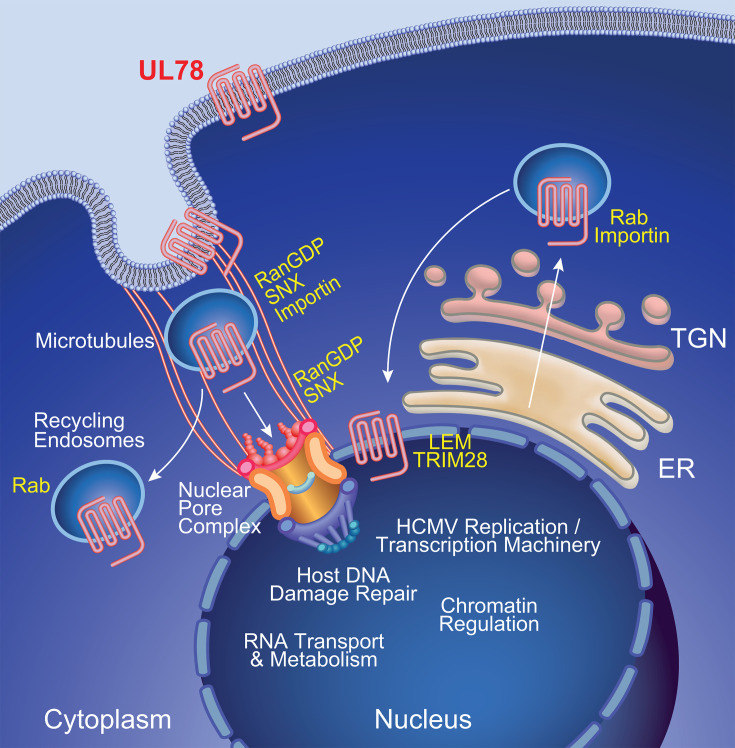 Figure 9
Peer Reviews
No public reviews on file for this paper yet. If you reviewed it on a platform where reviews are public (OpenReview, ICLR, NeurIPS, ICML), you can paste yours below so the community can read it here.
Videos
No videos yet. Explain this paper in a talk, walkthrough, or lecture? Add one.
Taxonomy
TopicsCytomegalovirus and herpesvirus research · Herpesvirus Infections and Treatments · Calcium signaling and nucleotide metabolism