Modeling immune responses of cattle to Mycobacterium bovis using magnetic bioprinted granulomas
Gesa Krueger, Brahmaiah Meesaragandla, Lea Schultze, Katharina Pape, Ulrike Zedler, Gabriele Stooß, Shah Faisal, Kati Franzke, Stefanie A. Barth, Una Janke, Stefan H. E. Kaufmann, Björn Corleis, Mihaela Delcea, Anca Dorhoi

TL;DR
Researchers created a 3D model of bovine TB granulomas to study immune responses and improve vaccine development.
Contribution
A novel magnetic bioprinted granuloma model using bovine leukocytes enables in vitro study of immune responses to mycobacteria.
Findings
Magnetic bioprinted granulomas mimic TB granulomas and show macrophage foamy phenotypes upon M. bovis BCG infection.
Lymphocytes in the model accelerate apoptotic cell death and release Th1 cytokines and chemoattractants.
The model supports spatial and temporal analysis of immune responses and cell death patterns in granulomas.
Abstract
Tuberculosis (TB) remains a threat for human and livestock health. Mycobacteria causing TB are host-adapted pathogens that occasionally spill over into other species. Mycobacterium bovis causes bovine TB, a well-known zoonosis. Mycobacterium tuberculosis is adapted to humans and can occasionally trigger symptomatic infection in cattle. However, immunocompetent cattle are resistant to experimental infection with M. tuberculosis. Hallmarks of TB in susceptible hosts are organized multicellular tissue lesions termed granulomas. In the absence of suitable in vitro systems that enable investigations of bovine tuberculous granuloma, we developed a three-dimensional granuloma model using bovine leukocytes and magnetic cell labeling. This model was termed the in vitro granuloma-like structure (IVGLS). We generated stable IVGLS resembling TB granulomas at the innate stage, composed of…
Genes, proteins, chemicals, diseases, species, mutations and cell lines named across the full text — each resolved to its canonical identifier and authoritative record.
Click any figure to enlarge with its caption.
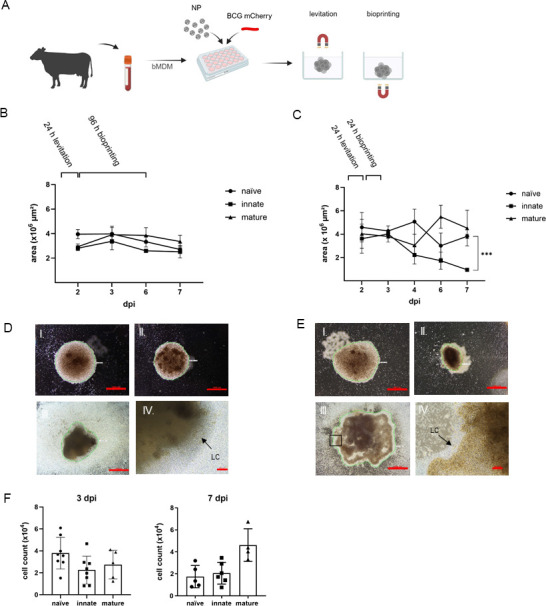 Figure 1
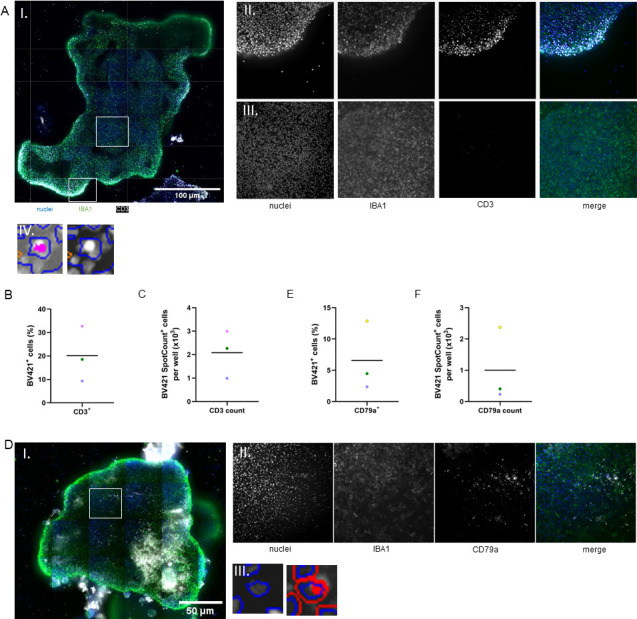 Figure 2
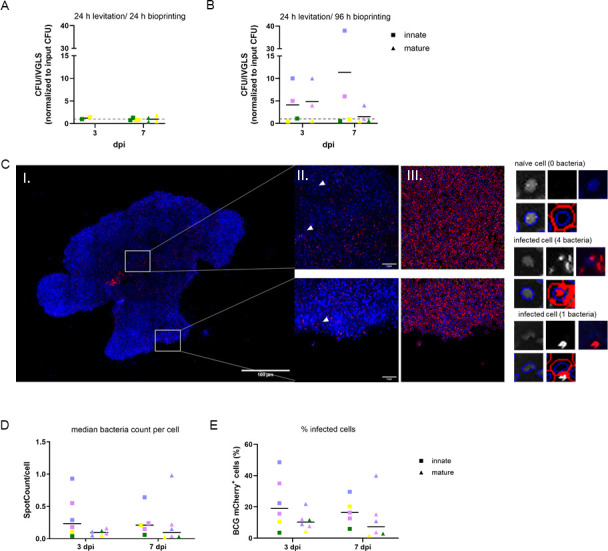 Figure 3
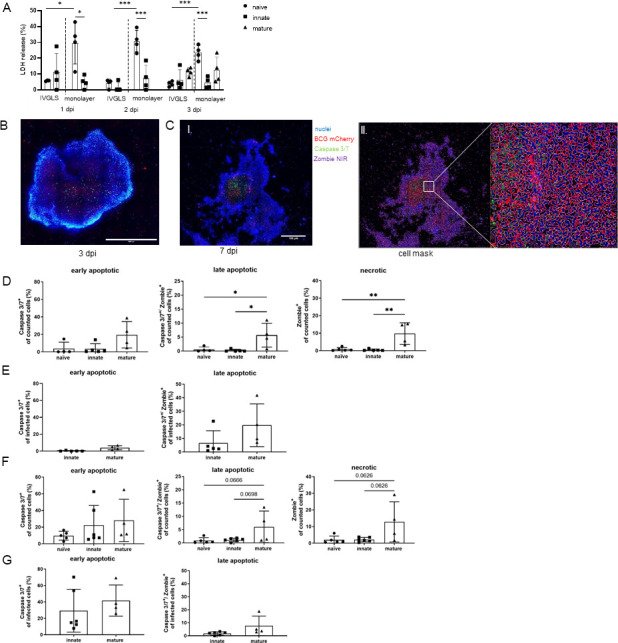 Figure 4
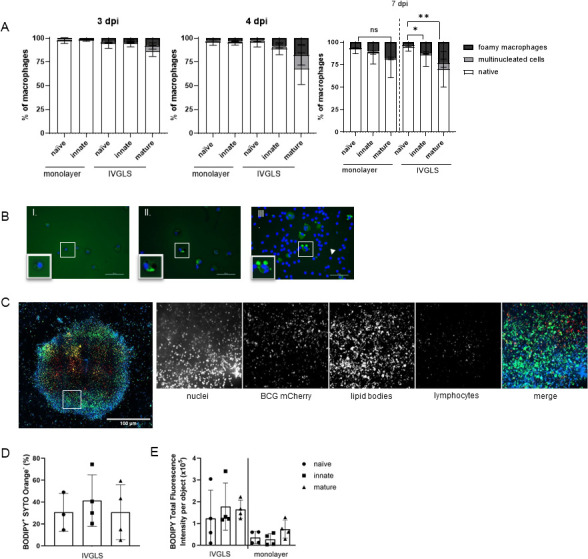 Figure 5
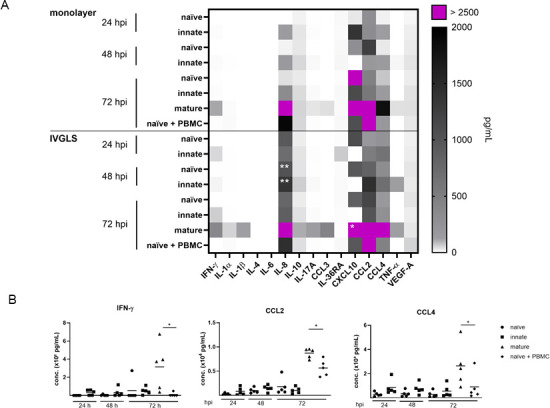 Figure 6
 Figure 7
Peer Reviews
No public reviews on file for this paper yet. If you reviewed it on a platform where reviews are public (OpenReview, ICLR, NeurIPS, ICML), you can paste yours below so the community can read it here.
Videos
No videos yet. Explain this paper in a talk, walkthrough, or lecture? Add one.
Taxonomy
TopicsTuberculosis Research and Epidemiology · Microbial infections and disease research · Mycobacterium research and diagnosis