Heterogeneous viromes in the salivary glands, ovaries, and midguts suggested differential viral transmission advantages of six tick genera
Jun Ni, Abulimiti Moming, Qi Chen, Yi Huang, Jian Xiao, Yang Wu, Xiaoli Wu, Chenxuan Li, Liyan Fu, Yuan Bai, Yaohui Fang, Jun Wang, Zhaojun Fan, Bo Wang, Yujiang Zhang, Feifei Yin, Jingfeng Xiong, Shaung Tang, Xuhua Guan, Fei Deng, Shu Shen

TL;DR
This study explores how different tick species transmit viruses by analyzing viromes in key tissues, revealing that some ticks are better at spreading viruses through biting or to their offspring.
Contribution
The study identifies differential viral transmission advantages among six tick genera based on viromic heterogeneity in salivary glands, ovaries, and midguts.
Findings
Ovaries of Rhipicephalus, Dermacentor, and Hyalomma showed high viral abundance, suggesting vertical transmission advantages.
Salivary glands of Haemaphysalis and Ixodes had high viral abundance, indicating advantages for horizontal transmission.
Midguts of Rhipicephalus, Haemaphysalis, Dermacentor, and Ixodes exhibited high viral diversity.
Abstract
The transmission of tick-borne viruses is associated with the biological functions of tick tissues. This study investigated the viromes in salivary glands, ovaries, and midguts collected from nine tick species of six genera and identified 49 viruses from at least 14 families. A variety of viral abundance and diversity across the three tissues was demonstrated. Ovaries of Rhipicephalus (Boophilus), Rhipicephalus, Dermacentor, and Hyalomma exhibited high viral abundance, suggesting their vertical transmission advantages, while high viral abundance observed in the salivary glands of Haemaphysalis and Ixodes indicated their advantage for horizontal transmission. Midguts of Rhipicephalus (Boophilus), Haemaphysalis, Dermacentor, and Ixodes exhibited high viral diversity, as did the salivary glands of Rhipicephalus and Hyalomma. Viruses found across the three tissues (tissue-common viruses)…
Genes, proteins, chemicals, diseases, species, mutations and cell lines named across the full text — each resolved to its canonical identifier and authoritative record.
Click any figure to enlarge with its caption.
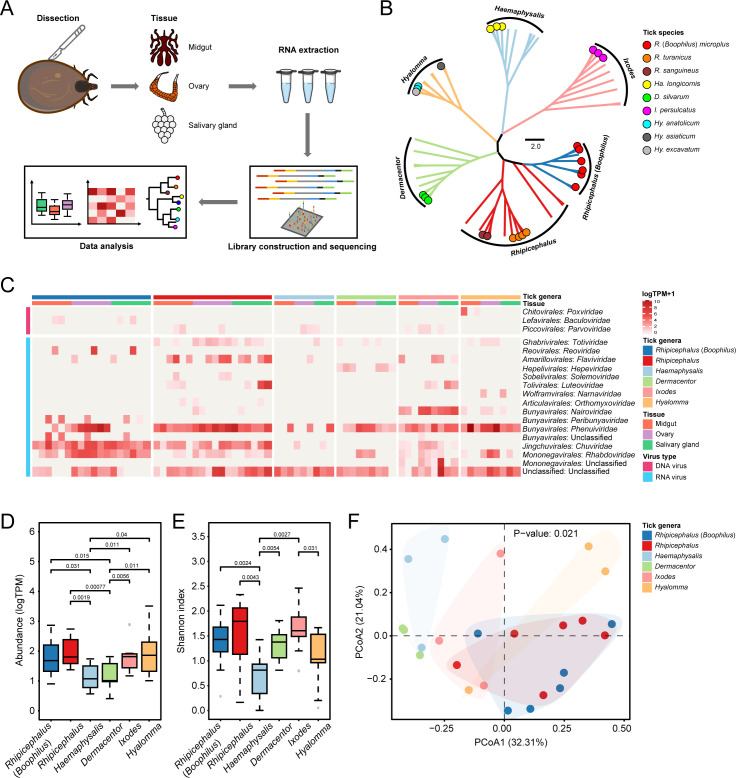 Figure 1
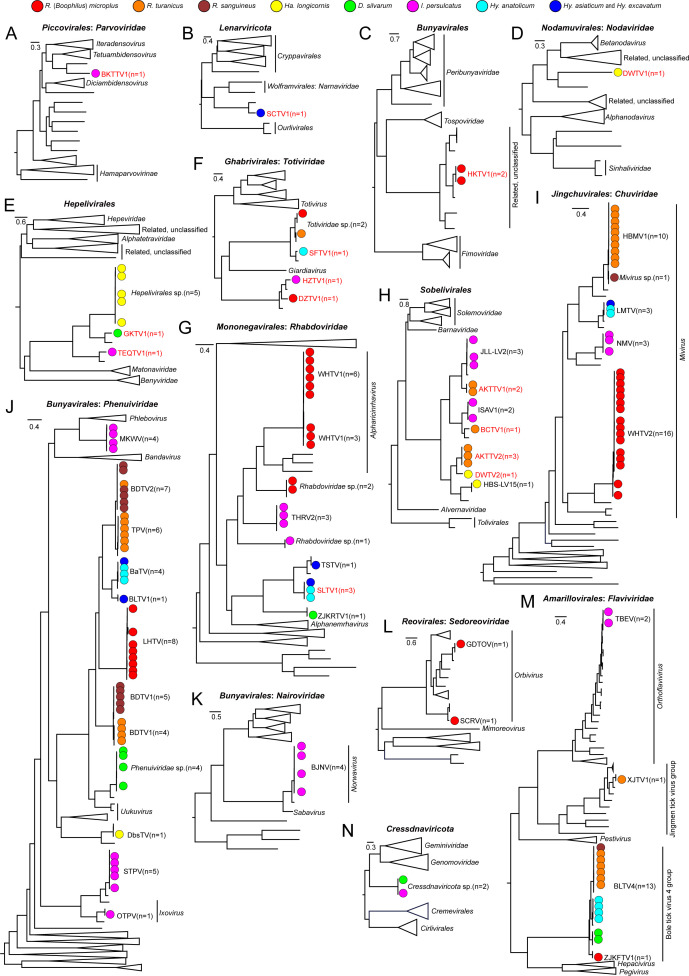 Figure 2
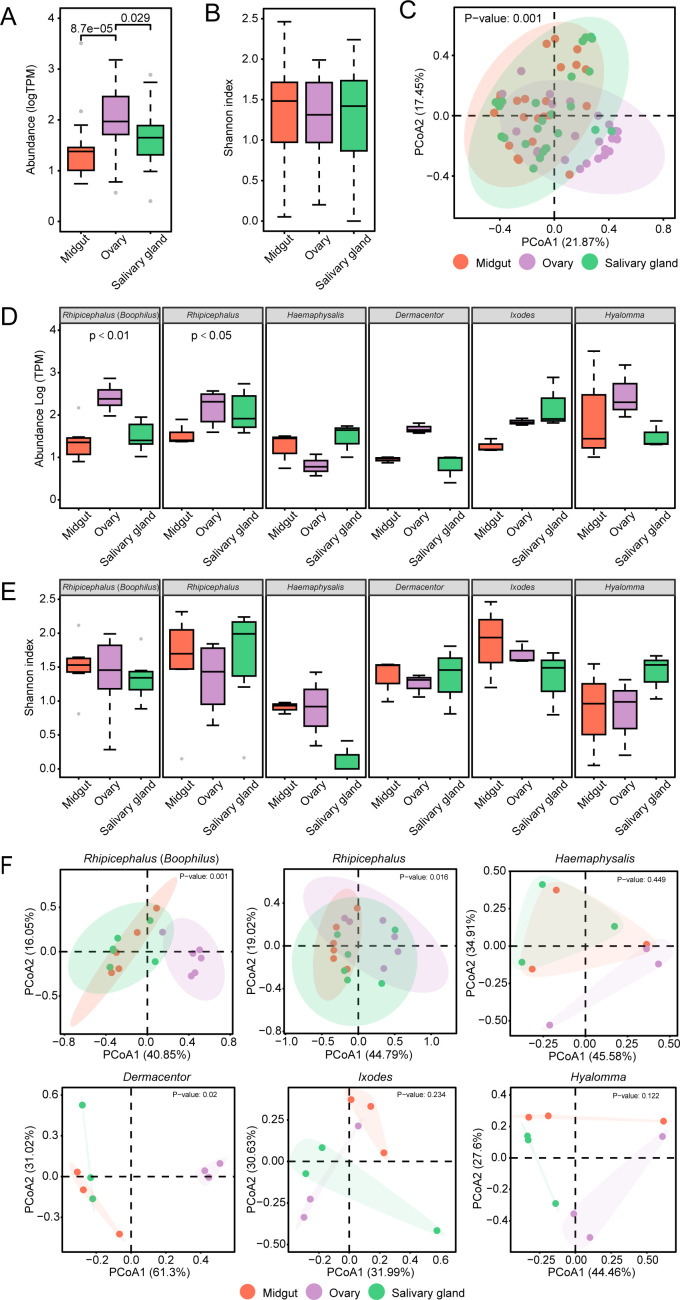 Figure 3
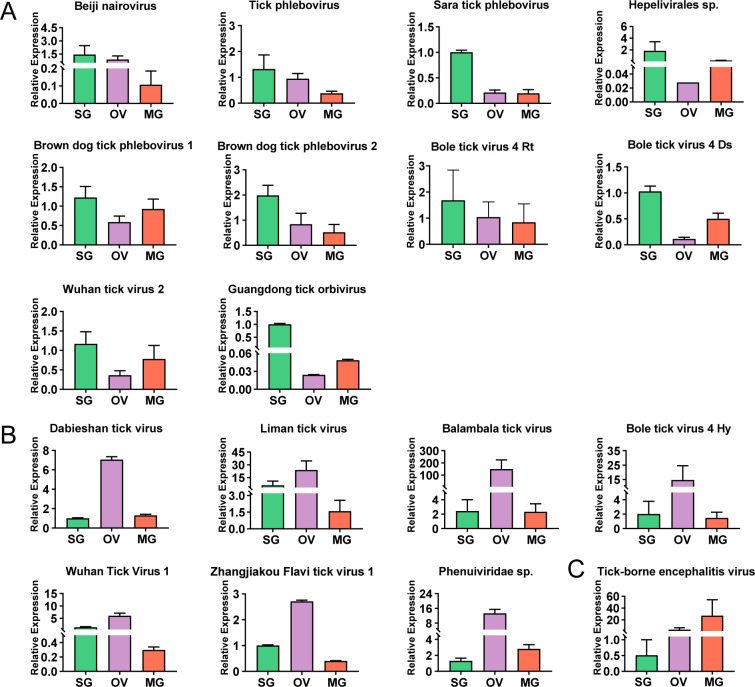 Figure 4
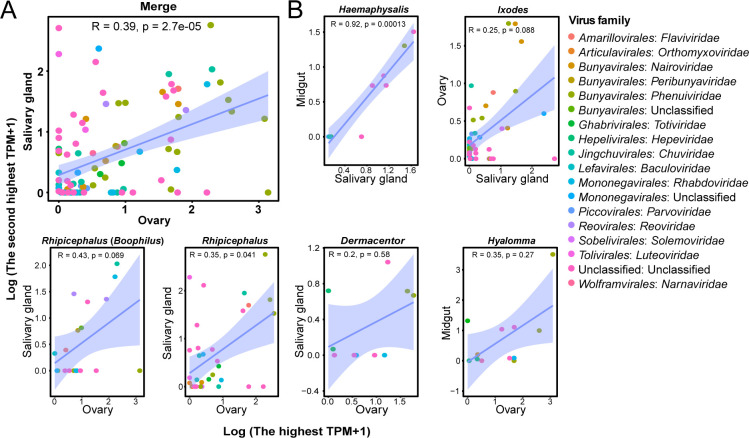 Figure 5
Peer Reviews
No public reviews on file for this paper yet. If you reviewed it on a platform where reviews are public (OpenReview, ICLR, NeurIPS, ICML), you can paste yours below so the community can read it here.
Videos
No videos yet. Explain this paper in a talk, walkthrough, or lecture? Add one.
Taxonomy
TopicsViral Infections and Vectors · Vector-borne infectious diseases · Vector-Borne Animal Diseases