Metagenomic insights into soil microbial diversity and antibiotic resistance genes in pristine karst tiankeng ecosystems
Cong Jiang, Yuqing Wu, Changchun Qiu, Sufeng Zhu, Yiyi Zhang, Wei Shui

TL;DR
This study explores microbial diversity and antibiotic resistance genes in untouched karst sinkhole ecosystems, revealing unique microbial networks and resistance patterns.
Contribution
The study provides novel insights into microbial composition and antibiotic resistance genes in pristine karst tiankengs, previously unexplored environments.
Findings
Non-degraded tiankengs maintain complex and stable microbial networks dominated by Proteobacteria, Actinobacteria, and Acidobacteria.
ARGs like CeoB, AcrB, and MexF are prevalent, hosted mainly by Paraburkholderia, Rhodococcus, Bradyrhizobium, and Agromyces.
Soil factors influence microbial communities more than antibiotic resistance genes in these ecosystems.
Abstract
Surveys of microorganisms and antibiotic resistance genes (ARGs) in edaphic systems have centered on those in human-impacted environments, with relatively little information from primitive environments. The karst tiankeng (also known as sinkholes) is the largest negative terrain on the earth’s surface, and the trapped terrain keeps the interior relatively pristine. In this study, three of the most representative tiankeng types (severely, moderately, and non-degraded tiankengs) were selected, and microbial composition, function, and their association with ARGs were determined using metagenetic techniques. The dominant phyla in karst tiankengs were Proteobacteria, Actinobacteria, and Acidobacteria; the dominant archaea were Crenarchaeota; and the dominant fungi were Ascomycota. The non-degrade tiankeng maintains a complex and stable microbial network. The major functional profiles of the…
Genes, proteins, chemicals, diseases, species, mutations and cell lines named across the full text — each resolved to its canonical identifier and authoritative record.
Click any figure to enlarge with its caption.
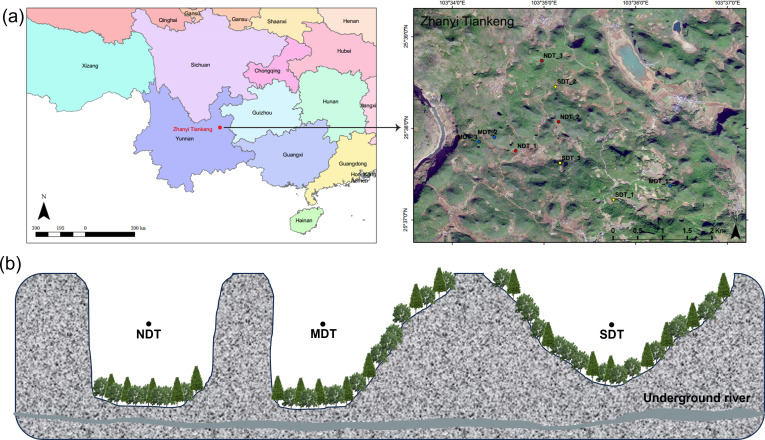 Figure 1
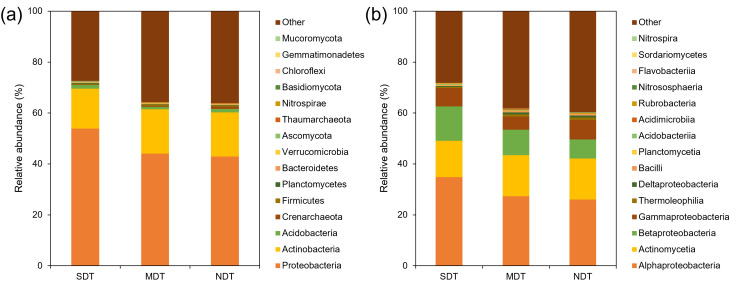 Figure 2
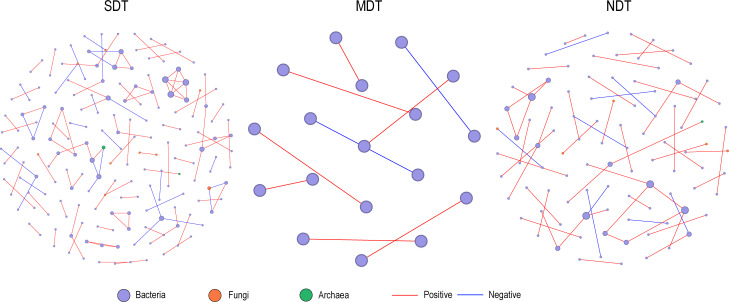 Figure 3
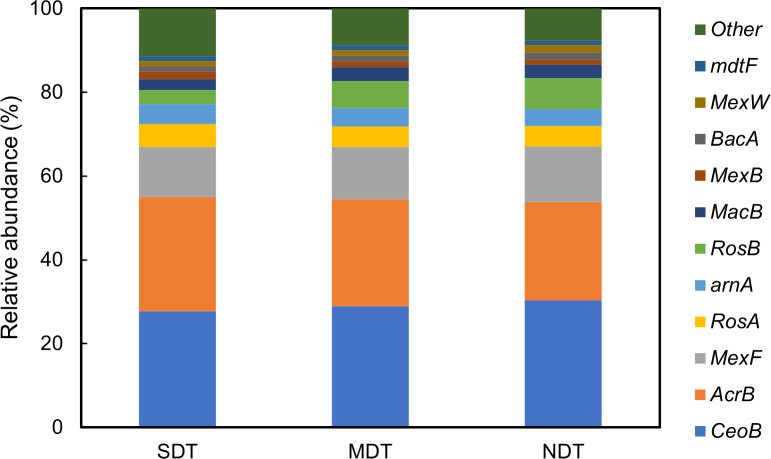 Figure 4
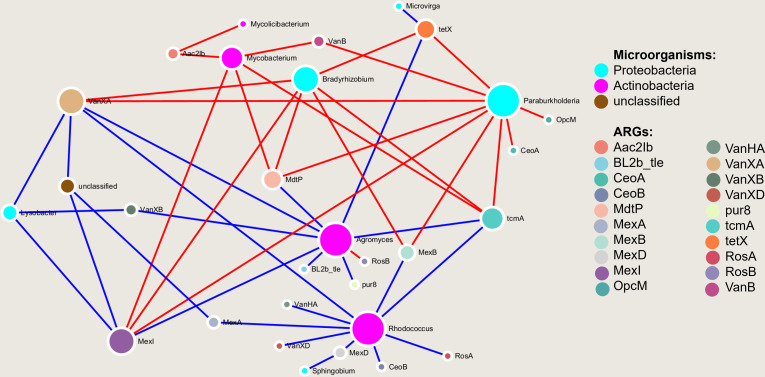 Figure 5
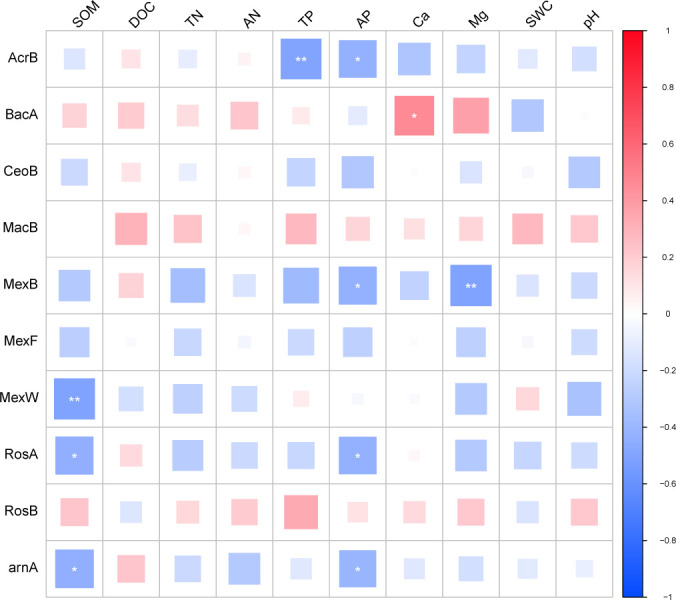 Figure 6
Peer Reviews
No public reviews on file for this paper yet. If you reviewed it on a platform where reviews are public (OpenReview, ICLR, NeurIPS, ICML), you can paste yours below so the community can read it here.
Videos
No videos yet. Explain this paper in a talk, walkthrough, or lecture? Add one.
Taxonomy
TopicsMicrobial Community Ecology and Physiology · Genomics and Phylogenetic Studies · Pharmaceutical and Antibiotic Environmental Impacts