Spatially resolved single-cell transcriptome analysis of murine Salmonella infection reveals the role of distal colonocytes in the inflammatory response
Dan Xu, Ruifen Zhang, Shanshan Li, Can Guo, Chenglin Guan, Xiang Li, Mengyao Guo, Xin Xu, Yaxin Liu, Chenyi Mao, Peisen Sun, Xiaomin Dang, Diya Sun, Chengyao Wang, Stephen J. Bush, Kai Ye

TL;DR
This study uses advanced sequencing to map how different parts of the mouse intestine respond to Salmonella infection, highlighting the role of distal colon cells in triggering inflammation.
Contribution
The study reveals the spatiotemporal transcriptomic landscape of Salmonella-induced intestinal inflammation and identifies distal colonocytes as key responders.
Findings
Distal colonocytes are the most responsive epithelial cells during the early stages of Salmonella infection.
A human colonocyte population with similarities to murine distal colonocytes was identified using single-cell transcriptome data.
The research provides insights into compartmentalized immune responses in the intestine during infection.
Abstract
The intestine is a highly compartmentalized organ, with distinct segments exhibiting both varying susceptibilities and responses to enteric pathogens, although the cellular and molecular bases of these responses remain elusive. Here, we used Salmonella Typhimurium (S. Tm), a prominent enteric pathogen that causes human colitis, to establish a murine model of Salmonella enterocolitis. By integrating bulk RNA-seq, single-cell RNA-seq, and spatial RNA-seq data, we present a comprehensive spatiotemporal single-cell transcriptomic landscape of the colon over a week-long time course of infection. We identified the distal colon as the intestinal segment where most of the host responses were initiated, with distal colonocytes (DCCs) being the most responsive epithelial cells upon the onset of infection. Furthermore, by correlating our findings with human intestinal single-cell transcriptome…
Genes, proteins, chemicals, diseases, species, mutations and cell lines named across the full text — each resolved to its canonical identifier and authoritative record.
Click any figure to enlarge with its caption.
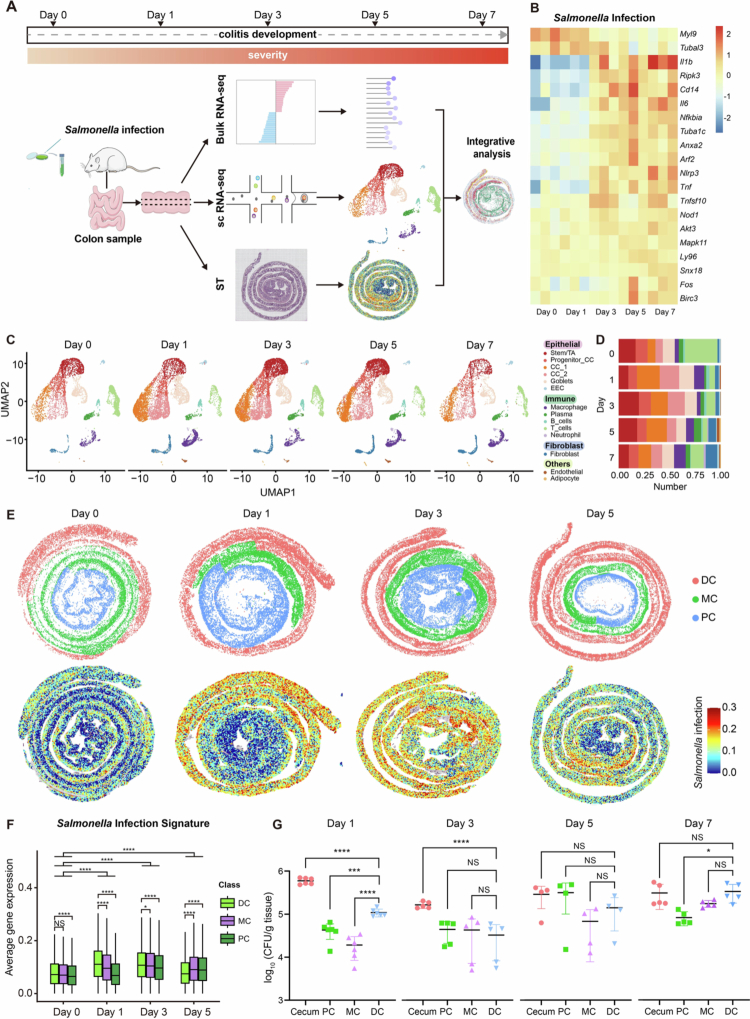 Figure 1
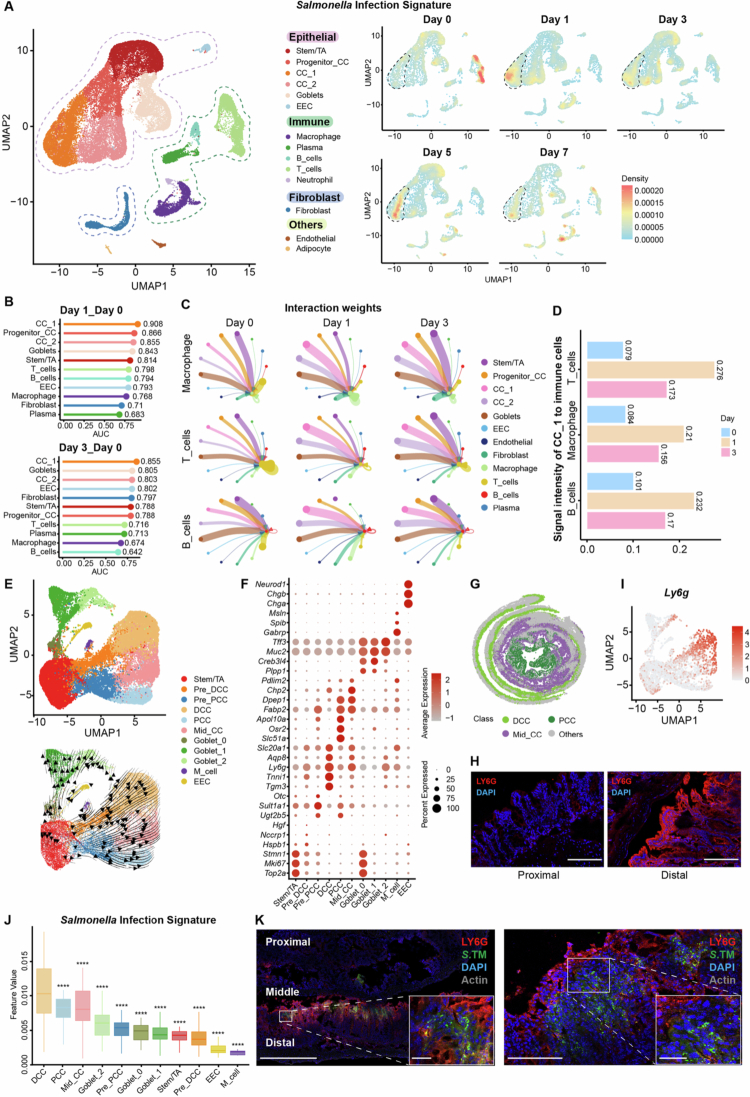 Figure 2
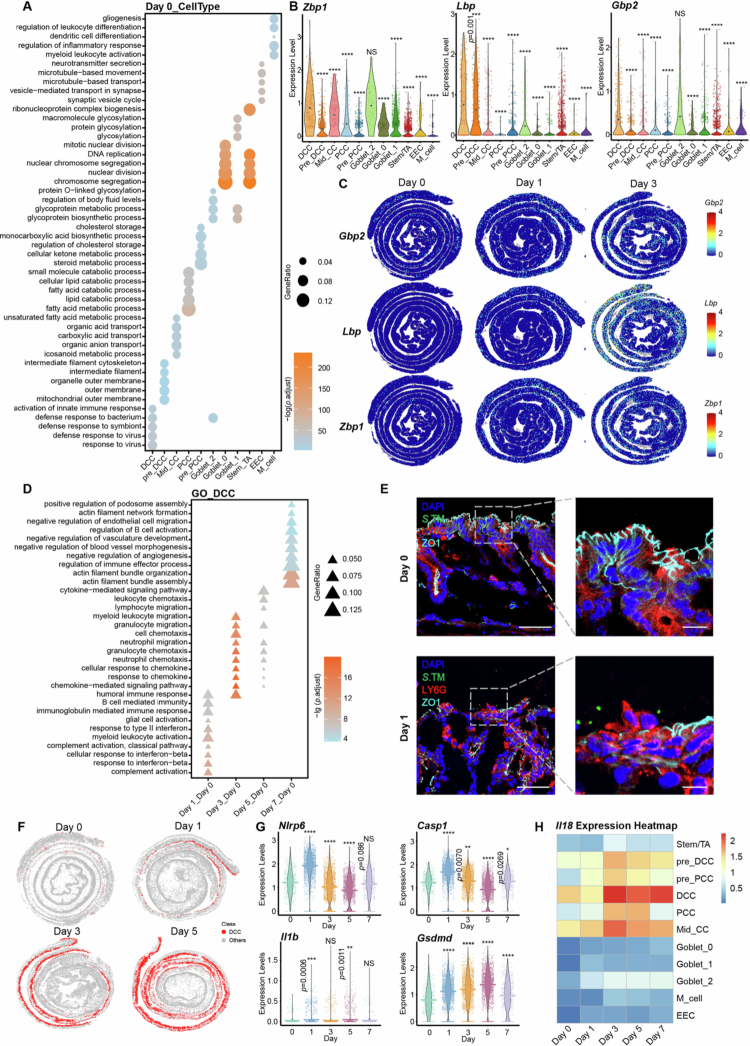 Figure 3
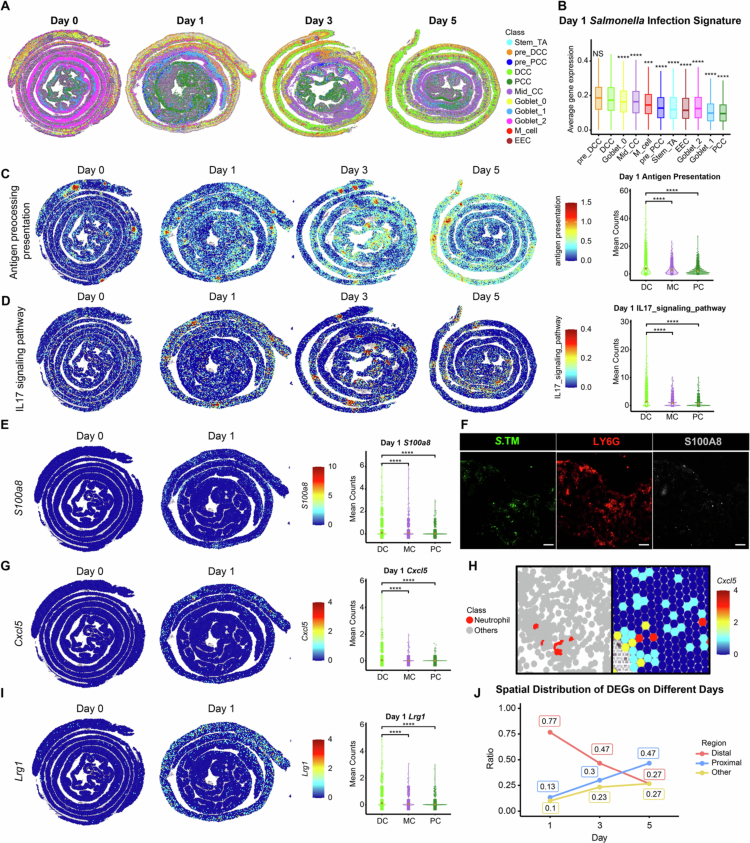 Figure 4
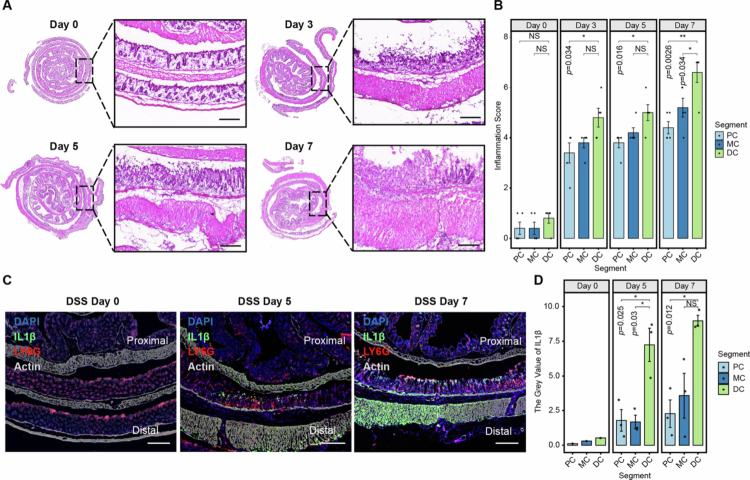 Figure 5
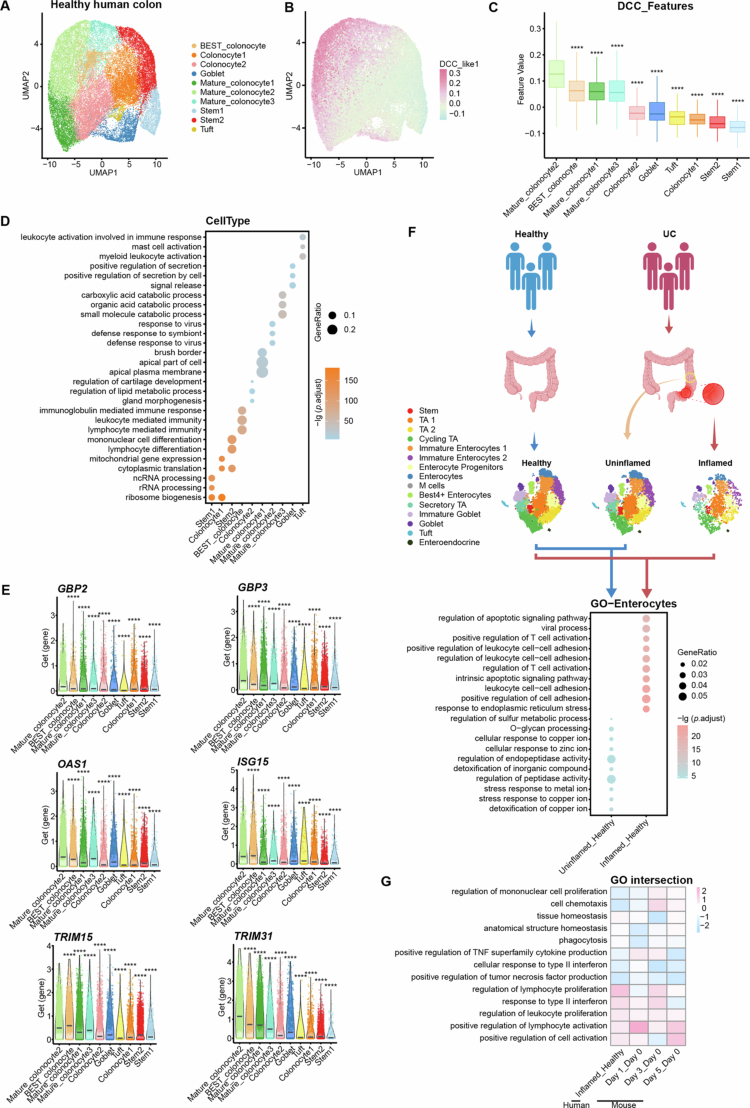 Figure 6
Peer Reviews
No public reviews on file for this paper yet. If you reviewed it on a platform where reviews are public (OpenReview, ICLR, NeurIPS, ICML), you can paste yours below so the community can read it here.
Videos
No videos yet. Explain this paper in a talk, walkthrough, or lecture? Add one.
Taxonomy
TopicsSingle-cell and spatial transcriptomics · Gut microbiota and health · Salmonella and Campylobacter epidemiology