Crosstalk between skeletal muscle and the brain during physical activity - in search of epigenetic mechanisms
Cayla Boycott, Ewa Kilanczyk, Huiying A. Zhang, Jiaxi Zhang, Arian Abolhassani, Malgorzata Kubiak, Jan Celichowski, Katarzyna Kryściak, Dominika Gruszka, Joanna H. Sliwowska, Barbara Stefanska

TL;DR
This review explores how physical activity improves brain function through communication between muscles and the brain, focusing on epigenetic changes.
Contribution
The paper highlights novel epigenetic mechanisms in muscle-brain crosstalk during exercise and their implications for cognitive health.
Findings
Myokines like cathepsin B and irisin mediate muscle-brain communication and influence cognitive functions.
Exercise alters gene expression through epigenetic modifications, impacting metabolic and cognitive health.
Obesity and diabetes are linked to cognitive decline, which may be mitigated by exercise-induced muscle-brain crosstalk.
Abstract
Recent research highlights the crucial role of muscle-brain crosstalk in metabolic regulation, particularly in individuals with type 2 diabetes and obesity. Myokines, protein hormones secreted by skeletal muscle, play a crucial role in this communication, influencing brain functions such as neuroplasticity, memory, and mood. Specific myokines like cathepsin B, FNDC5/irisin and interleukin-6 have been identified as key players in this muscle-brain axis. Physical activity modulates the production of these molecular factors, enhancing muscle-brain crosstalk and influencing cellular interactions. Moreover, exercise training may lead to adaptive long-term changes in gene expression, mediated by epigenetic regulators. Metabolic pathways activated during exercise can directly impact epigenetic marks by modulating the availability of metabolic intermediates required for these modifications. In…
Genes, proteins, chemicals, diseases, species, mutations and cell lines named across the full text — each resolved to its canonical identifier and authoritative record.
Click any figure to enlarge with its caption.
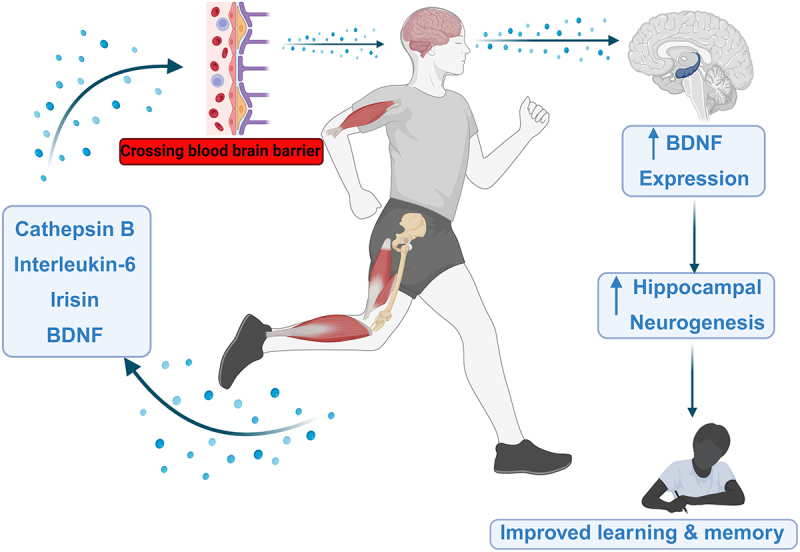 Figure 1
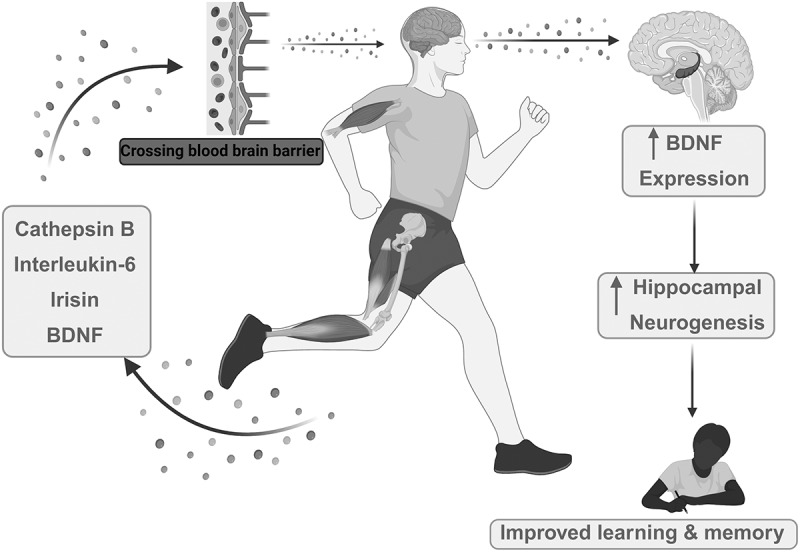 Figure 2
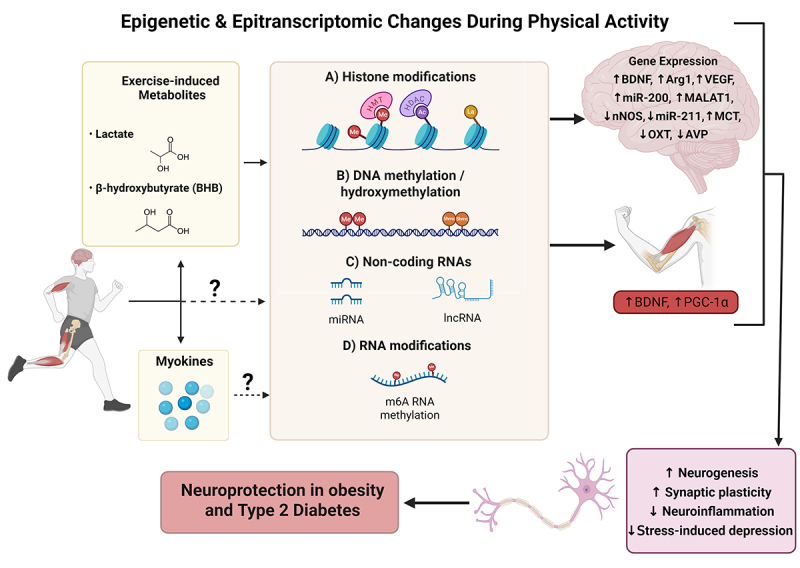 Figure 3
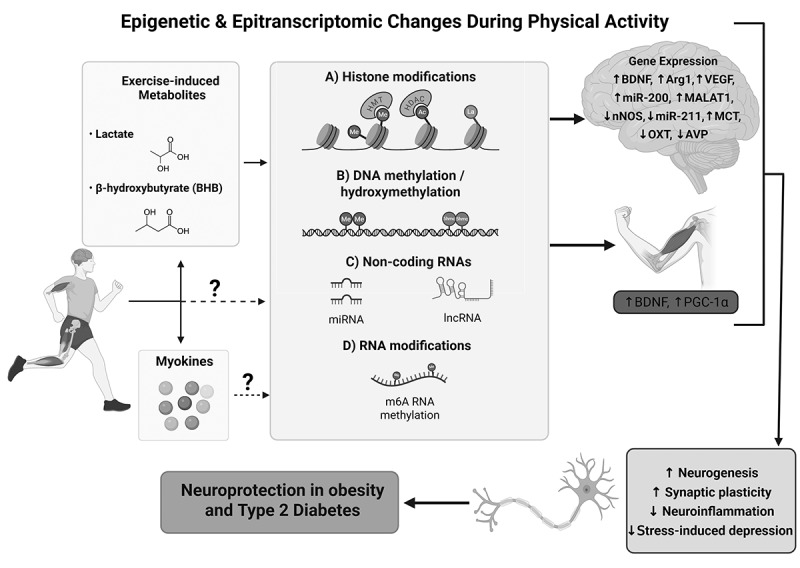 Figure 4
Peer Reviews
No public reviews on file for this paper yet. If you reviewed it on a platform where reviews are public (OpenReview, ICLR, NeurIPS, ICML), you can paste yours below so the community can read it here.
Videos
No videos yet. Explain this paper in a talk, walkthrough, or lecture? Add one.
Taxonomy
TopicsAdipose Tissue and Metabolism · Regulation of Appetite and Obesity · Renin-Angiotensin System Studies