Epidemiology, evolution, and biological characteristics of avian influenza A (H11) viruses from wild birds
Zhiguo Zhao, Jingman Tian, Xiaoli Bai, Minghui Li, Xingdong Song, Jiaying Li, Jianzhong Shi, Huihui Kong, Xianying Zeng, Guobin Tian, Jinxiong Liu, Chengjun Li, Hualan Chen, Yanbing Li

TL;DR
This paper studies H11 avian influenza viruses in wild birds, showing they can evolve to bind human cells and cause disease in mice, posing a public health risk.
Contribution
The study reveals new mutations in H11 viruses that enhance human receptor binding and mammalian virulence, highlighting their pandemic potential.
Findings
H11 viruses from wild birds have acquired mutations linked to human receptor binding and increased mammalian virulence.
Seven genotypes of H11 viruses were identified through genomic recombination with other avian influenza subtypes.
Some H11 isolates can infect mice directly and exhibit dual receptor binding specificity.
Abstract
H11 subtype avian influenza viruses (AIVs) have been identified in both wild and domestic birds. H11N9 viruses from wild birds provided the NA gene to human H7N9 virus in 2013 in China, which caused five waves of human infections. During active surveillance in wild birds in China, 17 H11 viruses were isolated between December 2022 and January 2024, including six H11N1, one H11N2, one H11N3, and nine H11N9. The epidemiology of H11 subtype viruses in public databases revealed that they distributed across seven continents, and more than 54.9% of H11 viruses originated from wild Anseriformes. Phylogenetic analysis of the HA genes indicated that H11 viruses were classified into Eurasian and North American lineages, and our isolates belonged to the Eurasian lineage. Bayesian phylogeographic analysis suggested that Bangladesh served as a crucial geographical transmission center for H11 viruses…
Genes, proteins, chemicals, diseases, species, mutations and cell lines named across the full text — each resolved to its canonical identifier and authoritative record.
Click any figure to enlarge with its caption.
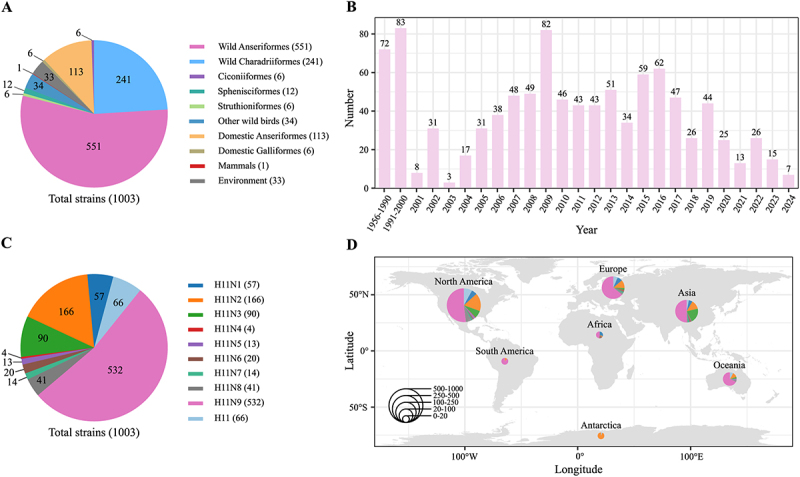 Figure 1
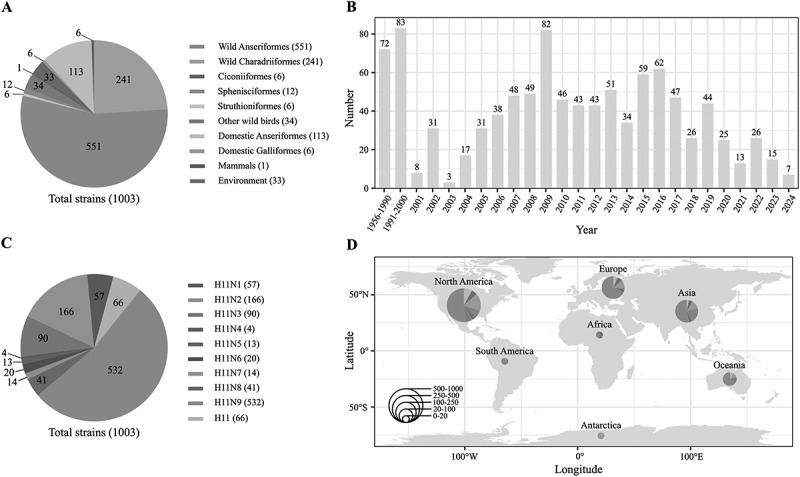 Figure 2
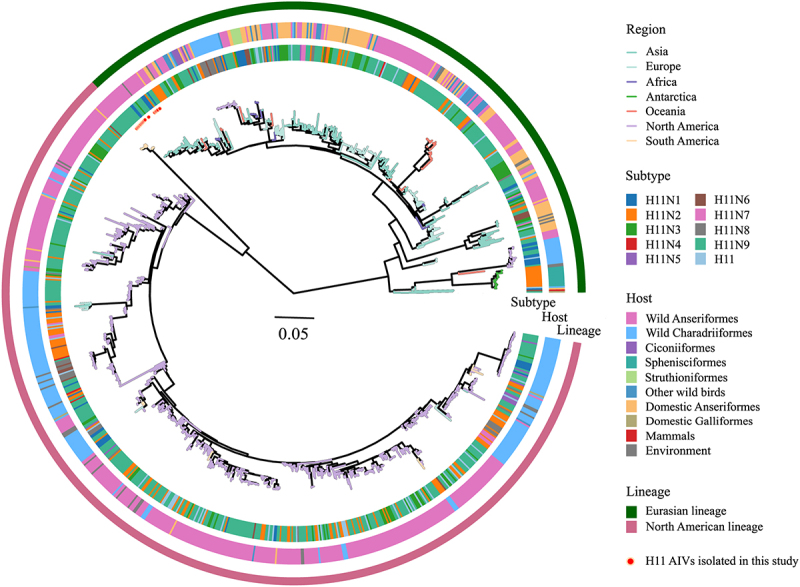 Figure 3
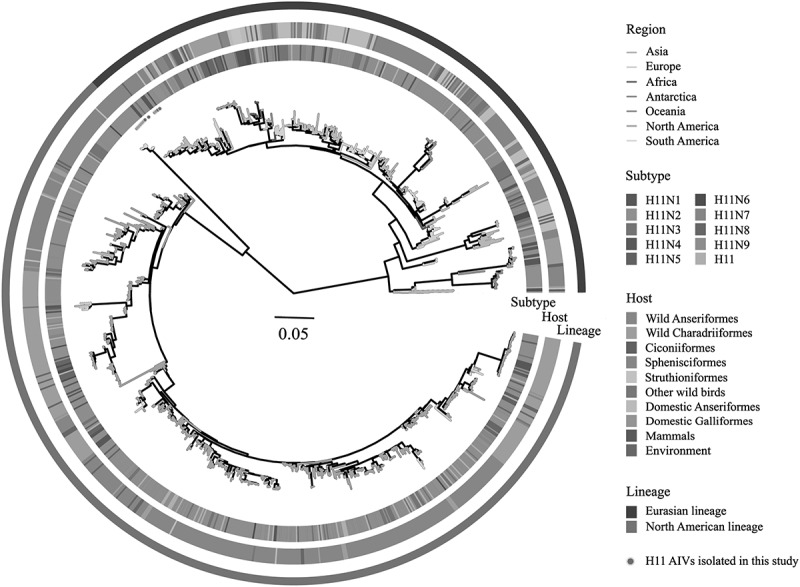 Figure 4
 Figure 5
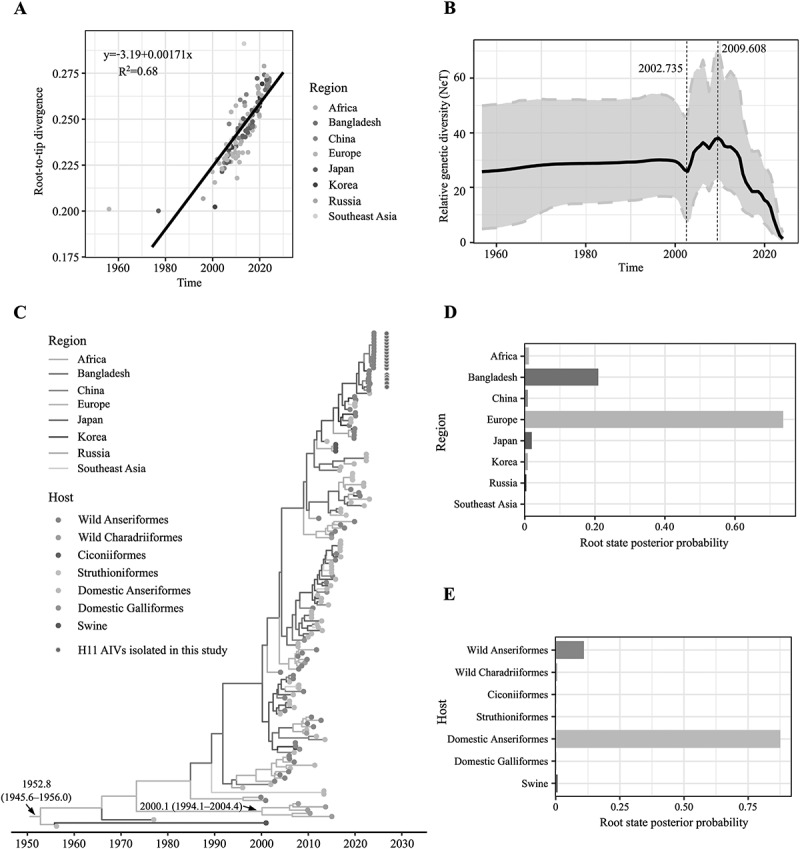 Figure 6
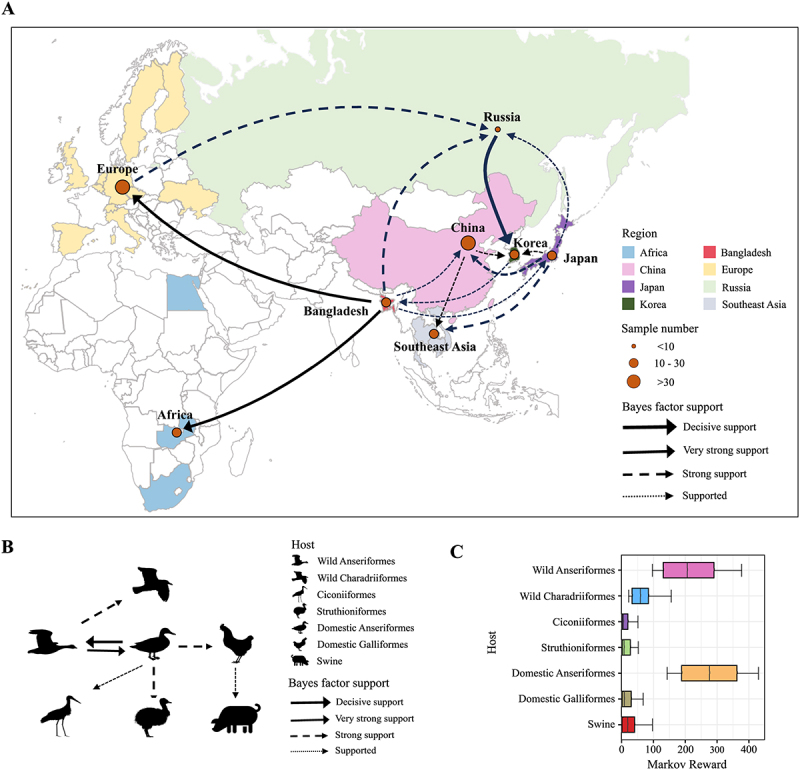 Figure 7
 Figure 8
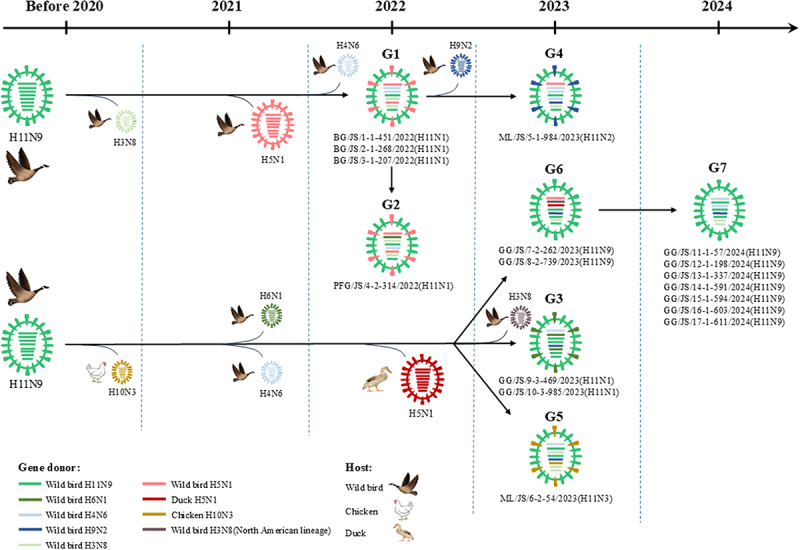 Figure 9
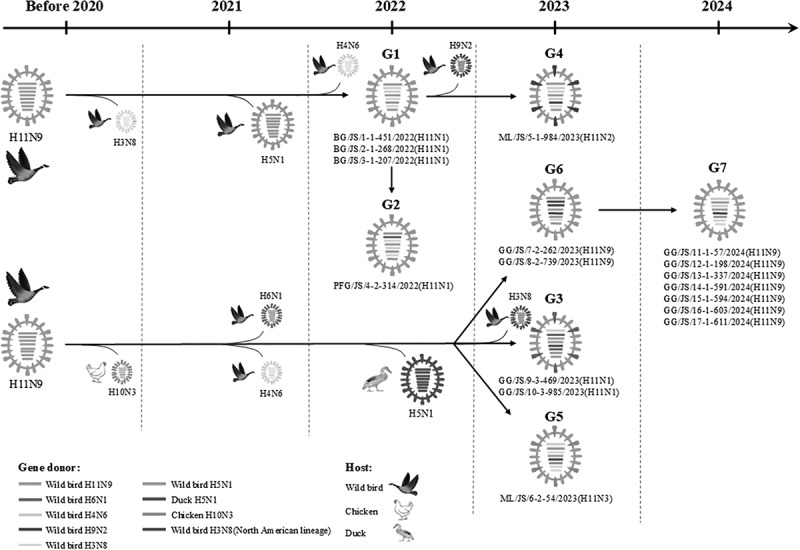 Figure 10
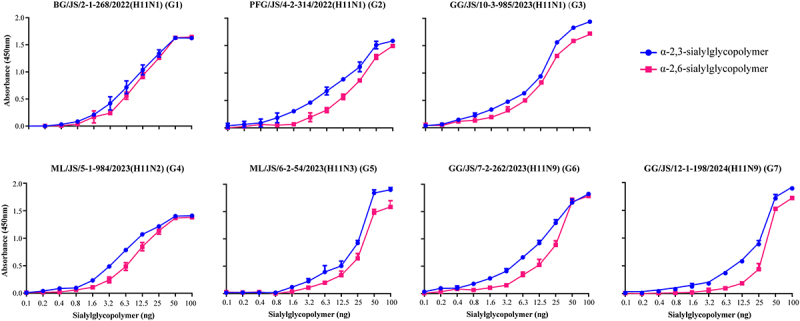 Figure 11
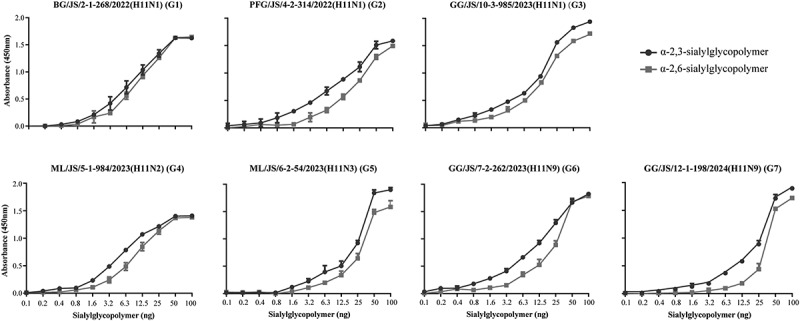 Figure 12
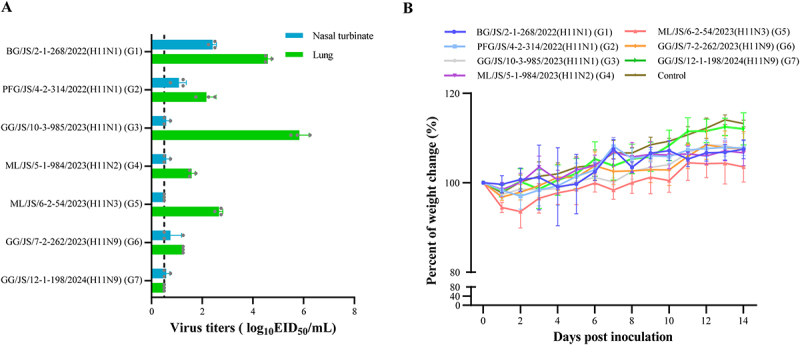 Figure 13
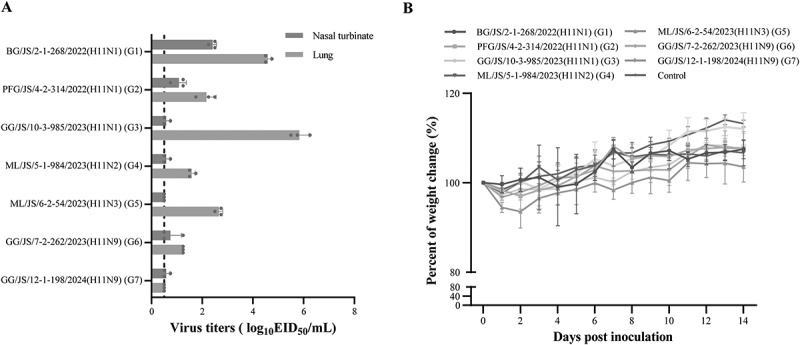 Figure 14
Peer Reviews
No public reviews on file for this paper yet. If you reviewed it on a platform where reviews are public (OpenReview, ICLR, NeurIPS, ICML), you can paste yours below so the community can read it here.
Videos
No videos yet. Explain this paper in a talk, walkthrough, or lecture? Add one.
Taxonomy
TopicsInfluenza Virus Research Studies · Respiratory viral infections research · Infectious Encephalopathies and Encephalitis