Urinary metabolome at birth in patients with hypoxic–ischemic encephalopathy treated with therapeutic hypothermia and long-term neurodevelopmental outcomes: a 7-year follow up
Claudio Ancona, Enrico Valerio, Nicoletta Mainini, Alessio Favali, Ignazio D’Errico, Chiara Lasagni, Matteo Stocchero, Paola Pirillo, Giuseppe Giordano, Stefano Sartori, Eugenio Baraldi

TL;DR
This study explores how the urinary metabolome at birth can predict long-term brain development in babies with hypoxic-ischemic encephalopathy treated with cooling therapy.
Contribution
This is the first study linking neonatal urinary metabolites to long-term neurodevelopmental outcomes in HIE patients treated with therapeutic hypothermia.
Findings
21 metabolites were identified that distinguish neonates with favorable versus adverse long-term outcomes.
Brain MRI had 67% positive and 96% negative predictive value for adverse outcomes.
Metabolites like γ-butyrolactone and Aldosterone are linked to neuromodulation and neuronal damage susceptibility.
Abstract
Hypoxic-ischemic encephalopathy (HIE) is a leading cause of neonatal mortality and morbidity, yet no validated biomarkers currently exist to predict long-term outcomes. We investigated the potential of the neonatal urinary metabolomic profile as a predictor of long-term neurodevelopmental outcomes in HIE newborns treated with therapeutic hypothermia (TH). We conducted a longitudinal study in neonates with HIE undergoing TH. Urine samples collected during TH were analyzed using untargeted metabolomics via mass spectrometry. Based on long-term follow-up outcomes, patients were categorized into two groups: the adverse outcome (AO) group, defined by perinatal death, cerebral palsy, and/or an intelligence quotient (IQ) < 70, and the favourable outcome (FO) group, defined as absence of CP and IQ ≥ 70. Additionally, we assessed the predictive value of early neonatal brain magnetic resonance…
Genes, proteins, chemicals, diseases, species, mutations and cell lines named across the full text — each resolved to its canonical identifier and authoritative record.
Click any figure to enlarge with its caption.
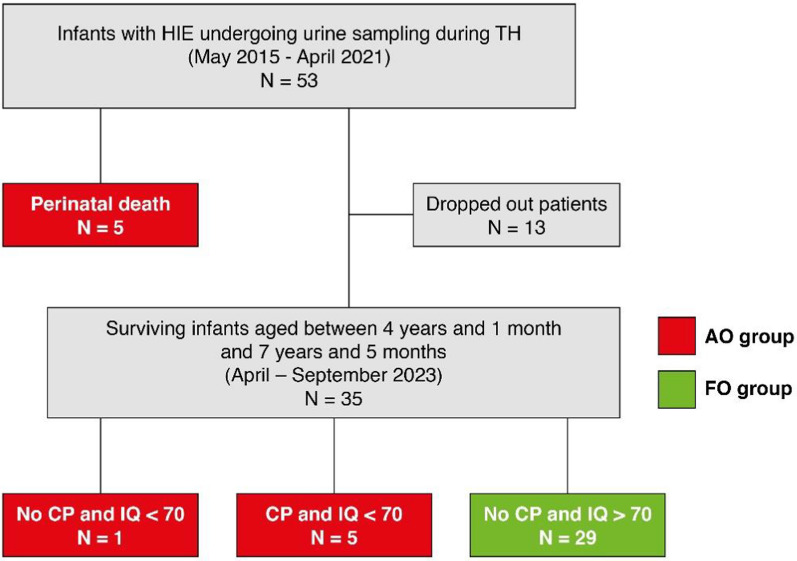 Figure 1
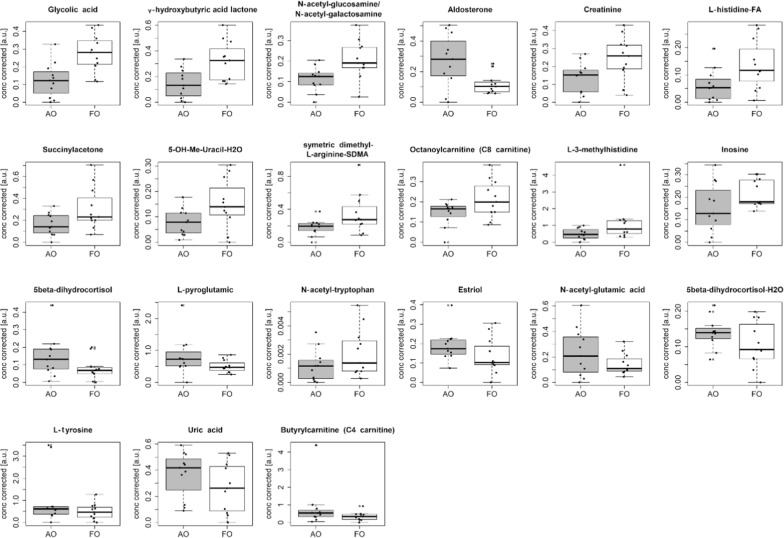 Figure 2
Peer Reviews
No public reviews on file for this paper yet. If you reviewed it on a platform where reviews are public (OpenReview, ICLR, NeurIPS, ICML), you can paste yours below so the community can read it here.
Videos
No videos yet. Explain this paper in a talk, walkthrough, or lecture? Add one.
Taxonomy
TopicsNeonatal and fetal brain pathology · Metabolomics and Mass Spectrometry Studies · Metabolism and Genetic Disorders