Measuring adult mortality from mobile phone surveys in Burkina Faso, Malawi and the Democratic Republic of the Congo
Kassoum Dianou, Bruno Masquelier, Shammi Luhar, Bruno Lankoandé, Ashira Menashe-Oren, Abdramane Soura, Hervé Bassinga, Malebogo Tlhajoane, Boniface Dulani, Pierre Z Akilimali, Georges Reniers

TL;DR
This study explores using mobile phone surveys to measure adult mortality in three African countries, finding lower mortality rates than traditional methods, likely due to reporting errors.
Contribution
The study evaluates the feasibility and accuracy of mobile phone surveys for measuring adult mortality in low-resource settings.
Findings
Mortality estimates from mobile phone surveys were lower than those from face-to-face surveys.
Mobile phone survey mortality rates were about half of expected global estimates.
Reporting errors in sibling death data likely caused underestimation in mobile survey results.
Abstract
In many low and middle-income countries, adult mortality estimates are derived from surveys and censuses conducted through face-to-face interviews. These interviews can be time-intensive and are often impractical during health crises or humanitarian emergencies. The expansion in cellphone ownership and network coverage has created new opportunities for collecting demographic data through mobile phone surveys, but our understanding of selection biases and reporting errors of such data remains incomplete. This study reports on adult mortality estimates obtained through mobile phone surveys conducted in Burkina Faso, Malawi and the Democratic Republic of the Congo in 2021 and 2022. To mitigate respondent fatigue and network interruptions, we used a shortened version of the set of questions generally used in surveys to ask about the survival of respondents’ siblings. Mortality estimates…
Genes, proteins, chemicals, diseases, species, mutations and cell lines named across the full text — each resolved to its canonical identifier and authoritative record.
Click any figure to enlarge with its caption.
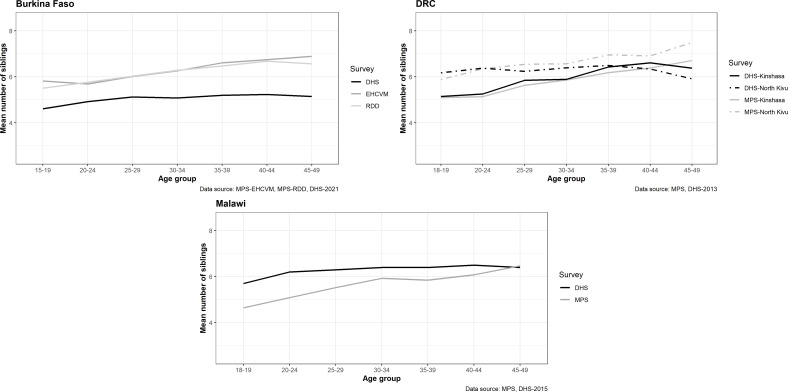 Figure 1
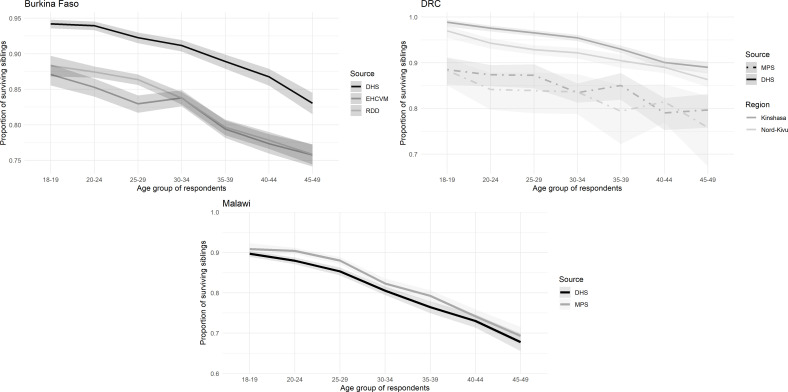 Figure 2
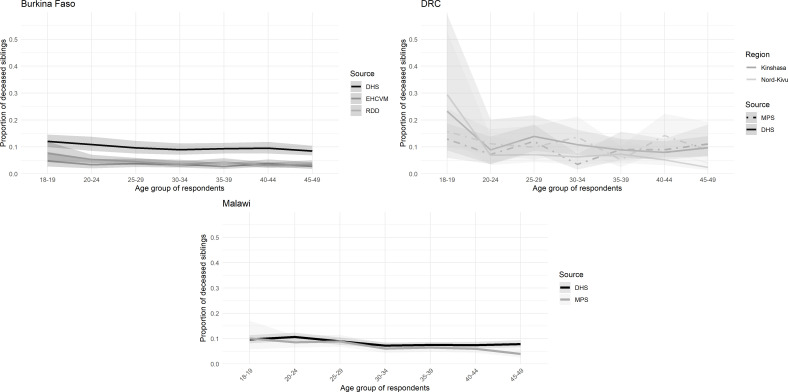 Figure 3
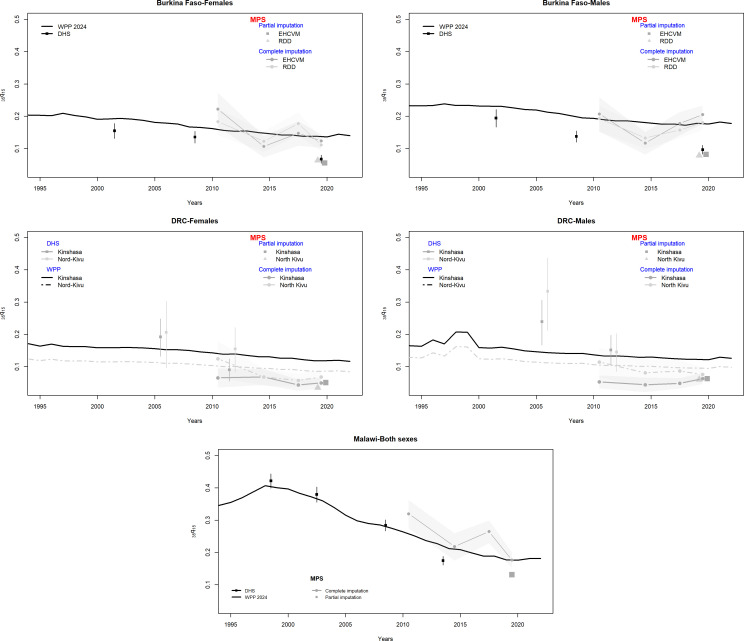 Figure 4
Peer Reviews
No public reviews on file for this paper yet. If you reviewed it on a platform where reviews are public (OpenReview, ICLR, NeurIPS, ICML), you can paste yours below so the community can read it here.
Videos
No videos yet. Explain this paper in a talk, walkthrough, or lecture? Add one.
Taxonomy
TopicsData-Driven Disease Surveillance · Global Maternal and Child Health · Survey Methodology and Nonresponse