Photoinduced Deoxygenative Boration of Unactivated Alcohols Involving In-Situ-Formed Alkyl Iodides
Xiaojie Liu, Biping Xu, Martin Oestreich

TL;DR
This paper presents a new method to convert alcohols into alkylboronate esters using light and a two-step one-pot process.
Contribution
A streamlined, scalable, and functional-group-tolerant one-pot method for alkylboronate ester synthesis from unactivated alcohols.
Findings
The method works for primary, secondary, and tertiary alcohols.
The process is operationally simple and allows for broad functional-group tolerance.
Visible-light irradiation and lithium iodide are essential for the reaction.
Abstract
A method for the direct two-step/one-pot conversion of unactivated 1°, 2°, and 3° alcohols into the corresponding alkylboronate esters is reported. The hydroxy group is activated in situ by reaction with the Hendrickson “POP” reagent. The rapidly formed alkoxyphosphonium salt is then reacted with bis(catecholato)diboron under visible-light irradiation in the presence of stoichiometric amounts of lithium iodide. This one-pot protocol streamlines the two-step procedure, and it is operationally simple and scalable. The functional-group tolerance is broad.
Genes, proteins, chemicals, diseases, species, mutations and cell lines named across the full text — each resolved to its canonical identifier and authoritative record.
Click any figure to enlarge with its caption.
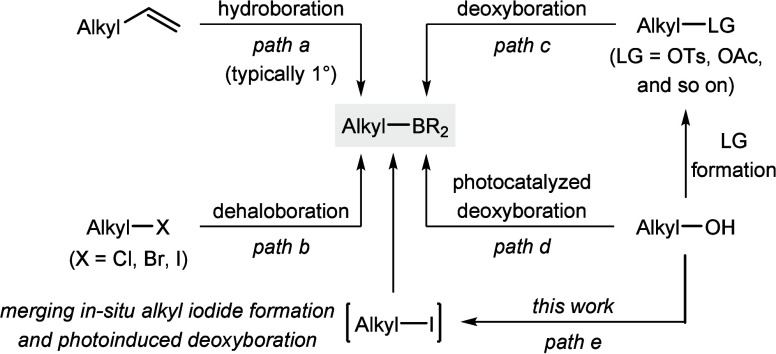 Figure 1
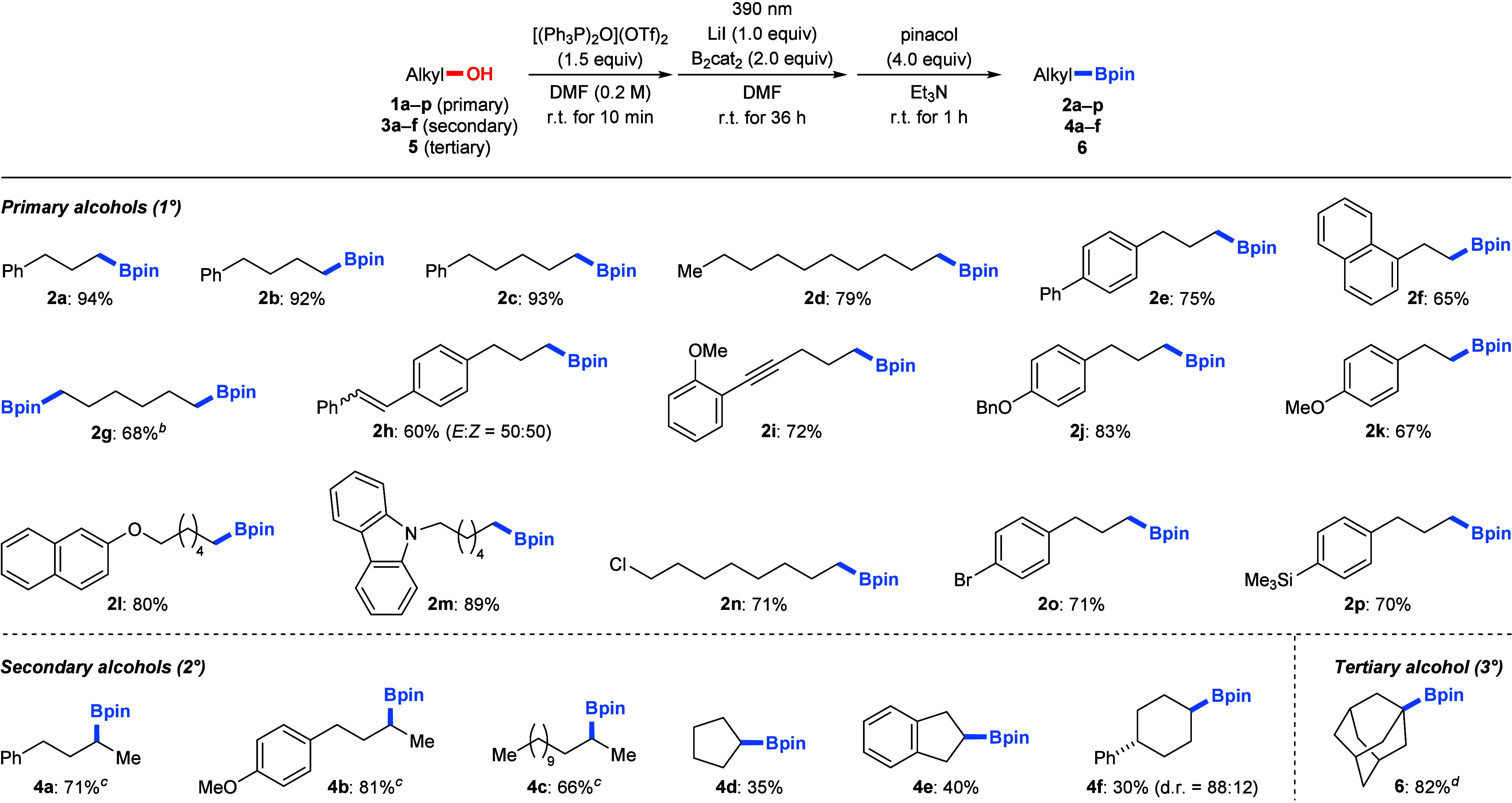 Figure 2
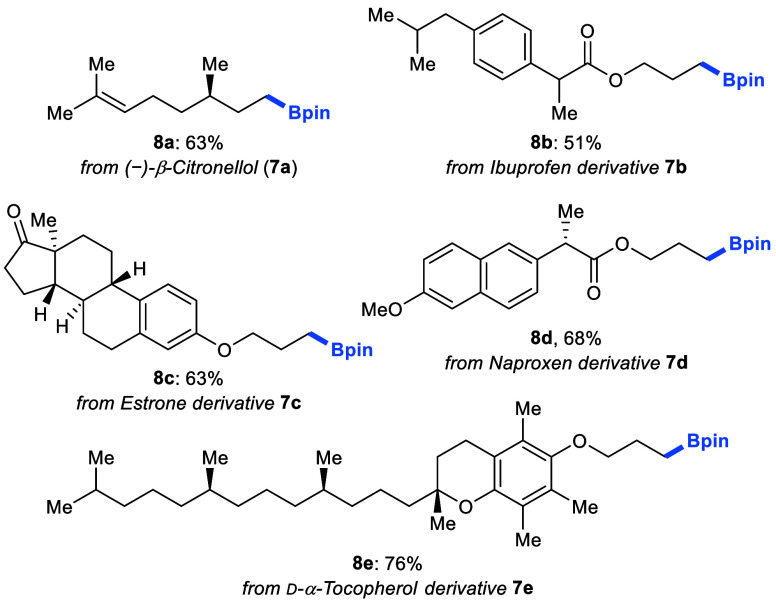 Figure 3
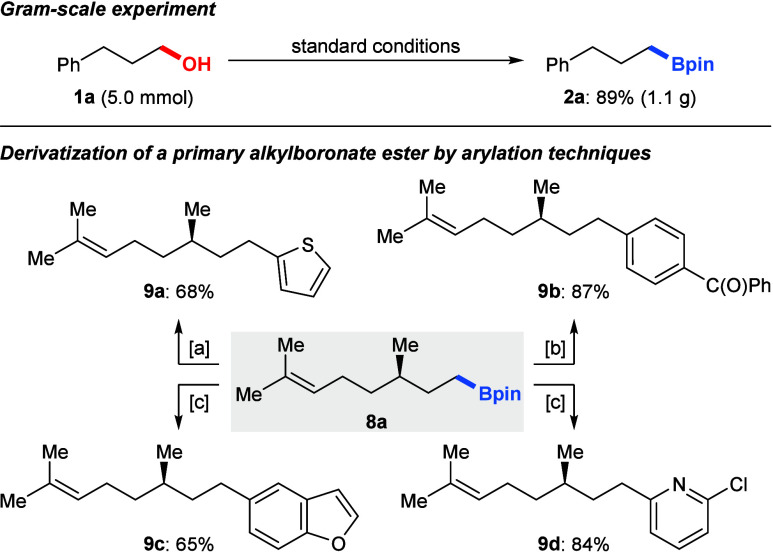 Figure 4
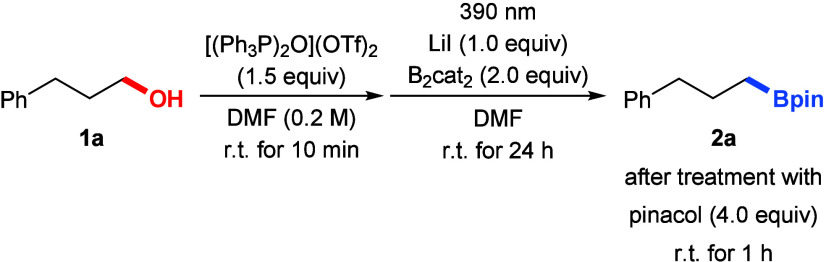 Figure 5
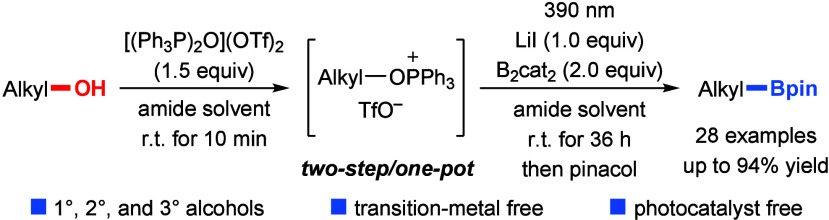 Figure 6
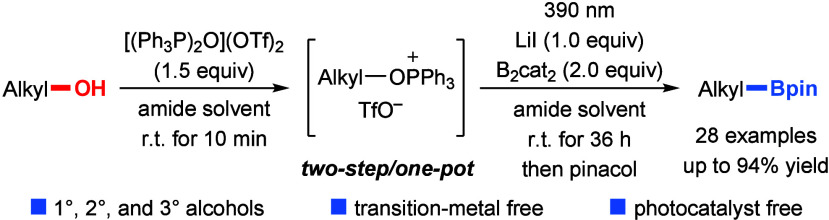 Figure 7
Peer Reviews
No public reviews on file for this paper yet. If you reviewed it on a platform where reviews are public (OpenReview, ICLR, NeurIPS, ICML), you can paste yours below so the community can read it here.
Videos
No videos yet. Explain this paper in a talk, walkthrough, or lecture? Add one.
Taxonomy
TopicsOrganoboron and organosilicon chemistry · Radical Photochemical Reactions · Catalytic Cross-Coupling Reactions