Cell-Free-Based Thermophilic Biocatalyst for the Synthesis of Amino Acids from One-Carbon Feedstocks
Ray Westenberg, Shaafique Chowdhury, Ryan Cardiff, Kimberly Wennerholm, Alexander S. Beliaev, James M. Carothers, Pamela Peralta-Yahya

TL;DR
This paper presents a new cell-free biocatalyst that efficiently converts one-carbon feedstocks into amino acids like serine and glycine.
Contribution
The first use of a thermophilic pathway in E. coli lysate-based cell-free systems to create a high-yield biocatalyst for amino acid synthesis.
Findings
The thermophilic biocatalyst achieved 97% stoichiometric yield of serine and glycine from formate and bicarbonate.
The system outperformed previous mesophilic and purified enzyme systems by tripling and quadrupling the amino acid yield, respectively.
Cofactor usage for THF and NADPH could be reduced fivefold without significantly affecting product yields.
Abstract
Bioproduction from one-carbon compounds, such as formate, is an attractive prospect due to reduced energy requirements and the possibility for using CO2 as a sustainable feedstock. Formate-fixing pathways engineered using Escherichia coli lysate-based cell-free expression (CFE) biocatalysts have the potential to route 100% of feedstock carbon toward chemical synthesis but are undermined by siphoning of in-pathway metabolites and cofactors by the CFE background metabolism. To address this limitation, we engineer a CFE-based thermophilic multienzyme biocatalyst for the synthesis of serine and glycine from formate, bicarbonate, and ammonia. After expression of the thermophilic formate-to-serine pathway in a one-pot reaction, the mesophilic E. coli CFE background machinery is removed by simple heat denaturation, eliminating the siphoning of cofactors, in-pathway metabolites, and products.…
Genes, proteins, chemicals, diseases, species, mutations and cell lines named across the full text — each resolved to its canonical identifier and authoritative record.
Click any figure to enlarge with its caption.
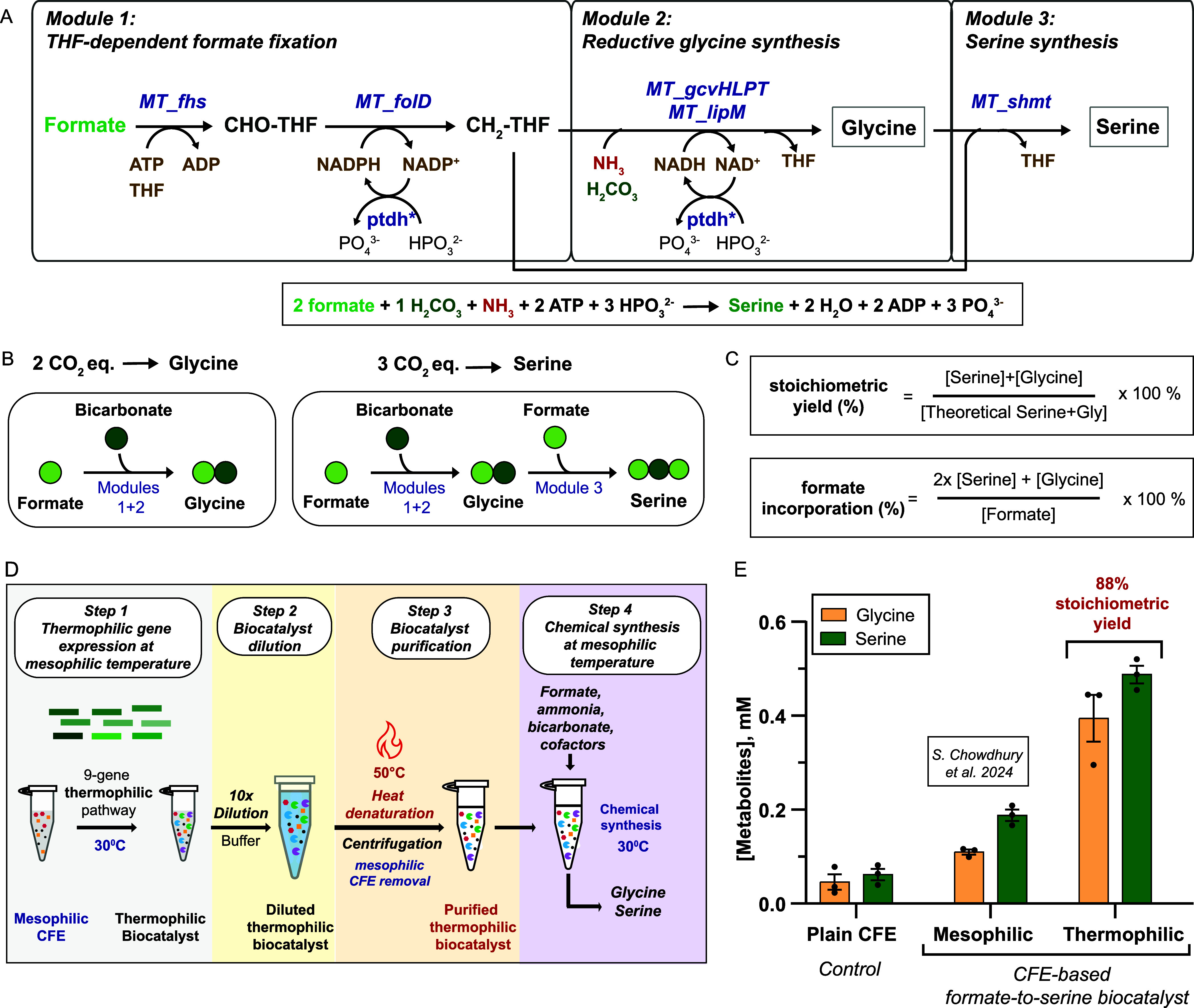 Figure 1
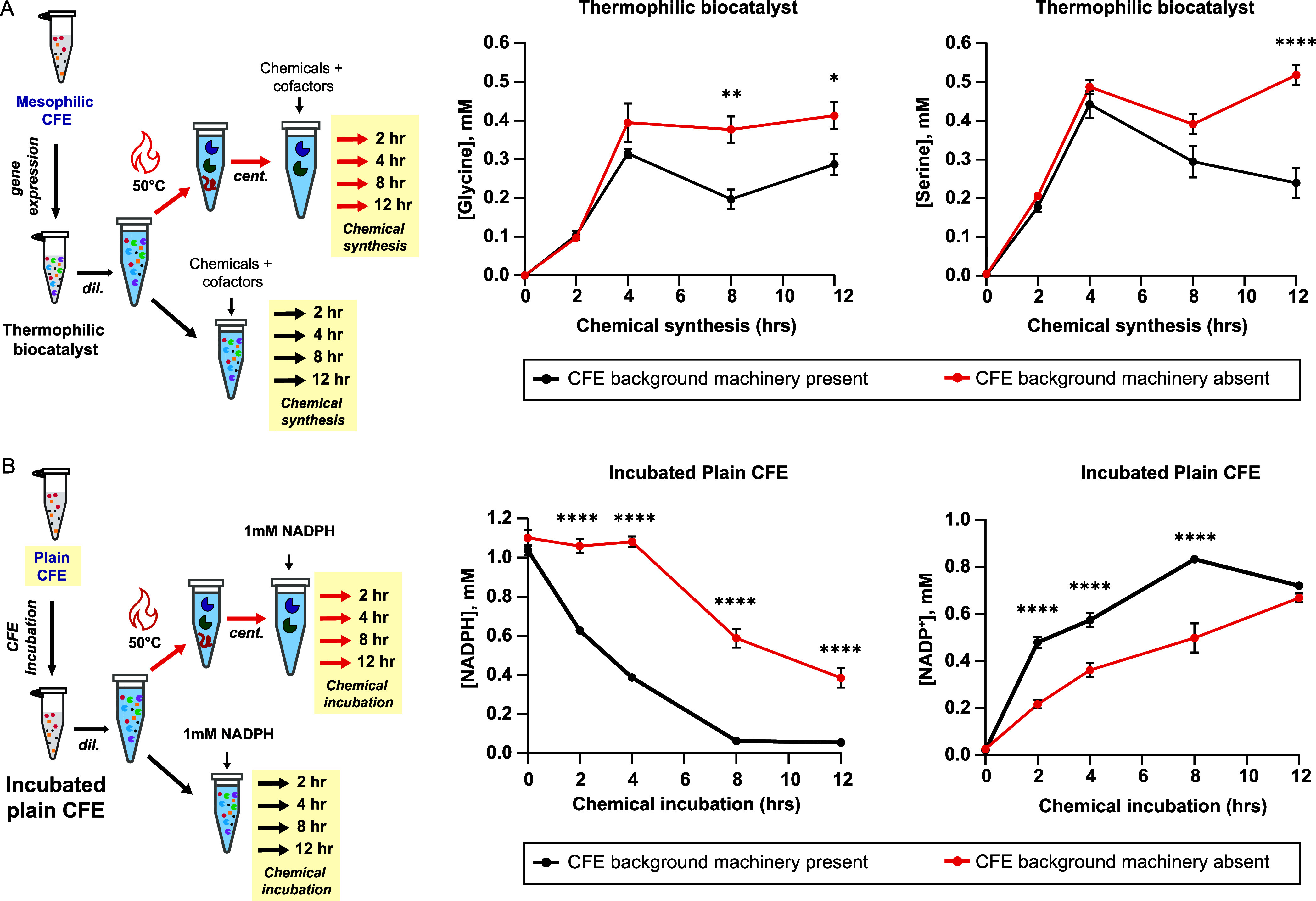 Figure 2
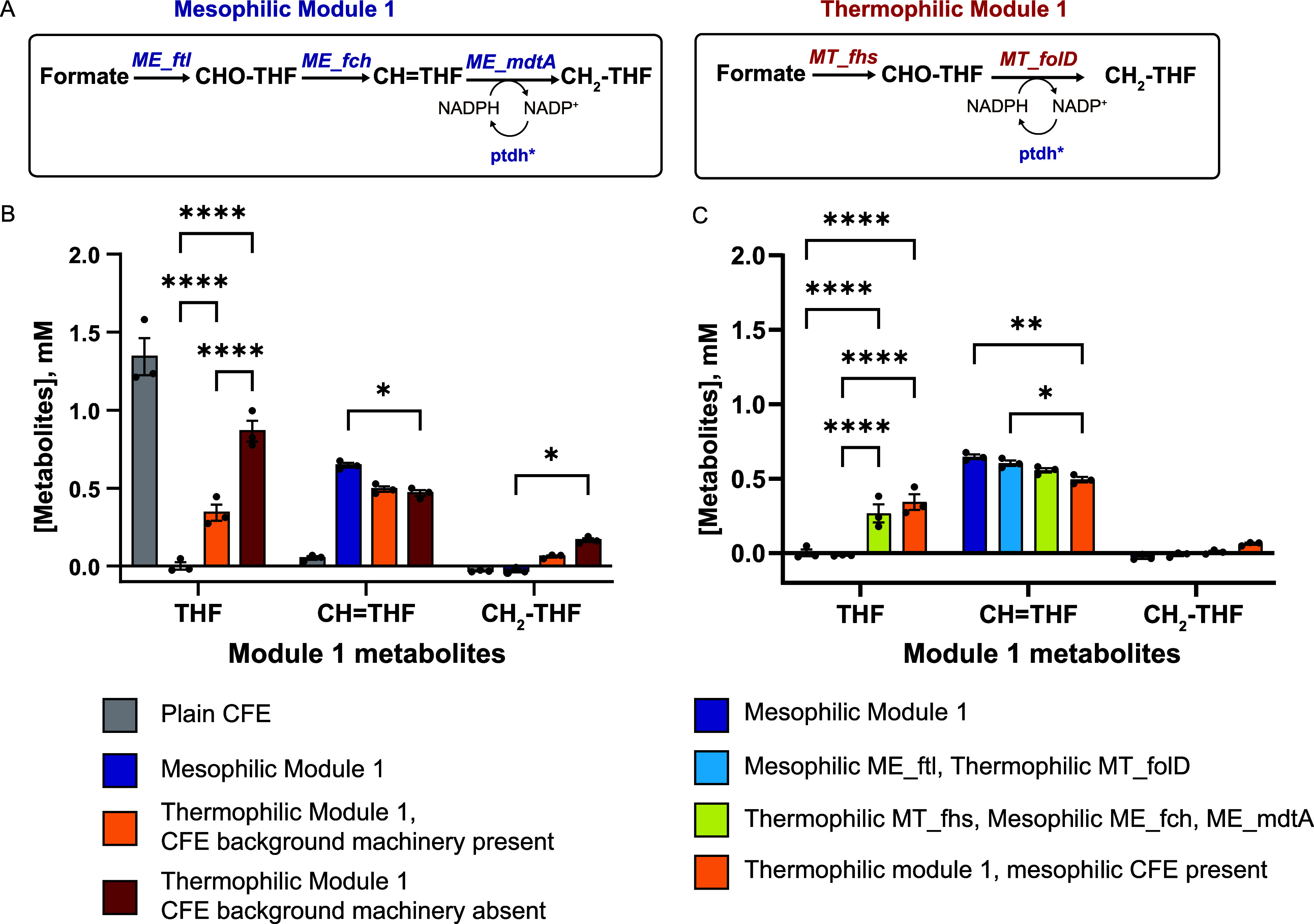 Figure 3
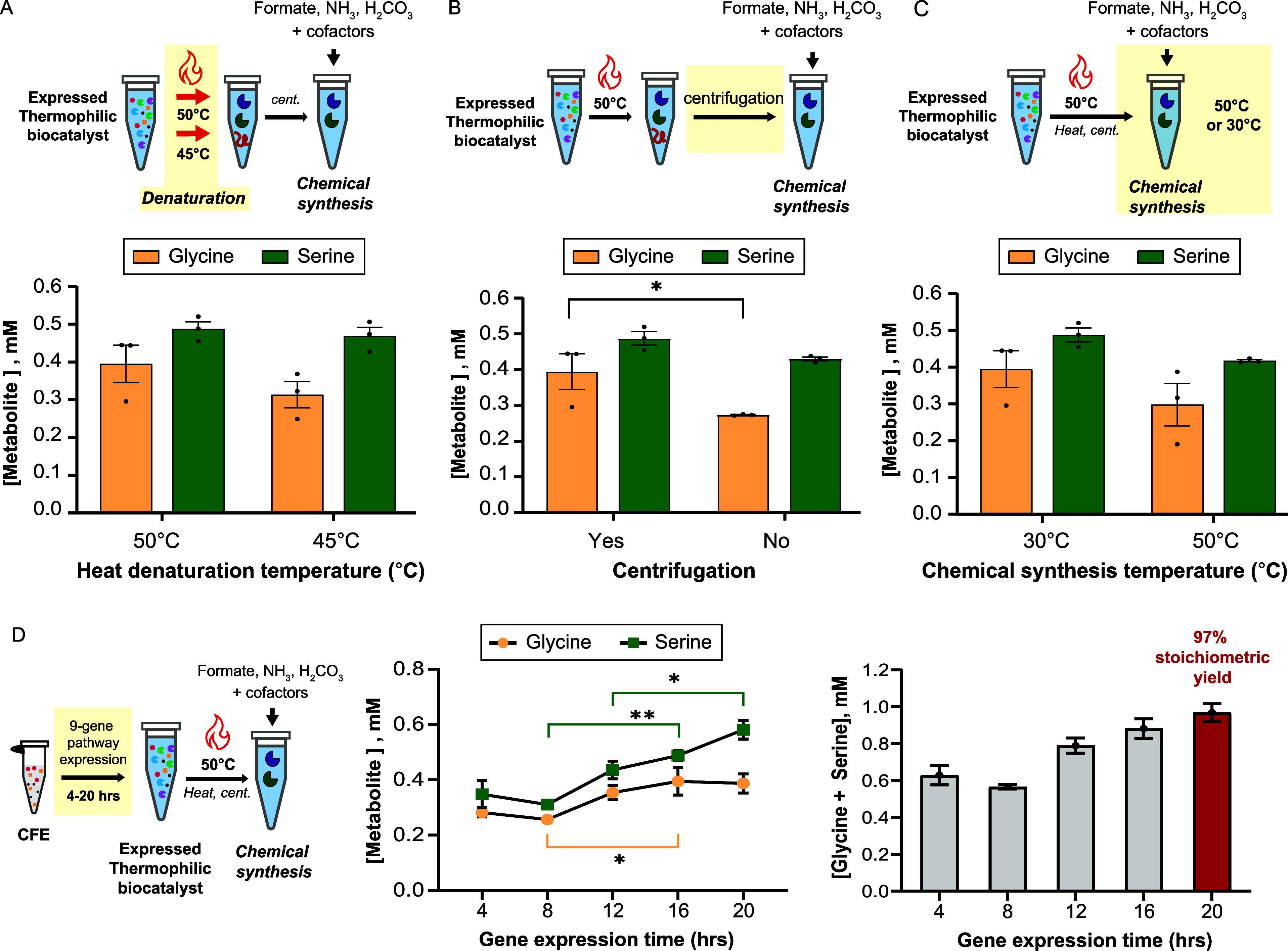 Figure 4
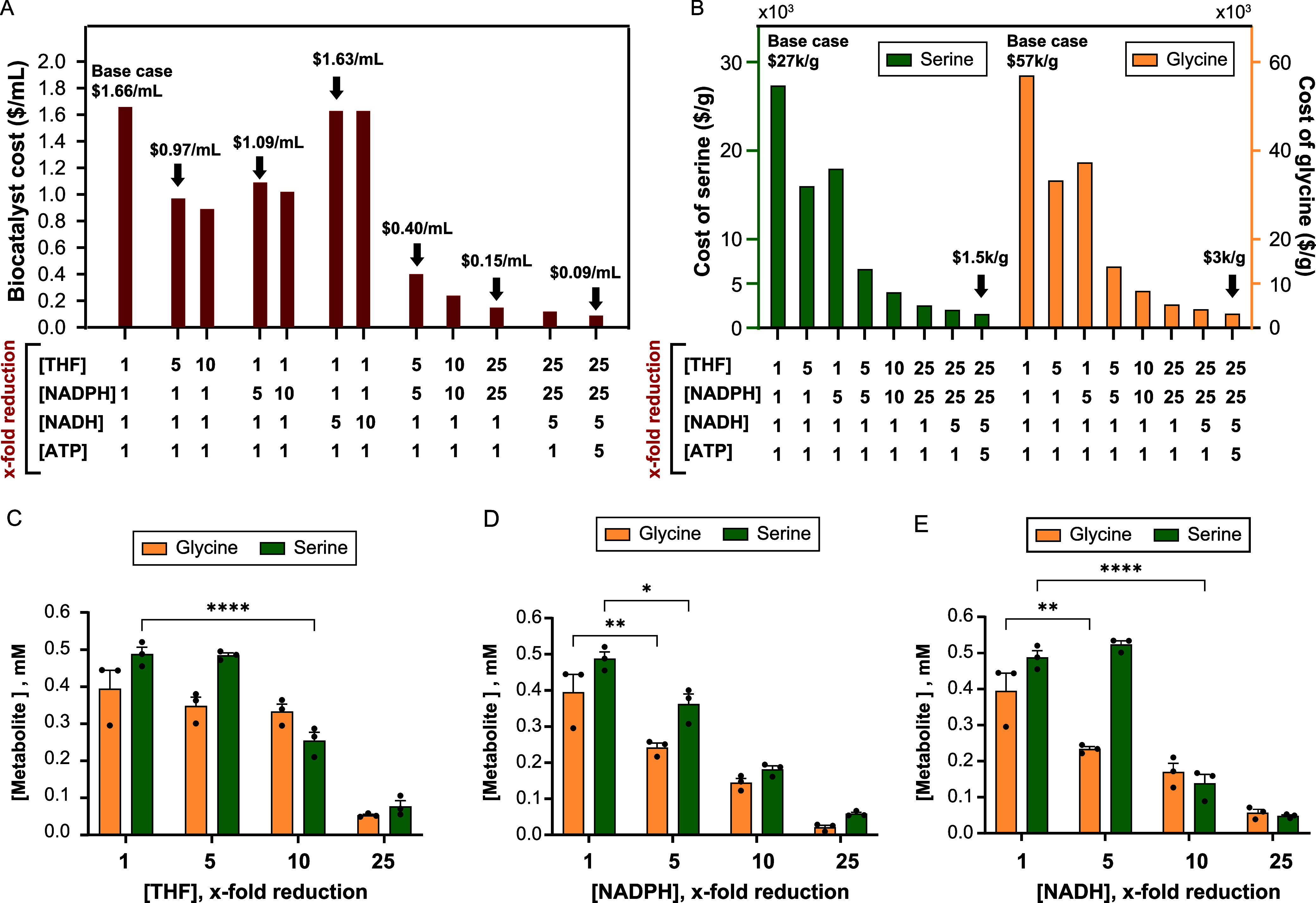 Figure 5
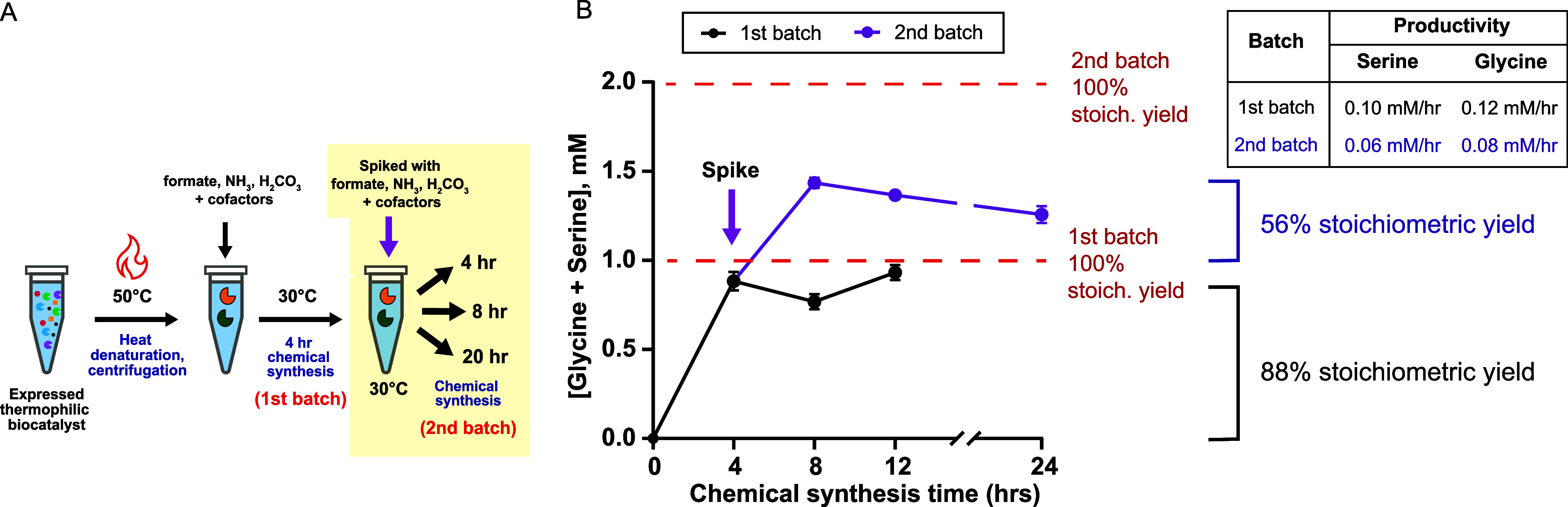 Figure 6
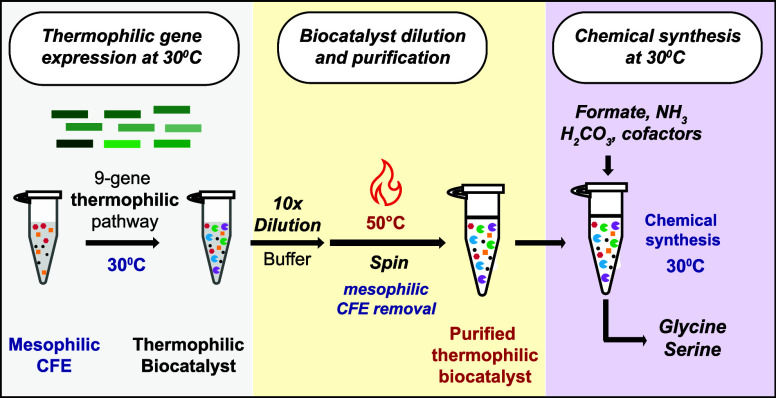 Figure 7
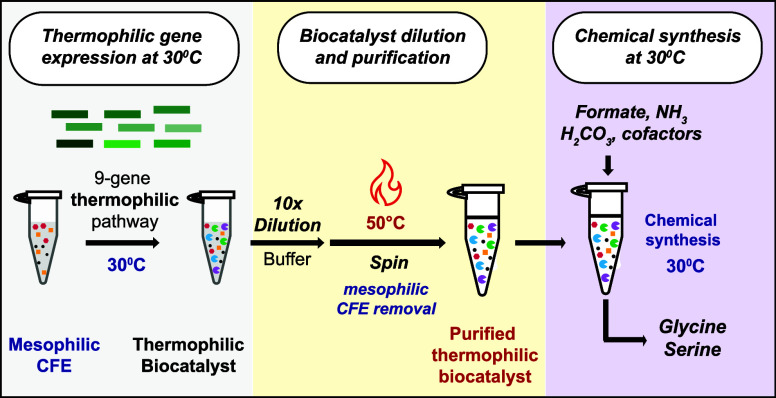 Figure 8
Peer Reviews
No public reviews on file for this paper yet. If you reviewed it on a platform where reviews are public (OpenReview, ICLR, NeurIPS, ICML), you can paste yours below so the community can read it here.
Videos
No videos yet. Explain this paper in a talk, walkthrough, or lecture? Add one.
Taxonomy
TopicsEnzyme Catalysis and Immobilization · Microbial Metabolic Engineering and Bioproduction · Biochemical and Molecular Research