The Translational Coupling of Daidzein Reductase and Dihydrodaidzein Racemase Genes Improves the Production of Equol and Its Analogous Derivatives in Engineered Lactic Acid Bacteria
Susana Langa, José Antonio Curiel, Ángela Peirotén, José María Landete

TL;DR
Scientists improved the production of health-benefiting isoflavones in engineered bacteria by linking specific genes together.
Contribution
Translational coupling of the ifcA and dzr genes enhanced the production of equol and its derivatives in multiple lactic acid bacteria strains.
Findings
Translational coupling improved equol production to 111.15–410.56 μM in soy beverages.
5-hydroxy-equol and 5-hydroxy-dehydroequol were produced at 71.00–148.22 μM and 111.15–201.09 μM, respectively.
Multiple LAB genera, including L. fermentum, L. plantarum, and L. paracasei, achieved high compound production.
Abstract
Equol (EQ) and its analogous derivatives 5-hydroxy-equol (5-OH-EQ) and 5-hydroxy-dehydroequol (5-OH-D-EQ) are isoflavones which benefit human health. They are produced from daidzein and genistein, respectively, in the gut by microorganisms harboring the genes daidzein reductase (dzr), dihydrodaidzein racemase (ifcA), dihydrodaidzein reductase (ddr) and tetrahydrodaidzein reductase (tdr). Since the production of these isoflavones is of interest due to their great-health benefits for humans, the heterologous expression of dzr, ddr, tdr and ifcA from Slackia isoflavoniconvertenes DSM 22006T in lactic acid bacteria (LAB) was used as a strategy to produce EQ, 5-OH-EQ and 5-OH-D-EQ in soy beverages. However, efficient production of these compounds was only demonstrated in two engineered Limosilactobacillus fermentum strains, and it is dependent on dihydrodaidzein racemase (DDRC). In order to…
Genes, proteins, chemicals, diseases, species, mutations and cell lines named across the full text — each resolved to its canonical identifier and authoritative record.
Click any figure to enlarge with its caption.
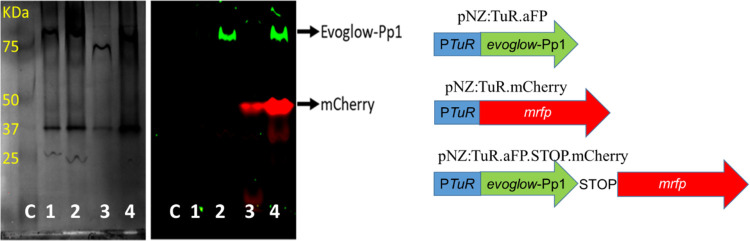 Figure 1
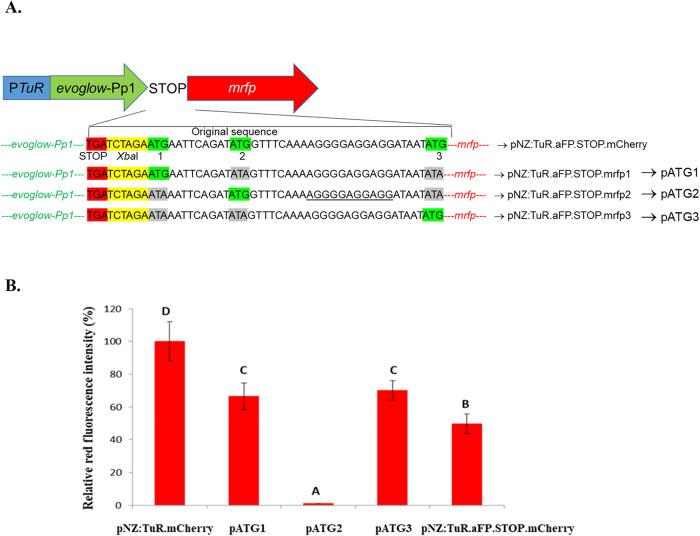 Figure 2
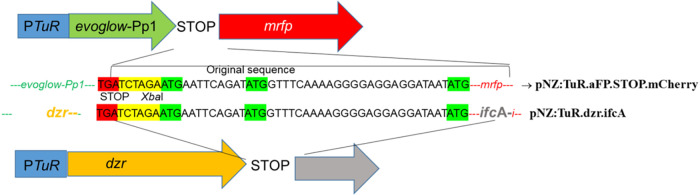 Figure 3
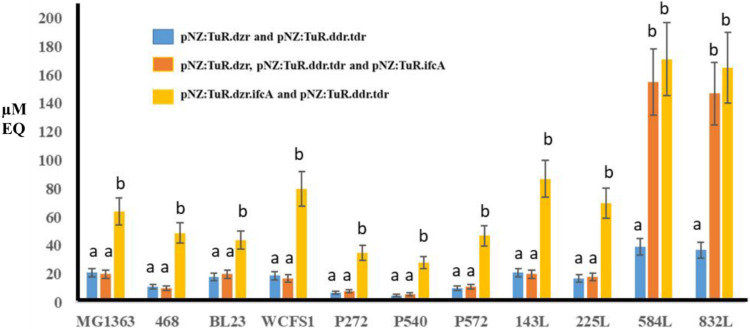 Figure 4
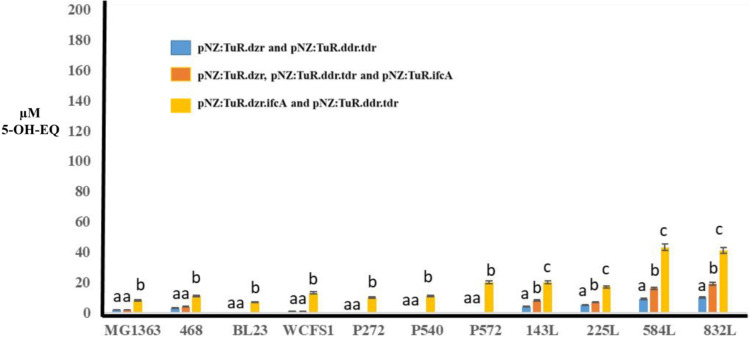 Figure 5
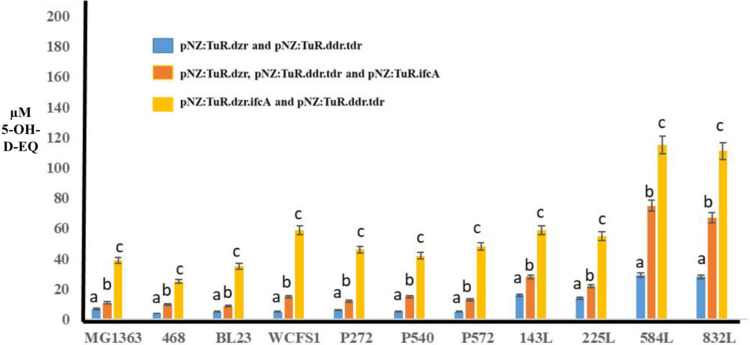 Figure 6
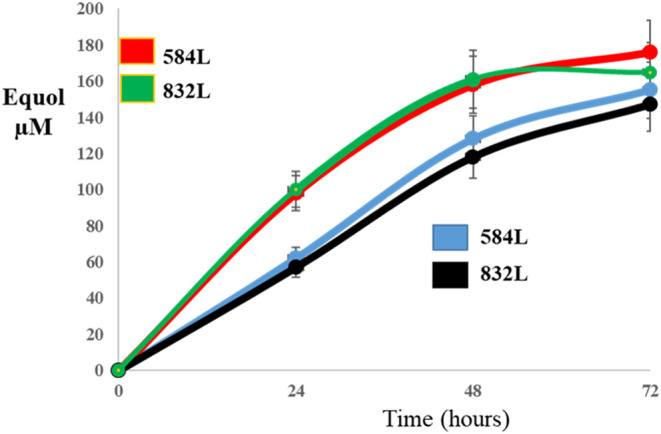 Figure 7
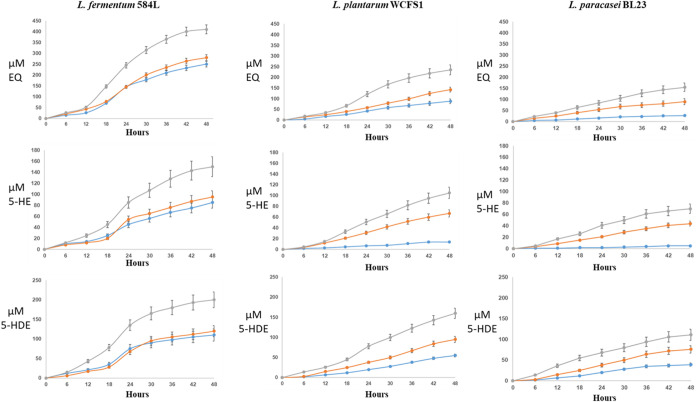 Figure 8
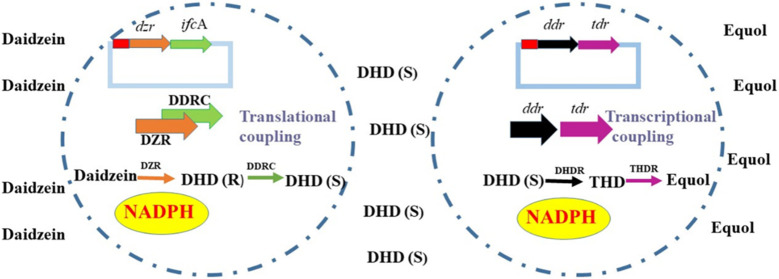 Figure 9
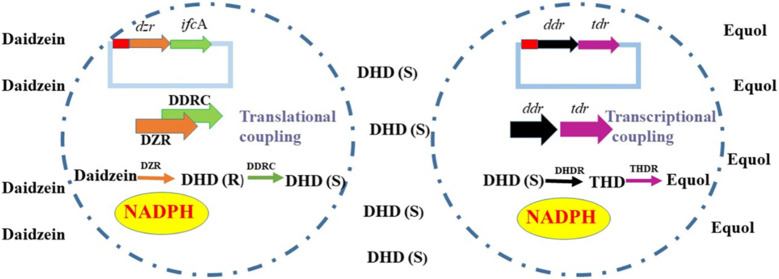 Figure 10
Peer Reviews
No public reviews on file for this paper yet. If you reviewed it on a platform where reviews are public (OpenReview, ICLR, NeurIPS, ICML), you can paste yours below so the community can read it here.
Videos
No videos yet. Explain this paper in a talk, walkthrough, or lecture? Add one.
Taxonomy
TopicsProbiotics and Fermented Foods · Phytoestrogen effects and research · Tea Polyphenols and Effects