Hydrophilic BIPHEPHOS Ligand for Pd-Mediated Cysteine Allylation of Peptides and Proteins in Water
Thomas Schlatzer, Julia Kriegesmann, Mark Bieber, Christian F. W. Becker, Rolf Breinbauer

TL;DR
A new water-soluble ligand enables efficient modification of peptides and proteins under biocompatible conditions.
Contribution
A hydrophilic BIPHEPHOS ligand with diethyl phosphonates is introduced for aqueous Pd-mediated cysteine allylation.
Findings
The hydrophilic BIPHEPHOS ligand is catalytically isofunctional to unpolar tert-butyl.
Native prenyl groups and bioconjugation handles were successfully introduced into peptides and proteins.
The method works under nearly aqueous conditions, improving biocompatibility.
Abstract
The selective and natural post-translational modification of peptides and proteins under biocompatible conditions remains a challenge. Herein, we report a hydrophilic variant of the BIPHEPHOS ligand featuring diethyl phosphonates as solubilizing groups, which were found to be catalytically isofunctional to unpolar tert-butyl. This enabled the fast introduction of native prenyl groups and bioconjugation handles into peptides and folded proteins under nearly aqueous conditions.
Genes, proteins, chemicals, diseases, species, mutations and cell lines named across the full text — each resolved to its canonical identifier and authoritative record.
Click any figure to enlarge with its caption.
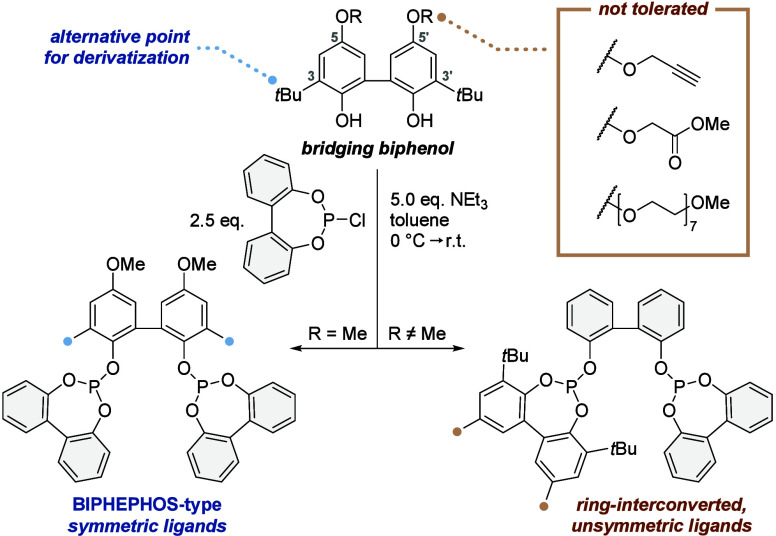 Figure 1
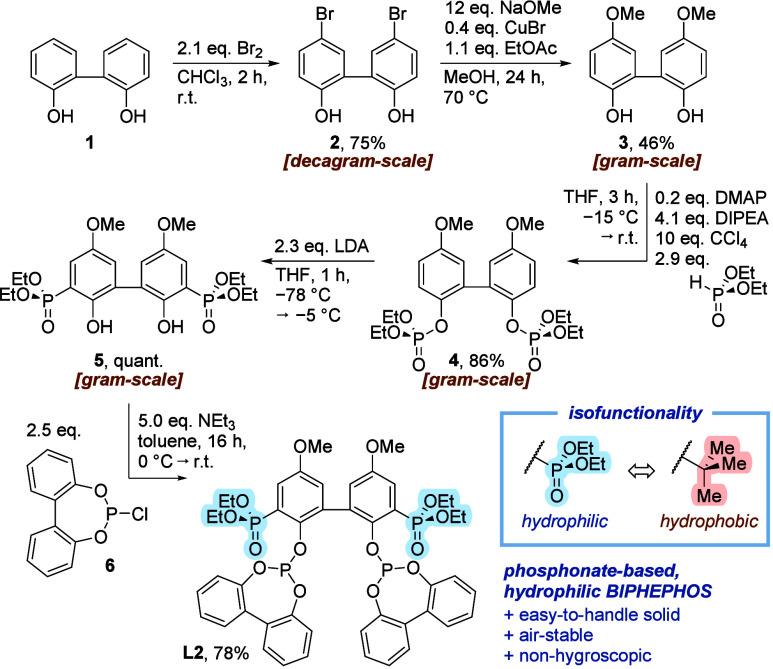 Figure 2
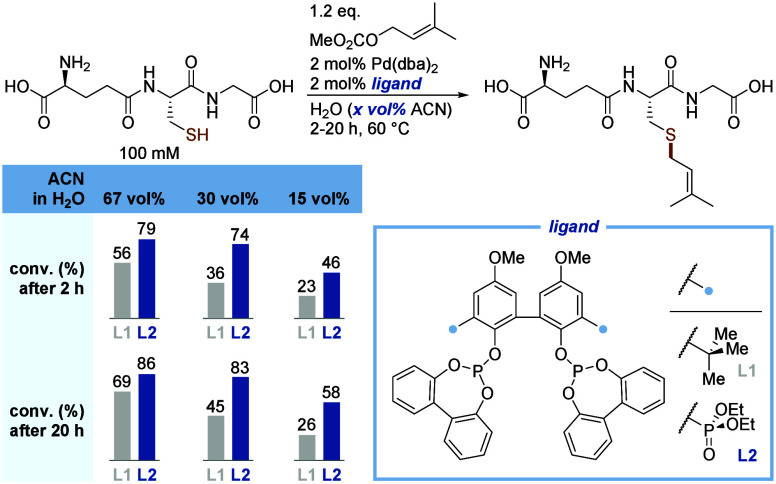 Figure 3
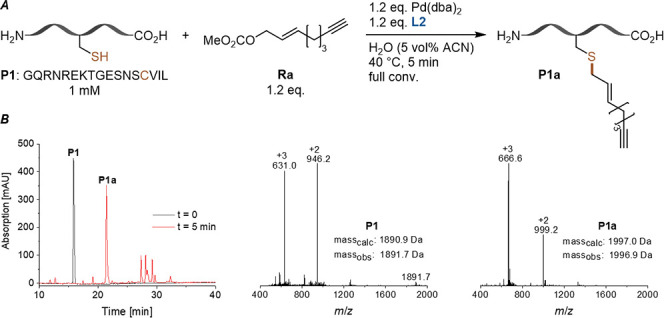 Figure 4
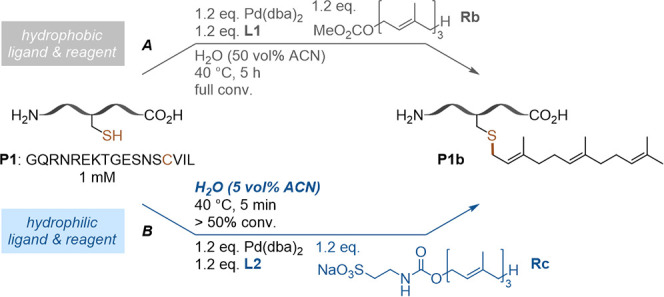 Figure 5
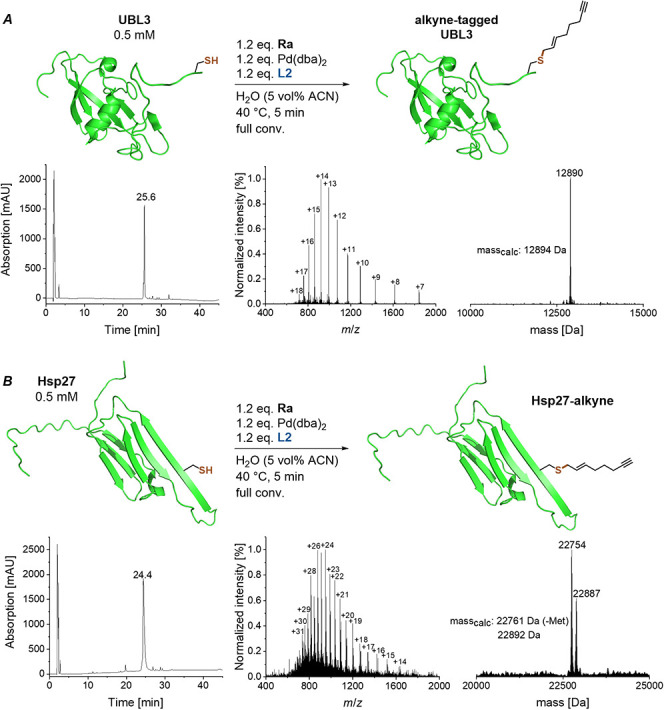 Figure 6
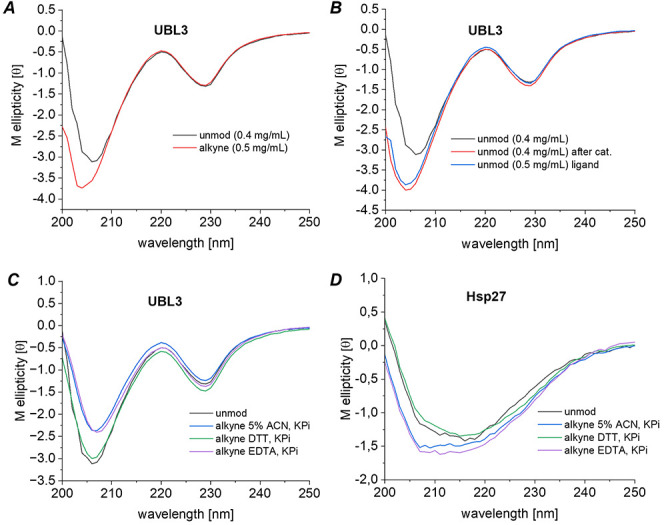 Figure 7
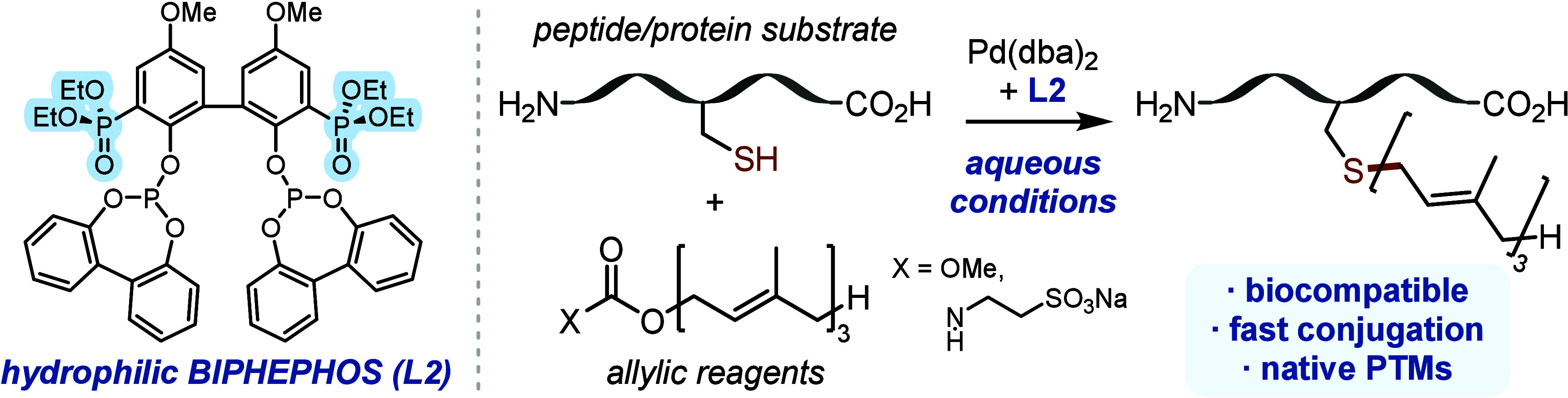 Figure 8
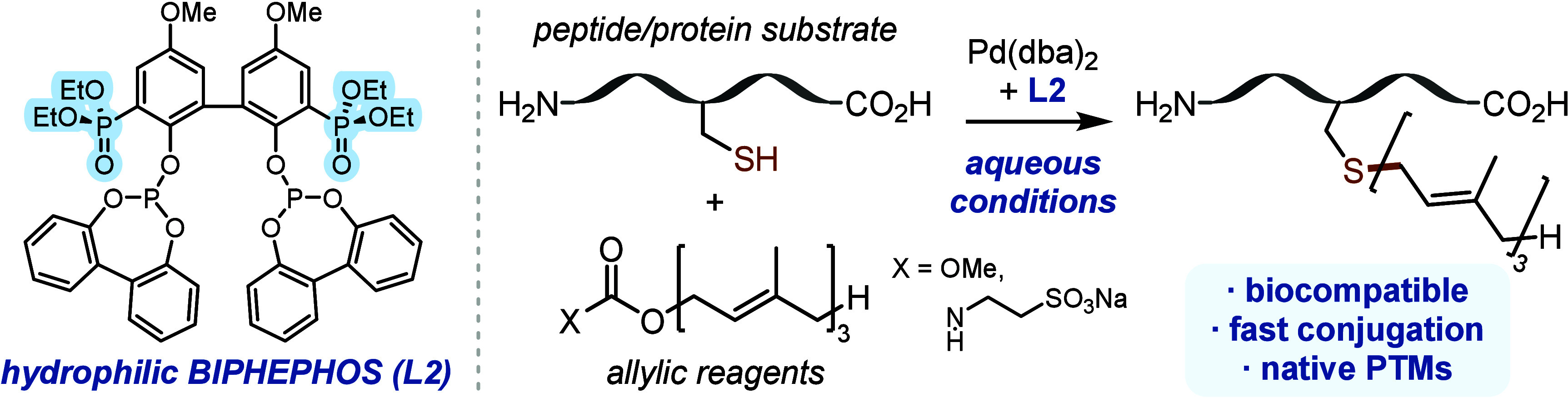 Figure 9
Peer Reviews
No public reviews on file for this paper yet. If you reviewed it on a platform where reviews are public (OpenReview, ICLR, NeurIPS, ICML), you can paste yours below so the community can read it here.
Videos
No videos yet. Explain this paper in a talk, walkthrough, or lecture? Add one.
Taxonomy
TopicsClick Chemistry and Applications · Catalytic Cross-Coupling Reactions · Organophosphorus compounds synthesis