Operando XAS and DFT Uncover Structure-Performance Relationships in Re/TiO2 for Selective CO2 Hydrogenation to Methanol
Maite Lippel Gothe, Adriano Henrique Braga, Lais Reis Borges, Jiyun Hong, Giliandro Farias, Alvaro David Torrez Baptista, Bryan Alberto Laura Larico, Ana Barbara Moulin Cansian, Caetano Rodrigues Miranda, Simon R. Bare, Liane Marcia Rossi, Pedro Vidinha

TL;DR
Scientists used advanced techniques to understand how rhenium catalysts convert CO2 to methanol efficiently, finding that smaller catalyst clusters work better.
Contribution
The study reveals how cluster size affects catalytic performance in CO2 hydrogenation to methanol using operando XAS and DFT.
Findings
1 wt% Re/TiO2 achieves 97% methanol selectivity at 23% conversion, while 5 wt% Re/TiO2 achieves 74% selectivity at 40% conversion.
XAS and DFT show that cluster size influences energy barriers for H2 activation, CH3OH dissociation, and desorption.
Balancing cluster size is crucial for optimal catalyst performance in methanol production from CO2.
Abstract
The conversion of CO2 into value-added chemicals, such as methanol, offers a promising pathway toward a renewable energy future. However, a precise kinetic control and a highly selective catalyst are necessary to overcome the thermodynamic preference for CO2 hydrogenation to methane. Rhenium-based catalysts, particularly Re/TiO2, demonstrate high activity and selectivity for methanol under high-pressure conditions. For example, at 100 bar and 200 °C, a methanol selectivity of 97–99% was obtained. Catalysts with 1 wt % Re and 5 wt % Re/TiO2 were used to study the effect of cluster sizes. At 250 °C, the 1 wt % catalyst achieves 97% selectivity at 23% conversion, whereas 5 wt % Re/TiO2 achieves 74% selectivity at 40% conversion, corresponding to a drop in space-time yield from 65 to 16 gCH3OH·gRe –1·h–1, respectively. X-ray absorption spectroscopy provided insights into the structure of…
Genes, proteins, chemicals, diseases, species, mutations and cell lines named across the full text — each resolved to its canonical identifier and authoritative record.
Click any figure to enlarge with its caption.
 Figure 1
 Figure 2
 Figure 3
 Figure 4
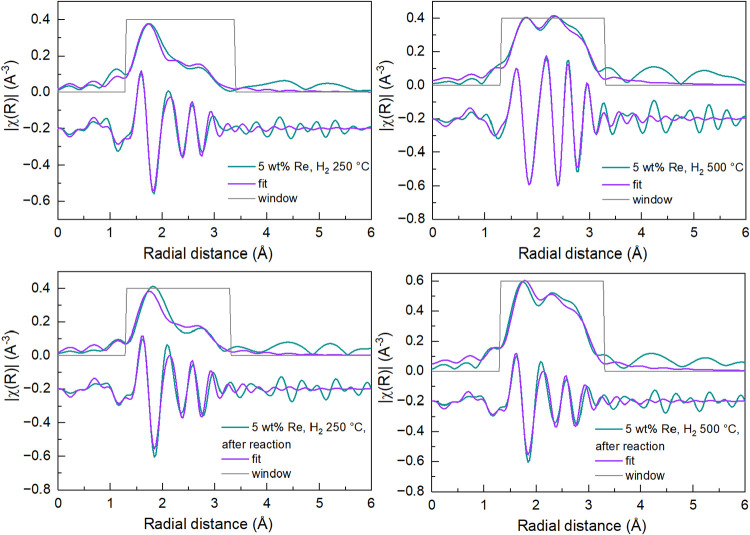 Figure 5
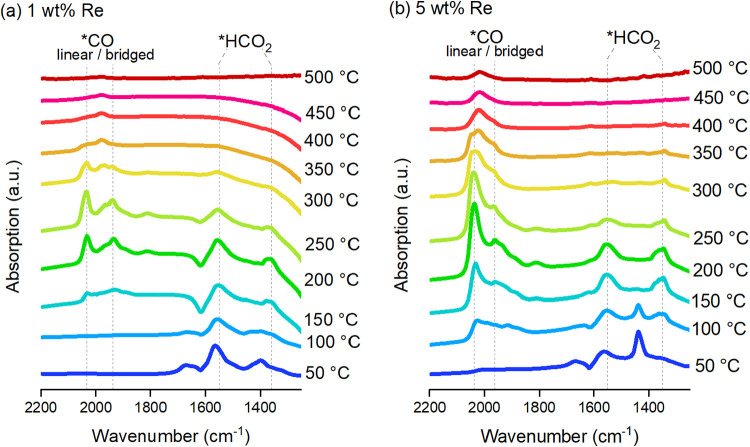 Figure 6
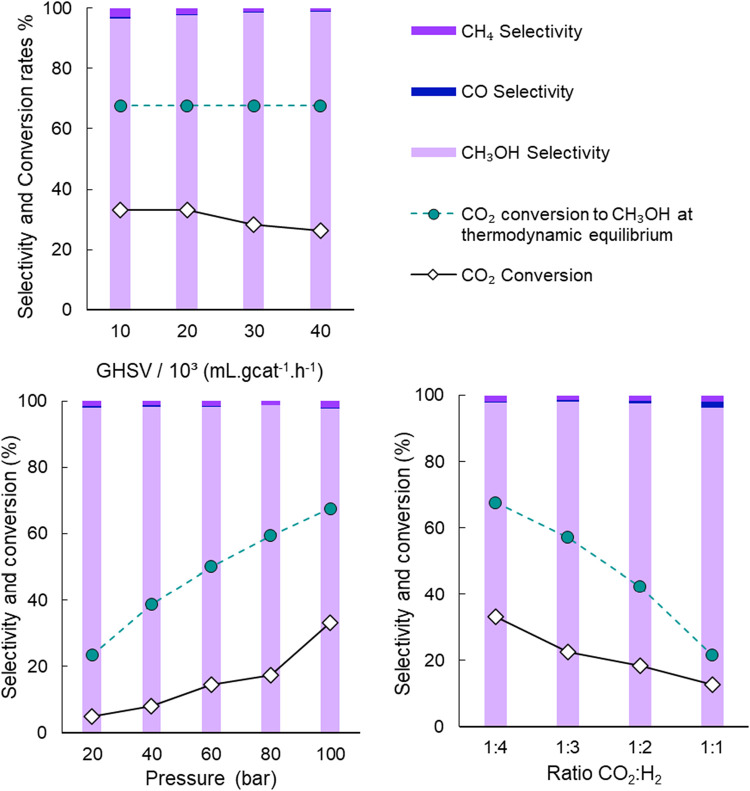 Figure 7
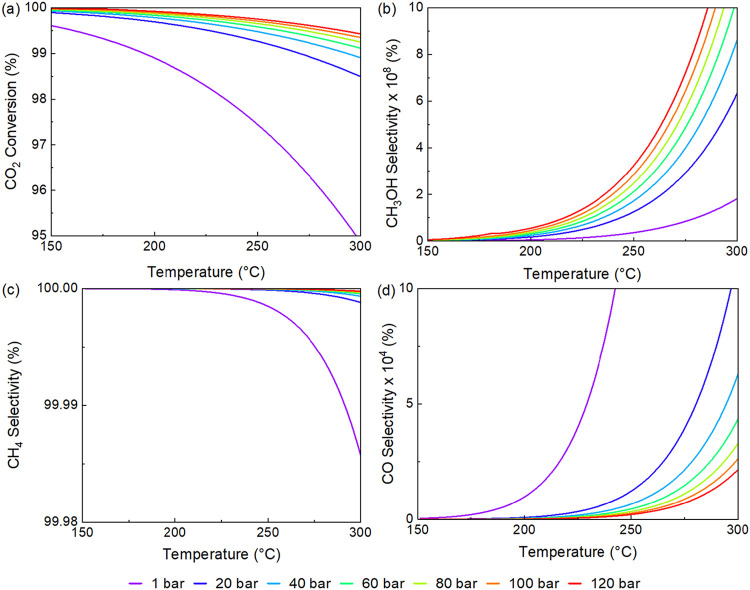 Figure 8
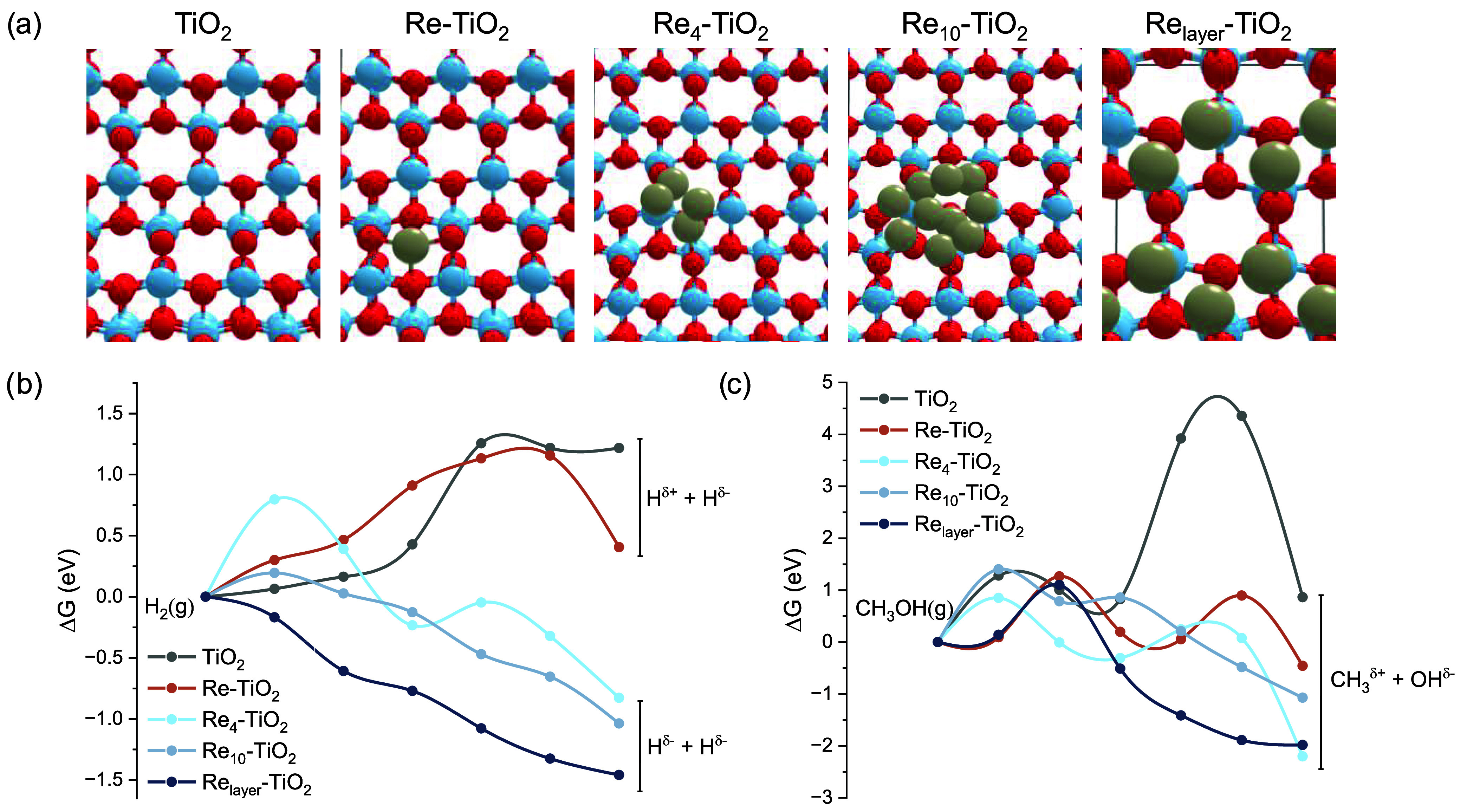 Figure 9
 Figure 10
 Figure 11
 Figure 12
 Figure 13
 Figure 14
 Figure 15
Peer Reviews
No public reviews on file for this paper yet. If you reviewed it on a platform where reviews are public (OpenReview, ICLR, NeurIPS, ICML), you can paste yours below so the community can read it here.
Videos
No videos yet. Explain this paper in a talk, walkthrough, or lecture? Add one.
Taxonomy
TopicsCatalysts for Methane Reforming · Catalysis for Biomass Conversion · CO2 Reduction Techniques and Catalysts