Seismic shifts in the geochemical and microbial composition of a Yellowstone aquifer
Eric S Boyd, Daniel R Colman, Ana Menchaca, Rachel L Spietz, Anna Shoemaker, Carol Finn, David Mencin, Eva Andrade-Barahona, Alysia Cox, Thomas Kieft, Susan Bilek, Jefferson Hungerford, Tullis C Onstott

TL;DR
Earthquakes in Yellowstone can change underground chemistry and support microbial life by releasing hydrogen and carbon.
Contribution
This study shows seismic activity can dynamically alter subsurface microbial communities through geochemical changes.
Findings
Earthquake swarms correlate with increased hydrogen, organic carbon, and sulfide in aquifer fluids.
Seismic energy alters microbial composition, increasing chemolithotrophic bacteria like Dethiobacteraceae and Desulfotomaculum.
Mechanical fracturing of rhyolite releases organic carbon and hydrogen, suggesting a large subsurface reservoir.
Abstract
Seismic energy, like that released by earthquakes, can fracture rock and thereby alter subsurface fluid flow paths, release substrates from inclusions, and expose fresh mineral surfaces capable of reacting with water. However, it is unclear how such seismic-induced changes influence microbial communities. Volcanically active areas experience frequent seismic activity and thus represent ideal locations to examine the influence of seismic-induced geochemical change on subsurface microbial communities. Here, we demonstrate that energy released in an earthquake swarm in 2021 correlated with extensive temporal change in the geochemical and microbial composition of aquifer fluids sampled from ∼100 m depth in a borehole in Yellowstone National Park. Increased energy absorbed at the borehole over time was correlated with increased concentrations of hydrogen, dissolved organic carbon, and…
Genes, proteins, chemicals, diseases, species, mutations and cell lines named across the full text — each resolved to its canonical identifier and authoritative record.
Click any figure to enlarge with its caption.
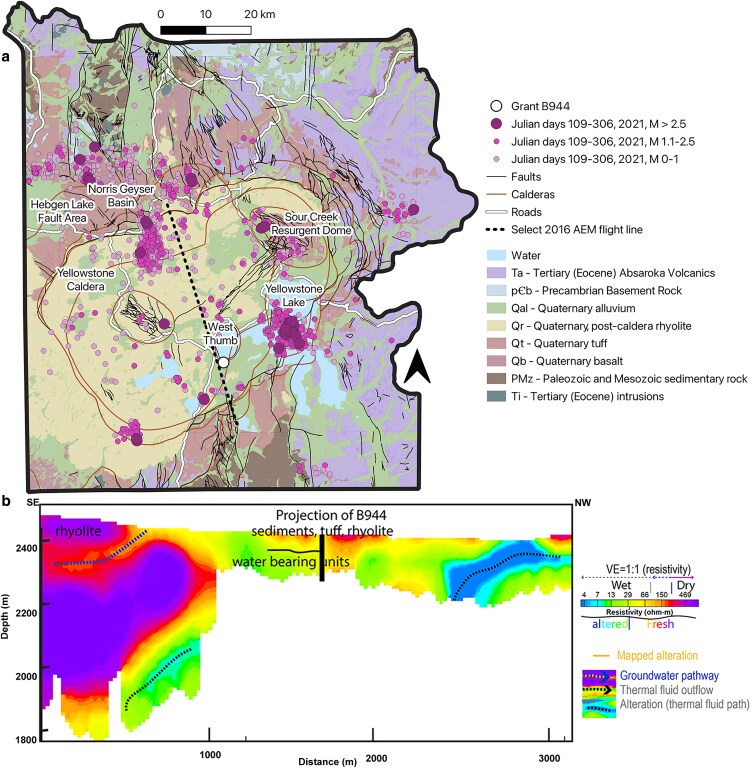 Figure 1
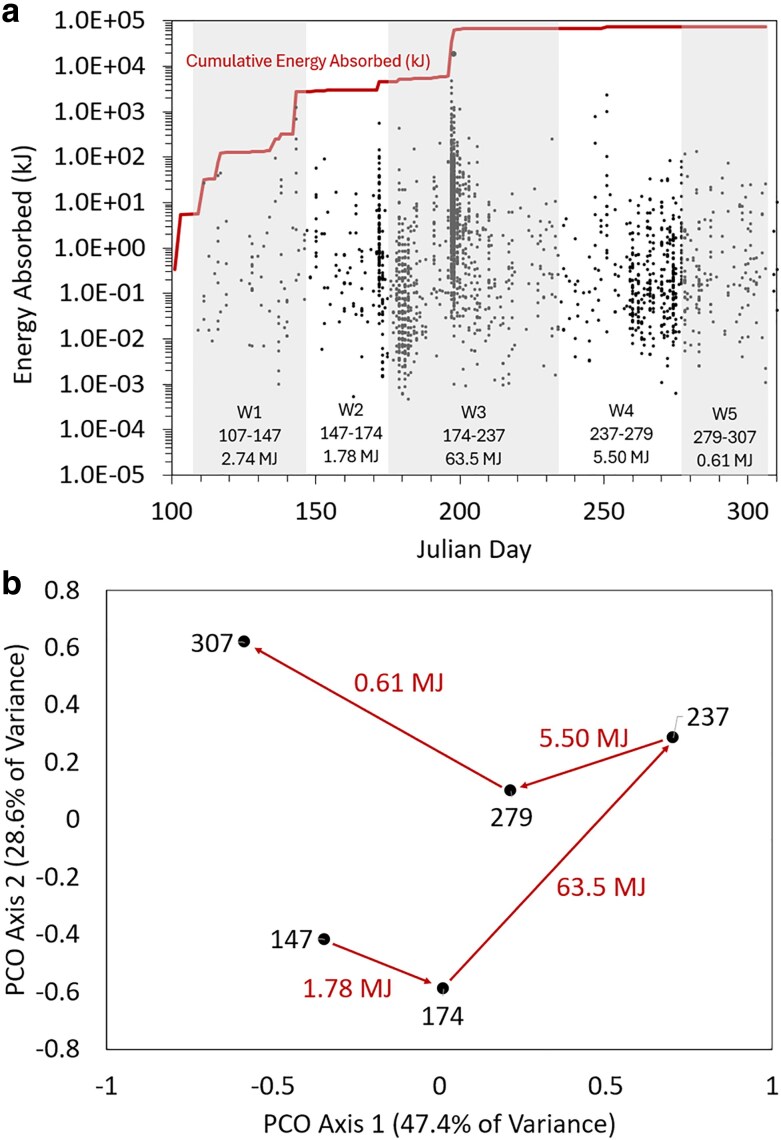 Figure 2
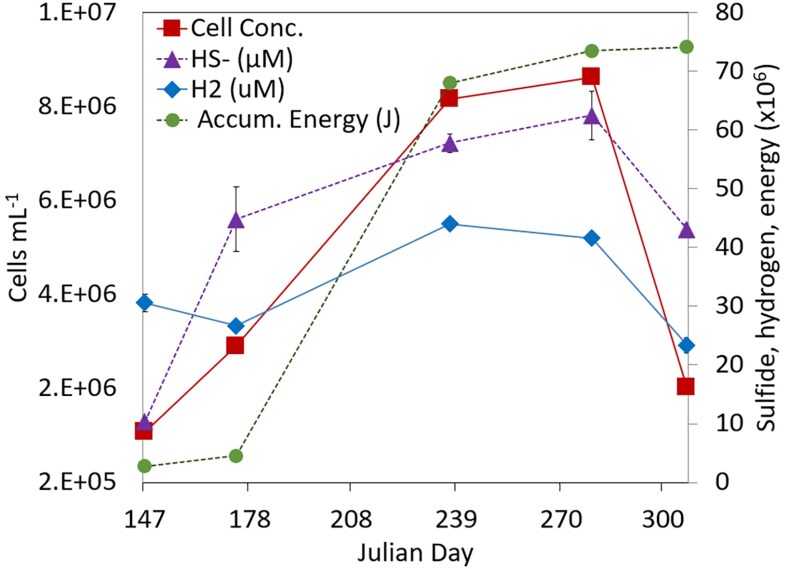 Figure 3
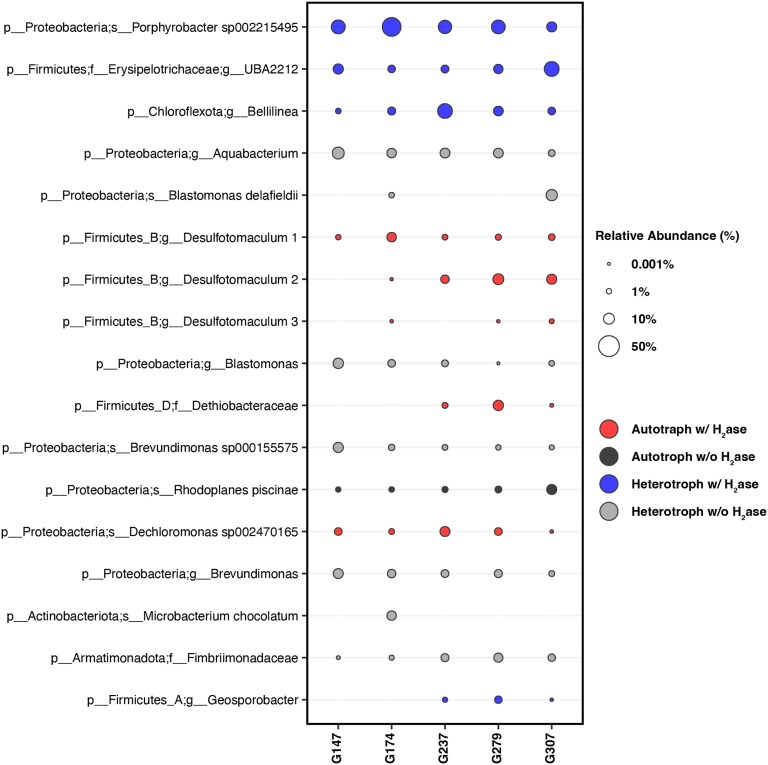 Figure 4
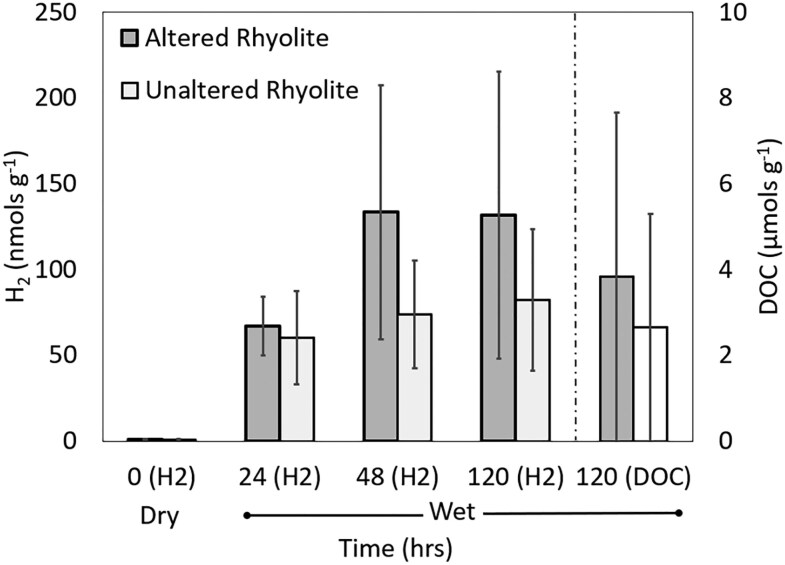 Figure 5
Peer Reviews
No public reviews on file for this paper yet. If you reviewed it on a platform where reviews are public (OpenReview, ICLR, NeurIPS, ICML), you can paste yours below so the community can read it here.
Videos
No videos yet. Explain this paper in a talk, walkthrough, or lecture? Add one.
Taxonomy
TopicsCO2 Sequestration and Geologic Interactions · earthquake and tectonic studies · Methane Hydrates and Related Phenomena