Chemokine-Binding All-D-CLIPS Peptides Identified Using Mirror-Image Phage Display
Stepan S. Denisov, Emilia L. Bialek, Fabio Beretta, Gintare Smagurauskaite, Hans Ippel, Eline Fijlstra, Sangram S. Kale, Peter Timmerman, Tilman M. Hackeng, Paul Proost, Michael Goldflam, Ingrid Dijkgraaf

TL;DR
Researchers developed stable peptides that bind to a specific chemokine, CXCL8, using a mirror-image phage display method, which could help treat inflammation-related diseases.
Contribution
The study introduces the use of mirror-image phage display to identify proteolytically stable all-D-peptides with submicromolar affinity for CXCL8.
Findings
All-D-peptides with submicromolar affinity to CXCL8 were identified using mirror-image phage display.
These peptides disrupted CXCL8 dimerization and GAG binding without affecting cell migration.
The peptides showed structural diversity and selectivity for CXCL8 over related chemokines.
Abstract
Chemokines are secreted blood proteins that steer leukocyte migration in the inflammatory response. Neutralization of chemokines is believed to be a beneficial therapeutic strategy for the treatment of inflammation-associated diseases. Proteolytically stable chemokine-binding peptides could be suitable candidates for the development of chemokine-neutralizing agents. Here, we report the mirror-image phage display selection of cyclic all-D-peptides against the C–X–C motif chemokine ligand 8 (CXCL8). Selection yielded structurally diverse all-D-peptides with submicromolar affinity to the target CXCL8 chemokine and different selectivity to related chemokines. Binding of these all-D-peptides caused dissociation of the native CXCL8 dimer and disruption of its binding to GAGs, without an effect on in vitro cell migration. This work demonstrates the example of mirror-image phage display…
Genes, proteins, chemicals, diseases, species, mutations and cell lines named across the full text — each resolved to its canonical identifier and authoritative record.
Click any figure to enlarge with its caption.
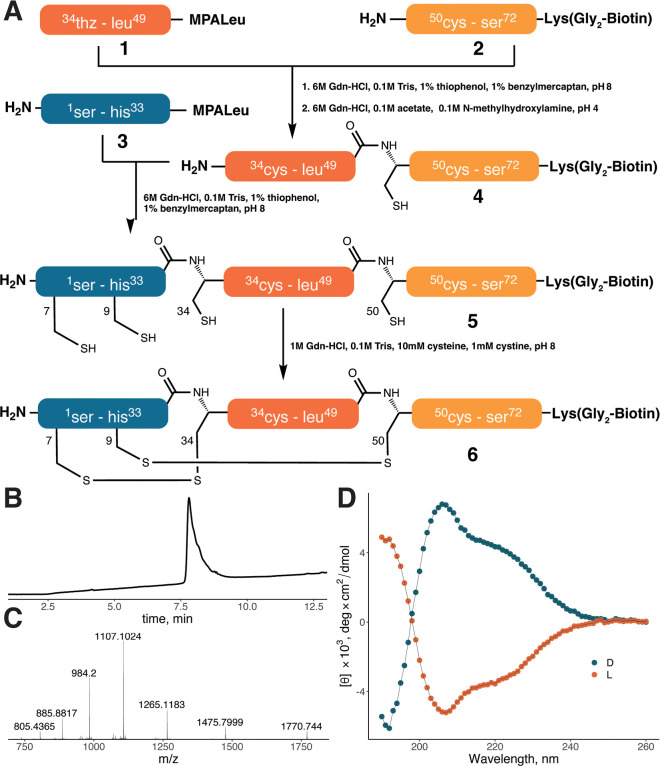 Figure 1
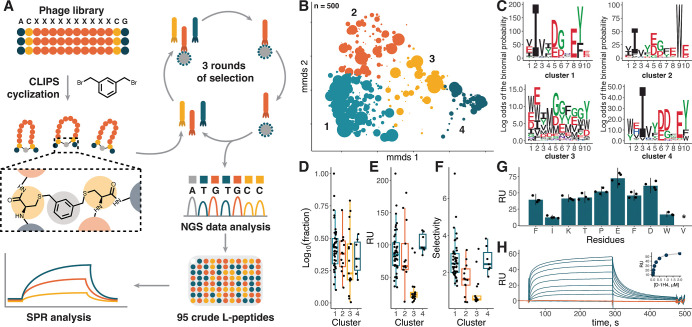 Figure 2
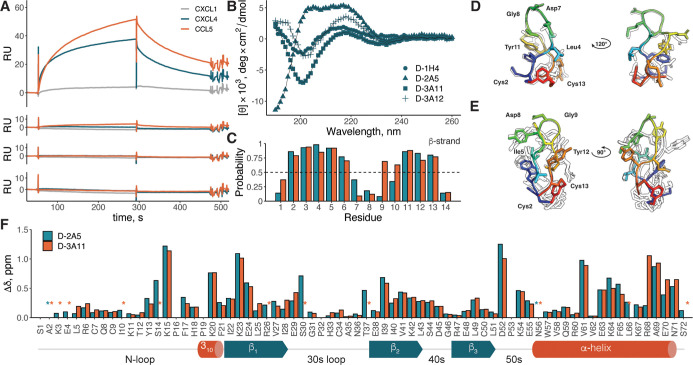 Figure 3
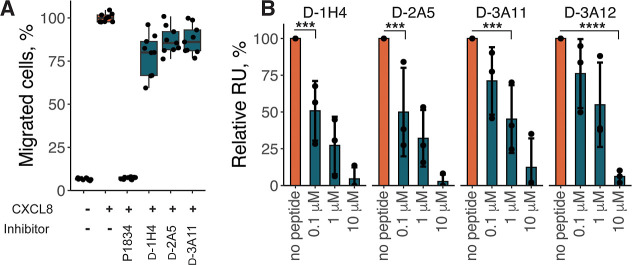 Figure 4
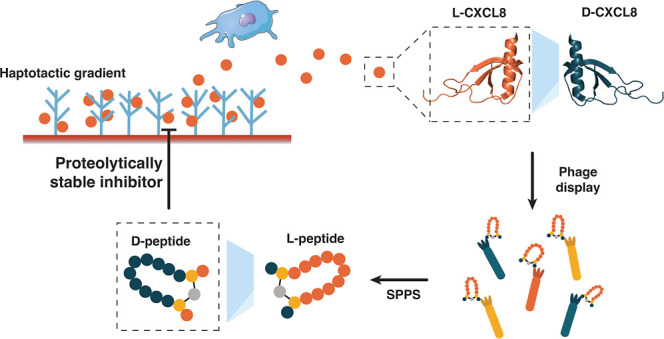 Figure 5
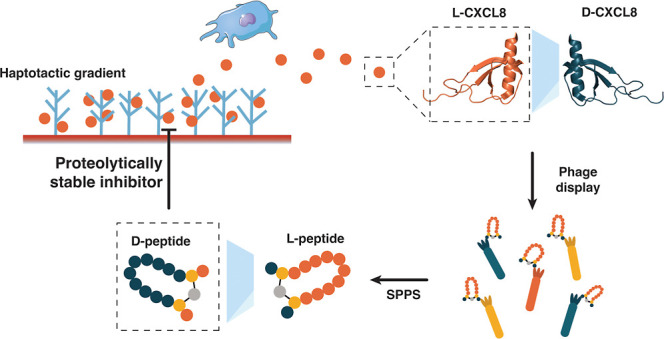 Figure 6
Peer Reviews
No public reviews on file for this paper yet. If you reviewed it on a platform where reviews are public (OpenReview, ICLR, NeurIPS, ICML), you can paste yours below so the community can read it here.
Videos
No videos yet. Explain this paper in a talk, walkthrough, or lecture? Add one.
Taxonomy
TopicsMonoclonal and Polyclonal Antibodies Research · Chemokine receptors and signaling · Advanced Biosensing Techniques and Applications