Virus Propagation Linked to Exceedingly Rare Gene-Expression Errors: A Single-Molecule Microscopy Demonstration
Raquel Luzón-Hidalgo, Gianluca D’Agostino, Valeria A. Risso, Asuncion Delgado, Beatriz Ibarra-Molero, Luis A. Campos, Jose Requejo-Isidro, Jose M. Sanchez-Ruiz

TL;DR
This study shows how viruses can replicate using proteins made in very low amounts due to gene-expression errors, which might help them survive in new hosts.
Contribution
The paper experimentally demonstrates virus replication enabled by exceedingly low levels of a host protein due to gene-expression errors.
Findings
Phage T7 can replicate even when only about 10 thioredoxin molecules are present per host cell.
Low thioredoxin levels are possible due to the polymerase-thioredoxin complex's high kinetic stability and long residence time.
Gene-expression errors may allow viruses to access diverse protein variants, aiding survival in new hosts.
Abstract
Many viruses use programmed frameshifting and stop-codon misreading to synthesize functional proteins at high levels. The underlying mechanisms involve complex RNA sequence/structure motifs and likely reflect optimization driven by natural selection of inefficient, nonprogrammed processes. Then, it follows from basic evolutionary theory that low levels of proteins generated through gene expression errors could provide viruses with some survival advantage. Here, we devise an experimental demonstration of this possibility. Phage T7 recruits the host thioredoxin as an essential processivity factor for the viral DNA polymerase. We inserted early stop codons in the thioredoxin gene and appended to its end the sequence encoding for a photoconvertible fluorescent protein. Virus replication was not abolished. Single-molecule localization microscopy showed that the phage replicates even when…
Genes, proteins, chemicals, diseases, species, mutations and cell lines named across the full text — each resolved to its canonical identifier and authoritative record.
Click any figure to enlarge with its caption.
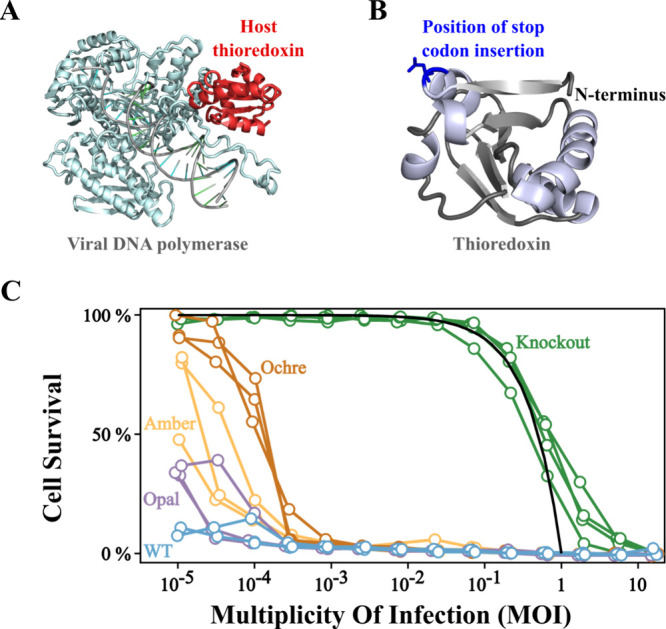 Figure 1
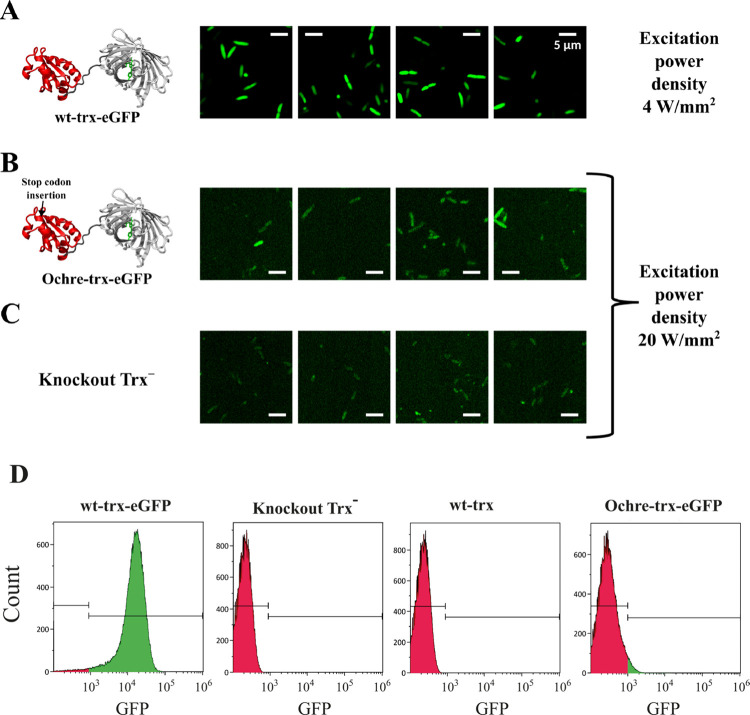 Figure 2
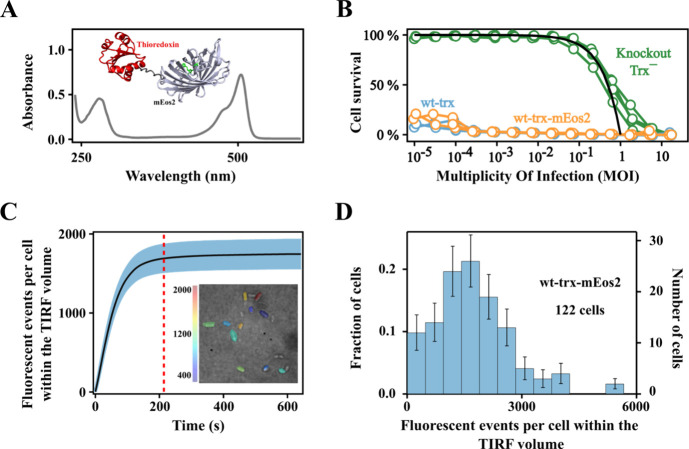 Figure 3
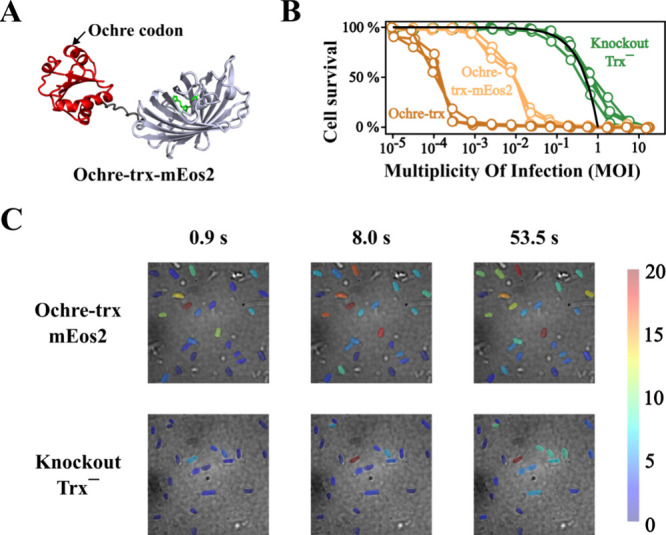 Figure 4
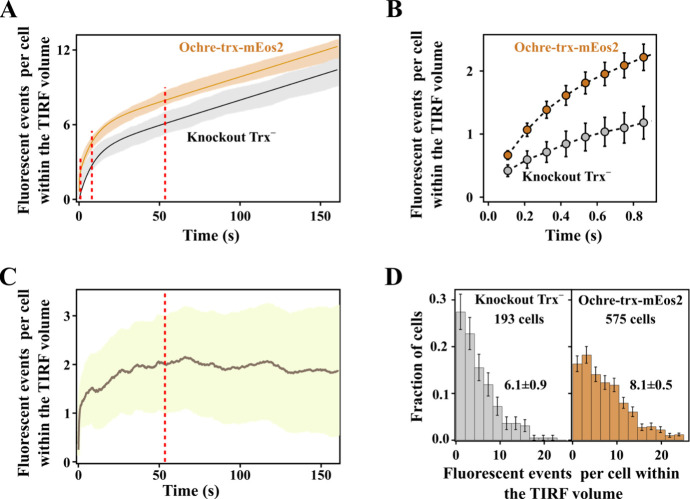 Figure 5
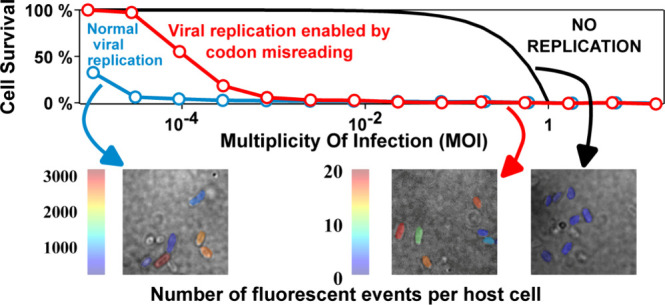 Figure 6
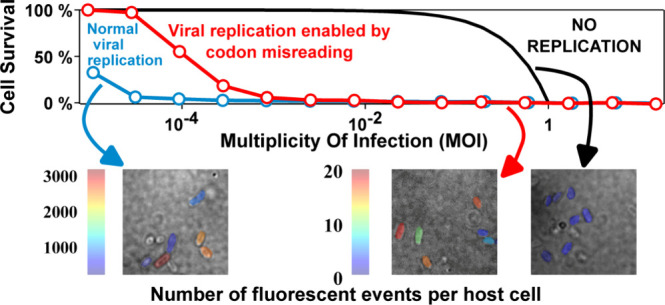 Figure 7
 Figure 8
 Figure 9
 Figure 10
 Figure 11
Peer Reviews
No public reviews on file for this paper yet. If you reviewed it on a platform where reviews are public (OpenReview, ICLR, NeurIPS, ICML), you can paste yours below so the community can read it here.
Videos
No videos yet. Explain this paper in a talk, walkthrough, or lecture? Add one.
Taxonomy
TopicsAdvanced Fluorescence Microscopy Techniques · Advanced Biosensing Techniques and Applications · RNA and protein synthesis mechanisms