3M syndrome in Saudi Arabia: a case series study and literature review
Raghad Alhuthil, Afaf Alsagheir, Maha Almslam, Jana Raed, Farah Barakat, Sarah Murad, Bassam Bin-Abbas

TL;DR
This study examines 3M syndrome in Saudi Arabia, focusing on its clinical features and response to growth hormone therapy.
Contribution
The study provides new insights into the genetic and clinical variability of 3M syndrome in a Saudi population.
Findings
CUL7 was the most frequently affected gene in Saudi 3M syndrome patients.
Growth hormone therapy showed mixed results, with only half of treated children showing improved growth.
Genetic testing is essential for accurate diagnosis and management of 3M syndrome.
Abstract
3M syndrome (3MS) is a very rare autosomal recessive disorder characterized by short stature, distinctive facial features, and skeletal abnormalities. The condition is frequently underdiagnosed due to its nonspecific symptoms and normal neurocognitive development. Few reports exist on its clinical course and response to growth hormone (GH) therapy. Therefore, this study aims to describe the clinical features of Saudi patients with 3MS and to investigate the effects of growth hormone therapy on growth. We conducted a retrospective case series of 14 Saudi patients from 11 families with genetically confirmed 3MS at King Faisal Specialist Hospital and Research Centre in Riyadh. The mean age at diagnosis was 5.4 years. Consanguinity was present in 79% of cases. The most frequently affected gene was CUL7 (57% of cases), followed by OBSL1 and CCDC8. All variants were predominantly homozygous…
Genes, proteins, chemicals, diseases, species, mutations and cell lines named across the full text — each resolved to its canonical identifier and authoritative record.
Click any figure to enlarge with its caption.
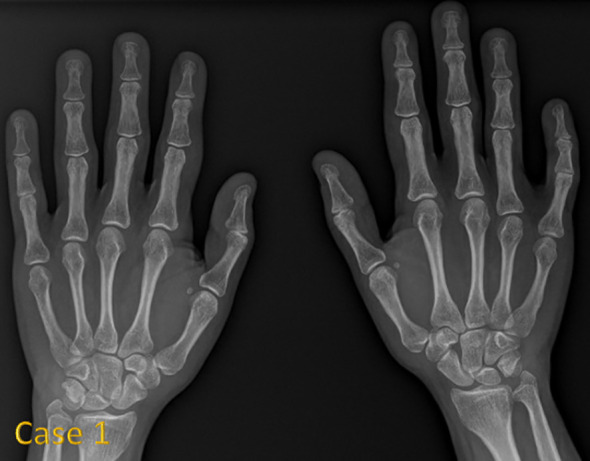 Figure 1
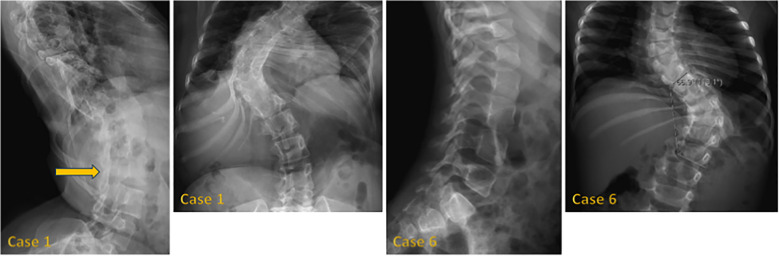 Figure 2
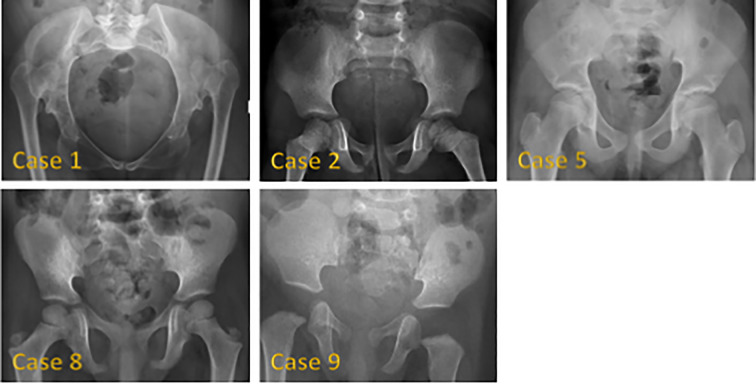 Figure 3
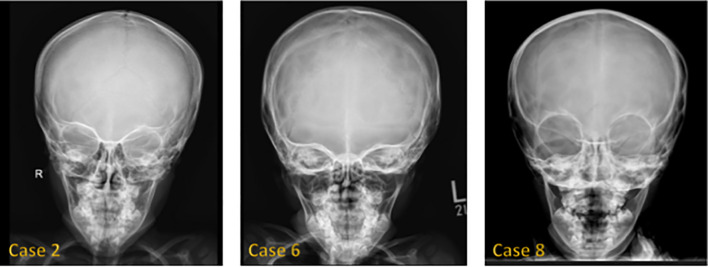 Figure 4
| ID | Family | Sex | Current age (yr) | Age at diagnosis (yr) | Gene | Exon: mutation [transcript] | Variant effect | Classification | Zygosity | Family history | Consanguinity | IUGR |
|---|---|---|---|---|---|---|---|---|---|---|---|---|
| 1 | Fam-1 | F | 39 | 20 |
| Exon 15: c.2988G>A (p.Trp996Ter) [ | Nonsense | P | Homo | No | Yes | Yes |
| 2 | Fam-2 | M | 9 | 1.5 |
| Intron 16: c.3173-1G>C [ | Splice site | P | Homo | Yes | No | Yes |
| 3 | Fam-3 | F | 7 | Intrauterine |
| Intron 17: c.3607 + 1G>C [ | Splice site | LP | Homo | Yes | Yes | Yes |
| 4 | Fam-3 | F | 12 | 3 |
| Intron 17: c.3607 + 1G>C [ | Splice site | LP | Homo | Yes | Yes | Yes |
| 5 | Fam-4 | F | 16 | 12 |
| Exon 3: c.784C>T (p.Leu262Phe) [ | Missense | VUS | Homo | Yes | Yes | Yes |
| 6 | Fam-4 | F | 15 | 11 |
| Exon 3: c.784C>T (p.Leu262Phe) [ | Missense | VUS | Homo | Yes | Yes | Yes |
| 7 | Fam-5 | F | 6 | 1.5 |
| Exon 1: c.963del (p.Ala323ProfsTer156) [ | Frameshift | LP | Homo | Yes | No | Yes |
| 8 | Fam-6 | F | 5 | 3.5 |
| ND | – | – | Homo | No | Yes | Yes |
| 9 | Fam-7 | F | 9 | 0.5 |
| Exon 5: c.1997_2049del (p.Gly666AlafsTer56) [ | Frameshift | P | Homo | Yes | Yes | Yes |
| 10 | Fam-7 | F | 16 | 1 |
| Exon 5: c.1997_2049del (p.Gly666AlafsTer56) [ | Frameshift | P | Homo | Yes | Yes | Yes |
| 11 | Fam-8* | F | 11 | 10 |
| Exon 1: c.324_331del (p.Ser108ArgfsTer37) [ | Frameshift | LP | Homo | Yes | Yes | Yes |
| 12 | Fam-9 | M | 4 | 2 |
| Exon 7: c.2497C>T (p.Arg833Ter) [ | Nonsense | P | Homo | No | No | Yes |
| 13 | Fam-10 | F | 8 | 7 |
| Exon 14: c.4453C>T (p.Arg1485Ter) [ | Nonsense | LP | Homo | Yes | Yes | Yes |
| 14 | Fam-11** | M | 10 | 3 |
| Exon 14: c.4596G>T (p.Arg1532Ser) [ | Missense | VUS | Hetero | No | Yes | Yes |
| ID | Clinical features | MPH (cm) | Baseline height (cm; GV, cm/year; SDS) | Last/final height (cm; GV, cm/year; SDS) | Bone age** | IGF-1 (ng/mL; reference range) | GH therapy (start age; duration; dose) | GH benefit |
|---|---|---|---|---|---|---|---|---|
| 1 | Short stature, dolichocephaly, distinctive facial features, slender fingers, congenital scoliosis, dysplastic hips | 172 | ND | 105* (NA; −8.4) | ND | ND | No—late presentation | NA |
| 2 | Short stature, dolichocephaly, distinctive facial features, macrocephaly, left grade 3 hydronephrosis | 164 | 68 (7; −4.2) | 114.5 (5; −3.77) | Age appropriate | 210 (ref 85–249) | Yes (8 y; 24 mo; 0.75 mg/day) | No—stopped due to headache |
| 3 | Short stature, dysmorphic features, prominent heels, hyperextensible joints, nephrocalcinosis, nephrotic syndrome | 159 | 82.8 (4.9; −3.75) | 111.3 (6.6; −3.61) | Mildly advanced | 615 (ref 87–399; high) | Yes (5 y; 48 mo; 0.6 mg/day) | Yes |
| 4 | Short stature, nephrotic-range proteinuria | 159 | 83 (4.3; −6.78) | 112.2 (7.9; −4.44) | Age appropriate | 228 (ref 188–510) | Yes (6 y; 72 mo; 0.8 mg/day) | Yes |
| 5 | Short stature, thin build, speech delay, no dysmorphic or skeletal features | 155 | 127 (6.7; −3.32) | 142.5* (1.9; −3.07) | Age appropriate | 375 (ref 188–510) | Completed (12 y; 27 mo; 1.33 mg/day) | Yes |
| 6 | Short stature, distinctive facial features, triangular face, recurrent UTIs | 155 | 142 (7.24; −1.76) | 153.6* (3.11; −1.28) | Age appropriate | 326 (ref 268–471) | Yes (12 y; 60 mo; 1.3 mg/day) | Unclear—poor adherence |
| 7 | Short stature, low bone mineral density, scoliosis (corrective surgery) | 149 | 66 (5.9; −6.63) | 89.3 (6.6; −6.13) | ND; BMD Z−score −4.2 (below expected for age) | 101 (ref 80–244) | Yes (6 y; 9 mo; 0.45 mg/day) | Unclear—recently started |
| 8 | Short stature, distinctive facial features, triangular face, flat profile, maxillary hypoplasia, dental crowding, developmental and speech delay | 163 | 74 (2.41; −6.18) | 86.5 (1.47; −5.75) | ND | 42 (ref 34–172) | Yes (5 y; 13 mo; 0.3 mg/day); headache after 1 mo—GH stopped, then resumed; no current side effects | Unclear |
| 9 | Short stature, growth failure, osteopenia, deafness | 163 | 70 (9.9; −4.57) | 76 (5; −4.3) | ND | 195 (ref 34–172; high) | Yes (2 y; 24 mo; 0.33 mg/day) | Yes |
| 10 | Short stature, dysmorphic features, skeletal dysplasia, radial head deformity, elbow restriction, brachydactyly | ND | 75 (7; −3.95) | 144.4* (2.3; −2.85) | ND | 219 (ref 87–399) | Completed (8 y; 72 mo; 5 mg/1.5 mL SC, 4 times/week) | Yes |
| 11 | Short stature, dysmorphic features, scoliosis | ND | 119 (ND; −3.19) | ND | ND | ND | Discontinued after puberty (10 y; 12 mo; dose unknown) | Unclear |
| 12 | Short stature, skeletal deformities, distinctive facial features, small head, triangular face, retrognathia, pectus carinatum | ND | 71.5 (5.13; −4.38) | 81 (6.46; −4.98) | ND | ND | Not yet started | NA |
| 13 | FTT, micrognathia, speech delay, musculoskeletal pain, atopy, growth delay, poor school performance, joint pain, arthritis | ND | 116.5 (7.22; −1.07) | 122.5 (6.96; −0.85) | ND | ND | Not clinically indicated (height SDS −0.85; weight SDS −3.03) | NA |
| 14 | Short stature, skeletal deformities, hyperlordosis, osteopenia | ND | 83 (6.51; −4.1) | 115 (5.31; −3.73) | ND | ND | No—currently followed by orthopedics for post−op implant removal | NA |
| Author(s), year | Country | Study design | Size | M/F | Positive gene(s) | Clinical presentations |
|---|---|---|---|---|---|---|
| 1-Index study (2025) | Saudi Arabia | Case Series | 14 | 3/11 | Short stature, IUGR, distinctive facial abnormalities (triangular face, micrognathia, dental abnormalities, flat nasal profile), skeletal abnormalities (scoliosis, hyperlordosis, radial abnormalities, pectus deformities), developmental delay, speech delay, low bone mineral density, joint abnormalities, dental crowding, microcephaly, urologic abnormalities (hydronephrosis), renal involvement (2 cases) | |
| 2-Akalın et al. (2025) ( | Turkey | Cohort Study | 25 | 16/9 | Short stature, IUGR, triangular face, frontal bossing, periorbital fullness, fleshy nasal tip, short nasal bridge, hyperlordosis, joint abnormalities, pes planus, prominently projecting heels, dental abnormalities, aorta abnormalities, Gradenigo’s syndrome in 1 patient. | |
| 3-Elsayed et al. (2025) ( | Egypt | Case Series | 11 | 8/3 |
| Short stature, IUGR, triangular face, macrocephaly, square shoulders, short broad thorax, fleshy heels, pes planus, hip dislocation, talipes equinovarus, and variable dysmorphic features (e.g., frontal bossing, pointed chin). |
| 4-Alkhawaldeh et al. (2024) ( | Jordan | Case Report | 1 | 1/0 |
| Short stature, distinct facial features, IUGR, normal mental development |
| 5-Piao et al. (2024) ( | China | Case Report | 1 | 1/0 |
| Short stature, IUGR, pronounced forehead, flat nasal bridge |
| 6-Luo et al. (2024) ( | China | Case Report | 1 | 0/1 |
| Square shoulders, scoliosis, long slender tubular bones, no facial dysmorphism |
| 7-Gomez et al. (2024) ( | Colombia | Case Report | 1 | 0/1 |
| Short stature, IUGR, prominent forehead, triangular face, bulbous nose, thick lips |
| 8-Wang et al. (2024) ( | China | Case Report | 1 | Fetus |
| Growth abnormalities |
| 9-Xu et al. (2023) ( | China | Case Series | 4 | 2/2 | Short stature, enlarged head circumference, triangular face, low nasal bridge, normal intelligence | |
| 10-Ceylan et al. (2023) ( | Turkey | Case Report | 1 | 1/0 | Recurrent infections, facial dysmorphism, hypotonia, developmental delay, SCID | |
| 11-Küçükali et al. (2023) ( | Turkey | Case Series | 8 | 3/5 |
| Short stature, delayed bone age, small for gestational age, triangular face, frontal bossing, short fleshy nose, full lower lip, rib groove, lordosis |
| 12-Akalın et al. (2022) ( | Turkey | Case Report | 1 | 1/0 |
| Short stature, prenatal onset, triangular face, macrocephaly, frontal bossing, pectus excavatum |
| 13-Khachnaoui-Zaafrane et al. (2022) ( | Tunisia | Case Series | 7 | 3/4 |
| Facial dysmorphism, skeletal abnormalities (lumbar lordosis, hyperextensible joints), spina bifida occulta, single transverse palmar creases |
| 14-Tüysüz et al. (2021) ( | Turkey | Cohort Study | 19 | 10/9 | Triangular face, short fleshy nose, full lower lip, rib groove, lordosis, slender long bones, facial infantile hemangioma | |
| 15-Isik et al. (2021) ( | Turkey | Case Series | 4 | 2/2 | IUGR, macrocephaly, typical facial features | |
| 16-Lee et al. (2020) ( | Korea | Case Report | 2 | 0/2 |
| Short stature, macrocephaly, frontal bossing, triangular face, prominent philtrum, full lips, short neck, fifth-finger clinodactyly |
| 17-Yang & Patni (2020) ( | USA | Case Report | 1 | 1/0 |
| IUGR, macrocephaly, skeletal abnormalities, GH insensitivity, morbid obesity, voracious appetite, acanthosis nigricans, tonsillar hypertrophy, obstructive sleep apnea |
| 18-Simsek‐Kiper et al. (2019) ( | Turkey | Cohort Study | 24 | 12/12 | Short stature, short extremities, IUGR, delayed bone age, skeletal abnormalities | |
| 19-HabibUllah et al. (2019) ( | Saudi Arabia | Case Report | 1 | 1/0 |
| Short stature, low weight, developmental delay, dysmorphic features (large head, triangular face, upturned nostrils, clinodactyly) |
| 20-Shaikh et al. (2019) ( | India | Case Report | 2 | 1/1 |
| IUGR, facial dysmorphology, broad thorax, heel protrusion |
Peer Reviews
No public reviews on file for this paper yet. If you reviewed it on a platform where reviews are public (OpenReview, ICLR, NeurIPS, ICML), you can paste yours below so the community can read it here.
Videos
No videos yet. Explain this paper in a talk, walkthrough, or lecture? Add one.
Taxonomy
TopicsGenomic variations and chromosomal abnormalities · Genomics and Rare Diseases · Prenatal Screening and Diagnostics
Introduction
1
3M syndrome (3MS) is a rare autosomal recessive disorder characterized by short stature, distinctive facial features, and skeletal abnormalities (1). It is inherited in accordance with an autosomal recessive pattern (1), and is considered very uncommon, with approximately 200 cases reported worldwide. The actual prevalence, however, might be higher because many cases might go unnoticed due to normal cognitive development (2, 3).
Individuals diagnosed with 3MS experience profound prenatal growth retardation, attributed to fetal growth delays, leading to a diminished birth weight (1). The growth impediments persist beyond birth, manifesting as a consistent pattern of delayed growth throughout childhood and adolescence, culminating in a stature significantly below the average. Many distinctive physical characteristics associated with this condition are congenital in nature. Craniofacial anomalies commonly observed encompass a disproportionately elongated and narrow head, a prominently broad forehead, and a triangular facial appearance marked by a hypoplastic midface, pointed chin, extended philtrum, noticeable mouth, depressed nasal bridge, fleshy-tipped upturned nose, large ears, and full lips (1, 4–6).
While skeletal anomalies are not apparent at birth, they gradually manifest, including delayed bone maturation, elongated and slender tubular bones, and heightened vertebral bodies (1, 4). Some individuals exhibit joint hypermobility and an increased susceptibility to hip dislocation (1, 5). Anomalous spinal curvature, such as kyphoscoliosis or hyperlordosis, leading to back pain, is also documented in this disorder (1, 5).
Additional physical abnormalities identified in certain children consist of an unusually short and broad neck and thorax, square shoulders, flared shoulder blades, atypical curvature of the 5th finger, and prominent heels (1, 5, 6).
Three different genes have been involved in the disease so far, with mutations in CUL7, OBSL1 and CCDC8 (1). The CUL7 gene, initially documented in 2005 (7), is responsible for 77.5% of genetically confirmed cases, with a specific mutation identified in exon 24 for Maghreb families (7–9).
Consequently, there is limited data on this syndrome in the existing literature. Therefore, the purpose of this study is to describe the clinical characteristics of 14 Saudi patients who have 3MS and investigate the impact of growth hormone (GH) therapy on their growth.
Methodology
2
This retrospective case series research involved 14 cases of 3MS who are currently receiving care at endocrinology clinics at King Faisal Specialist Hospital and Research Centre (KFSHRC) in Riyadh, Saudi Arabia. Data retrieval occurred from November 2023 to January 2025 from our database and included both pediatric and adult patients. Individuals without available genetic testing data were excluded. The study documented patients’ demographics, medical history, presentations, management and investigative results. Approval for this study was obtained from the Office of Research Affairs at King Faisal Specialist Hospital and Research Centre (reference number: 2245444).
The diagnostic criteria for 3MS include proportionate short stature, characteristic facial and skeletal features, with confirmation typically achieved by identifying pathogenic variants in the CUL7, OBSL1, or CCDC8 genes.
Genetic testing was conducted as part of routine clinical practice. Following patient consent, DNA was extracted from peripheral blood samples, and whole-exome sequencing was carried out at the Molecular Diagnostic Laboratory of the Clinical Genomic Department, Center for Genomic Medicine at KFSHRC.
Clinical improvement with GH therapy is defined as a significant and sustained increase in height velocity (≥2 cm/year above baseline) and/or an improvement in height SDS (≥0.3–0.5 within one year), without adverse effects, indicating partial restoration of growth potential.
This research was performed according to the guidelines of the Declaration of Helsinki and approved by the Office of Research Affairs in King Faisal Specialist Hospital and Research Centre (Reference number: 2231134). This was a retrospective study; therefore, informed consent was not required.
Results
3
Table 1 presents clinical and genetic characteristics of 14 individuals (10 females, 4 males) from 11 families diagnosed with 3MS. The mean current age of the cases was approximately 11.2 years, with a range of 4 to 39 years. The average age at diagnosis (excluding intrauterine cases) was 5.4 years. The most commonly affected gene was CUL7 (8/14 cases), followed by OBSL1 (5/14), and CCDC8 (2/14). One subject had no gene documented. Most variants were homozygous (13/14), with one heterozygous. Consanguinity was reported in 11/14 (78.6%) cases, and intrauterine growth restriction (IUGR) was present in all cases. Most mutations were classified as pathogenic (P) or likely pathogenic (LP), with three variants of uncertain significance (VUS) noted.
At baseline, patients had significantly reduced height with a mean SDS of -3.9. Short stature with dysmorphic/skeletal features was universal, with frequent orthopedic issues (e.g., scoliosis, skeletal dysplasia) and occasional renal involvement (hydronephrosis, nephrotic-range proteinuria). Bone age was usually age-appropriate when assessed; one child had mildly advanced bone age, and one had very low BMD (Z -4.2). IGF-1 was within/low-normal in most tested cases, with two elevated results (Table 2).
GH therapy was initiated in 10/14 (71.4%): five showed a clear clinical benefit, one stopped due to headaches (no benefit), and four had indeterminate benefit (recent start/poor adherence/insufficient data). Among patients with paired height SDS, most improved over time (median ΔSDS ≈ +0.43 in GH-treated vs ≈ +0.22 in non-treated; small numbers), with the largest gain of +2.34 SDS in a long-treated child. Four patients had reached final height (including one untreated adult at 105 cm); others remain under follow-up, with GH not started or not indicated in selected cases (Table 2).
Figure 1 shows hand radiographs from Case 1 revealing slender tubular phalanges, a characteristic skeletal feature of 3MS. Figure 2 includes spinal imaging from Cases 1 and 6. Case 1 exhibits lumbar hyperlordosis, thoracolumbar scoliosis, and rib abnormalities, while Case 6 shows tall lumbar vertebral bodies and scoliosis, further supporting skeletal involvement. Figure 3 illustrates pelvic radiographs from multiple cases. Cases 8 and 9 exhibit narrow triangular pelvis, while Case 1 demonstrates severe hip dysplasia with pseudoacetabuli and displaced femoral heads, reflecting the heterogeneity in pelvic morphology among affected patients. Figure 4 shows frontal facial radiographs. A triangular face was noted in Cases 2, 6, and 8, with additional craniofacial anomalies in Case 8, including maxillary hypoplasia and dental crowding, features consistent with 3MS-related dysmorphism.
Anteroposterior radiograph of both hands in case 1 reveals slender tubular phalanges.
Lateral radiographs of case 1 reveal lumbar hyperlordosis (arrow), while frontal radiographs show thoracolumbar scoliosis and abnormal rib morphology. In case 6, lateral radiographs demonstrate tall lumbar vertebral bodies, and frontal radiographs display thoracolumbar scoliosis.
Pelvic radiographs of 5 patients with 3M syndrome. No obvious abnormality was found in Case 2. The pelvic measurements of Cases 5, 8 and 9 are smaller than their peers. Cases 8 and 9 showed a narrow triangular pelvis. Cases 1 and 5 showed a wide pelvis. Case 1 also showed severely dysplastic hip joints, pseudoacetabili formation, and superiorly displaced bilateral femoral heads.
Frontal face radiograph showed a triangular configuration of the face in Cases 2, 6, and 8. Case 8 also showed maxillary hypoplasia, teeth malocclusion, and teeth crowding.
Discussion
4
This case series aims to describe the clinical characteristics of 14 Saudi patients who have 3MS, investigate the impact of growth hormone therapy on their growth. Additionally, it provides a review of the recent literature of this condition (3, 10–15, 18, 21–31).
The clinical manifestations observed in this series align with classical 3MS characteristics (10–13) (Table 3). Common features included IUGR, postnatal short stature, and a triangular face, frequently accompanied by dental abnormalities, pectus abnormalities, spinal abnormalities, hyperlordosis, and other skeletal abnormalities, such as scoliosis, lordosis, and slender tubular phalanges. One patient (Case 6) was described with recurrent infections, a feature previously documented in Turkey by Ceylan et al. (2023) in a patient with severe combined immunodeficiency (SCID) and 3MS (14). Less frequently described abnormalities, such as macrocephaly, acanthosis nigricans, voracious appetite, and obstructive sleep apnea, were also reported by Yang & Patni (2020) in a patient with a CUL7 mutation (15).
Genetically, we identified variants predominantly in CUL7, OBSL1, and CCDC8, reflecting autosomal recessive inheritance, a pattern frequently described in 3MS cases (Table 3). The most frequently affected gene was CUL7, followed by OBSL1, while CCDC8 variants were rare, which is consistent with the findings by Akalın et al. (2025) (12). Consanguinity was present in nearly 79% of cases, which may explain the predominantly homozygous variants in this population. CUL7 mutations identified in cases 1 and 2 — c.2988G>A (p.Trp996Ter) and c.3173-1G>C, respectively — have previously been described in 3MS cases (16, 17).
In mechanistic context, the three canonical 3MS genes form an interrelated “3M complex” that participates in cytoskeletal integrity, mitotic progression, and ubiquitin–proteasome–mediated protein turnover (2, 9, 12, 13, 20). CUL7 encodes a scaffold of a cullin-RING E3 ubiquitin ligase that, together with adaptor proteins, regulates turnover of signaling intermediates, including components of insulin/IGF pathways (2, 7, 9, 20). Experimental work indicates that perturbations of CUL7 can dysregulate IRS-1 handling and downstream PI3K–AKT signaling, contributing to impaired chondrocyte proliferation and skeletal growth despite ostensibly intact upstream GH stimulation (2, 9, 13, 25). OBSL1 (a cytoskeletal adaptor) and CCDC8 (a coiled-coil protein with roles in cell division and genome surveillance) interact with CUL7; loss of function across any of these partners disrupts the complex, with convergent effects on growth-factor signaling and endochondral ossification (2, 9, 13, 20). Clinically, this biology predicts GH insensitivity or post-receptor resistance, a pattern we observed—several children had normal or even elevated IGF-1 while linear growth remained suboptimal (18, 19, 26, 29).
As for management, of the ten reported cases where GH therapy was administered, the response was highly variable. Five cases demonstrated a notable improvement, while the other five showed no clear response or discontinued therapy due to factors like puberty or poor compliance. This variability is consistent with previous reports; for instance, Tüysüz et al. (2021) described analogous cases where GH treatment improved growth outcomes in only a subset of children with 3MS (18). Similarly, Altun et al. (2025) observed modest but statistically significant improvements in annual growth velocity (from 5.3 to 6.1 cm/year) in eight pediatric cases, despite evidence of underlying GH resistance indicated by elevated IGF-1 levels in some patients (19). While final height in these studies remained significantly below average, the stabilization or slight improvement in height SDS suggests a potential, albeit limited, benefit from GH therapy (19).
The challenges of this treatment are further highlighted across other studies. In one study, three out of four children exhibited significant growth acceleration with recombinant human GH (rhGH), though their long-term outcomes remain under observation (32). Another study reported that five out of seven patients discontinued GH treatment due to an insufficient growth response, underscoring the difficulty in sustaining effective therapy over time (Küçükali et al., 2023) (26). The genetic background of 3MS, particularly mutations in the CUL7 and OBSL1 genes, is thought to influence this variable response and contribute to the observed GH resistance (Xu et al., 2023) (25). In cases of suspected resistance, recombinant human IGF-1 (rhIGF-1) has been trialed as an alternative; however, one such report noted it did not provide substantial height benefits and was associated with side effects like obesity and acanthosis (Yang & Patni, 2020) (15). To potentially enhance outcomes, combination therapies have been explored, with one report of two siblings showing height gains following a regimen of GH and a gonadotropin-releasing hormone (GnRH) agonist (Lee et al., 2020) (29).
Beyond pharmacological interventions, the comprehensive management of 3MS includes surgical interventions for skeletal and joint abnormalities, as well as adaptive measures for persistent short stature. Furthermore, genetic counseling is recommended for affected families to explain the autosomal recessive inheritance pattern, discuss the 25% recurrence risk, and review options such as preimplantation genetic testing and prenatal ultrasound for early diagnosis (20, 21).
This study has a few limitations. Since it included only a small number of patients, the results may not apply to all individuals with 3MS. Also, because the data were collected by looking back at medical records, there’s a chance some details were missed or not recorded consistently. Finally, the study took place at just one specialized hospital, so the findings might not represent how 3MS is diagnosed or treated in other hospitals or regions.
In conclusion, this study highlights the clinical variability of 3MS, predominantly homozygous variants in CUL7, OBSL1, and CCDC8, and the potential role of GH therapy in improving growth outcomes in some cases. Nevertheless, the response to treatment is heterogeneous and underscores the necessity for individualized management plans and ongoing follow-up. Furthermore, genomic testing and proper genetic counseling are crucial for guiding future family planning and disease management.
The reference list from the paper itself. Each links out to its DOI / PubMed record.
- 1Meazza C Lausch E Pagani S Bozzola E Calcaterra V Superti-Furga A . 3-M syndrome associated with growth hormone deficiency: 18-year follow-up of a patient. Ital J Pediatr. (2013) 39:21. doi: 10.1186/1824-7288-39-21, PMID: 23517720 PMC 3608257 · doi ↗ · pubmed ↗
- 2Clayton PE Hanson D Magee L Murray PG Saunders E Abu-Amero SN . Exploring the spectrum of 3-M syndrome, a primordial short stature disorder of disrupted ubiquitination. Clin Endocrinol (Oxf). (2012) 77:335–42. doi: 10.1111/j.1365-2265.2012.04428.x, PMID: 22624670 · doi ↗ · pubmed ↗
- 3Isik E Arican D Atik T Ooi JE Darcan S Ozen S . A rare cause of syndromic short stature: 3M syndrome in three families. Am J Med Genet A. (2021) 185:461–8. doi: 10.1002/ajmg.a.61989, PMID: 33258289 · doi ↗ · pubmed ↗
- 4Winter RM Baraitser M Grant DB Preece MA Hall CM . The 3-M syndrome. J Med Genet. (1984) 21:124–8. doi: 10.1136/jmg.21.2.124, PMID: 6716411 PMC 1049241 · doi ↗ · pubmed ↗
- 5Guven A Cebeci AN . 3-M syndrome: A report of four cases in two families. J Clin Res Pediatr Endocrinol. (2011) 3:154–9. doi: 10.4274/jcrpe.v 3i 3.30, PMID: 21911330 PMC 3184518 · doi ↗ · pubmed ↗
- 6Miller JD Mc Kusick VA Malvaux P Temtamy S Salinas C . The 3-M syndrome: A heritable low birthweight dwarfism. Birth Defects Orig Artic Ser. (1975) 11:39–47., PMID: 1218233 · pubmed ↗
- 7Huber C Dias-Santagata D Glaser A O’Sullivan J Brauner R Wu K . Identification of mutations in CUL 7 in 3-M syndrome. Nat Genet. (2005) 37:1119–24. doi: 10.1038/ng 1628, PMID: 16142236 · doi ↗ · pubmed ↗
- 8Huber C Delezoide AL Guimiot F Baumann C Malan V Le Merrer M . A large-scale mutation search reveals genetic heterogeneity in 3M syndrome. Eur J Hum Genet. (2009) 17:395–400. doi: 10.1038/ejhg.2008.200, PMID: 19225462 PMC 2986175 · doi ↗ · pubmed ↗