Enantioselective Synthesis of α‐Arylated Allene Ketones Through Sequential Bismuth(V)‐mediated Arylation and Organocatalytic Protonation
Kun Zhu, Yuli Sun, Yunhan Ma, Zugen Wu, Yixin Lu

TL;DR
This paper introduces a new method for creating enantioselective α-arylated allene ketones using bismuth and organocatalysis, enabling the synthesis of chiral compounds with high efficiency.
Contribution
The first example of coupling bismuth(V)-mediated arylation with asymmetric catalysis for enantioselective synthesis.
Findings
A sequential reaction combining bismuth(V)-mediated arylation and enantioselective protonation was developed.
The method produces enantioenriched α-arylated allenones with broad functional-group tolerance.
Mechanistic studies confirm a cascade involving enolate formation, aryl migration, and irreversible isomerization.
Abstract
Triarylbismuth(V)‐mediated arylation represents an important approach for synthesizing a wide range of α‐arylated ketones and enol derivatives. Since the seminal work by Barton and colleagues in the 1980s, these C─C bond‐forming transformations have been extensively explored. Despite significant progress, asymmetric variants of these reactions have yet to be developed. In this study, we document a sequential reaction consisting of bismuth‐mediated α‐arylation of allene ketones and an enantioselective protonation of α‐arylated alkynyl ketones, leveraging the isomerization between allenyl and alkynyl intermediates. Our approach relies on a reversible/irreversible isomerization sequence comprising three distinct stages. The process initiates with the generation of enolates through reversible isomerization, followed by oxidative arylation and a subsequent enantioselective, irreversible…
Genes, proteins, chemicals, diseases, species, mutations and cell lines named across the full text — each resolved to its canonical identifier and authoritative record.
Click any figure to enlarge with its caption.
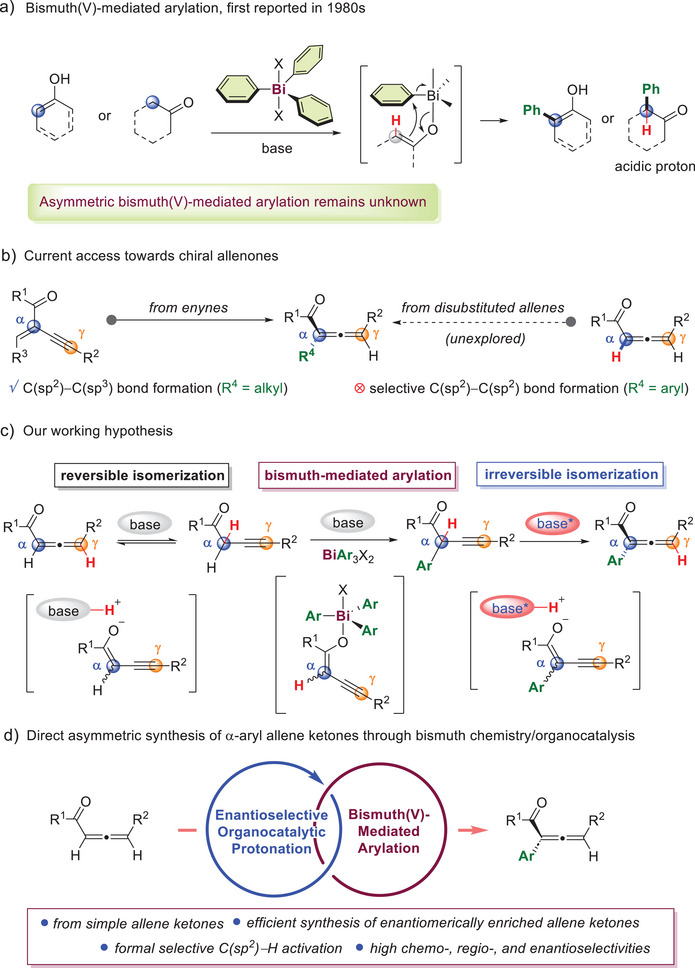 Figure 1
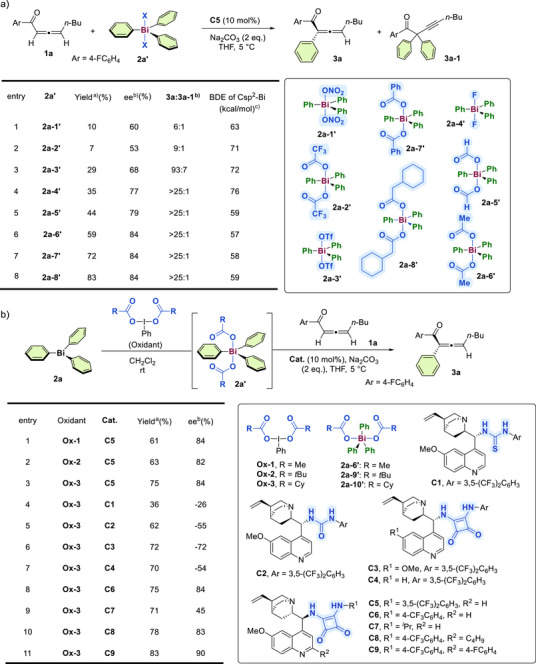 Figure 2
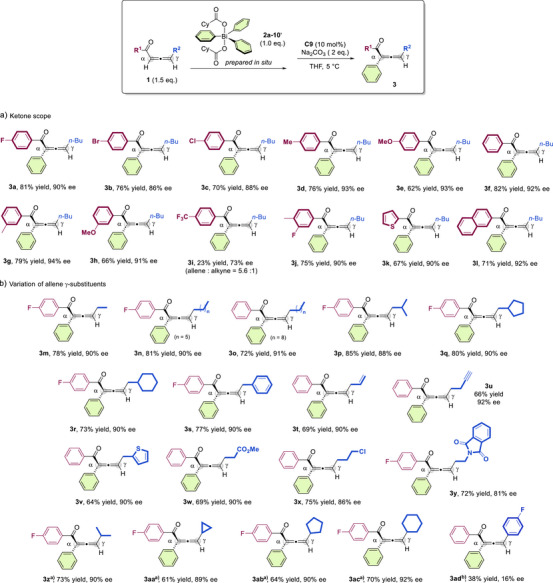 Figure 3
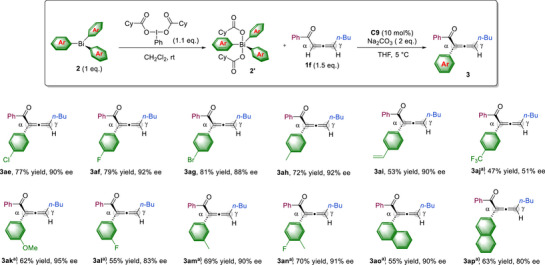 Figure 4
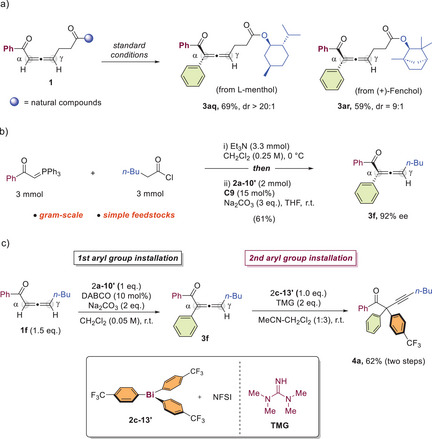 Figure 5
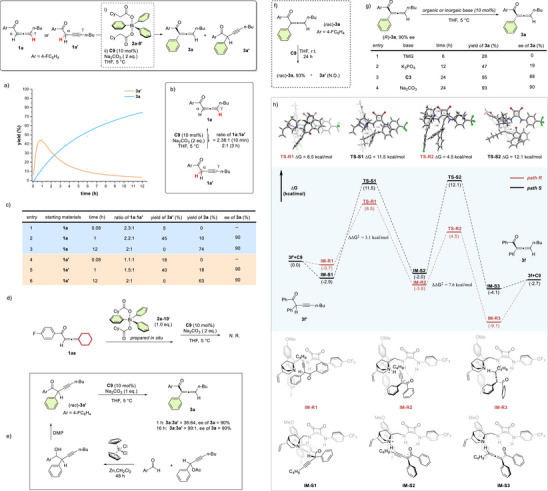 Figure 6
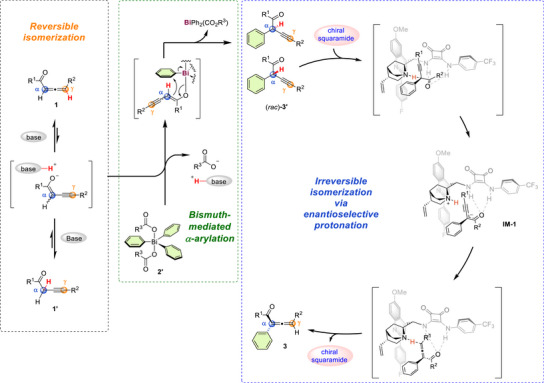 Figure 7
- —National University of Singapore10.13039/501100001352
- —Ministry of Education (MOE) of Singapore
Peer Reviews
No public reviews on file for this paper yet. If you reviewed it on a platform where reviews are public (OpenReview, ICLR, NeurIPS, ICML), you can paste yours below so the community can read it here.
Videos
No videos yet. Explain this paper in a talk, walkthrough, or lecture? Add one.
Taxonomy
TopicsCatalytic C–H Functionalization Methods · Catalytic Cross-Coupling Reactions · Asymmetric Hydrogenation and Catalysis
Introduction
Despite being located among toxic heavy metals in the periodic table, bismuth and bismuth‐containing compounds demonstrate exceptional stability and low toxicity.^[^ 1, 2 ^]^ This has resulted in a worldwide focus on producing bismuth as a safer alternative to hazardous elements like lead in various alloys.^[^ 3, 4 ^]^ Due to the soft Lewis acidity of Bi(III) and oxidizing nature of Bi(V), as well as the lability of the Bi(V)─C(sp^2^) bond, bismuth catalysis has found broad applications in carbonyl and π–bond activation,^[^ 5, 6 ^]^ oxidation,^[^ 7, 8 ^]^ as well as arylation.^[^ 9, 10, 11, 12 ^]^ Recently, bismuth redox catalysis has been harnessed as a powerful main group platform for organic synthesis, by leveraging the redox behaviors of bismuth species in various oxidation states.^[^ 13, 14, 15, 16, 17, 18, 19, 20 ^]^ In the realm of bismuth chemistry, arylation reactions through the cleavage of the bismuth–carbon bond in a bismuth(V) species represent one of the most classic reactions in the field. Ever since the pioneering reports by Barton and co‐workers in 1980s,^[^ 21, 22, 23 ^]^ such bismuth‐promoted arylation reactions have been extensively applied to a broad range of substrates, including phenols, ketones, β‐diketones, ketoesters, substrates bearing an acidic α‐proton, as well as α,β‐unsaturated carbonyls (Figure 1a).^[^ 24, 25, 26, 27, 28 ^]^ Very recently, through the use of in situ generated modular bismacylic organobismuth(V) arylating agents,^[^ 29 ^]^ Ball and co‐workers achieved selective C─H arylation of phenols, naphthols, and diketones.^[^ 30, 31, 32, 33 ^]^ Up to date, all the arylation reactions through the utilization of arylbismuth(V) reagents have produced only racemic products, and enantioselective version of such arylation remains unknown. We recognize that achieving a successful asymmetric process is challenging, primarily due to difficulties in controlling enantiomeric outcomes during the arly migration step and in preserving the stereochemical integrity at the newly formed stereogenic center at the α‐position of a carbonyl group. We therefore set out a goal to develop a bismuth‐based catalytic method to achieve asymmetric α‐arylation of ketone compounds. To address these challenges, we considered merging an additional asymmetric catalytic transformation to achieve asymmetric induction, alongside the organobismuth(V)‐mediated arylation reaction.
a) Bismuth(V)‐mediated arylation, first reported in 1980s. b) Current access towards chiral allenones c) Our working hypothesis. d) Direct asymmetric synthesis of α‐aryl allene ketones through bismuth chemistry/organocatalysis (this work).
Due to their distinctive structural features and properties, allenes represent an important class of structural motifs that are found in natural products and therapeutic agents, and they are also tremendously useful in synthetic organic chemistry and materials science.^[^ 34, 35, 36, 37, 38, 39, 40, 41, 42, 43, 44, 45 ^]^ In particular, allene ketones^[^ 46 ^]^ are a class of compounds that find wide applications in organic synthesis.^[^ 47, 48, 49, 50, 51 ^]^ When the asymmetric synthesis of chiral allene ketones is concerned, there are only a handful of reports (Figure 1b).^[^ 52, 53, 54, 55, 56, 57 ^]^ These examples mostly required the use of enynes as substrates and are also somewhat limited in reaction scope. Given our continuous interest in axial chirality and allene chemistry, and in an effort to unleash the synthetic potential of arylbismuth(V)‐triggered arylation reaction, we questioned the feasibility of utilizing bismuth‐mediated arylation reaction for the straightforward asymmetric construction of α‐arylated allene ketones.^[^ 58 ^]^ Hinging on the nature of acidic proton at the α‐position of an alkynyl isomer or at the γ‐position of an allenyl isomer, isomerization processes between an alkyne and an allene are anticipated.^[^ 59, 60, 61 ^]^ Notably, Takemoto and co‐workers reported that allenyl esters, particularly those bearing an α‑alkyl substituent, exhibit a strong kinetic preference that drives essentially enantioselective irreversible isomerization away from the alkynyl form.^[^ 62, 63 ^]^ In our working hypothesis, we propose that a base‐induced reversible isomerization of an allene ketone leads to the formation of an alkynyl enolate intermediate, which undergoes bismuth(V)‐mediated arylation to yield the α‐arylated alkynyl ketone. Given the strong kinetic preference towards the formation of α‐substituted allenyl isomer, the subsequent isomerization is expected to be irreversible, yielding the final α‐arylated allene ketone products. By carefully selecting a chiral base catalyst to influence stereochemically controlled isomerization through an enantioselective protonation process, an effective catalytic asymmetric synthesis of α‐arylated allene ketones may be achieved. (Figure 1c). Herein, we document the first direct enantioselective synthesis of α‐arylated allene ketones by merging triarylbismuth(V)‐mediated arylation and enantioselective organocatalytic protonation (Figure 1d).
Results and Discussion
We began our investigation by employing readily available allene ketone 1a as a model substrate for the organocatalytic enantioselective α‐arylation reaction with triarylbismuth(V) reagents 2a’ (Figure 2a). Cinchona alkaloids are powerful organic catalysts widely used to promote asymmetric transformations. Given their potential utility in multicatalytic systems and proton‐transfer processes,^[^ 64 ^]^ we selected cinchona alkaloid–derived squaramides and evaluated their catalytic effects in our reactions. Upon treatment with BiPh_3_(NO_3_)2 (2a‐1′) in the presence of epi‐quinine–derived squaramide C5, the desired product 3a was obtained in a 10% yield and with 60% ee, with a ratio of α‐arylated allene ketone (3a) to α,α‐diarylated alkyne ketone (3a‐1) of 6:1 (entry 1). A similar problem of low yield and overfunctionalization was observed when arylating bismuth agents containing hard nucleophilic counter anions were used (entries 2–4). After systematically investigating the effect of the anion, we found that triarylbismuth(V) reagents with carboxylate anions led to the formation of 3a in moderate to good yields, with excellent selectivity for monoarylation over diarylation (3a:3a‐1 = >25:1; entries 5–8). We hypothesized that the observed improvement in yield could be attributed to the bond dissociation energy (BDE) of the C(sp^2^)–Bi bond.^[^ 65, 66 ^]^ Arly migration is more feasible when the C(sp^2^)–Bi bond is relatively weaker, and the BDE is partially modulated by the nature of the counter anion. With weakly coordinating anions, the C(sp^2^)─Bi bond is strengthened, which leads to less efficient aryl transfer. However, their weak coordination also gives greater flexibility in ligand exchange,^[^ 67 ^]^ thus contributing to the formation of bis‐arylated products (3a’). To make our method more practical and versatile, we next focused on developing a more concise arylation method starting directly from triarylbismuth (Figure 2b). Upon treatment with a hypervalent iodine(III) reagent, triphenylbismuth(V) 2a’ could be readily prepared and used directly without further purification.^[^ 68 ^]^ Different hypervalent iodine reagents were employed, with Ox‐3 proving to be the most effective, affording 3a in a 75% yield (Figure 2b, entries 1–3). Subsequently, various cinchona alkaloid derivatives bearing different hydrogen‐bond donating moieties were examined. While thiourea and urea were less effective (entries 4 and 5), the squaramide motif efficiently induced asymmetry (entries 6 and 7). Further structural modifications of epi‐quinine‐derived squaramides led to improved enantiomeric excesses (entries 8–10; see Scheme S4 in the Supporting Information for detailed optimization). Under the optimal reaction conditions, treatment of triarylbismuth with the hypervalent iodine(III) reagent Ox‐3 yielded triphenylbismuth(V) 2a’ in situ, which further reacted with allene ketone 1a in the presence of C9 to furnish the desired α‐arylated allene ketone 3a in 83% yield with 90% ee (entry 11).
Screening the reaction conditions. a) Evaluation of triarylbismuth reagents. Reaction conditions: 1a (0.06 mmol), 2a’ (0.05 mmol), C5 (10 mol%), Na2CO3 (2 equiv.), THF (1 mL) at 5 °C, 16 h. a) Determined by crude 1H NMR analysis with mesitylene as an internal standard. b)Determined by HPLC. c)Bond dissociation energies of C(sp2)‐Bi bond were calculated via Gaussian 16. b) Modified arylation process directly from triphenylbismuth. Reaction conditions: 1a (0.075 mmol), 2a’ (0.05 mmol), Cat (10 mol%), Na2CO3 (2 equiv.), THF (1 mL) at 5 °C, 16 h. 2a’ was prepared in situ, directly from 2a (0.05 mmol) with Ox (0.055 mmol) in CH2Cl2 (0.5 mL), subsequently used after evaporation of the solvent. Cy = cyclohexyl.
With the optimized reaction conditions established, the scope of the reaction was subsequently investigated, beginning with an evaluation of various allene aryl ketones (Figure 3). Arene moieties bearing either a halogen atom or an electron‐donating group at the *para‐*position of the phenyl ring were well‐tolerated (3a–3e), so were the aryl ketone substrates with a *meta‐*substituted phenyl substituent (3 g, 3 h). In contrast, the electron‐deficient CF_3_ substituent resulted in a significant decrease in yield and eantioselectivity (3i), which can be attributed to the normally irreversible isomerization becoming reversible, thereby compromising product stability. Disubstituted phenyl ketone was also found to be suitable (3j). Additionally, allene ketone substrates bearing a 2‐thiophenyl or 2‐naphthyl group were compatible, forming products with high ee values (3k, 3l). Allene ketones bearing different γ‐alkyl substituents were next examined. The reaction worked well for the substrates with linear alkyl groups of different length, and consistently high yields and excellent ee values were attainable (3m−3o). Allene ketones containing branched/cyclic alkyl substituents at the γ‐position were also good substrates (3p−3r). Moreover, allene substrates bearing a benzyl (3s), a terminal alkenyl (3t), an alkynyl (3u), or a heterocyclic moiety (3v) at the γ‐position were all well‐tolerated. Interestingly, functionalized substrates containing an ester (3w), a chloride (3x), or a terminal phthalimidyl‐protected amine group (3y) were also applicable to the reaction. Moreover, this reaction was equally effective for substrates with secondary alkyl groups, whether cyclic or acyclic (3z−3ac), affording the desired products with high enantioselectivities. However, the allene substrate bearing a γ‑aryl substituent showed reduced reactivity, forming the desired product with poor enantioselectivity (3ad).
Scope of the allene ketones. Reaction conditions: 1 (0.15 mmol), 2a‐10′ (0.1 mmol), C9 (10 mol%), Na2CO3 (2 equiv.), THF (2 mL) at 5 °C, 16 h. 2a‐10′ was prepared in situ, directly from 2a (0.1 mmol) with iodobenzene dicyclohexanecarboxylate (0.11 mmol) in CH2Cl2 (1 mL), subsequently used after evaporation of the solvent. The yields refer to isolated yields. ee values were determined by HPLC analysis on a chiral stationary phase. a)The reaction was performed at 5 °C for 24 h. b)The reaction was performed at room temperature for 24 h, and no product was observed at 5 °C.
We have also investigated the compatibility of various triarylbismuth(V) reagents under our standard reaction conditions (Figure 4). A diverse range of arenes bearing a para‐substituted halogen atom (3ae–3ag), an electron‐donating methyl group (3ah), or a vinyl substituent (3ai) were found to be suitable. The use of the corresponding triarylbismuth starting materials afforded the desired products in good yields with excellent enantiomeric excesses. In contrast, the electron‐deficient arene bearing a CF_3_ substituent resulted in decreased yield and enantioselectivity (3aj). In addition, meta‐ or disubstituted arenes (3ak–3an) were applicable, affording α‐arylated allene ketones with very good enantiomeric excesses. The use of triarylbismuth reagents bearing a 1‐ or 2‐naphthyl substituent (3ao, 3ap) afforded the corresponding arylation products with good enantioselectivities, although with somewhat reduced chemical yields.
Scope of triarylbismuth. Reaction conditions: 1f (0.15 mmol), 2′ (0.1 mmol), C9 (10 mol%), Na2CO3 (2 equiv.), THF (2 mL) at 5 °C, 16 h. 2′ was prepared in situ, directly from 2 (0.1 mmol) with iodobenzene dicyclohexanecarboxylate (0.11 mmol) in CH2Cl2 (1 mL), subsequently used after evaporation of the solvent. The yields refer to isolated yields. ee values were determined by HPLC analysis on a chiral stationary phase. a) 2’ was prepared with iodobenzene diacetate (0.11 mmol).
The synthetic suitability of our method was next demonstrated by performing the reaction on substrates derived from natural products, including L‐menthol and (+)‐fenchol. All reactions proceeded in good yields with high diastereoselectivities. (Figure 5a). The α‐arylated allene ketones exhibit unique reactivity and hold significant potential for advancing allene chemistry, albeit with limited synthetic accessibility. Thus, starting from commercially available phosphonium ylide and acyl chloride, we performed straightforward synthesis of α‐arylated allene ketones on gram scale, obtaining 3f in moderate yield with 92% ee (Figure 5b). Furthermore, we found that 3f derived from our reaction could be activated as a nucleophile under stronger basic conditions. With the treatment of 1,1,3,3‐tetramethylguanidine (TMG) and arylbismuth reagent 2c‐13′, a distinct aryl group was readily introduced at the α‐position of 3f, resulting in unsymmetrical α‐diarylated alkyne product 4a with 62% yield over two steps (Figure 5c).
Reaction extension. a) Late‐stage functionalization of complex natural products. b) Gram‐scale, de novo synthesis of α‐arylated allene ketones. c) Tunable sequential arylation of allene ketones enabling unsymmetrical α‐diarylated alkynes.
To gain mechanistic insight, a number of experiments were carried out. We began by monitoring the reaction between allenyl substrate 1a and triphenylbismuth reagent 2a‐8′ under the standard conditions (Figure 6a). As expected, the racemic alkynyl intermediate 3a’ was initially generated and gradually accumulated over the course of the reaction. The enantioselective, irreversible isomerization then required 12 h to fully convert 3a’ into the desired allenyl isomer 3a. To further elucidate the relationship between reversible isomerization and bismuth‐mediated α‐arylation, we conducted additional control experiments. Treatment of 1a with the chiral squaramide catalyst C9 at 5 °C led to reversible isomerization, reaching equilibrium with an isomeric ratio of 2:1 (Figure 6b). Since both 1a and its isomer 1a’ can form the active enolate intermediate during the reaction, we subjected each to the reaction separately (Figure 6c). The results indicated that 1a’ displayed higher reactivity in the arylation step, as evidenced by the yield of 3a’ and the isomeric ratio of 1a to 1a’ at 5 min (entry 1 versus 4). Notably, similar enantioselectivities were observed at both the initial (entry 2 versus 5) and final stages (entry 3 versus 6) of the reaction, suggesting that both 1a and 1a’ underwent the same arylation and subsequent isomerization processes. Moreover, the necessity of an acidic proton at the γ‐position of allene ketone was examined (Figure 6d). The 1,3,3‐trisubstituted allenone 1as was employed, and no reaction was observed, supporting the requirement for enolate formation. To confirm the origin of the observed enantioselectivity, we investigated the irreversible proton transfer process using racemic 3a’ as the reactant (Figure 6e). Because 3a’ could not be separated from 3a, it was synthesized through a titanium‐catalyzed metallation and carbonyl addition of propargylic acetate,^[^ 69 ^]^ followed by oxidation of the resulting alcohol. Upon treatment with C9, the desired product 3a was smoothly generated over time, and the enantioselectivity matched that obtained in the one‐pot reaction, confirming that the axial chirality of 3a arose from the enantioselective proton transfer of 3a’. Moreover, only racemic 3a’ was detected during the reaction, indicating that its enantiomers were interconvertible. This observation provides evidence for a dynamic kinetic process in the irreversible isomerization step. Irreversibility was confirmed by treating (rac)‐3a with C9 at room temperature: the allene product remained racemic and 3a′ was not formed (Figure 6f). The stability of (R)‐3a under basic conditions was examined (Figure 6g). Strong organic or inorganic bases caused decomposition, reducing both yield and ee (entries 1–2), whereas chirality was maintained with the chiral base C3 and with the milder base Na_2_CO_3_ (entries 3–4).
Reaction mechanisms. a) Monitoring reaction of 1a and 2a‐8′ under standard condition. b) Equilibrium of reversible isomerization between 1a and 1a’ under basic conditions. c) Control experiment of different starting materials. d) Examination for the necessity of an acidic proton at the γ‐position e) Monitoring irreversible isomerization of (rac)‐3a’. DMP = Dess‐Martin periodinane. f) Evaluation of irreversible proton transfer g) Evaluation for the stability of (R)‐3a under basic conditions h) Energy profiles along path R and S. The relative free energies are given in kcal mol−1.
To elucidate the origin of enantioselectivity, density functional theory (DFT) calculations were carried out using the Gaussian 16 program at the M062X‐D3‐IEFPCM(THF)/def2tzvpp//M062X‐D3‐IEFPCM(THF)/def2svp level, employing the alkynyl intermediate 3f’ and catalyst C9 (Figure 6h). Taking (rac)‐3f’ (consisting of (R)‐3f’ and (S)‐3f’) as the starting material, the formation of complexes IM‐S1 and IM‐R1 served as the entry points for the two distinct pathways leading to (S) ‐3f and (R) ‐3f, respectively. In this Curtin–Hammett‐type dynamic kinetic resolution (DKR) system,^[^ 70 ^]^ both enantiomers interconvert rapidly, remaining racemic throughout the reaction. We first discuss the pathway originating from IM‐R1 (red, Figure 6h), comparing it with the pathway from IM‐S1 (black, Figure 6h). IM‐R1 proceeds through transition state TS‐R1 to generate intermediate IM‐R2, with a free energy barrier of 9.2 kcal mol^−1^ and an exergonicity of 3.1 kcal mol^−1^. This transformation is the rate‐determining step, and the calculated Gibbs free energy difference (ΔΔG‡) between the R and S products is about 3.0 kcal mol^−1^. Subsequently, proton transfer from the catalyst to the γ‐position of the substrate occurs readily via TS‐R2, with a free energy barrier of 4.5 kcal mol^−1^, whereas the corresponding barrier for the S pathway is 12.1−7.6 kcal mol^−1^ higher. In light of the above calculated results and experimental findings, we believe the deprotonation of 3f’ is the enantiodetermining step.^[^ 71 ^]^ Overall, these calculations indicate a strong preference for the R pathway, in agreement with the experimentally observed major product with R‐configuration.
Based on the above studies, we propose a three‐phase mechanism, as illustrated in Figure 7. Under basic conditions, allene ketone 1 and its alkynyl isomer 1′ undergo rapid, reversible isomerization via an enolate intermediate. This enolate is then intercepted by the triarylbismuth(V) reagent 2′, leading to the formation of the α‐arylated alkynyl isomer 3′ through a bismuth‐mediated arly migration. Notably, the resulting enantiomers of 3′ are interconverted via a DKR process in the presence of a base catalyst. During the subsequent enantioselective, irreversible isomerization step, deprotonation of (S)‐3′ proceeds more rapidly than that of its enantiomer (R)‐3′, producing the enolate intermediate IM‐1. This is followed by a proton transfer from the catalyst to the γ‐position of the substrate, generating the desired (R)‐3 product and regenerating the chiral squaramide catalyst.
Proposed mechanism for α‐arylation reaction.
Conclusion
In summary, we have developed a straightforward method for synthesizing chiral α‐arylated allenones through a bismuth(V)‐mediated arylation in combination with a squaramide‐catalyzed protonation. Unlike existing protocols involving triarylbismuth(V) reagents, this three‐phase strategy is the first example to integrate bismuth‐mediated arly migration with asymmetric catalysis in a cascade process, affording the chiral products in high yields and with excellent enantioselectivities. The mechanism was elucidated using a combination of experimental and computational approaches. We believe that this work will open new avenues for the development of novel asymmetric reactions employing organobismuth(V) reagents.
Conflict of Interests
The authors declare no conflict of interest.
Supporting information
Supporting Information
Supporting Information
The reference list from the paper itself. Each links out to its DOI / PubMed record.
- 1R. Mohan , Nat. Chem. 2010, 2, 336.21124518 10.1038/nchem.609 · doi ↗ · pubmed ↗
- 2H. Suzuki , N. Komatsu , T. Ogawa , T. Murafuji , T. Ikegami , Y. Matano , Organobismuth Chemistry 1st ed., Elsevier, Amsterdam 2001.
- 3O. Rohr , Ind. Lubr. Tribol. 2002, 54, 153–164.
- 4S. A. Singerling , R. M. Callaghan , 2018 USGS Minerals Yearbook: Bismuth, United States Geological Survey, Reston, VA (USA) 2018.
- 5J. M. Bothwell , S. W. Krabbe , R. S. Mohan , Chem. Soc. Rev. 2011, 40, 4649.21589974 10.1039/c 0cs 00206 b · doi ↗ · pubmed ↗
- 6T. Ollevier , Bismuth‐Mediated Organic Reaction, Springer‐Verlag, Berlin, Heidelberg 2012.
- 7D. H. R. Barton , D. J. Lester , W. B. Motherwell , M. T. B. Papoula , J. Chem. Soc. Chem. Commun. 1979, 706–707.
- 8D. H. R. Barton , J. P. Kitchin , D. J. Lester , W. B. Motherwell , M. T. B. Papoula , Tetrahedron 1981, 37, 73–79.