Mimicry in the Bite: Shared Sequences Between Aedes aegypti Salivary Proteins and Human Proteins
Andrea Arévalo-Cortés, Daniel Rodriguez-Pinto

TL;DR
This study finds shared sequences between Aedes aegypti salivary proteins and human proteins, suggesting molecular mimicry that could contribute to autoimmune responses during arboviral infections.
Contribution
The first identification of molecular mimicry between Aedes aegypti salivary proteins and human proteins, linking it to potential autoimmune phenomena.
Findings
47 peptides from Aedes aegypti salivary proteins matched sequences in 52 human proteins.
302 peptides were predicted to bind with high affinity to MHC alleles linked to autoimmune diseases.
14 human peptides with shared sequences were confirmed as immunogenic in the IEDB.
Abstract
Background: Molecular mimicry contributes to the development of unwanted responses to self-antigens. Autoimmune phenomena have been observed in diseases caused by Aedes aegypti-transmitted arboviruses, but the occurrence of mimicry between salivary and human proteins has been unexplored. Methods: We used bioinformatic tools to determine if peptides from Aedes aegypti salivary proteins were present in the human proteome. We further characterized the potential of shared sequences to induce immunity by analyzing their predicted binding to MHC molecules and their occurrence in peptides from the Immune Epitope Database (IEDB). Results: We analyzed 9513 octapeptides from 29 Aedes aegypti salivary proteins against the human proteome and found 47 peptides identical to sequences from 52 human proteins, ranging in length from 8 to 18 amino acids. We found 302 matches of peptides predicted to bind…
Genes, proteins, chemicals, diseases, species, mutations and cell lines named across the full text — each resolved to its canonical identifier and authoritative record.
Click any figure to enlarge with its caption.
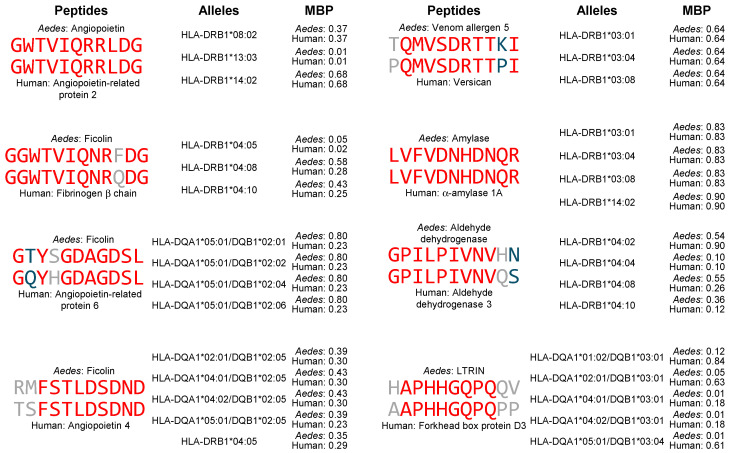 Figure 1
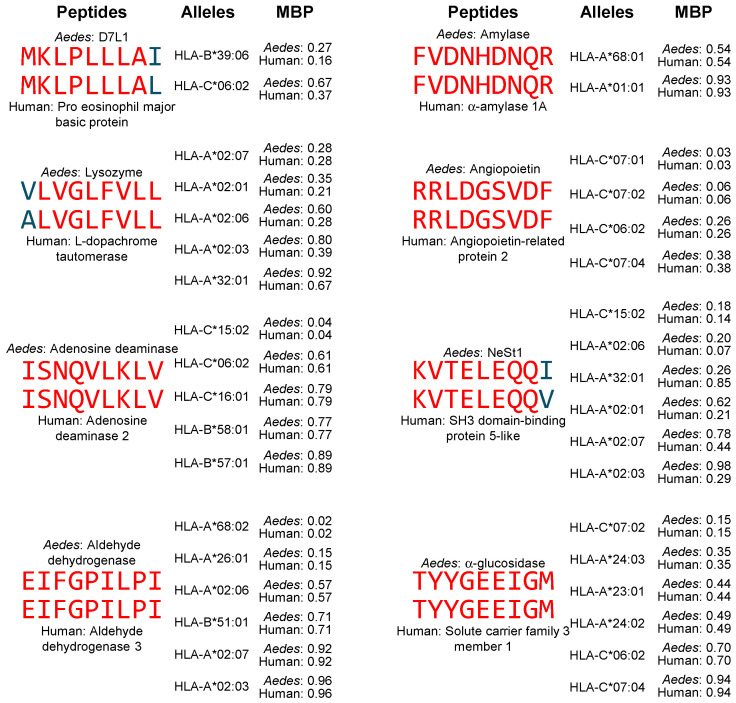 Figure 2
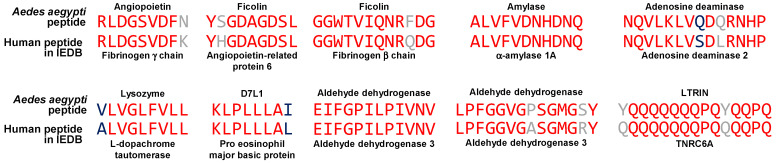 Figure 3
Peer Reviews
No public reviews on file for this paper yet. If you reviewed it on a platform where reviews are public (OpenReview, ICLR, NeurIPS, ICML), you can paste yours below so the community can read it here.
Videos
No videos yet. Explain this paper in a talk, walkthrough, or lecture? Add one.
Taxonomy
TopicsVector-borne infectious diseases · Mosquito-borne diseases and control · Invertebrate Immune Response Mechanisms
1. Introduction
Aedes aegypti is a mosquito vector responsible for transmitting several arboviruses that cause significant morbidity globally, including dengue virus (DENV), Zika virus (ZIKV), yellow fever virus, and Chikungunya virus (CHIKV) [1,2]. The diseases caused by these viruses are complex and include severe presentations, the pathophysiology of which is poorly understood [3,4,5,6]. In dengue, severe disease is characterized by plasma leakage and bleeding caused by platelet, coagulation, and endothelial cell dysfunction, which are a consequence of an excessive inflammatory response [7,8,9]. Autoimmune phenomena have been proposed as a contributing factor due to the finding in affected patients of DENV-specific antibodies that cross react with endothelial cells, platelets, coagulation factors, and plasminogen that can alter their normal function [7,10,11,12,13,14,15,16]. DENV infection has also been reported as the trigger for the development of autoimmune pathology, including lupus and neurological disorders [17,18,19,20]. Autoimmunity has also been implicated in neurological complications of ZIKV infection, including Guillain-Barré syndrome, transverse myelitis, and dysautonomia [21,22,23]. These observations are strengthened by several case reports that link Guillain-Barré syndrome to DENV [24,25], CHIKV [26], and ZIKV [27,28,29,30]. Furthermore, West Nile virus, another vector-borne virus, has also been linked to Guillain-Barré syndrome [31,32] and autoimmune encephalitis [33].
The genesis of autoimmunity remains obscure, but it is accepted that in most cases several genetic and environmental factors must concur to cause the breakdown of tolerance to self-antigens [34,35,36]. Molecular mimicry, the existence of very similar structures in two different organisms capable of igniting a cross-reactive immune response, has been recognized as an important factor in several autoimmune diseases [37,38,39]. Abundant evidence exists for viral and bacterial antigens cross-reacting with autoantigens recognized in human diseases, but only in a few entities, such as rheumatic fever [40] and Guillain-Barré syndrome [41], is molecular mimicry believed to be the main pathological mechanism. In most cases, its contribution has not been clearly established, but it is believed to be an important trigger. The occurrence of identical amino acid sequences that lead to epitope sharing between microorganisms and humans has been extensively documented for numerous viruses [42,43,44,45], bacteria [46,47,48], and parasites [49,50], as well as their capacity to ignite both humoral and cellular immune responses [47,51,52,53]. In severe dengue, mimicry between DENV proteins such as NS1, E, and prM and human antigens expressed in endothelial cells and platelets, as well as coagulation factors, has been documented and proposed as the origin of autoimmune responses that contribute to pathogenesis [13,14,54,55,56,57,58,59]. Likewise, significant molecular mimicry exists between the ZIKV proteome and human proteins related to neurological structures affected in Zika infection [60,61].
During arbovirus infection, salivary proteins from the mosquito vector enter the human body and immediately are found in an immunogenic environment promoted by activation of innate immune receptors by viral pathogen-associated molecular patterns (PAMPs) [62,63,64] and effects derived from the mosquito bite, which include skin trauma, salivary factors, and microbiota [65,66,67]. Thus, the potential for them to include shared epitopes with human proteins is relevant, as molecular mimicry may contribute to the autoimmune phenomena associated with Aedes aegypti-transmitted diseases. Although many roles for Aedes aegypti salivary proteins have been described, including modulation of the immune response [68,69,70] and altering of the coagulation and vascular systems [71,72,73,74], no studies have addressed the issue of mimicry with human proteins. However, antibodies specific for Aedes salivary proteins have been detected in humans [75,76,77,78], thus confirming their immunogenic potential. Interestingly, molecular mimicry between human desmoglein 1 and Lutzomyia longipalpis and Phlebotomus papatasi salivary proteins has been proposed as a mechanism for pemphigus foliaceus [79].
Here, we used bioinformatic methods to determine if protein sequences of eight amino acids or more are shared between Aedes aegypti salivary proteins and human proteins. We found 47 shared sequences between 21 Aedes aegypti proteins and 60 human proteins, representing linear epitopes with the potential of activating autoreactive lymphocytes. We further determined the existence of peptides containing these sequences that bind MHC molecules with high affinity and to have been tested for immune reactivity.
2. Materials and Methods
2.1. Determination of Occurrence of Identical Peptide Sequences in Proteins from Aedes aegypti Saliva and Humans
Sequences from 29 proteins expressed in Aedes aegypti saliva [80,81,82,83] were retrieved from the National Center for Biotechnology Information (NCBI) protein database (Table 1). The Peptide Library Design Tool from GenScript (https://www.genscript.com/peptide_screening_tools.html (accessed on 3 September 2025)) was used to generate an octapeptide library with an overlap of seven amino acids. The length of eight amino acids was chosen because this is the shortest length that can represent a linear peptide capable of activating T cells, as MHC-I molecules bind peptides from 8 to 15 amino acids in length [84], while MHC-II molecules bind peptides from 11 to 30 amino acids in length [85]. Identical sequences of at least eight amino acids were searched in each of the peptides generated using the NCBI Protein Basic Local Alignment Search Tool (BLAST) (https://blast.ncbi.nlm.nih.gov/Blast.cgi?PROGRAM=blastp&PAGE_TYPE=BlastSearch&LINK_LOC=blasthome (accessed on 3 September 2025)) by entering the sequence for each peptide and running the search for non-redundant protein sequences against the human proteome (Homo sapiens (PARIS) (taxid: 9606)) using the blastp algorithm. Search parameters were adjusted automatically by the search tool to search for a short input sequence. Results were filtered to include only sequences with 100% identity. The octapeptide library with a shift of one amino acid (overlap of seven amino acids) covered the whole sequence of each protein with the maximum amount of octapeptides, ensuring that no identical sequence of at least eight amino acids could be absent from the results. To determine if the identical sequences found were longer than eight amino acids, peptides including the flanking amino acids of each of these sequences were aligned with the corresponding matched human protein using blastp. The E value (number of alignment scores that would be expected to be found by chance with an alignment score equal or better than the observed alignment) was determined for each identified identical sequence within the matched human proteins. When the results showed multiple entries for the same protein (including isoforms) in the human proteome only one was chosen for analysis and the others were registered in an Excel file (Supplementary File S1). Sequences that matched hypothetical or uncharacterized human proteins, as well as variable regions of antigen receptors, were not considered in the results. Post-translational modifications affecting amino acids from each shared sequence were searched for in the UniProt (https://www.uniprot.org/ (accessed on 3 September 2025)) entry of each Aedes aegypti salivary protein and human protein. Each bioinformatic analysis described was run one time and the relevant results were registered in an Excel file (Supplementary File S1).
2.2. Prediction of Peptide Binding Affinity for MHC Molecules
Binding affinity of peptides containing sequences shared between Aedes aegypti salivary proteins and human proteins was predicted using T Cell Prediction—Class I and T Cell Prediction—Class II tools available in the Immune Epitope Database (IEDB) website (https://nextgen-tools.iedb.org/ (accessed on 10 September 2025)). For MHC-II predictions, the identified shared sequences from the salivary proteins were extended on both sides until a peptide of 18 to 19 amino acids was reached. These sequences were entered into the Class II tool with the following parameters: peptide length: 11–16 amino acids; peptide shift length: 1; MHC alleles: a panel of 30 MHC-II alleles associated with autoimmune diseases was selected (Table 2). For DQ genes, alleles are available in the prediction tool only as DQA1/DQB1 combinations. For this reason, the 10 combinations available for each DQA1 allele in Table 2 were selected and a total of 50 HLA-DQA1/HLA-DQB1 alleles were analyzed; prediction model: NetMHCIIpan 4.1 EL. Peptide–MHC predicted interactions with a median binding percentile < 1 were considered of high affinity. For each sequence that had at least one peptide with high binding affinity in the Aedes protein, the same process was carried out for the matching sequence of the human protein. For an Aedes peptide and a human peptide to be considered a match for high-affinity MHC binding the following conditions were required: both had a median binding percentile < 1; their length was equal, they were aligned for the shared sequence, and they had at least seven continuous amino acids from the shared sequence. Each bioinformatic analysis described was run one time and the relevant results were registered in an Excel file (Supplementary File S2).
For MHC-I predictions, the identified shared sequences from the salivary proteins were extended on both sides until a peptide of 10 to 11 amino acids was reached. These sequences were entered into the Class I tool with the following parameters: peptide length: 8–9 amino acids; MHC alleles: a panel of 22 MHC-I alleles associated with autoimmune diseases was selected (Table 3); prediction model: NetMHCpan 4.1 EL. Peptide–MHC predicted interactions with a median binding percentile < 1 were considered of high affinity. For each sequence that had at least one peptide with high binding affinity in the Aedes protein, the same process was carried out for the matching sequence of the human protein. For an Aedes peptide and a human peptide to be considered a match for high-affinity MHC binding the following conditions were required: both had a median binding percentile < 1 (meaning that any random peptide would have a 99% probability of having a lower binding affinity to that particular MHC allele); their length was equal, they were aligned for the shared sequence, and they had at least seven continuous amino acids from the shared sequence. Each bioinformatic analysis described was run one time and the relevant results were registered in an Excel file (Supplementary File S3).
2.3. Determination of the Presence of Sequences Shared Between Aedes aegypti Salivary Proteins and Human Proteins in Validated Peptides from the Immune Epitope Database
Sequences shared between Aedes Aegypti salivary proteins and human proteins were entered into the Immune Epitope Database (IEDB) search tool (https://www.iedb.org/ (accessed on 15 September 2025)) set to BLAST—70% and restricted to positive assays. Peptides resulting from this search that originated from the same human protein that shared a sequence with the corresponding Aedes aegypti salivary protein were chosen. To identify matched peptides between Aedes aegypti and human proteins, sequences were aligned at the start of the shared sequence present in the IEDB human peptide, and the sequence of the Aedes aegypti protein was extended until a peptide of the same size was obtained. A match was defined by the following conditions: at least 85% identity between the peptides and at least seven continuous amino acids from the identical shared sequence in both peptides. Each bioinformatic analysis described was run one time.
3. Results
3.1. Occurrence of Identical Peptide Sequences in Aedes aegypti Salivary Proteins and Human Proteins
A total of 9513 octapeptides obtained from 29 Aedes aegypti salivary proteins were probed to find identical sequences of at least eight amino acids in the human proteome. The complete results can be found in Supplementary File S1 and are summarized in Table 4 and Table 5. As shown in Table 4, a total of 47 peptides from 21 salivary proteins had 60 identical matches in 52 different human proteins. The length of the matching peptides ranged from 8 to 18 amino acids, with 32 out of the 47 (68.1%) being octamers. Lymphotoxin β receptor inhibitor (LTRIN), aldehyde dehydrogenase, ficolin, angiopoietin, and α-glucosidase were the salivary proteins with most matches, accounting for 28 (59.6%) of the peptides and 40 (66.7%) of the 60 matches found in human proteins.
The 47 shared peptides with the 60 matching human proteins are shown in Table 5. For the Aedes aegypti salivary protein LTRIN, which is the one with the most matching sequences, eight of the nine peptides are found in two regions of the protein that contain a repetition of glutamine residues (YQQQQQQQPQ, amino acids 32–41; and PQQQQQQHQQP, amino acids 59–69). These peptides include one decamer, two nonamers, and five octamers that match sequences in 17 distinct human proteins. Seven of the identified peptides were matched between the Aedes aegypti protein and its human homolog, including three enzymes (amylase, adenosine deaminase, and aldehyde dehydrogenase) and the innate immune receptor ficolin. Only 2 of the 60 matches (3.3%) contained amino acids that were the site of post-translational modifications in human proteins: sites for lysine ubiquitination in aldehyde dehydrogenase 3 and for threonine phosphorylation in phosphatidylinositol (PI)-binding clathrin assembly protein (Supplementary File S1). No post-translational modifications were found in the shared sequences in Aedes aegypti salivary proteins. In seven instances (five Aedes aegypti salivary proteins and two human proteins) the shared sequences were totally or partially part of the signal sequence of a secreted protein. This does not invalidate their potential for immunogenicity, as signal peptides have been found to be presented in the context of MHC molecules [115].
3.2. High-Affinity Binding of Peptides Containing Shared Sequences Between Aedes aegypti Salivary Proteins and Human Proteins to MHC-II Molecules
T cell activation requires the ligation of the T cell receptor (TCR) by a complex formed between a peptide from the immune response-inducing protein and an MHC molecule [116]. The very high polymorphism of the genes that encode human MHC molecules ensures that virtually any peptide can be presented in this fashion at the population level [117]. However, the high-affinity binding of peptides to MHC molecules is correlated to higher efficiency for T cell activation [118,119]. For this reason, we sought to determine if the prediction of peptide binding to MHC-II molecules indicated that the identified shared sequences between Aedes aegypti salivary proteins and human proteins were included in peptides that bind with very high affinity to a panel of 72 MHC-II alleles that have been associated with autoimmunity (Table 2) following the strategy described in the Materials and Methods Section. The results of this analysis are found in Supplementary File S2 and are summarized in Table 6 and Table 7, while Figure 1 shows the representative examples of high affinity binding matching peptides.
We found 69 peptides from Aedes aegypti salivary proteins that bound with high affinity (<1 median binding percentile) to at least one of the MHC-II alleles associated with autoimmunity and had a matching peptide in at least one human protein. As shown in Table 6, the matched peptides were from six Aedes aegypti proteins and nine human proteins. A total of 259 matches were found that had high-affinity binding to 46 different MHC-II alleles. Angiopoietin is the Aedes aegypti salivary protein with most matches, which includes 23 different Aedes aegypti peptides matched to peptides from three different human proteins; these matching peptides bound to three MHC-II alleles with high affinity. Likewise, 14 peptides from Aedes aegypti ficolin matched peptides from three human proteins that bind 25 MHC-II alleles for a total of 67 matches. LTRIN, aldehyde dehydrogenase, amylase and venom allergen-5 were the other Aedes aegypti proteins for which matches were found, all for peptides from one human protein each. Since the length of peptides that bind MHC-II is greater than most of the shared peptides identified in our analysis, our strategy included extending these peptides and thus the resulting matches have different sequences. Thus, we only found 19 out of 259 (7.3%) identical matches, 12 of them for the longest sequence (ALVFVDNHDNQRGHGAGG from amylase). However, as shown in Table 5 and illustrated in eight representative examples in Figure 1, 144 of 259 (55.6%) matching peptides had at least 80% identity.
The frequency of matches for the 46 alleles had a wide distribution (range 1 to 58 matches), with the highest frequency observed for the three alleles that mainly bound peptides from angiopoietin (Table 7). In fact, the 11 alleles with the highest frequencies (5 or more matches) accounted for 67.2% of the matches (174 of 259), while the other 35 alleles had four or less matches each and together accounted for 32.8% of the matches (85 of 259). This analysis allows us to conclude that the shared sequences we identified can be presented as peptide–MHC-II complexes in a potentially efficient manner by binding with high affinity, although most of the instances are concentrated in a relatively small proportion of the elements probed (4 mosquito proteins and 11 MHC-II alleles).
3.3. High-Affinity Binding of Peptides Containing Shared Sequences Between Aedes aegypti Salivary Proteins and Human Proteins to MHC-I Molecules
CD8^+^ T cell responses are also capable of contributing to autoimmune pathology through molecular mimicry [52,120]. For this reason, we predicted high-affinity binding of the peptides shared by Aedes aegypti salivary proteins and human proteins for 22 MHC-I alleles associated with autoimmunity (Table 3). The results of this analysis are found in Supplementary File S3 and are summarized in Table 8 and Table 9, while Figure 2 shows representative examples of high-affinity-binding matching peptides.
A total of 19 peptides from 10 Aedes aegypti salivary proteins bound with high affinity to MHC-I alleles associated with autoimmunity, matching peptides from 14 human proteins. The highest frequency of matches was found for aldehyde dehydrogenase, which had ten matches involving nine different alleles, while ficolin, angiopoietin, and α-glucosidase had six matches each involving six alleles each (Table 8). Since the length of peptides that bind MHC-I molecules is short, we limited our analysis for octamers and nonamers and extended the octamers by one amino acid. Thus, all matches were either identical or had only one non-identical amino acid, as illustrated in Figure 2 and shown in the total identical matches in Table 8 (22 of 43, 51.2%).
Matches with high-affinity binding were found for 19 of 22 (86.4%) investigated alleles, albeit none of them had more than four matches. As shown in Table 9, HLA-A02:07, HLA-C06:02, HLA-C15:02, and HLA-C16:01 were the alleles with the most matches. In conclusion, this analysis indicates that peptides from Ae. aegypti salivary proteins that have shared sequences with human proteins can also be presented in the context of MHC-I molecules in a highly stable and immunogenic form, albeit with a lower frequency than that found for MHC-II peptide binding.
3.4. Peptides in the Immune Epitope Database Containing Sequences Shared Between Aedes aegypti Salivary Proteins and Human Proteins
Next, we searched for peptides in the IEDB that originated from the previously identified human proteins that contain sequences shared with Aedes aegypti salivary proteins. We found that 10 of the sequences from 10 different human proteins were included in 14 IEDB-validated peptides that matched an Aedes aegypti salivary protein peptide (matching peptides had ≥85% identity and at least seven continuous amino acids from the shared sequence). Figure 3 shows ten of these peptides aligned with each Aedes aegypti matching peptide. Two of the matching peptides were identical and two others had 100% similarity. Table 10 shows the validated characteristics for each peptide. Interestingly, four peptides that matched with sequences from Aedes aegypti ficolin, D7L1, and LTRIN were validated in the context of autoimmune pathology, highlighting the potential for cross-reactive immune responses.
4. Discussion
The fact that the etiology of most autoimmune diseases remains obscure, despite all the accumulated knowledge regarding the immune response, points to multiple significant factors concurring and interacting in a complex fashion [34,35,36]. In this context, the description of new mechanisms for self-antigens to be targeted is a relevant contribution to the advancement of understanding of autoimmunity. The possibility of receiving protein sequences encountered on human proteins in an immunogenic form after a mosquito bite has barely been explored, and thus the bioinformatic approach taken in this present study to prove the existence of shared sequences between Aedes aegypti salivary proteins and human antigens represents the first step toward establishing a novel manner for molecular mimicry to inform autoimmune pathology. By searching for the occurrence of octapeptides derived from the Aedes aegypti salivary proteins in the human proteome, we found 47 shared peptides of 8 to 18 amino acids in length. Our analysis of MHC-binding and validation in the IEDB indicates that several of these linear sequences have the potential of generating ligands for both CD4^+^ and CD8^+^ T cells leading to effector mechanisms that would target the human tissues that express the human antigen due to cross-reactivity.
The shared peptides described in this analysis were found in 52 human proteins that encompass a variety of locations and functions, as summarized in Table 11. Self-antigens targeted in autoimmunity are not restricted to any category [138,139], and therefore it is possible for each of these proteins to contribute to an autoimmune response. For instance, intracellular antigens that are not normally exposed to the immune system can trigger an immune response if liberated because of inadequate clearance of apoptotic cells or tissue damage due to inflammation [140,141]. In this case, the presence of cross-reactive T cells previously primed by the contact with saliva could thus induce damaging inflammation. As shown in Table 11, we found 30 intracellular proteins, 20 of which had ubiquitous distribution.
Another important aspect of autoimmune phenomena in the context of infectious diseases is their contribution to exacerbating or inhibiting the host response. Both directions can support the pathogenesis of severe disease in Aedes aegypti-transmitted arboviral infections, as inhibition can result in increased viral loads and excessive inflammation can damage tissues [193,194]. Any autoimmune response that exacerbates inflammation is a potential contributor to the hyperinflammatory state that characterizes severe presentations of Aedes aegypti-transmitted infections, leading to cytokine storm, vascular leakage, and organ dysfunction [9,195,196], and in some cases neural invasion due to increased permeability of the blood–brain barrier [197,198]. Thus, an immune response to several membrane and secreted proteins that have a shared sequence with Aedes aegypti salivary proteins and participate in inflammation, immune recognition, wound healing, hemostasis, and cell adhesion (Table 11) could affect the host response.
High-affinity binding of peptides to MHC molecules has been associated with the effectiveness of the immune response [118] and is a requisite for MHC–peptide complex stability, which has been shown to be a determinant for immunogenicity [119,199,200]. Our analysis found 259 matching peptides in Aedes aegypti salivary proteins and human proteins that bound to MHC-II alleles associated with autoimmune diseases with very high affinity (mean binding percentile lower than 1) and 43 such matches for MHC-I. Only three Aedes aegypti salivary proteins included peptides with matches for both types of MHC molecules: angiopoietin, ficolin, and aldehyde dehydrogenase. Together, they represented 75.2% (227 of 302) of the matches, indicating that the shared peptides found in these proteins can be stably presented in alleles associated with a variety of autoimmune conditions. Since MHC alleles are considered an important genetic factor in the development of autoimmunity [87,88,89,99,102], there is a potential for these proteins to contribute to the generation of a pathogenic autoimmune response in susceptible individuals.
One of the limitations of this study is that the analysis used peptides from the reference sequence for each Aedes aegypti salivary protein against the reference human proteome and thus does not account for all possible proteoforms. The existence of proteoforms can undoubtedly affect immunogenicity as fine structural details can alter T cell activation [201]; accordingly, post-translational modifications have been proven to be a critical factor in the genesis of autoimmunity [202]. We determined that most of the shared sequences we found are not affected by post-translational modifications, but due to their high complexity, assessing the impact of the existence of proteoforms in the potential of shared sequences to ignite autoimmune responses is not possible with this analysis.
The future directions required to validate molecular mimicry between Aedes aegypti salivary proteins and human proteins as triggers of autoimmune pathology encompass several steps: (1) demonstration of cross-reactive T cells and antibodies; (2) generation of an autoimmune response in an animal model of the infection after administering the antigens containing the shared sequences; and 3) establishing an epidemiological relationship between mosquito bites and autoimmune pathologies [38,51]. Thus, immunological and epidemiological studies are needed, along with the development of animal models that reflect severe presentations and chronic complications of Aedes aegypti-transmitted infections.
5. Conclusions
Although Aedes aegypti salivary proteins have been characterized as antibody-inducing antigens [75,76,77,78] and allergens [203,204,205], their immunogenic potential in the context of autoimmunity has not been explored. Our bioinformatic analysis shows the sharing of identical peptides between Aedes aegypti salivary proteins and human proteins, as well as their potential to be immunogenic by binding with high affinity to MHC molecules. This information can direct further studies to evaluate the impact of autoimmune responses to vector saliva in Aedes aegypti-transmitted infections and can also aid in enhancing the security of salivary protein-based vaccines [206,207,208].
The reference list from the paper itself. Each links out to its DOI / PubMed record.
- 1Souza-Neto J.A. Powell J.R. Bonizzoni M. Aedes aegypti vector competence studies: A review Infect. Genet. Evol.20196719120910.1016/j.meegid.2018.11.00930465912 PMC 8135908 · doi ↗ · pubmed ↗
- 2Alonso-Palomares L.A. Moreno-García M. Lanz-Mendoza H. Salazar M.I. Molecular Basis for Arbovirus Transmission by Aedes aegypti Mosquitoes Intervirology 20186125526410.1159/00049912831082816 · doi ↗ · pubmed ↗
- 3Khan Z.A. Yadav M.K. Lim D.-W. Kim H. Wang J.-H. Ansari A. Viral-host molecular interactions and metabolic modulation: Strategies to inhibit flaviviruses pathogenesis World J. Virol.2024139911010.5501/wjv.v 13.i 4.9911039722758 PMC 11551686 · doi ↗ · pubmed ↗
- 4Aguilar-Briseño J.A. Moser J. Rodenhuis-Zybert I.A. Understanding immunopathology of severe dengue: Lessons learnt from sepsis Curr. Opin. Virol.202043414910.1016/j.coviro.2020.07.01032896675 · doi ↗ · pubmed ↗
- 5Christian K.M. Song H. Ming G.-L. Pathophysiology and Mechanisms of Zika Virus Infection in the Nervous System Annu. Rev. Neurosci.20194224926910.1146/annurev-neuro-080317-06223131283901 PMC 7523638 · doi ↗ · pubmed ↗
- 6Cherie T.J.J. Choong C.S.H. Abid M.B. Weber M.W. Yap E.S. Seneviratne S.L. Abeysuriya V. de Mel S. Immuno-Haematologic Aspects of Dengue Infection: Biologic Insights and Clinical Implications Viruses 202416109010.3390/v 1607109039066252 PMC 11281699 · doi ↗ · pubmed ↗
- 7Lardo S. Soesatyo M.H. Juffrie J. Umniyati S.R. The Autoimmune Mechanism in Dengue Hemorrhagic Fever Acta Med. Indones.2018507079 Available online: https://pubmed.ncbi.nlm.nih.gov/29686179/(accessed on 22 July 2025)29686179 · pubmed ↗
- 8Martina B.E.E. Koraka P. Osterhaus A.D.M.E. Dengue virus pathogenesis: An integrated view Clin. Microbiol. Rev.20092256458110.1128/CMR.00035-0919822889 PMC 2772360 · doi ↗ · pubmed ↗