Ayurvedic management of a chronic venous ulcer using dusting of powdered botanicals – A Case Report
Arvind Singh Sisodia, Mahesh P. Jadhav, Sanjay C. Babar, Amit Paliwal, Priyanka D. Patil, Manvendra Singh Sisodia

TL;DR
This case report shows that a traditional Ayurvedic treatment using powdered botanicals helped heal a chronic venous ulcer in an elderly patient.
Contribution
The study presents a novel application of Ayurvedic dusting powders for chronic venous ulcer management.
Findings
The patient showed progressive wound healing within four weeks of treatment.
Noticeable epithelialisation occurred within one week of applying the botanical powder mixture.
Abstract
Chronic venous ulcers (CVUs) pose a persistent challenge in clinical practice, especially among elderly individuals with comorbidities such as hypertension and venous insufficiency. Characterised by delayed healing, frequent recurrence, and impaired quality of life, these ulcers often remain unresponsive to conventional treatment. In recent years, Ayurveda has gained attention for its approach to chronic wound care, offering fewer side effects and greater cost-effectiveness. This report details the case of a 74-year-old male with a history of varicose veins. He presented with a chronic, non-healing venous ulcer over the left lower limb, unresponsive to standard wound management. Diagnosed with a chronic venous ulcer. The patient was managed with Avachoornan (dusting powdered botanicals), composed of equal parts of Shigru (Moringa oleifera), Nirgundi (Vitex negundo), and Guduchi…
Genes, proteins, chemicals, diseases, species, mutations and cell lines named across the full text — each resolved to its canonical identifier and authoritative record.
Click any figure to enlarge with its caption.
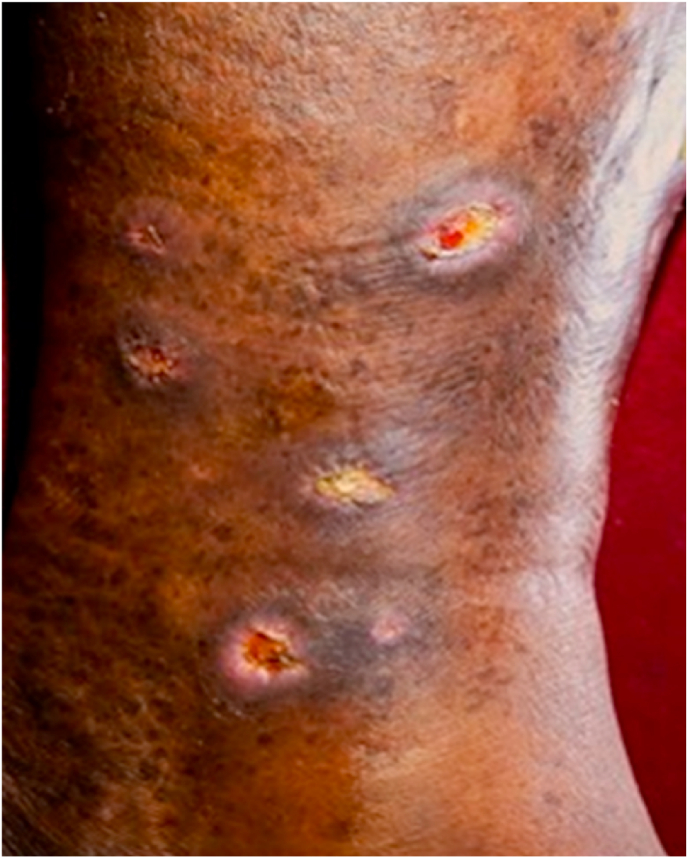 Figure 1
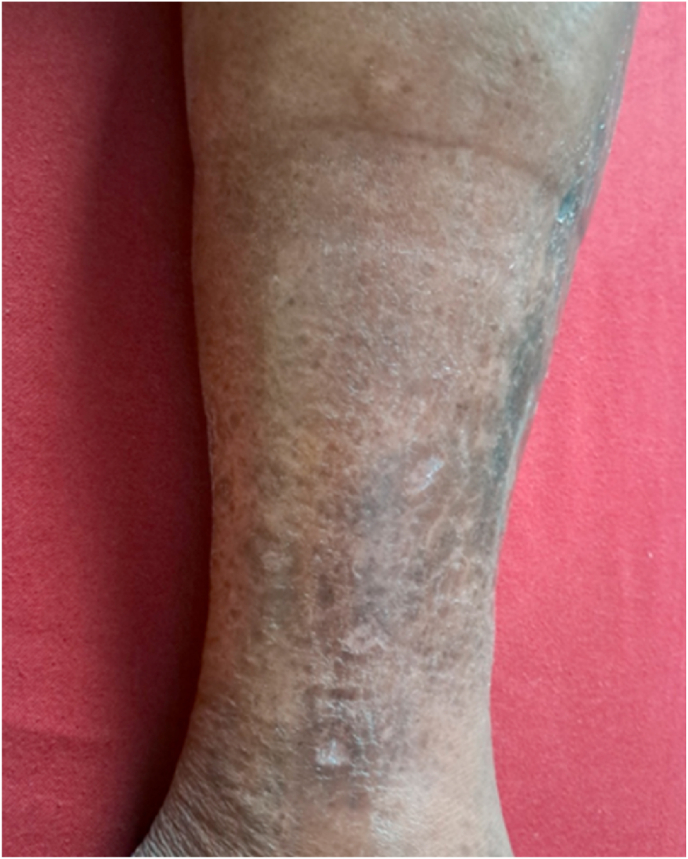 Figure 2
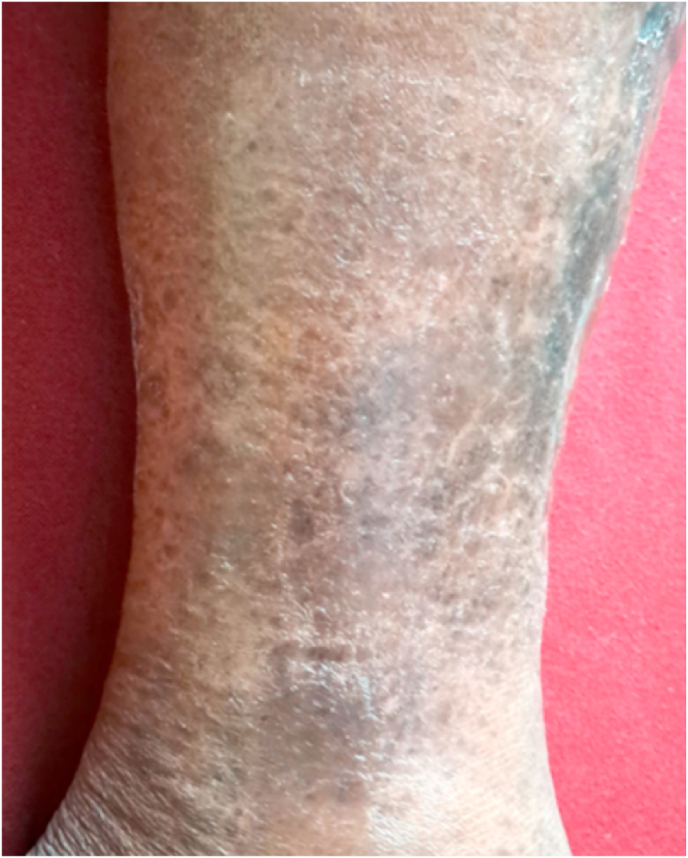 Figure 3
Peer Reviews
No public reviews on file for this paper yet. If you reviewed it on a platform where reviews are public (OpenReview, ICLR, NeurIPS, ICML), you can paste yours below so the community can read it here.
Videos
No videos yet. Explain this paper in a talk, walkthrough, or lecture? Add one.
Taxonomy
TopicsDiagnosis and Treatment of Venous Diseases · Phytochemicals and Medicinal Plants · Wound Healing and Treatments
Introduction
1
Varicose veins are dilated subcutaneous veins typically measuring ≥3 mm in diameter. These are most commonly observed in the great saphenous vein, the short saphenous vein, and their tributaries [1], which further cause a venous ulcer.
The prevalence of venous leg ulcers is 1.69 % [2]. About 60 % of these ulcers completely healed within 12 weeks. Nonetheless, recurrence is a major issue, with up to 75 % of cases relapsing within three months after initial healing [3].
Conventional management of venous ulcers includes compression therapy, wound care, and surgical interventions. Nevertheless, a considerable proportion of cases recur or evolve into chronic conditions. The average healing period for venous ulcers is approximately 12 weeks, often causing patient discomfort and a diminished quality of life. In this case, however, the healing was achieved in just 4 weeks.
Clinically, venous leg ulcers manifest as cutaneous hyperpigmentation, oedema, prolonged exudation, and delayed epithelial repair—features that correspond closely to Dushta Vrana mentioned in Ayurveda. According to Acharya Sushruta, the interplay of the vitiated Tridoshas along with Rakta Dushti impairs Twak (skin), Mamsa (muscle), and Sira (blood vessels). This leads to Sira Shithilata (loss of vessel tone), poor circulation, and stagnation (Srotorodha), culminating in ulceration. Clinical features of Dushta Vrana [4] include Atisamvrita (overly covered), Ativivrita (overly uncovered), Atikathina (too hard), Atimrudu (too soft), Utsanna (overly elevated), Avasanna (overly depressed), Atyushna (calor), and Atisheeta (cold to touch) [5], which aligned with the clinical features of this patient.
Ayurveda not only emphasises balancing the body's Tridoshas (Vata, Pitta, and Kapha) using herbal formulations but also the topical application of herbal powders, i.e., Avachoornan (dusting powdered botanicals), which facilitates wound healing through multiple mechanisms as it promotes local decontamination, absorbs excess exudate, mitigates inflammation, stimulates granulation tissue formation, and supports re-epithelialisation [4].
Patient information
2
- •A 74-year-old male with a history of umbilical hernioplasty (2007) and a history of road traffic accident with femur fracture (2014), managed with open reduction and internal fixation and plating, and a known case of hypertension for 1 year on regular medicine (Tab Telmisartan 20mg once a day).
- oHistory of varicose veins for 6 years with no evidence of deep vein thrombosis as confirmed by a colour doppler study. He has worked as a teacher for the past 10 years. Before that, he was a policeman for 30 years, for which he had a history of prolonged standing.
- oThere was no contributory family history. The patient had no history of smoking, tobacco chewing, or alcohol consumption.
- •Presenting Complaint: Multiple non-healing ulcers on the left lower leg, associated with pain, itching, burning sensation, swelling, and skin discolouration present over bilateral lower limbs.
- •History of present illness: lesions started with itching, and symptoms were insidious in onset and progressive in nature, causing significant discomfort and impaired mobility over a three-month duration.
Clinical findings
3
General examination
3.1
The patient was conscious, alert, and oriented upon admission. Vital parameters remained within normal physiological limits throughout the hospital stay. Systemic examination findings were unremarkable, with no abnormalities detected across cardiovascular, respiratory, gastrointestinal, or neurological systems.
Local examination (left lower limb)
3.2
- •According to CEAP {clinical findings (C), etiology (E), anatomy (A), and pathophysiology (P)} classification [6] for varicose venous ulcer, the wound corresponds to C 3,4,6,s E_s_ A_s,p_ P_r,o_.
Inspection
3.3
- •Skin: The skin over both lower limbs appeared hyperpigmented and thickened, suggestive of chronic venous stasis.
- •Swelling: Present in both lower limbs, limiting visual assessment of superficial varicosities.
Venous ulcer
3.4
- •Ulcer site and shape: Multiple oval-shaped ulcers were observed on the lower medial aspect of the left leg, slightly above the medial malleolus.
- •Largest Ulcer Dimensions: Approximately 0.6 cm (length) × 1.1 cm (breadth) × 0.7 cm (depth).
- •Ulcer Floor: Covered with thick red granulation tissue.
- •Ulcer Edges: Sloping edges observed.
- •Skin around wounds: Pigmented with signs of local inflammation and mild oedema.
- •Discharge: Serous-purulent discharge noted from the ulcer surface.
Palpation
3.5
- •Temperature: Localised warmth not appreciable.
- •Tenderness: Tenderness around ulcer margins.
- •Pedal Oedema: Mild, bilaterally symmetrical oedema present in lower limbs
- •Pedal Pulses: Dorsalis pedis, anterior tibial, and posterior tibial pulses are palpable bilaterally, ruling out major arterial insufficiency.
Investigations
3.6
Bilateral lower limb arterial Doppler (27/12/24) - revealed multiple dilated, tortuous, non-thrombosed varicosities in both lower limbs along the Great and Short Saphenous Veins, with incompetent left Saphenofemoral Junction. Perforators measuring 3.2–3.9 mm on the right and 3.4–3.5 mm on the left were noted in medial and posterior aspects below the knee and above the ankle.
Bilateral Common Iliac Arteries, Superficial Femoral Arteries, Deep Femoral Arteries, Popliteal Arteries, Anterior Tibial Arteries, and Posterior Tibial Arteries show normal flow on colour Doppler with triphasic waveforms.
Diagnostic assessment
3.7
The patient has a 6-year history of varicose veins and presents with a non-severe ulcer located over the medial malleolus. The clinical presentation and patient history are consistent with a diagnosis of venous ulcer, with no apparent diagnostic complexity.
According to Ayurveda, based on the patient's symptoms, a diagnosis of Pitta pradhana s**arakta Tridoshaja Dushta vrana was made on his left leg.
Assessment criteria
3.8
Assessment of subjective parameters like pain [7], pruritus [8], and burning sensation [9] was done on VAS (Visual Analogue Scale).
All the objective parameters, ulcer floor, edges, exudate, and skin around the wound, were assessed with the Bates-Jensen wound assessment tool [10].
Therapeutic intervention
3.9
The patient was on both internal and external medications. (Table 1)
- 1.Topical Ayurvedic Treatment, i.e., Avachoornan (dusting powdered botanicals) with Guduchi (Stem) Choorn**a, Nirgundi (Leaves) Choorn, and Shigru (Leaves, Stem Bark) Choorn**a (which are fine powdered and preserved in a glass jar), Mixed in equal proportion and used daily for dressing. Dose - 3 g.
- 2.Concomitant medication: Raktashodhak Vati 500mg BD after food with water for 4 weeks. Table 1. Blood reports.Table 1. Blood Reports (dated - 27/12/24)1.Haemoglobin14.7 gm/dl2.RBC4.88 mill/cu.mm3.WBC5100 cum4.Platelet Count3.01 lac/cu.mm5.HIVNon-reactive6.HBsAgNegative7.Bleeding time2 min 20 sec8.Clotting time4 min 30 sec9.PT15 secINR1.1Control13.510.HbA1c5.4 %11.BSL (Random)116 mg/dl12.Vitamin B5200 ng/ml
All these medicines were purchased from the GMP-certified pharmacy of our institution.
Follow-up and outcomes
3.10
Daily assessments were systematically recorded during the patient's hospital stay. By the end of the fourth week, the wounds had fully healed, with complete re-epithelialisation observed. (Table 2) However, due to the chronic nature of venous insufficiency, significant haemosiderin deposition was observed, resulting in persistent hyperpigmentation that did not show substantial resolution within the duration of the study. After discharge, follow-up was advised after two weeks, and for the prevention of recurrence, the patient was advised to undergo Siraveda (Blood letting therapy) at least once a month, which the patient followed from the panchkarma clinic near his house. First follow-up: Two weeks post-intervention, a reduction in peri-wound skin discolouration was noted, with the skin colour score improving to 3 on the Bates-Jensen Wound Assessment Tool. At the most recent follow-up, this further improved to a score of 2, indicating progressive resolution of surrounding tissue changes.Table 2. Timeline of intervention.Table 2. DateTherapeutic Intervention/Results27/12/24Intervention startedDaily dressing (Avachoornan) with Guduchi Choorna, Nirgundi Choorna, and Shigru Choorn**a mixed in equal quantities (dressing once a day for 28 days). The fine powders, mixed in equal proportions, were applied to the wound as a topical dressing and packed daily. During subsequent dressings, the wound was cleansed before reapplication. This protocol was followed consistently for four weeks.Internal medication—Raktashodhak Vati 500mg BD after food with water for 28 days.1st Week From 27/12/24 to 03/01/25Continued the same medication.Result (Table 3)2nd WeekFrom 03/01/25 to 10/01/25Continued the same medication.Result (Table 3)3rd WeekFrom 10/01/25 to 17/01/25Continued the same medication.Result (Table 3)4th WeekFrom 17/01/25 to 24/01/25Continued the same medication.Result (Table 3) (Fig. 1)1st Follow-upAfter 2 weeks of completion of the study, 07/02/25Only wound scars were present. (Fig. 2)2nd Follow-upAfter 5 months of completion of the study (June 21, 2025)Minimal scars marks were present. (Fig. 3)Table 3. Treatment progress.Table 3. Parameter for AssessmentBefore InterventionAfter 1st WeekAfter 2nd WeekAfter 3rd WeekAfter 4th Week1st Follow-up After 2 weeks of completion of the study, 07/02/252nd Follow-upAfter 5 months of completion of the study (June 21, 2025)Pain (VAS)9864200Itching (VAS)8772000Burning Sensation (VAS)7531000BATES-JENSEN WOUND ASSESSMENT TOOLWound Size (length) × (breadth) × (depth).0.6 cm 1.1 cm × 0.7 cm0.5 cm × 1.0 cm × 0.5 cm0.3 cm × 0.7 cm × 0.3 cm0.2 cm × 0.6 cm × 0.1 cmThe granulation tissue had coveredOnly wound scars were present.Minimal scars were present.Depth3322100Edges4332100Exudate amount3211100Skin Colour Surrounding Wound5544432Fig. 1After the 3rd week of Treatment.Fig. 1. Fig. 2After 2 weeks of completing of study.Fig. 2. Fig. 3After 5 months (June 21, 2025).Fig. 3
Discussion
4
The observed clinical improvements following the Avachoornan (dusting powdered botanicals) of Shigru (Moringa oleifera), Nirgundi (Vitex negundo), and Guduchi (Tinospora cordifolia) Choorn**a and Raktashodhak Vati in a chronic venous ulcer case underscore the potential therapeutic value of these botanicals in wound management.
Pathophysiology Sustained venous hypertension disrupts physiological haemodynamics, culminating in elevated microcirculatory pressure and capillary dysfunction. This leads to transudation of macromolecules and erythrocytes into the dermal interstitium, accompanied by iron accumulation in the form of haemosiderin [11]. The resultant milieu is characterised by persistent inflammation, oxidative stress, and impaired cellular turnover, all of which impede wound resolution and compromise dermal integrity.
Shigru (Moringa oleifera) contains flavonoids and phenolics with strong anti-inflammatory and antioxidant effects that reduce oedema and enhance tissue repair by modulating cytokines like TNF-α and interleukins. Its antimicrobial action prevents secondary infections. Nirgundi (Vitex negundo) offers analgesic and antipruritic effects through iridoid glycosides, supporting comfort and epithelial healing [12]. Guduchi (Tinospora cordifolia) contributes to Pitta-Vata pacification, promotes Ropana, and enhances immune responses. Its polysaccharides stimulate macrophage activity, cytokine release, and collagen synthesis, aiding re-epithelialisation, reflecting a classical pharmacological rationale in the management of chronic wounds [13].
Samprapti (pathophysiology)- The patient's habitual consumption of Vidahi (Pitta-aggravating) substances—such as fermented foods, sour soups, Maṣa (black gram), prawns, curd, poultry, and refined-flour preparations—contributed to the chronic vitiation of Pitta and Kapha Doshas. Additionally, his sedentary lifestyle, postprandial sleep, and lack of physical activity further aggravated the Kapha and impeded Agni, weakening tissue metabolism and clearance. Prolonged exposure to these Nidanas led to Rakta Dus**hti, manifesting in tissue toxicity and chronic inflammation. Over time, the chronicity of the condition induced Vata vitiation, particularly contributing to pain and delayed healing.
Samprapti vighatana (reversal of pathology)- In the Sushruta Samhita, Avachoornan (dusting powdered botanicals) is one of the sixty fundamental modalities (Shashti Upakrama) employed in the treatment of wounds (Vrana Chikitsa). This involves the external application of finely ground herbal powders aimed at promoting wound debridement (Shodhana) and facilitating tissue regeneration (Ropana) [14]. The choice of Avachoornan (dusting powdered botanicals), comprising Shigru (Katu-Tikta Rasa, Uṣṇa Virya, Kapha-Vata Samaka), reduced Shotha and cleared Srotorodha. Nirgu**ndi (Tikta-Katu Rasa, Uṣṇa Virya, Vata-Kapha Hara) relieved Kandu and Ruja, supporting comfort and wound recovery. Guduci (Tshaya Rasa, Madhura Vipaka, Rasayana, Tridosha Samaka) purified Rakta, modulated Pitta-Vata, and enhanced Ropaṇa. The combination addressed Dsha-Dshṭi, facilitated Sodhana, Shamana, and Ropana, aligning with Sushruta's principles for managing chronic ulcers. The combination was also selected for its ability to address local Kapha-Pitta aggravation and Vata vitiation.
Raktashodhak Vati contains Anantamoola (Hemidesmus indicus), which is Madhura-Tikta rasa, Sheeta virya, and Pitta-Vata shamaka with Raktaprasadana properties. Daruharidra (Berberis aristata) has Tikta-Kashaya rasa, Ushna virya, and acts as Pitta-shamaka and Raktashodhaka. Manjistha (Rubia cordifolia) is Tikta-Kashaya rasa, Ushna virya, and Raktashodhaka-Varnya. Triphala [Amalaki (Emblica officinalis), Haritaki (Terminalia chebula), Bibhitaki (Terminalia bellirica)] balances Tridosha, enhances Agnideepana, and purifies Srotas. Kutki (Picrorhiza kurroa) is Tikta rasa, Sheeta virya, and pacifies Pitta via Yakrit and Ranjaka pitta. Gorakhmundi (Tinospora cordifolia) is Tikta-Katu rasa, Ushna virya, and Kaphapitta hara. Shuddha Gandhak (Purified Sulfur) is Teekshna, Snigdha, and possesses Krimighna, Kusthaghna, and Raktashodhaka effects*.* This combination in Rakshodhak Vati may have worked on the nidanas of the disease.
Acharya Sushruta describes Siravedh as the foremost intervention for eliminating vitiated Rakta, which is central to the pathogenesis of chronic inflammatory disorders. In the present case, Siravedh was employed to evacuate stagnant and impure blood, thereby alleviating local Shotha (swelling) and Daha (burning sensation) and enhancing regional perfusion. This intervention directly targeted Rakta Duṣṭi, interrupting the disease process (Sapti-vighatana) and establishing a favourable milieu for Vrana Ropana (wound healing).
Patient followed our treatment suggestion for prevention of recurrence, following the completion of the study, no ulcer relapse was observed even after five months. (June 21, 2025). (Fig. 3).
Although limited to a single case report, this case study invites further exploration into the integration of Ayurvedic interventions within chronic wound care protocols.
Conclusion
5
Chronic non-healing venous ulcers were well managed by the Ayurvedic therapy regimen, which included systemic administration of Raktashodhak Vati in addition to dusting of Shigru (Moringa oleifera), Nirgundi (Vitex negundo), and Guduchi (Tinospora cordifolia) powders*.* In situations when traditional treatments might not be sufficient, this case study highlights the potential of Ayurvedic interventions as a comprehensive, secure, and economical method to treat chronic non-healing venous ulcers. In order to create stronger evidence, larger sample-based controlled studies are required.
Informed consent
Written informed consent was collected from the patient for the publication of this case report.
Patient perspective
“I had been suffering from recurring ulcers on my left leg for a long time, which severely limited my mobility and comfort. Seeking relief, I came to your Ayurveda hospital—and I'm so grateful I did. The treatment led to a complete recovery in a short span, something I hadn't experienced. Thanks to your care, I've regained my independence and confidence. I continue with the recommended exercises and remain deeply thankful for the healing and support I received.” (June 2025).
Author contributions
Dr. Arvind Singh Sisodia: Conceptualization, methodology/study design, visual analysis, writing original draft, writing review and editing, Dr. Mahesh P. Jadhav: Software, validation, investigation, visualisation, Dr. Sanjay C. Babar: Resources, data curation, writing review, supervision, project administration, Dr. Amit A. Paliwal: writing review, supervision Dr. Priyanka D. Patil: visualisation, supervision Dr. Manvendra Singh Sisodia: writing review, visualisation.
Declaration of generative AI in scientific writing
We hereby confirm that the draft of this manuscript is entirely the product of our original work. We affirm that no generative artificial intelligence tools or applications were employed in the original draft of the manuscript's preparation. During the development of the revision of this manuscript, the authors utilised [Copilot] to assist with language refinement and grammar. All content was subsequently reviewed and revised by the authors, who accept full responsibility for the final version of the work. The entirety of the scientific content and conclusions has been developed through our independent expertise and diligent efforts, guided appropriately by our mentor, in strict accordance with the ethical and academic standards prescribed by JAIM.
Funding sources
None.
Conflict of interest
The authors declare that they have no known competing financial interests or personal relationships that could have appeared to influence the work reported in this paper.
The reference list from the paper itself. Each links out to its DOI / PubMed record.
- 1Chowdhry S.Jaiswal S.S.Dwivedi S.A study of treatment Outcomes based on revised venous clinical severity score in patients of varicose veins undergoing surgical management Indian J Vasc Endovasc Surg 102202313313910.4103/ijves.ijves_7_23 · doi ↗
- 2Margolis D.J.Bilker W.Santanna J.Baumgarten M.Venous leg ulcer: incidence and prevalence in the elderly J Am Acad Dermatol 463200238138610.1067/mjd.2002.12173911862173 · doi ↗ · pubmed ↗
- 3Abbade L.P.Lastória S.Venous ulcer: epidemiology, physiopathology, diagnosis and treatment Int J Dermatol 446200544945610.1111/j.1365-4632.2004.02456.x 15941430 · doi ↗ · pubmed ↗
- 4Shastri A.Sushruta Samhita of Sushruta with Ayurveda-Tattva-Sandipika Hindi Commentary Reprint ed.2012 Chaukhambha Sanskrit Sansthan Varanasi Sutra Sthana, Chapter 22, Verse 6
- 5Dudhamal T.S.Review of grey literature on Ayurveda wound healing formulations and procedures - a systematic review J Ayurveda Integr Med 144202310077910.1016/j.jaim.2023.100779 PMC 1042414337556864 · doi ↗ · pubmed ↗
- 6Zegarra T.I.Tadi P.CEAP classification of venous disorders Stat Pearls 2025 Jan Stat Pearls Publishing Treasure Island (FL)[Updated 2023 Mar 27]32491342 · pubmed ↗
- 7Delgado D.A.Lambert B.S.Boutris N.Mc Culloch P.C.Robbins A.B.Moreno M.R.Harris J.D.Validation of digital visual analog Scale pain scoring with a traditional paper-based visual analog Scale in adults J Am Acad Orthop Surg Glob Res Rev 232018 e 08810.5435/JAAOS Global-D-17-00088 PMC 613231330211382 · doi ↗ · pubmed ↗
- 8Reich A.Heisig M.Phan N.Q.Visual Analogue Scale: evaluation of the instrument for the assessment of pruritus Acta Derm Venereol 92201249750110.2340/00015555-126522102095 · doi ↗ · pubmed ↗