A comparative gas chromatography-mass spectrometry (GC-MS) profiling of Egyptian and Indian ashwagandha (Withania somnifera) root extracts
Mohamed M. Elghazaly, Yasmeen M. Gawaan, Shereen Abdelkader, Eman Hashem Radwan, Hadeer M. El-Sayed

TL;DR
This study compares the chemical composition of Egyptian and Indian ashwagandha root extracts using GC-MS to identify differences in their bioactive compounds.
Contribution
The study provides a comparative GC-MS analysis of Egyptian and Indian ashwagandha root extracts, highlighting differences in bioactive compound percentages.
Findings
Egyptian ashwagandha extract has higher percentages of campesterol, stigmasterol, and n-hexadecanoic acid compared to Indian extract.
Indian ashwagandha extract contains higher percentages of ҫ-sitosterol, oleic acid, and 9,12-octadecadienoic acid than the Egyptian extract.
Both extracts contain essential bioactive compounds beneficial to human health, with Egyptian extract showing higher levels of most active compounds.
Abstract
Ashwagandha (Withania somnifera) is a woody shrub that grows up to 2 feet in height. Ashwagandha roots extract has been used as a traditional herbal medicine for centuries because it has phytochemicals. This study aimed to analyse the chemical composition of both the Egyptian and Indian ashwagandha roots’ extracts by Gas Chromatography-Mass Spectrometry (GC-MS). Both extracts analysis by GC-MS found that they contain essential compounds that have important health benefits. Both Egyptian and Indian ashwagandha extracts contain phytosterols and fatty acids with different area percentages. From the comparison between the ashwagandha extracts of the present study, it is revealed that the Egyptian ashwagandha extract contains higher area percentages of campesterol (28.70%), stigmasterol (16.11%), n-hexadecanoic acid (17.43%), octadecanoic acid (2.59%), 1-heptatriacotanol (1.64%) and atropine…
Genes, proteins, chemicals, diseases, species, mutations and cell lines named across the full text — each resolved to its canonical identifier and authoritative record.
Click any figure to enlarge with its caption.
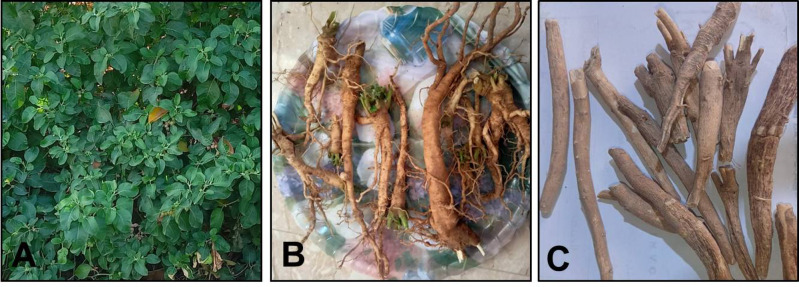 Figure 1
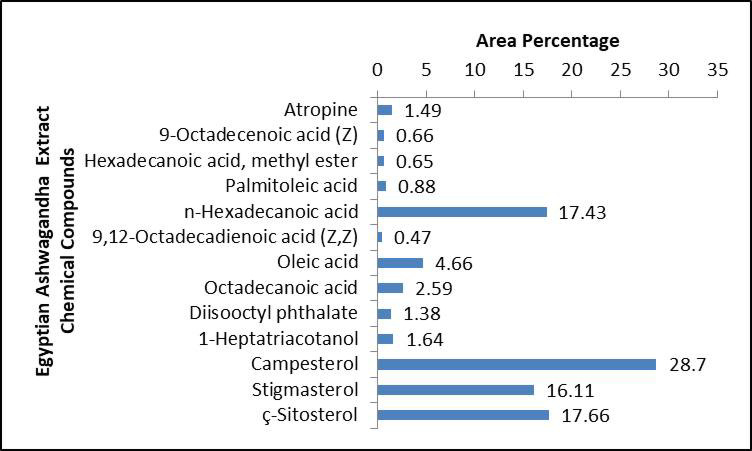 Figure 2
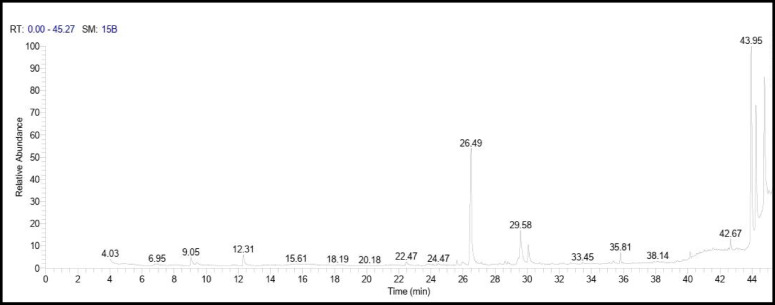 Figure 3
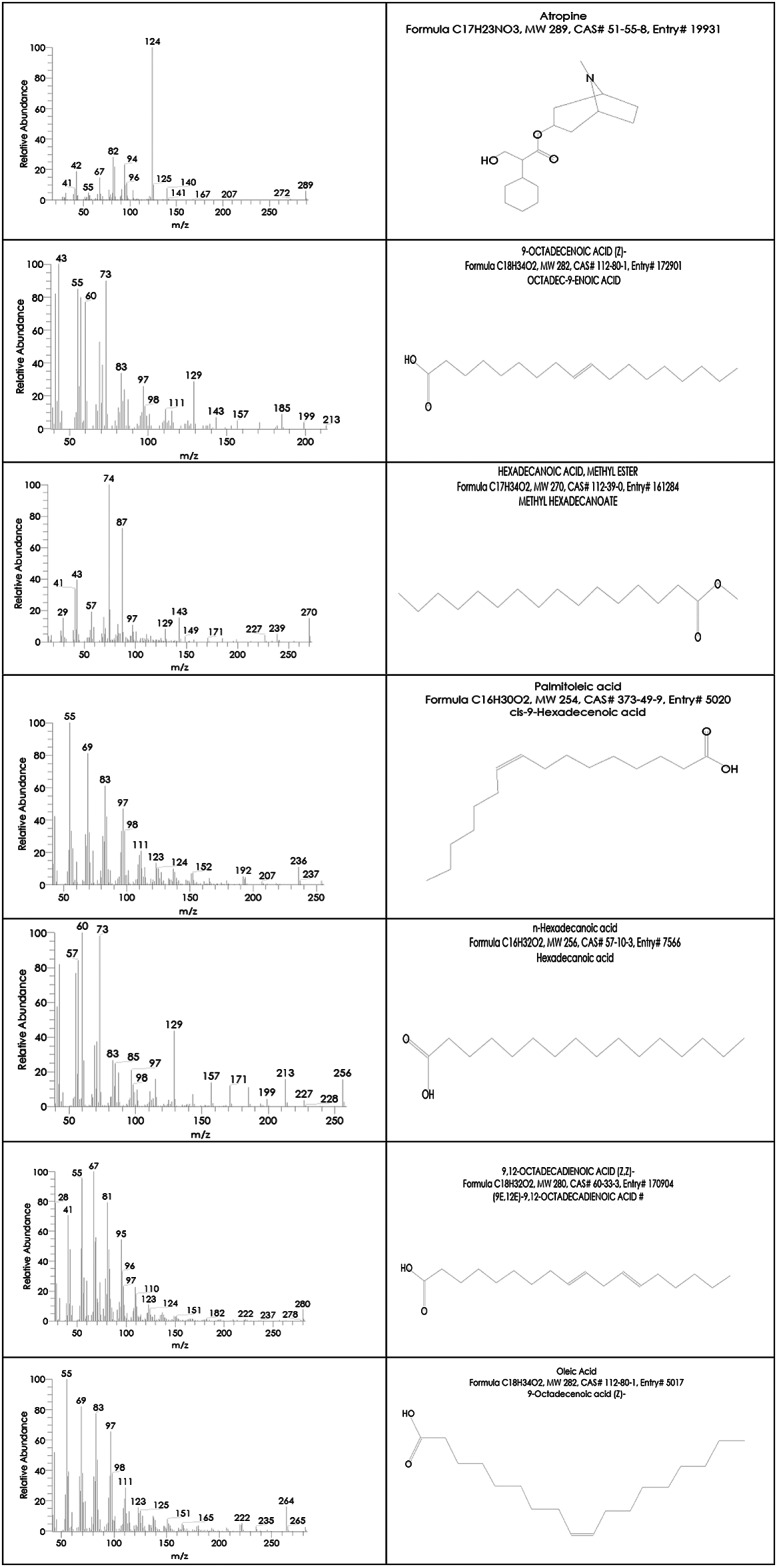 Figure 4
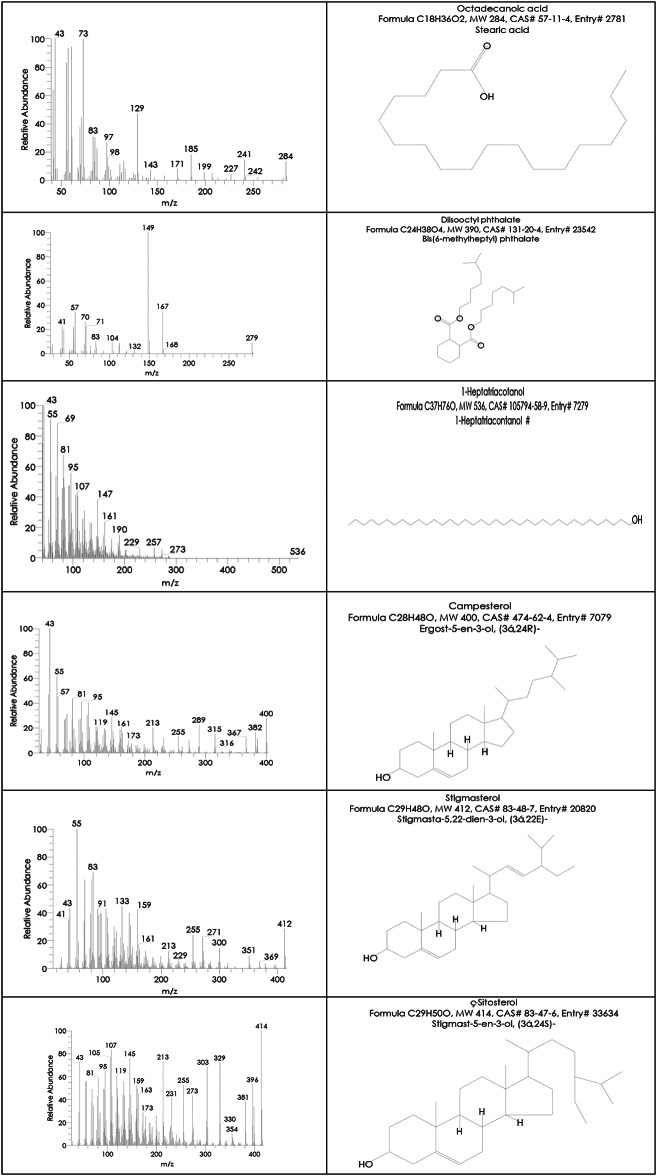 Figure 4
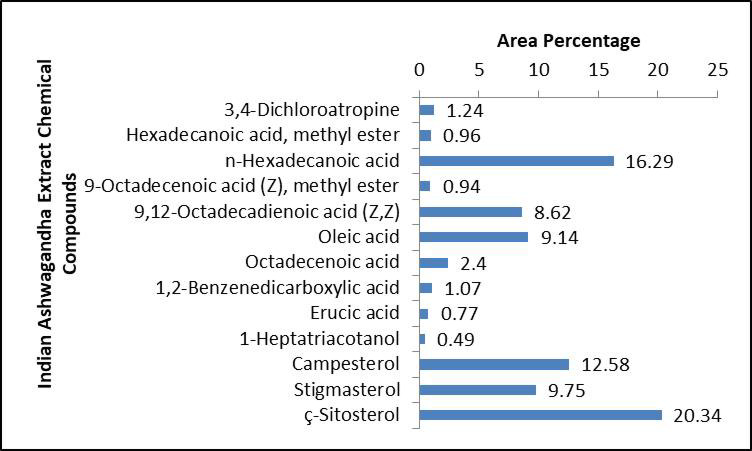 Figure 5
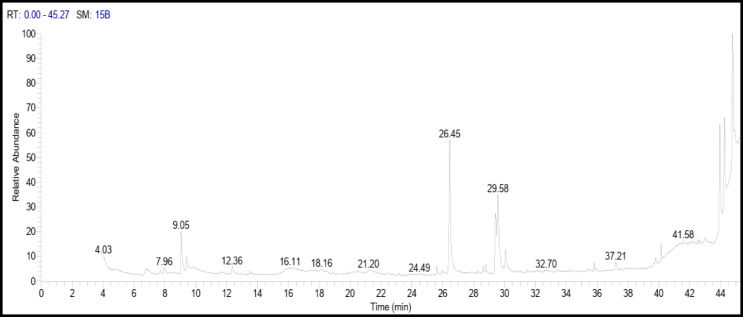 Figure 6
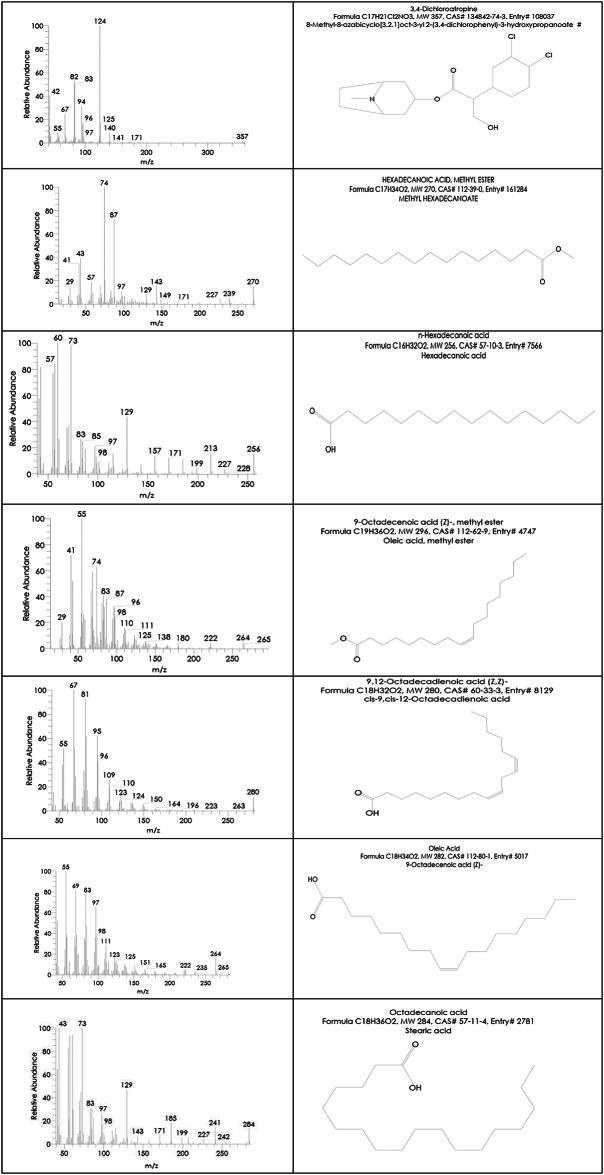 Figure 7
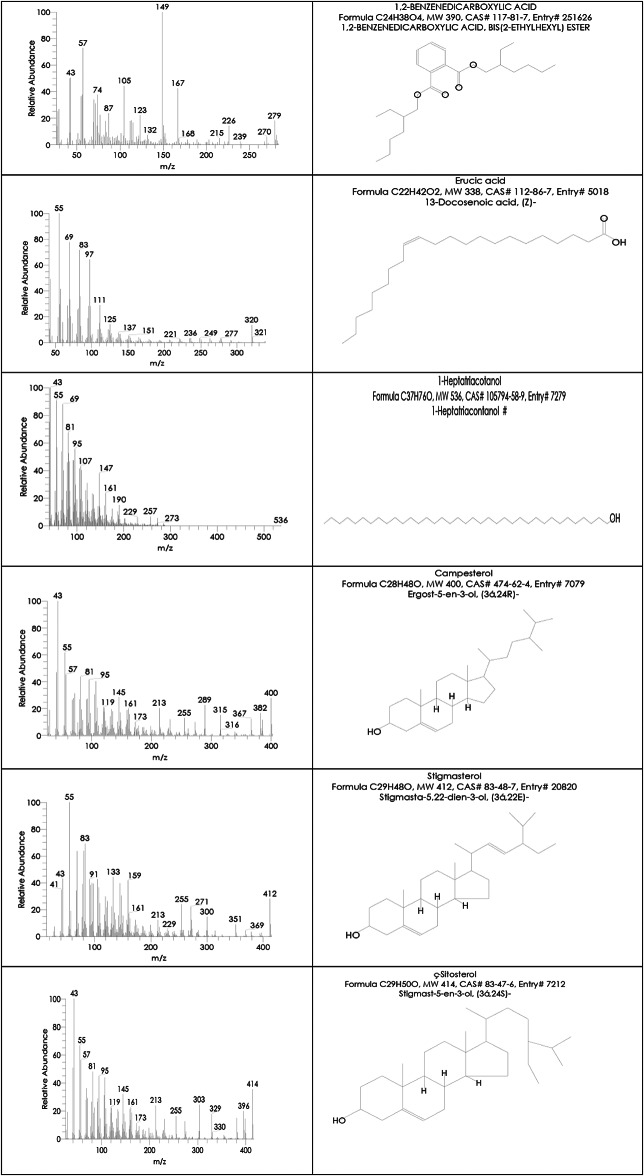 Figure 7
- —Damanhour University
Peer Reviews
No public reviews on file for this paper yet. If you reviewed it on a platform where reviews are public (OpenReview, ICLR, NeurIPS, ICML), you can paste yours below so the community can read it here.
Videos
No videos yet. Explain this paper in a talk, walkthrough, or lecture? Add one.
Taxonomy
TopicsPhytochemicals and Medicinal Plants · Pharmacology and Nanomedicine Research · Environmental and Analytical Chemistry Studies
Introduction
Ashwagandha (Withania somnifera) is a small, typically upright, woody shrub that belongs to the Solanaceae family. This plant can reach a height of up to 2 feet. Its roots are fleshy, whitish-brown and covered in bristles. The roots are the primary part of the plant and are used for therapeutic purposes. The leaves are simple, ovate, smooth, petiolate and smaller, arranged oppositely. The flowers are greenish or yellow and grow in axillary, umbellate clusters; the small berries are globular and turn orange-red when they ripen, encapsulated in a persistent calyx; the seeds are yellow and reniform. It grows throughout the drier regions and subtropical areas of India, as well as in other countries such as Pakistan, Egypt, Jordan, Morocco and Eastern and South Africa^1^.
Ashwagandha is an Ayurvedic herb that is also known as Indian winter cherry and Indian ginseng. It has been used for centuries in India for its various beneficial health activities in stress management, energy elevation and improving cognitive health^2^. Various metabolites derived from Ashwagandha leaves and root extracts have therapeutic efficacy^3^.
It was reported that Ashwagandha roots extract consumption for 8 weeks was safe in both males and females volunteers^4^. Ashwagandha contains a wide range of phytochemicals. Many studies have used Ashwagandha roots extract, either alone or in combination with other natural plants, for a variety of biomedical purposes. These include its anti-microbial, anti-inflammatory, anti-stress, anti-tumour, cardio-protective and neuroprotective qualities. It also enhances endothelial function, reduces reactive oxygen species, regulates apoptosis and enhances mitochondrial function as well as the treatment of age-related symptoms, anxiety, neurodegenerative diseases, diabetes, stress, arthritis, fatigue and cognitive/memory impairment^5^. In last years, ashwagandha has attracted a lot of attention as an adaptogen that helps sleep, reduces stress and has variety of health related benefits^6^.
Material & methods
Plant collection
Ashwagandha plant grows in many places in Egypt (Fig. 1A) and its roots (Fig. 1B) were collected from Faculty of Agriculture nursery, Alexandria University, Egypt and the plant was identified as Withania somnifera according to the plant atlas of Faculty of Science, Alexandria University, Egypt. The collected roots were left at room temperature to dry. While dried Indian Ashwagandha roots (Fig. 1C) were purchased from Haraz shop for natural products, Cairo, Egypt.
Fig. 1**(A)** Egyptian Ashwagandha plant, (B) Egyptian ashwagandha roots & (C) Indian Ashwagandha roots.
Preparation of Ashwagandha roots’ extracts
The dried roots of both Egyptian and Indian Ashwagandha were ground into fine powders. Powdered roots of both Egyptian and Indian Ashwagandha were macerated in a stoppered container with 50 ml of 85% methanol and left at room temperature for 48 h. The extracts were filtered and concentrated using a rotary evaporator under a vacuum at 40° C to evaporate the solvent and obtain crude extracts^7^. The extraction processes were done in Faculty of Agriculture, Alexandria University, Alexandria, Egypt.
Gas chromatography–mass spectrometry (GC-MS) analysis
The chemical composition analysis was performed using GC-TSQ mass spectrometer (Thermo Scientific, Austin, TX, USA) with a direct capillary column TG-5MS (30 m x 0.25 mm x 0.25 μm film thickness). The column oven temperature was initially held at 60 °C and then increased by 5 °C/min to 250 °C withhold 2 min then increased to 300 with 30 C/min. The injector temperature was kept at 270 °C. Helium was used as a carrier gas at a constant flow rate of 1 ml/min. The solvent delay was 4 min and diluted samples of 1 µl were injected automatically using Autosampler AS3000 coupled with GC in the split mode. EI mass spectra were collected at 70 eV ionization voltages over the range of m/z 50–650 in full scan mode. The ion source and transfer line were set at 200 °C and 280 °C, respectively. The components were identified by comparing their mass spectra to those found in the Wiley Registry and NIST14 mass spectral database^8^.
Results
Egyptian Ashwagandha roots extract components analysis by GC-MS showed that it contains numerous essential bioactive compounds with several biological activities. The most important compounds found in the Egyptian Ashwagandha roots extract are listed in Table 1; Fig. 2 and their peaks and chemical structures are shown in Figs. 3 and 4. From the GC-MS obtained data, the Egyptian Ashwagandha roots extract contains high area percentages of phytosterols; campesterol (28.70%), stigmasterol (16.11%) and ҫ-sitosterol (17.66%) in addition to numerous fatty acids; n-hexadecanoic acid (17.43%), oleic acid (4.66%), octadecanoic acid (2.59%),1-heptatriacotanol (1.64%), palmitoleic acid (0.88%), 9-octadecenoic acid (Z) (0.66%), hexadecanoic acid, methyl ester (0.65%) and 9,12-octadecadienoic acid (Z, Z) (0.47%), besides other phytochemicals as atropine (1.49%) and diisooctyl phthalate (1.38%).
On the other side, the Indian Ashwagandha roots extract components analysis by GC-MS revealed that it also contains numerous essential bioactive compounds relatively similar to those in the Egyptian Ashwagandha roots extract with different area percentages. These effective compounds are listed in Table 2; Fig. 5 and their peaks and chemical structures are shown in Figs. 6 and 7. The Indian extract contains high area percentages of phytosterols; ҫ-sitosterol (20.34%), campesterol (12.58%) and stigmasterol (9.75%) in addition to numerous fatty acids; n-hexadecanoic acid (16.29%), oleic acid (9.14%), octadecanoic acid (2.40%), 9,12-octadecadienoic acid (Z, Z) (8.62%), 1,2-benzenedicarboxylic acid (1.07%), hexadecanoic acid, methyl ester (0.96%), 9-octadecenoic acid (Z), methyl ester (0.94%), erucic acid (0.77%) and 1-heptatriacotanol (0.49%), besides the presence of 3,4-dichloroatropine (1.24%).
From the comparison between the Ashwagandha extracts of the present study, it is revealed that the Egyptian Ashwagandha extract contains higher area percentages of campesterol (28.70%), stigmasterol (16.11%), n-hexadecanoic acid (17.43%), octadecanoic acid (2.59%), 1-heptatriacotanol (1.64%) and atropine (1.49%) than those present in the Indian extract. On the other side, the Indian ashwagandha extract contains a higher area percentage of ҫ-sitosterol (20.34%), oleic acid (9.14%), 9,12-octadecadienoic acid (Z, Z) (8.62%) and hexadecanoic acid, methyl ester (0.96%) than those present in the Egyptian extract.
Table 1. Detected compounds by GC-MS in the Egyptian Ashwagandha extract.Retention timeCompound nameArea percentageMatching factorMolecular formula12.31Atropine1.49816C_17_H_23_NO_3_22.469-Octadecenoic acid (Z)0.66875C_18_H_34_O_2_25.61Hexadecanoic acid, methyl ester0.65860C_17_H_34_O_2_25.97Palmitoleic acid0.88856C_16_H_30_O_2_26.50n-Hexadecanoic acid17.43924C_16_H_32_O_2_29.439,12-Octadecadienoic acid (Z, Z)0.47825C_18_H_32_O_2_29.58Oleic acid4.66908C_18_H_34_O_2_30.07Octadecanoic acid2.59932C_18_H_36_O_2_35.81Diisooctyl phthalate1.38940C_24_H_38_O_4_42.671-Heptatriacotanol1.64744C_37_H_76_O43.95Campesterol28.70868C_28_H_48_O44.25Stigmasterol16.11867C_29_H_48_O44.77ҫ-Sitosterol17.66824C_29_H_50_O
Fig. 2. Histogram of the Egyptian Ashwagandha extract chemical compounds and their area percentage.
Fig. 3. Hit spectrum of the Egyptian Ashwagandha extract.
Fig. 4. List of Hit spectrum and chemical structure of the Egyptian Ashwagandha bioactive compounds.
Table 2. Detected compounds by GC-MS in the Indian Ashwagandha extract.Retention timeCompound nameArea percentageMatching factorMolecular formula12.353,4-Dichloroatropine1.24765C_17_H_21_Cl_2_NO_3_25.61Hexadecanoic acid, methyl ester0.96843C_17_H_34_O_2_26.46n-Hexadecanoic acid16.29932C_16_H_32_O_2_28.799-Octadecenoic acid (Z), methyl ester0.94883C_19_H_36_O_2_29.439,12-Octadecadienoic acid (Z, Z)8.62912C_18_H_32_O_2_29.58Oleic acid9.14893C_18_H_34_O_2_30.06Octadecenoic acid2.40897C_18_H_36_O_2_35.811,2-Benzenedicarboxylic acid1.07773C_24_H_38_O_4_39.79Erucic acid0.77677C_22_H_42_O_2_42.531-Heptatriacotanol0.49723C_37_H_76_O43.95Campesterol12.58796C_28_H_48_O44.24Stigmasterol9.75812C_29_H_48_O44.77ҫ-Sitosterol20.34735C_29_H_50_O
Fig. 5. Histogram of the Indian Ashwagandha extract chemical compounds and their area percentage.
Fig. 6. Hit spectrum of Indian Ashwagandha extract.
Fig. 7. List of Hit spectrum and chemical structures of the Indian Ashwagandha bioactive compounds.
Discussion
The obtained data from the present study revealed that both Egyptian and Indian Ashwagandha extracts contain phytosterols, fatty acids and other essential phytochemicals indicating their possible therapeutic potential.
Phytosterols are plant sterols that are vital secondary plant metabolites^9^. Campesterol, stigmasterol and sitosterol are the main and significant phytosterols in plants^10^. As these compounds are vital biomolecules and have beneficial effects on human health, they must be taken from foods^11^. It is well known that phytosterols have anti-cancer, anti-inflammatory, cholesterol-lowering and immune-protective activities^12^. The biological activities of stigmasterol as phytosterol have been studied through in vitro and in vivo pathways and its potent pharmacological capabilities such as anti-cancer, anti-oxidant, anti-inflammatory, anti-osteoarthritis, anti-diabetic, immunomodulatory, anti-parasitic, anti-fungal, anti-bacterial and neuroprotective properties have been documented^13^. Campesterol is a well-known phytosterol and it is documented that it has anti-cancer, anti-oxidant and hypocholesterolemic effects^14^ in addition to anti-inflammatory potential^15^. β-sitosterol performs various activities such as hepatoprotective and cholesterol-lowering potentials^16^, insulin-like biological activity^17^, anti-inflammatory and anti-oxidant effects^18^.
Fatty acids are fat-soluble portions of plants or animals, which are the basic components of lipids. Fatty acids can be saturated or unsaturated, depending on the presence of double bonds. Unsaturated fatty acids are also classified into mono and polyunsaturated fatty acids based on the number of double bonds^19^. n-Hexadecanoic acid is known as palmitic acid. It is the most prevalent saturated fatty acid in animals, plants and microorganisms and performs numerous basic biological functions at cellular and tissue levels^20^. It was documented that n-hexadecanoic acid has anti-inflammatory properties^21^, anti-oxidant and hypocholesterolemic potentials^22^. Hexadecanoic acid, methyl ester is documented that it has anti-inflammatory, cancer-preventive, hepatoprotective, anti-arthritic and anti-coronary potentials^23^.
Oleic acid is a monounsaturated fatty acid generally known for its low-density lipoprotein lowering effect, a slight anti-inflammatory effect and insulin-regulating activity^24^ and it also has anti-microbial and anti-oxidant activities^22^.
Octadecanoic acid is a fatty acid that has anti-microbial efficacy^25^, anti-inflammatory and anti-cancer effects^26^. 9,12-Octadecadienoic acid (Z, Z) is a fatty acid that has anti-inflammatory, hypocholesterolemic, cancer preventive, hepatoprotective, anti-histaminic, anti-eczemic, anti-acne, 5-α reductase inhibitor, anti-androgenic, anti-arthritic, anti-coronary and anti-microbial activities^27^. 9-Octadecenoic acid (Z), a fatty acid, can suppress rheumatoid arthritis and different types of cancer^28^. 9-Octadecenoic acid (Z), methyl ester, a fatty acid methyl ester, has anti-inflammatory and anti-cancer activities^29^.
Palmitoleic acid, a monounsaturated omega-7 fatty acid, has various beneficial effects; it suppresses lipogenesis in the liver and muscles (toxic storage sites) and on the contrary, it stimulates lipogenesis in adipose tissues (safe storage sites). It is related to ameliorated insulin sensitivity and lipid profile in addition to a decreased risk of type 2 diabetes and cardiovascular diseases including myocardial infarction^30^. 1-Heptatriacotanol, a fatty acid, has anti-oxidant, anti-cancer and anti-inflammatory properties, besides coronary heart disease treatment^31^.
Erucic acid, a monounsaturated fatty acid, has been reported to have side effects on health, particularly myocardial lipidosis and hepatic steatosis^32^. But, erucic acid can be converted into nervonic acid, a main component of myelin. So, it has remyelinating potential in demyelinating conditions treatment and it also has neurodegenerative disorders treatment potential through anti-oxidant and anti-inflammatory effects^33^.
Atropine is a tropane alkaloid that belongs to secondary metabolites and can be isolated from many plant species of the Solanaceae family^34^. It is documented that atropine has numerous medicinal applications including anti-cancer activity by suppressing epithelial-mesenchymal transition in breast cancerous cells^35^ and anti-cholinergic activity^36^ in addition to anti-bacterial activity^37^ and anti-viral activity^38^. 1,2-Benzenedicarboxylic acid has anti-oxidant and anti-microbial potentials^29^. Diisooctyl phthalate has anti-microbial and anti-fouling effects^39^.
Conclusion
Depending on GC-MS analysis of the Egyptian and Indian Ashwagandha extracts, it is concluded that both extracts contain essential bioactive compounds with vital effects on human health. As the Egyptian Ashwagandha extract is available and contains higher area percentages of most bioactive compounds than found in the Indian Ashwagandha extract, we will test its efficacy in treating some health problems.
Supplementary Information
Below is the link to the electronic supplementary material.
Supplementary Material 1
Supplementary Material 2
Supplementary Material 3
Supplementary Material 4
The reference list from the paper itself. Each links out to its DOI / PubMed record.
- 1Khallouki, F. et al. Current advances in phytosterol free forms and esters: Classification, biosynthesis, chemistry, and detection. Steroids, 212109520. 10.1016/j.steroids.2024.109520(2024).10.1016/j.steroids.2024.10952039378976 · doi ↗ · pubmed ↗
- 2Zheng, Y. et al. Current analytical strategies for the determination of phytosterols in vegetable oils. J. Food Compos. Anal.,131 106279. (2024).
- 3Bakrim, S. et al. Health Benefits and Pharmacological Properties of Stigmasterol. Antioxidants, 11(10), 1912 (2022).10.3390/antiox 11101912 PMC 959871036290632 · doi ↗ · pubmed ↗
- 4Nazir, S. et al. Campesterol: a natural phytochemical with anti inflammatory properties as potential therapeutic agent for rheumatoid arthritis: a systematic review: campesterol: A natural phytochemical. Pakistan J. Health Sci., 4(05). 10.54393/pjhs.v 4i 05.792(2023).
- 5Mohanty, S., Mehrotra, N., Khan, M. T., Sharma, S. & Tripathi, P. Paradoxical effects of erucic acid-a fatty acid with two-faced implications. Nutr. Rev., nuaf 032.83(10), 2028-2041.10.1093/nutrit/nuaf 032 (2025).10.1093/nutrit/nuaf 03240202517 · doi ↗ · pubmed ↗
- 6Nisha, S. V. D. & Joe, I. H. Molecular structure and quantum chemical evaluation of antiviral drug Atropine using vibrational spectroscopy and in-silico studies. Materials Today: Proceedings, 68, 463–469 (2022).